- Prep
- 15 min
- Cook
- 20 min
- Total
- 95 min
- Serves
- 20
- Calories
- 149 kcal
- Protein
- 3.00 g
- Carbs
- 18.00 g
- Fat
- 7.00 g
Introduction
I make these raspberry lemon tarts whenever I want a dessert that feels special but doesn’t leave me stuck in the kitchen while guests arrive. I love how the sunny lemon filling contrasts with the jewel-bright raspberries — the sight alone makes people linger at the dessert table. In my kitchen this recipe has become my go-to for showers, dinner parties, and casual summer evenings.
What I appreciate most is how forgiving the filling is. With a few technique notes I learned the hard way, the lemon becomes silky and smooth every time instead of curdled or grainy. I also learned the smart habit of prebaking shells and chilling the tarts so the flavors settle and serving is effortless.
When I bring a tray of these to a party, people comment on the balance: not too sweet, pleasantly tart, and perfectly portioned. I’ll share how to choose shells, keep the filling silky, present them beautifully, and adapt the recipe for gluten-free or no-bake needs—so you can spend more time with guests and less in the kitchen.
Why These Raspberry Lemon Tarts Are Perfect for Entertaining
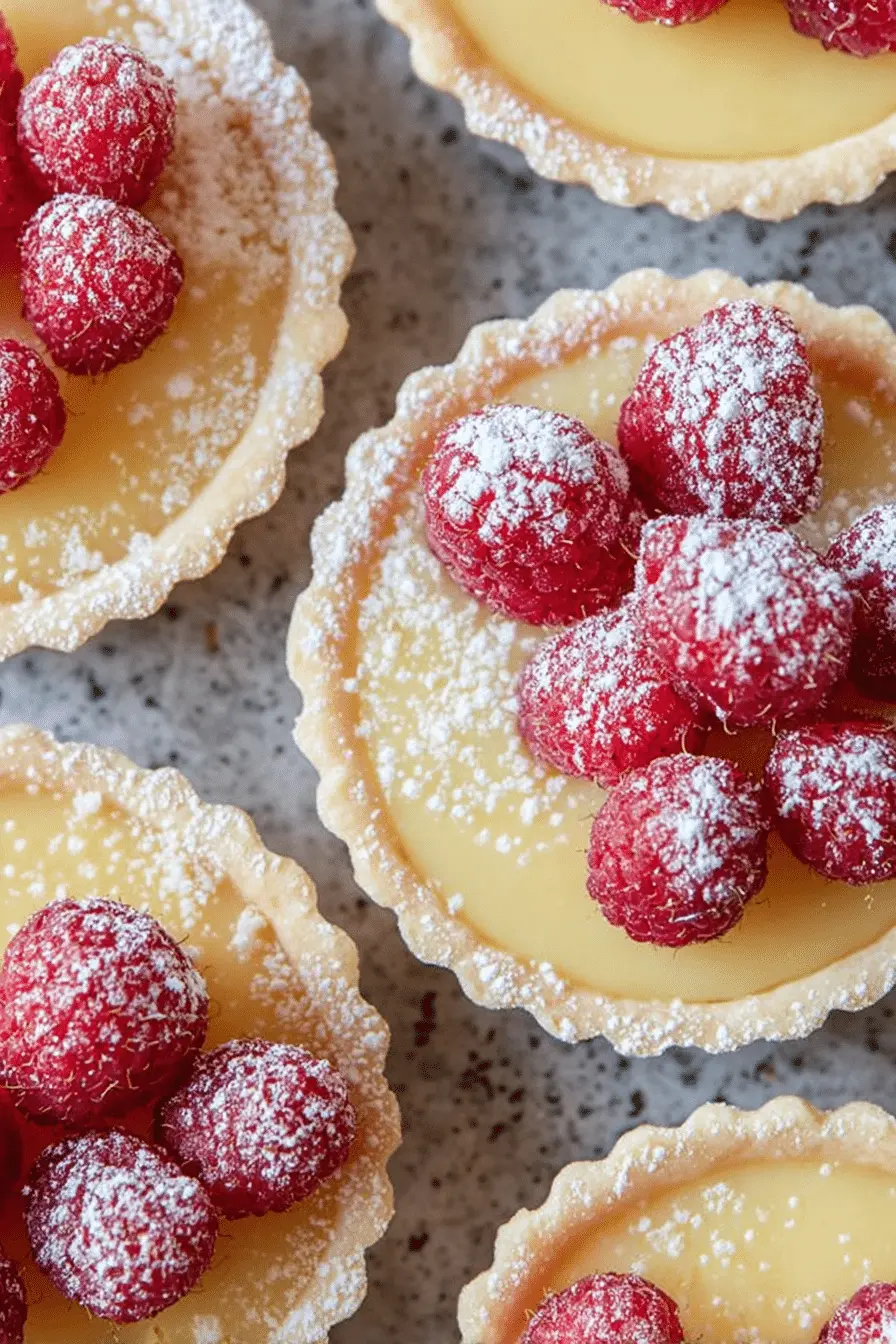
These tarts hit the notes hosts care about: visual elegance, easy portioning, and make-ahead convenience. The lemon filling has a warm golden hue that looks stunning against the vivid red of fresh raspberries. That contrast draws the eye on a dessert table and gives a refined, festive look without fuss.
The flavor balance works for most palates — bright citrus to cut the sweetness, with a creamy texture that’s familiar and comforting. Because they’re small and single-serve, guests can try one without committing to a whole slice, which makes them ideal for gatherings where variety is part of the charm. And importantly, you can bake and chill them ahead of time, so plating is calm and enjoyable when it matters.
Everything You Need for Raspberry Lemon Tarts
Below I cover both the pantry basics and the tools that make these tarts simple to prepare. I’ll focus on purpose and substitutions so you can adapt based on what’s in your kitchen.
- * Tart shells – A neutral, crisp vessel is best; choose a buttery shell for richness or a neutral shortcrust for a lighter bite.
- * Granulated sugar – Sweetens and helps stabilize the filling.
- * All-purpose flour – Adds body and helps the filling set; can be substituted with a gluten-free blend in adaptations.
- * Sweetened condensed milk – Gives the filling its creamy, luscious texture and a hint of caramelized sweetness.
- * Eggs – Provide structure and help the filling set; room temperature eggs blend more smoothly.
- * Sour cream – Adds gentle tang and silkiness; make a dairy-free swap with cultured coconut cream if needed.
- * Vanilla extract – Rounds and softens the tartness of lemon.
- * Lemon juice – Fresh-squeezed is best for brightness; bottled will work in a pinch but is less lively.
- * Fresh raspberries – For topping; choose firm, ripe berries for color and texture.
- * Powdered sugar – Optional garnish to add contrast and a soft, elegant finish.
Tools:
- * Baking sheet – To support tart shells while baking.
- * Mixing bowls and whisk – For smooth, lump-free filling.
- * Measuring cups and spoons – For consistent results.
- * Cooling rack – To bring tarts to room temperature before chilling.
Choosing Tart Shells: Store-Bought, Gluten-Free, and Homemade Options
Choosing the right shell sets the tone for your tarts. Store-bought frozen tart shells are a brilliant shortcut: they save time and deliver consistent crispness. If you prefer a more personal touch, a homemade shortcrust will offer a tender, buttery bite that pairs beautifully with the bright filling.
For guests with gluten sensitivities, there are excellent gluten-free tart shells available, or you can make your own using a gluten-free flour blend and a touch of xanthan gum for structure. To add a subtle flavor lift, fold a little lemon zest into the crust or a pinch of finely ground almond meal for nuttiness.
If you like looking at different tart styles for inspiration, try these mini meringue ideas as complementary shapes and textures: mini lemon meringue tarts.
How to Get a Silky Lemon Filling Every Time
The key to a silky filling is gentle emulsification and careful temperature control. Sugar and flour stabilize, eggs provide structure, and sweetened condensed milk brings creaminess without thinning the mixture. Using room-temperature eggs helps everything combine smoothly so the mixture doesn’t seize when citrus is added.
When you add the lemon juice, whisk steadily and avoid frantic motion that can incorporate too much air. Bake until the filling is set at the edges and only slightly wobbly in the center—residual heat will continue to firm it as it cools.
For alternative filling inspiration with a similar silkiness, consider this lemon curd option: lemon curd tartlets.
- Troubleshooting – If the filling curdles, it’s usually from too-high heat or adding cold ingredients to warm ones; strain the mixture if small curdles form, then bake gently.
- Egg temperature – I learned that using room-temperature eggs makes the texture noticeably smoother; if you forget, whisk a bit longer and keep a steady hand when incorporating citrus.
- Overbaking – An overly firm, chalky filling is a result of baking too long; remove when only faintly jiggly.
- Grainy texture – Often due to sugar not fully dissolving; whisk sugar and flour together first and mix until glossy before adding liquids.
Presentation Tips: Garnish and Arrange the Tarts Beautifully
Presentation is where these tarts truly shine. A light dusting of powdered sugar creates a soft contrast against the raspberries and emphasizes their color. Arrange tarts on a tiered stand or rustic wooden board for an inviting centerpiece that encourages guests to help themselves.
- Top each tart with two or three fresh raspberries for a classic look; a tiny mint or basil leaf adds herbal brightness and a pop of green.
- Use edible flowers for formal events — they bring delicate color and an elegant, seasonal touch.
- Group tarts in odd numbers on platters (3, 5, 7) to create pleasing visual clusters.
- For extra drama, place a small doily under each tart or use slate tiles to amplify color contrast.
If you’re planning a dessert table with complementary flavors, pairing these tarts with a buttery raspberry cake and lemon buttercream creates a cohesive, picturesque spread: raspberry cake with lemon buttercream.
How to Make Raspberry Lemon Tarts (Step-by-Step)
- Preheat your oven and arrange frozen or fresh tart shells on a baking sheet; bake the empty shells briefly to set the crust before filling.
- Whisk the sugar and flour together in a bowl until evenly combined to prevent lumps in the filling.
- Add the sweetened condensed milk, then the eggs one at a time while whisking so the mixture becomes smooth and glossy.
- Stir in the sour cream and vanilla, blending until the mixture feels silkier; finally whisk in the lemon juice until fully incorporated.
- Divide the filling evenly among the pre-baked shells and return them to the oven; bake until the filling is set around the edges and only gently jiggles at the center.
- Remove from the oven and let the tarts cool on a rack to room temperature, then chill in the refrigerator for at least an hour to let the filling finish setting before topping with raspberries.
- Just before serving, top each tart with fresh raspberries and, if desired, a light dusting of powdered sugar for contrast.
Pro Tip for raspberry lemon tarts: Gluten-Free and No‑Bake Alternatives
- Gluten-free crust – Use a pre-made gluten-free tart shell or blend gluten-free flour with almond meal for structure; press and blind-bake gently to avoid crumbling.
- No‑bake crust – A pressed cookie crust (think crushed shortbread or gluten-free cookies with melted butter) can be chilled until firm and topped with a stabilized lemon mousse if you prefer no oven time.
- No‑bake filling – Fold stabilized whipped cream into a lemon-sweetened base (thickened with a little gelatin or a commercial stabilizer) for a light, refrigerator-set version.
- Low-carb option – Swap a nut-based crust for a lower-carb shell and use a sugar substitute compatible with baking; adjust sweetness to taste.
How to Store, Make-Ahead, and Serve Raspberry Lemon Tarts
- Make-ahead – Bake, cool, and chill tarts up to 24 hours in advance; store in a single layer in an airtight container to keep shells crisp and filling set.
- Refrigeration – Keep tarts refrigerated; they hold well for up to three days. Bring them to a slightly warmer temperature before serving if you prefer a softer filling.
- Transport – For transporting to a party, use a flat tray and cover lightly; add raspberries at the destination to avoid crushed fruit.
- Freezing – While the shells don’t freeze perfectly, you can freeze unfilled baked shells. Thaw completely and fill with chilled lemon mixture when ready to serve.
Variations: Seasonal Adaptations and Ingredient Substitutions
- Blueberry or strawberry topping – Swap raspberries for seasonal berries; blueberries bring gentle sweetness, while strawberries offer a broad, bright note.
- Herb infusions – Infuse the sour cream with finely chopped basil or mint for a subtle herbal lift that pairs beautifully with citrus.
- Dairy-free substitutions – Use coconut cream and a dairy-free condensed milk alternative to make the filling dairy-free without losing richness.
- Almond or pistachio crust – Fold finely ground nuts into the crust for extra aroma and tender crumb; this also pairs well with the raspberry garnish.
- Seasonal idea – For winter events, top tarts with poached pear slices and a few pomegranate arils for color and texture, or try some bright lemon-raspberry cookies alongside: lemon raspberry cookies.
These raspberry lemon tarts are a small luxury that make entertaining easier: they’re pretty, portable, and flexible enough to suit many dietary needs and occasions. With a few simple techniques and the make-ahead approach I’ve outlined, you’ll feel confident sending a tray of these to the table while you enjoy the party.
Frequently Asked Questions
Can I use homemade tart shells instead of store-bought? Absolutely! Homemade tart shells are a great option and can add a personal touch to your Raspberry Lemon Tarts.
How can I make these tarts gluten-free? You can use gluten-free tart shells available in stores or make your own using gluten-free flour for a delicious and safe option for those with gluten sensitivities.
What should I do if I don’t have fresh lemons? If fresh lemons aren’t available, you can use bottled lemon juice, but fresh-squeezed juice will provide a brighter flavor!
How long can I store these tarts? The tarts can be stored in the refrigerator for up to 3 days. Just cover them well to keep them fresh!
Can I use frozen raspberries instead of fresh? Yes, you can use frozen raspberries, but ensure they're thawed and drained before using them to prevent extra moisture in the tarts.
Recipe Card
The Raspberry Lemon Tarts My Guests Always Request for Spring Parties
- Prep
- 15 min
- Cook
- 20 min
- Total
- 95 min
- Serves
- 20
- Calories
- 149 kcal
- Protein
- 3.00 g
- Carbs
- 18.00 g
- Fat
- 7.00 g
Ingredients
- 20 unitsunsweetened frozen tart shells (*)
- 1/2 cupgranulated white sugar
- 1 1/2 tablespoonsflour
- 6 tablespoonssweetened condensed milk
- 3 unitseggs
- 2 tablespoonssour cream
- 1 teaspoonvanilla extract
- 6 tablespoonslemon juice ((fresh-squeezed*))
- 1 1/2 cupsfresh raspberries
- to tastepowdered sugar ((to garnish, optional))
Instructions
- 1
Preheat the oven to 350℉. Arrange the frozen tart shells on a baking sheet. Bake the empty tart shells for 15 minutes.
- 2
In a mixing bowl, whisk together the sugar and flour until combined. Add the sweetened condensed milk, eggs, sour cream, and vanilla and mix until fully incorporated. Lastly, add the lemon juice and whisk until smooth.
- 3
Distribute the filling evenly between all 20 pre-baked tart shells. Return the pan to the oven and bake for 15-20 minutes or until the lemon filling is set and no longer jiggly when you wiggle the pan. Remove from the oven and let cool to room temperature before transferring to the refrigerator to chill for at least 1 hour before serving.
- 4
Once the tarts have chilled or right before serving, top each tart with a few fresh raspberries. Add a dusting of powdered sugar right before serving for a pretty garnish, if desired. Enjoy!
You might also like
Reviews
Be the first to review this.