- Prep
- 15 min
- Cook
- 40 min
- Total
- 55 min
- Serves
- 12
- Calories
- 460 kcal
- Protein
- 7.00 g
- Carbs
- 79.00 g
- Fat
- 14.00 g
Introduction
I grew up with the scent of orange peel and cinnamon drifting from my grandmother's kitchen every time the neighborhood gathered after church. Ravani was never just a dessert in my family; it was the cake that punctuated birthdays, named feast days, and quiet Sunday afternoons. I still remember the first time I tried to make it myself—my batter was heavy, the syrup sat on top instead of sinking in, and I learned the hard way how temperamental semolina can be.
Over the years I baked and baked until the crumb felt right in my hands: tender, slightly custardy in the middle, and porous enough to drink in syrup without collapsing. I tested different semolinas, fiddled with egg whites, and timed the syrup pour until I felt confident enough to serve it at my own table. Those mistakes taught me the small, decisive moves that take Ravani from simply sweet to something that tastes like home.
In my kitchen today I keep the method simple but precise—the whipped whites, gentle folding, a syrup scented with orange and a stick of cinnamon, and the one-second drama of pouring cool syrup over a hot cake. If you’ve been intimidated by syrup cakes, I promise this recipe rewards patience. I’ll walk you through the why as well as the how, and share the little adjustments that saved my ravani from being just another tray bake.
For me, Ravani is a living recipe—one you adapt to the seasons, the guests you’re feeding, and the jars of citrus waiting on the counter. Read on and I’ll show you how to make it reliably, how to keep it moist, and what to serve alongside it when you want to set a warm, festive table.
A Slice of Tradition: Why This Ravani Recipe Feels Like Home
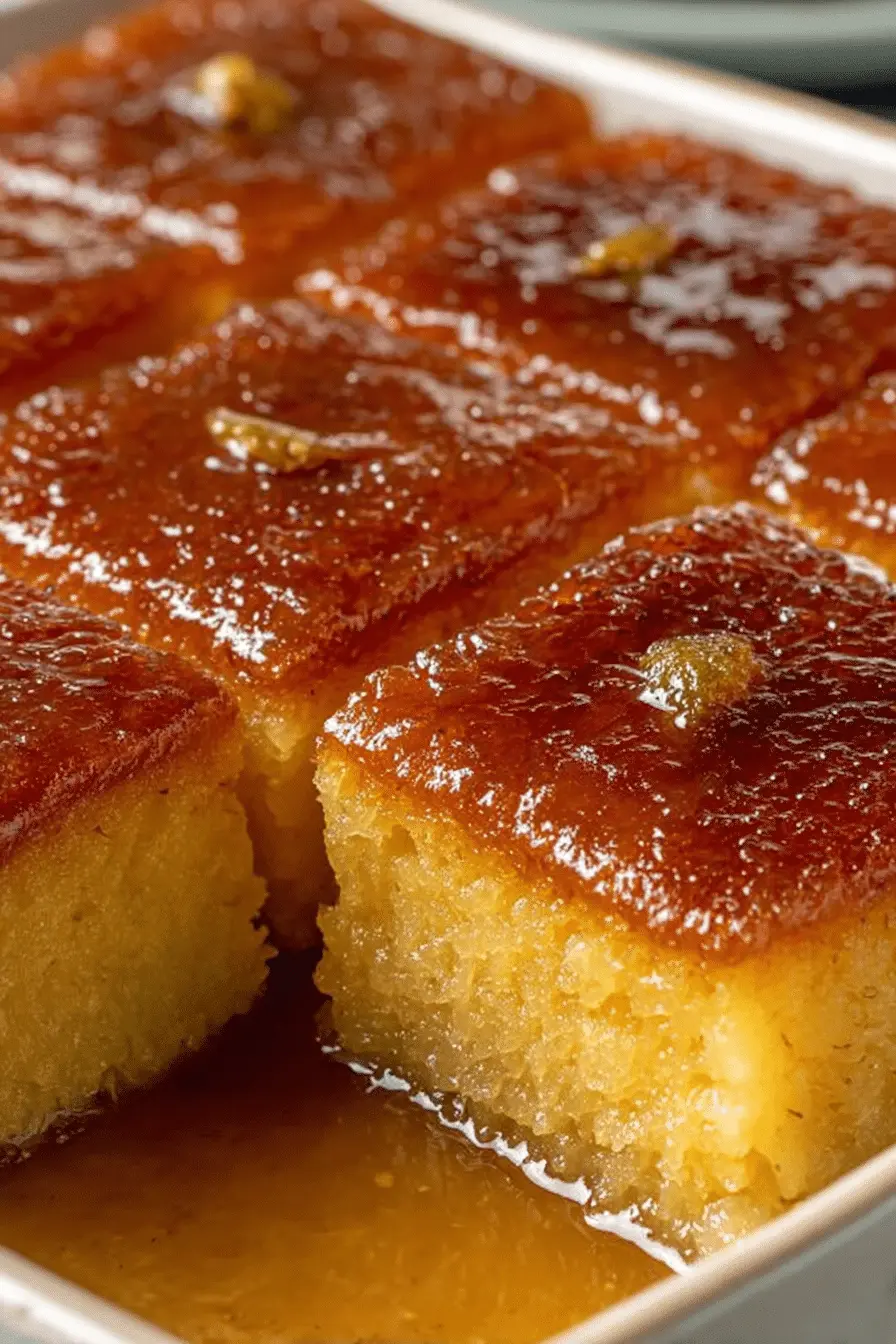
Ravani (also called Revani) sits at the crossroads of Greek, Turkish, and Levantine dessert traditions, but in Greece it has a special place as a celebratory cake—simple enough for weekday sharing, yet syrupy and aromatic enough for holidays. It’s the kind of dessert that arrives on a plate while conversations linger; people cut small pieces and keep coming back for one more.
Semolina is the heart of this cake. Unlike all-purpose flour alone, semolina gives ravani a slightly granular, custardy crumb that absorbs syrup without turning to mush. Traditionally, families passed down small variations—more orange zest, a drizzle of honey, or an extra egg white folded in for lift—so the cake always carried a personal signature.
When you bake this ravani you’re continuing that tradition. The warm citrus and cinnamon scent, the slightly coarse texture that yields a tender crumb, and the syrup that soaks in slowly are all part of why this cake is kept in memory and recipe boxes across generations.
Essential Ingredients for Authentic Greek Ravani
Below I describe the role each ingredient plays and suggest sensible swaps so you can adapt the recipe without losing its character.
- Semolina – Provides the cake’s signature texture: slightly granular yet tender. Use fine semolina for a more delicate crumb; coarser semolina will give a toothier bite.
- All-purpose flour – Gives structure and lightness when balanced with semolina. In gluten-free versions, a blend of rice flour and a starch can work, though texture will differ.
- Eggs (yolks and whites separated) – Yolks add richness; whipped whites create lift and a light, custardy interior. Don’t skip separating them if you want the classic sponge-like feel.
- Greek yogurt – Adds moisture and a slight tang that counters the syrup’s sweetness. Dairy-free yogurts are a good substitute, but expect a softer texture.
- Butter – Enriches flavor and mouthfeel. You can swap for a neutral oil for a dairy-free cake, though butter gives the most traditional flavor.
- Orange juice & zest – Fresh citrus lifts the whole cake—juice adds acidity and moisture; zest gives aromatic brightness. If you don’t have oranges, lemon can be used for a sharper profile.
- Sugar – Sweetens both batter and syrup; adjust the syrup sugar slightly if you prefer a less sweet finish.
- Baking powder & salt – Essential for rise and flavor balance. Don’t omit.
- Syrup (water, sugar, citrus peel, cinnamon) – The syrup is what defines ravani’s character: citrus and warm spice infused into a simple syrup that the hot cake absorbs.
The Secret to Ravani’s Light, Custardy Texture
Ravani’s best version is paradoxical: it’s airy because of the whipped whites, yet dense and custardy because of the semolina and yolks. The balance comes down to technique more than magic.
- Whipping the egg whites to stiff peaks gives the cake lift—watch for glossy peaks that hold shape but don’t dry out.
- Yolks mixed with yogurt and butter form a rich base; their fat and acidity yield a soft, tender crumb.
- Folding gently is essential: use a spatula and make wide, shallow strokes to combine without deflating the whites.
- Let the batter rest briefly if you can—semolina hydrates quickly and this helps the crumb become custard-like rather than crumbly.
Why Syrup Timing Makes or Breaks the Cake
The syrup step is a small performance with big consequences. The trick is thermal contrast: a hot cake accepts syrup; syrup that’s too hot can make the cake soggy, and syrup that’s too cold won’t absorb evenly.
- Pour cooled syrup over a hot cake—this encourages rapid absorption into the crumb rather than running off the top.
- If the syrup is warm (not boiling) and the cake is warm, absorption is quicker but carries a higher risk of over-saturation—aim for a cooled syrup straight from the pan, not chilled to refrigerator temperature.
- Pour evenly and slowly so the syrup has time to sink in; too much at once pools on the surface.
- Resist the urge to slice immediately. Let the cake rest for at least a couple of hours so the syrup disperses and flavors mellow.
How to Make Ravani (Step-by-Step)
Follow these steps carefully—each one is intentional. Use a wide spatula and a shallow rectangular pan for even baking.
- Prepare the syrup first: simmer water, sugar, orange peel, and a cinnamon stick until sugar dissolves; turn off after a brief boil and cool completely.
- Separate eggs, placing whites in a clean bowl and yolks in another.
- Beat egg whites with sugar until stiff, glossy peaks form.
- Whisk yolks with Greek yogurt, orange juice, melted butter, and vanilla until smooth.
- Fold the yolk mixture gently into the whipped whites to keep the batter airy.
- Sift flour, semolina, baking powder, and salt into the bowl and fold gradually until just combined—avoid overmixing.
- Grease and semolina-dust your pan to prevent sticking; semolina on the pan gives a beautiful base texture.
- Pour batter into the pan, even out the top, and poke gently with a skewer or tap to release large air bubbles.
- Bake at a moderate temperature until the top is golden and a toothpick comes out clean or with a few moist crumbs—watch carefully to avoid overbaking.
- Remove from oven and immediately pour the cooled syrup evenly over the hot cake. Let rest for several hours to absorb fully before serving.
Troubleshooting (from my kitchen)
- I once under-whipped the whites and the cake came out dense—if your batter looks flat, beat the whites a little more before folding.
- If the cake is gummy in the middle, it was likely underbaked; give it a few more minutes but lower the temperature slightly to avoid over-browning.
- If the syrup pools on top, it was probably too cold or poured too quickly—warm the syrup slightly next time and pour slowly.
Pro Tip for Ravani Recipe: Timing the Syrup for Maximum Moisture
- Always pour cooled (room-temperature) syrup over a hot cake for best absorption—this creates a gentle vacuum effect that pulls syrup into the crumb.
- Look for a golden top and a toothpick with a few moist crumbs as the visual cue that the cake is ready for syrup.
- If you want less sweetness, reduce the syrup sugar slightly or spoon less syrup over the cake, saving the rest for serving.
- Try different citrus—orange is classic, but lemon or a mix of orange and mandarin will shift the flavor profile subtly.
Best Beverages and Sides to Serve with Ravani
Ravani’s syrupy sweetness pairs beautifully with simple, slightly bitter or tart beverages and light, savory sides. For an afternoon table, strong Greek coffee or a cup of black tea balances the cake’s sugar. For a celebratory meal, a light dessert wine or a citrus-forward tea works well.
A comforting, sour-sweet pairing I love is a bowl of Greek lemon chicken soup—its brightness and gentle saltiness contrast the cake perfectly.
For a lighter, wholesome table you can serve a crisp salad; a Mediterranean chickpea salad with herbs and lemon keeps things fresh beside the sweet slice.
If you prefer a cold, fruity drink, a lightly sweetened tea-lemonade with berries refreshes the palate and cuts through richness.
For something heartier on the same table—say a celebratory spread—baked lemon garlic butter salmon brings savory depth that pairs surprisingly well with the cake.
Baked lemon garlic butter salmon
How to Store, Freeze and Make-Ahead Ravani (Variations Included)
Ravani keeps beautifully if stored correctly; the goal is to preserve moisture without inviting sogginess.
- Short-term storage – Cover the cake loosely with foil at room temperature for up to two days; refrigeration will extend life but can firm the texture slightly.
- Freezing – Freeze slices individually wrapped in plastic and then foil for up to two months. Thaw in the refrigerator overnight and bring to room temperature before serving.
- Make-ahead – You can bake the cake a day ahead and pour syrup the day you serve to keep the top from becoming too soft; alternatively, pour syrup and let it rest overnight for deeper flavor.
- Gluten-free variations – Replace all-purpose flour with a mix of fine gluten-free flours (rice flour plus a small percentage of starch) and use certified gluten-free semolina alternatives—expect a slightly different texture.
- Dairy-free options – Use a plant-based yogurt and a neutral oil instead of butter; the cake will be less rich but still very satisfying.
- Seasonal variations – Swap orange for blood orange or add a splash of citrus liqueur to the syrup in winter; in summer, toss a few berries over slices when serving for freshness.
Frequently Asked Questions
What ingredients are in Ravani?
Ravani is made with all-purpose flour, fine semolina, baking powder, eggs, and sugar. It's also soaked in a syrup made from water, sugar, orange peel, and cinnamon for that delightful sweetness!
Is Ravani Greek or Turkish?
Ravani, also known as Revani, is traditionally Greek, but it shares similar recipes across Turkey and the Middle East, featuring a moist semolina cake soaked in syrup.
How long does it take to make Ravani?
The total time to make Ravani is about 55 minutes, which includes 15 minutes of prep and 40 minutes of baking.
Can I substitute the Greek yogurt in the recipe?
Yes! If you don't have Greek yogurt, you can use regular yogurt or even a dairy-free alternative, but the texture might vary slightly.
What beverages pair well with Ravani?
Ravani pairs wonderfully with Greek coffee, tea, or even a light dessert wine for a delightful experience!
Recipe Card
How I Finally Nailed Ravani — Classic Greek Semolina Cake
- Prep
- 15 min
- Cook
- 40 min
- Total
- 55 min
- Serves
- 12
- Calories
- 460 kcal
- Protein
- 7.00 g
- Carbs
- 79.00 g
- Fat
- 14.00 g
Ingredients
- 500 gramssugar
- 500 gramswater
- 1 pieceorange peel
- 1 piececinnamon stick
- 4 largeeggs (separated)
- 200 gramssugar
- 250 gramsGreek yoghurt
- 170 gramsunsalted butter (melted) (use some to grease the pan)
- 2 tspvanilla extract
- 150 gramssemolina fine
- 150 gramsall-purpose flour
- 1 tbspbaking powder
- 1/2 tspsalt
Instructions
- 1
In a saucepan, combine the water, sugar, orange peel, and cinnamon stick.
- 2
Bring the mixture to a boil, then turn it off after 2 minutes.
- 3
Remove from heat and allow the syrup to cool completely while you prepare the cake.
- 4
Separate the egg whites from the yolks and place them in two separate mixing bowls.
- 5
Add the sugar to the egg whites and beat until stiff peaks form.
- 6
In the bowl with the egg yolks, whisk together the Greek yogurt, orange juice, melted butter, and vanilla extract until smooth and well combined.
- 7
Gently fold the egg yolk mixture into the whipped egg whites.
- 8
Sift the flour, semolina, baking powder, and salt directly into the bowl with the egg mixture.
- 9
Gradually fold everything together until fully combined, being careful not to overmix.
- 10
Preheat your oven to 160°C (fan-forced).
- 11
Grease the bottom and sides of a 32 x 22 cm rectangular baking pan with butter, then lightly dust with semolina, shaking out any excess to prevent sticking.
- 12
Pour the batter into the prepared pan, spreading it evenly. Use a skewer to gently mix the batter around, ensuring any air bubbles are broken. Then tap the pan on the counter to release any remaining trapped air bubbles.
- 13
Bake the cake for 30-40 minutes, or until the top is golden brown and a toothpick inserted into the centre comes out clean.
- 14
Once the cake is baked, remove it from the oven and immediately pour the cooled syrup evenly over the hot cake.
- 15
Let your Ravani rest for a few hours to absorb the syrup fully and cool down before serving.
You might also like

Reviews
Be the first to review this.