- Prep
- 15 min
- Cook
- 30 min
- Total
- 45 min
- Serves
- 4
- Calories
- 327 kcal
- Protein
- 36.00 g
- Carbs
- 15.00 g
- Fat
- 14.00 g
Introduction
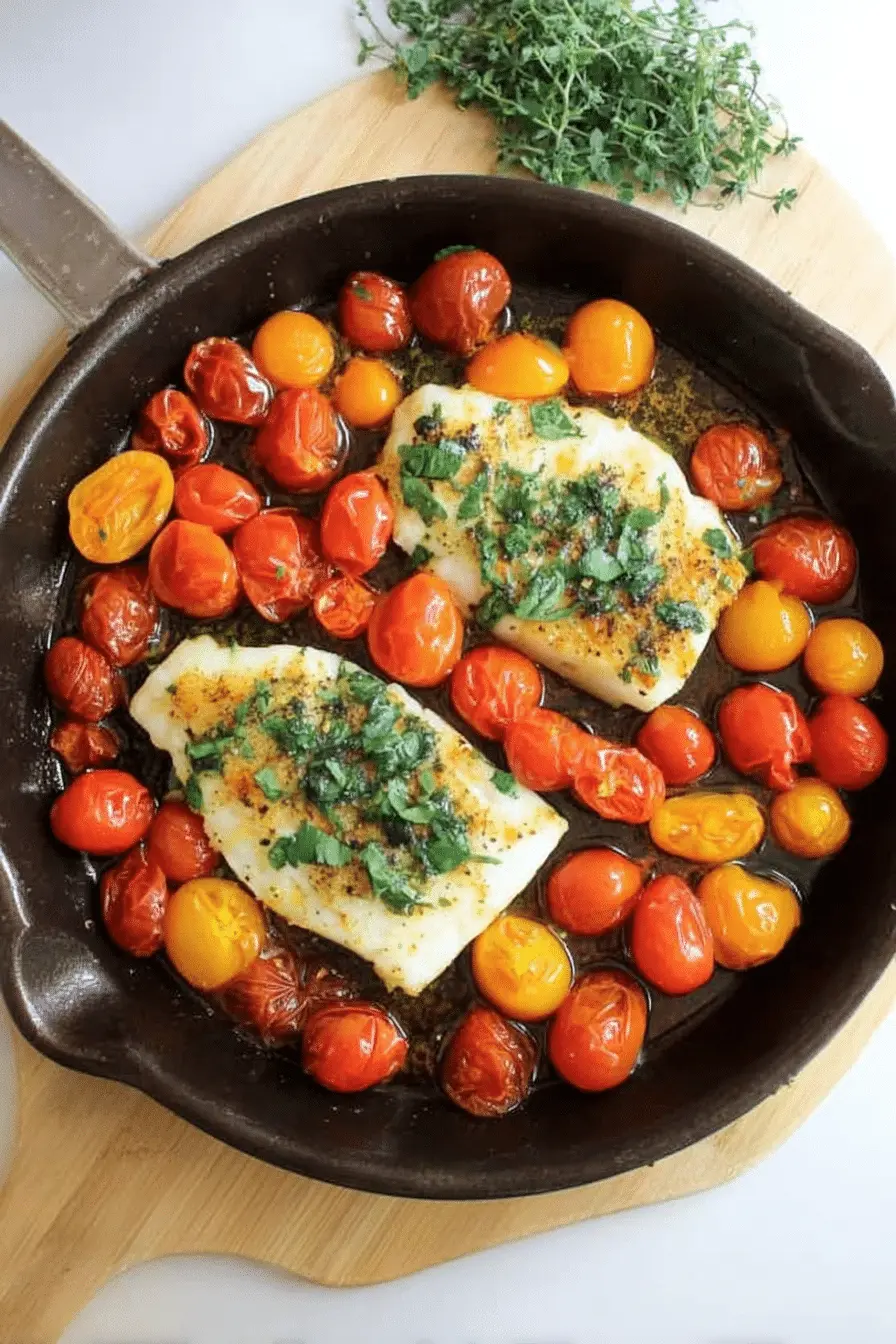
I first made roasted halibut with burst tomatoes on a humid Tuesday night when I wanted something light but satisfying — no fuss, one pan, and big flavors. The halibut started life with a quick sear to get that almost-creamy crust, then finished gently with cherry tomatoes that softened and split into sweet, tangy pockets of sauce. It’s one of those dishes that smells like summer the moment it hits the oven: warm olive oil, garlic getting sweet, and citrus brightening everything at the end. This dish is elegant without being precious. The halibut stays flaky and moist when treated gently, and the burst tomatoes do all the heavy lifting for the sauce — they release juices that mingle with garlic and a splash of olive oil to become glossy and spoonable. I’ve cooked this the simple way for weeknights and dressed it up for friends; both times it felt deliberate and homey. If you like clean flavors — bright lemon, basil pesto when you want it, and a little crust on the fish — this recipe will slot into your rotation fast.Ingredients You'll Need
- Halibut fillets – firm, meaty white fish; I use 6–8 ounce fillets for even cooking and a flaky, melt-in-your-mouth center (4 fillets total).
- Olive oil – for searing and coaxing flavor from the tomatoes; use extra-virgin for taste and a drizzle to finish.
- Cherry tomatoes – a pint or two (red and gold if you can find them) so they pop and form a quick sauce when they burst.
- Garlic – minced; it adds an aromatic backbone that softens and sweetens as it cooks with the tomatoes.
- Kosher salt – essential for seasoning the fish and coaxing juices from the tomatoes; it’s often the difference between flat and vibrant.
- Black pepper – freshly cracked for finishing; it gives a subtle bite.
- Lemon – cut into wedges and squeezed over the finished dish to lift the whole plate with brightness.
- Basil pesto – optional but wonderful spooned over the finished fish; it adds freshness and herbaceous fat that melds with the roasted tomatoes.
- Optional add-ins – capers for briny pops, a pinch of red pepper flakes for heat, or thyme/rosemary for earthiness.
Step-by-Step Instructions
I’ll walk you through the full process I use in my kitchen, including the sear, how to coax the tomatoes into bursting, and the cues I watch for so the halibut stays perfectly tender.- Preheat your oven to 300°F (about 150°C). I like a low oven finish for halibut — it warms through without toughening the flesh.
- Pat the halibut dry with paper towels and season both sides generously with kosher salt and a few turns of cracked black pepper. Drying the fish is important: moisture on the surface prevents a good sear.
- Heat an oven-safe skillet (cast iron or stainless) over medium-high heat. Add a couple tablespoons of olive oil and let it shimmer but not smoke. A shimmering pan gives you that immediate sizzle when the fish hits the surface.
- Add the halibut, searing one side until a pale golden crust forms — about 2 minutes. You’re not trying to cook it through here, just build texture and flavor. The fish will release from the pan when it’s properly seared; if it sticks, give it another 15–30 seconds.
- Transfer the seared fillets to a plate and leave the pan as-is. Lower the heat slightly and add a bit more olive oil if the pan looks dry. Toss in the cherry tomatoes, the minced garlic, and a pinch of kosher salt. Stir gently and let the tomatoes cook until a few split and start releasing juices, roughly 4–5 minutes. You’ll hear the occasional pop and see glossy little pools form — that’s when things are turning into sauce.
- Gently nestle the halibut back into the skillet with the seared side up so the tomato juices bathe the underside and sides. Transfer the skillet to the preheated oven.
- Bake until the fish is just cooked through, about 10–15 minutes. Start checking at 10 minutes: the halibut should flake easily with a fork but still look opaque and moist. Overcooking is the main problem people run into — pull it early rather than late. If you have an instant-read thermometer, aim for around 130–135°F internal for a moist finish.
- Remove from the oven, squeeze lemon wedges over everything and spoon a little basil pesto atop each fillet if desired. Serve immediately while the tomatoes are still warm and saucy.
Meal Prep Tips for Roasted Halibut
This dish is friendlier to make-ahead than it first appears. You can prep the elements in stages so weeknight cooking is minimal.- Marinate or season the halibut up to a day ahead: pat and salt the fillets lightly, cover, and refrigerate. Pull them 20–30 minutes before cooking so they come closer to room temperature; this helps them sear evenly.
- Pre-chop garlic and halve cherry tomatoes a day or two ahead and store them in airtight containers in the fridge. I don’t recommend pre-roasting the tomatoes too far ahead — freshly cooked burst tomatoes have the best texture.
- Make the pesto or zest the lemon in advance; little things like that save time at the finish and preserve fresh oils and aromatics.
Customizing with Seasonal Vegetables
This recipe is a great canvas for seasonal produce. I change up the vegetables depending on what’s at the market.- Asparagus – roasted alongside the fish for spring freshness; toss with oil and salt and add to the pan 10–12 minutes before the halibut is done.
- Zucchini – sliced thick and sautéed with garlic; they soak up the tomato juices beautifully and add a tender bite.
- Bell peppers – roasted until slightly charred for sweetness and color contrast.
- Green beans – quickly blanched and then finished in the pan with the burst tomatoes for crunch and a bright snap.
- Baby potatoes – par-cook and roast with rosemary for a sturdier side that soaks up the tomato sauce.
Nutritional Information
Halibut is a lean, protein-rich fish and pairs with tomatoes to create a nutrient-dense meal. Per serving this dish (as prepared) provides approximately 327 calories, 14 g fat, 15 g carbohydrates, and 36 g protein — making it friendly for those watching calories or following a higher-protein plan. Beyond macros, halibut offers a good dose of omega-3 fatty acids, selenium, and B vitamins. Tomatoes contribute vitamin C, potassium, and lycopene — an antioxidant that’s more bioavailable once tomatoes are cooked. If you’re tailoring this to specific diets: it fits pescatarian, low-carb, and keto plans (watch starchy sides), and it’s naturally gluten-free. Learn more about the nutritional benefits of seafood to understand how this dish fits into a healthy diet.Frequently Asked Questions
Can I use a different type of fish instead of halibut? Absolutely! You can substitute halibut with other firm white fish like cod, sea bass, or snapper. Just adjust the cooking time as needed. What can I serve with roasted halibut and burst tomatoes? This dish pairs wonderfully with side dishes like quinoa, roasted vegetables, or a fresh salad. You can also enjoy it with crusty bread to soak up the juices! How do I store leftovers of roasted halibut? Store any leftovers in an airtight container in the fridge for up to 2 days. To reheat, place the halibut and tomatoes in a preheated oven at 350°F until warmed through. Can I make this recipe keto-friendly? Yes! This recipe is already keto-friendly as it features low-carb ingredients like halibut and tomatoes. Just be mindful of any sides you serve with it. How can I ensure my halibut doesn’t dry out while cooking? To keep the halibut moist, avoid overcooking. Make sure to check for doneness around the 10-minute mark during baking, as halibut cooks quickly! What about cooking methods like sous-vide? Sous-vide is a fantastic option: cook the halibut at 125–130°F for 25–35 minutes, then sear briefly in a hot pan for color. Finish with the burst tomatoes warmed in the skillet and spoon the juices over the fish. My tomatoes didn't burst — what went wrong? Sometimes tomatoes with thicker skins need more heat or a little nudge: raise the pan temperature slightly, press a few against the pan with the back of a spoon, or cut larger tomatoes in half so they’re more likely to split.Conclusion: Why You'll Love This Recipe
Roasted halibut with burst tomatoes is a deceptively simple dish that rewards attention to small details: a confident sear, patient little bubbles of tomato, and a bright squeeze of lemon at the end. I make it when I want a low-stress dinner that still tastes like I spent time on it. It travels well to weeknight dinners and feels special enough for company — especially if you spoon on a little pesto and serve with a crisp green salad or roasted spring vegetables. Expect flaky, tender fish and tomatoes that give you both sweet juice and concentrated flavor. Leftovers are convenient and still tasty, though I prefer it fresh. Try the variations suggested above and don’t be afraid to tweak the herbs and add-ins; this recipe is forgiving and a great base for seasonal experimentation. If you try it, tell me whether you added capers, swapped in asparagus, or served it over a bed of lemony quinoa — I love hearing how a simple recipe evolves in real kitchens.Recipe Card
Delicious Roasted Halibut with Burst Tomatoes – A Healthy Weeknight Delight
- Prep
- 15 min
- Cook
- 30 min
- Total
- 45 min
- Serves
- 4
- Calories
- 327 kcal
- Protein
- 36.00 g
- Carbs
- 15.00 g
- Fat
- 14.00 g
Ingredients
- 4 smallhalibut filets (6 to 8 ounces each)
- 3 tablespoonsolive oil
- 2 pintscherry tomatoes (preferably red and gold mix)
- 2 clovesgarlic, minced
- 1/2 teaspoonkosher salt
- 1 wholelemon, cut into wedges
- 1/2 cupbasil pesto
Instructions
- 1
Preheat the oven to 300 degrees F.
- 2
Generously season the halibut on both sides with salt and pepper.
- 3
Heat an oven-safe skillet over medium-high heat. Add the halibut to the hot skillet and sear one side until a golden crust forms, about 2 minutes. (Do not cook the halibut completely.) Transfer the halibut to a plate and set aside.
- 4
With the skillet still over medium-high heat, add the tomatoes, garlic, and salt. Cook the tomatoes until some start to burst, about 4 to 5 minutes.
- 5
Nestle the halibut in the burst tomatoes with the seared side facing up.
- 6
Bake until the fish is cooked through, about 10 to 15 minutes.
- 7
Squeeze the lemon wedges over the dish and spoon the pesto over the halibut. Serve immediately.
You might also like
Reviews
Be the first to review this.