- Prep
- 10 min
- Cook
- 20 min
- Total
- 30 min
- Serves
- 6
- Calories
- 87 kcal
- Carbs
- 11.00 g
Introduction
I cook this sautéed cabbage on nights when the rest of the family is bouncing between homework and homework-adjacent activities. I like recipes that land on the table fast, use things I usually have on hand, and clean up in one pan. This version hits all three: it browns quickly, smells like warm onions and garlic, and takes under 30 minutes from start to finish.
I’ve learned a few lessons the hard way — overcrowding the skillet makes the cabbage sweat instead of brown, and adding garlic too early will give you a bitter edge. Once you get a feel for how the cabbage shrinks as it cooks and where to add aromatics, it becomes one of those go-to sides I make on repeat.
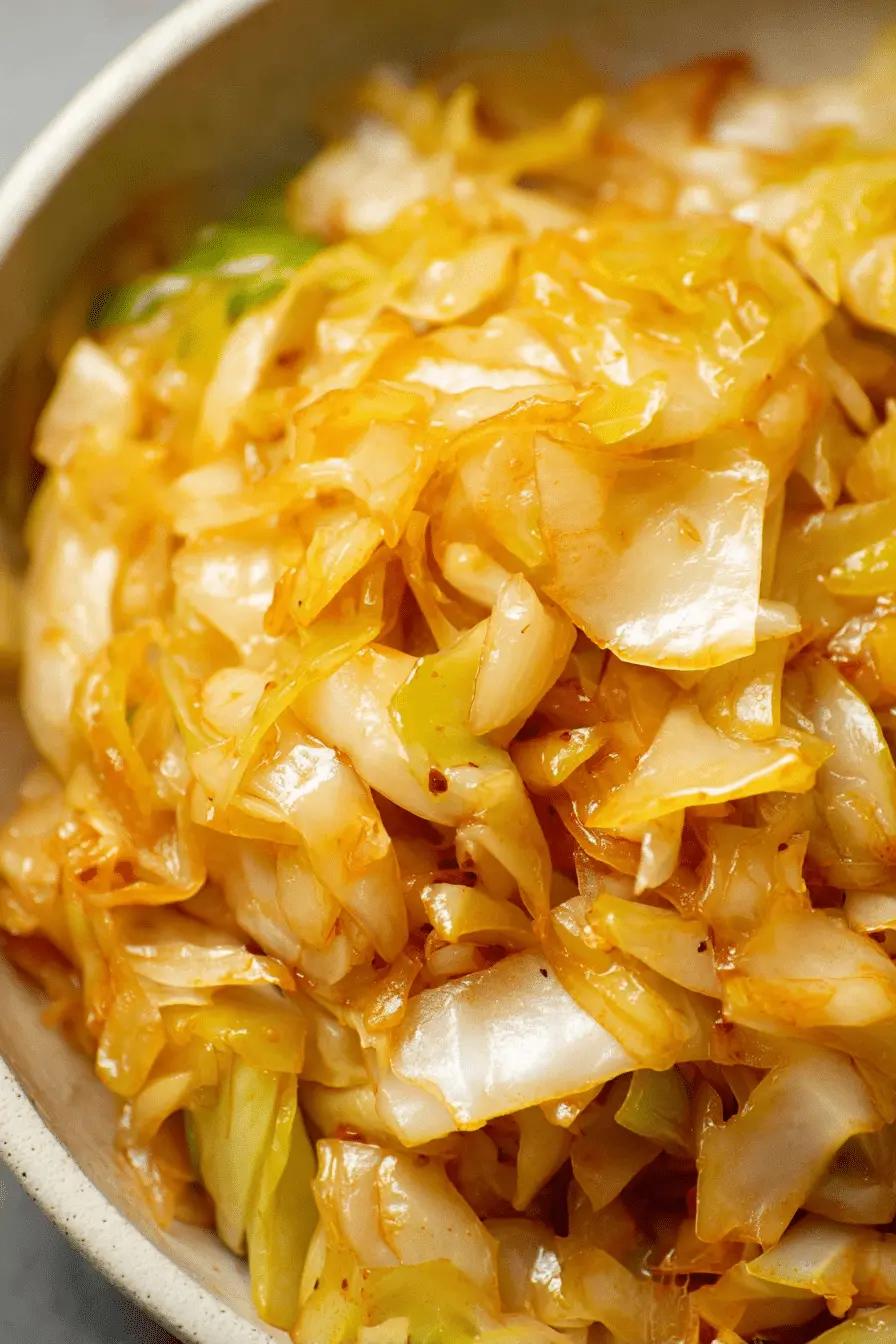
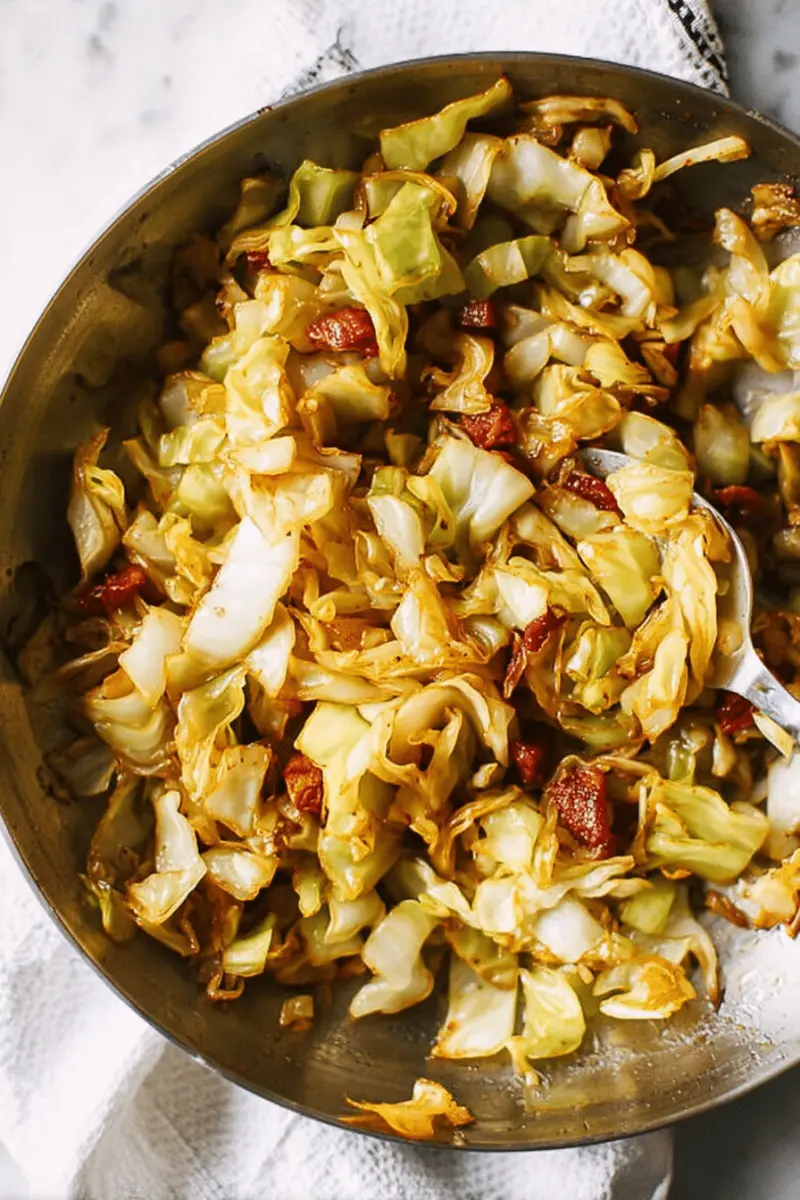
What I love most is the texture contrast: bright, slightly crunchy ribbons turning tender with edges that caramelize to golden-brown. The smell—sweet onion, a hint of smoky paprika, and butter—fills the kitchen fast. If you keep the steps simple and the heat steady, this dish consistently comes out buttery, savory, and satisfying.
Below I walk through why this works for busy weeknights, what to have ready, the chemistry behind caramelization, and a clear step-by-step you can follow even when you’re short on time.
A 30-Minute Side: Why Simple Sautéed Cabbage Works for Busy Weeknights
This recipe genuinely fits into a busy evening because prep and cook time together are under 30 minutes. You only need a handful of ingredients and one skillet, so you don’t waste time sorting through cabinets or washing multiple pans. The minimal ingredient list makes it easy to plan around other parts of the meal without overthinking.
Sensory note: picture bright green ribbons of cabbage hitting hot fat, the pan popping lightly, and the aroma of onions turning sweet. The color shifts to pale gold with darker browned bits—those browned edges are where the flavor lives. I keep the language practical here: this is a real weeknight side you can rely on, not a showpiece.
Everything You Need for Simple Sautéed Cabbage
Before you start, gather your ingredients and tools so the cooking goes smoothly. If you want a fresh, crunchy salad to serve alongside, try our best coleslaw recipe.
- Green cabbage – The main ingredient; holds up well to heat and offers a mild, slightly sweet flavor. Red or Savoy are fine swaps.
- Onion – Adds sweetness and depth when sautéed; yellow or sweet onions work best.
- Butter – For richness and browning; gives that golden, slightly nutty edge.
- Olive oil – Mixed with butter to raise the smoke point and keep the pan from burning.
- Garlic – Adds a sharp aromatic when added near the end of cooking.
- Smoked paprika – Brings gentle smokiness; can be swapped for sweet paprika or ground cumin for different profiles.
- Salt & pepper – Essential for seasoning at multiple stages.
- Equipment – A large skillet (so the cabbage has room to brown), a sturdy spoon or tongs for tossing, and a sharp knife for thin, even slicing.
Preparation tip: slice the cabbage into thin, even strips so it cooks uniformly. Chop the onion so it softens quickly. Having tongs or two spoons makes tossing the cabbage much easier as the pile reduces in the pan.
The Secret to Caramelized, Golden Cabbage
Caramelization and the Maillard reaction are what turn plain cabbage into something savory and slightly sweet. When sugars and amino acids on the cabbage surface meet hot fat and heat, they form new flavor compounds and brown color. That’s the chemical work behind the delicious crust and nutty aroma.
Practical tips to encourage browning:
- Start with a hot pan and enough fat so the cabbage makes steady contact with the surface—this encourages the Maillard reaction rather than steaming.
- Don’t overcrowd the skillet; if the cabbage is piled up, it will steam and stay pale instead of developing golden edges.
- Stir and toss frequently enough to get even browning but not constantly—give the cabbage a chance to stay in contact with the hot surface for short spells so those brown bits can form.
Imagine the smell of faintly sweet caramel and roasted vegetables coming off the pan—that’s the Maillard reaction working. Those browned edges add the savory backbone that keeps this side from tasting one-note.
Why Heat and Fat Matter for the Best Texture
Heat controls texture: higher heat speeds evaporation and encourages browning, while lower heat leads to softer, steamed cabbage. Fat helps in two ways: it transfers heat evenly across the cabbage surface and acts as a flavor carrier, making seasonings taste fuller. Using butter plus a splash of oil balances flavor and increases the cooking temperature before burning.
Some technical detail: butter provides delicious milk solids that brown and add nuttiness, but its smoke point is relatively low. Mixing in oil raises that point, allowing you to cook at a temperature high enough for browning without burning the butter. Fat also helps distribute heat so the cabbage cooks evenly instead of just softening on the edges.
If you want to practice similar pan technique elsewhere, try it on mushrooms—the method is nearly identical and yields great results: savory garlic mushrooms with spinach.
How to Make Simple Sautéed Cabbage (Step-by-Step)
- Heat your large skillet over medium-high. Add the butter and olive oil so the fat is hot but not smoking.
- Add the chopped onion and sauté for about 3 minutes, stirring occasionally, until the onion is translucent and starting to soften.
- Add the sliced cabbage to the pan. Toss or stir to coat it in the hot fat; it will look like a lot at first but will wilt down as it cooks.
- Keep the heat at medium-high to encourage some browning. Stir or toss every minute or so; cook until the cabbage is as tender as you like—usually about 10–15 minutes. Aim for mostly tender with some golden-browned edges.
- When the cabbage is nearing your preferred tenderness, add the smoked paprika and the minced garlic. Cook for another 1–2 minutes so the spices bloom and the garlic softens without burning.
- Season with salt and pepper to taste and serve immediately while still warm and glossy from the butter.
Troubleshooting (short, scannable list):
- If the cabbage is releasing too much water and not browning: raise the heat slightly and give the pan a gap to evaporate liquid, or cook in batches so pieces contact the pan.
- If the garlic tastes bitter: you added it too early—add garlic only at the end so it softens but doesn’t burn.
- If the pan is smoking or butter is burning: lower the heat and add a splash more oil to cool the surface.
I find that adjusting heat by small increments and tasting as you go makes the biggest difference. I also often remove a small taste as a test for seasoning before plating.
Pro Tip for simple sautéed cabbage: Spice Swaps & Flavor Boosts
Pro-Tips, Troubleshooting, and Variations are listed as bulleted lists for quick scanning.
- Smoked paprika swap: use sweet paprika for milder flavor, ground cumin for warm earthiness, or a pinch of chili flakes for heat.
- Herb additions: finish with chopped parsley, chives, or dill for freshness.
- Acid finish: a squeeze of lemon or a splash of apple cider vinegar brightens the dish right before serving.
- Protein boost: add a handful of cooked bacon, sausage, or crispy tofu toward the end for a heartier plate (for a heartier option, consider adding some flavor with fried cabbage with sausage).
- International twists: for an Asian profile, swap smoked paprika for toasted sesame oil and soy sauce and add grated ginger; for Eastern European notes, finish with caraway seeds and a touch of vinegar.
How to Store, Reheat, and Use Leftover Sautéed Cabbage
Store leftovers in an airtight container in the refrigerator for up to three days. Cooling quickly and keeping the container sealed helps maintain flavor and texture.
- Reheat on the stovetop in a skillet over medium heat with a small splash of oil or butter to refresh the texture; the microwave works for convenience but can make cabbage softer.
- Use leftover sautéed cabbage as a filling for tacos or sandwiches, toss it into fried rice or noodles, or mix it into grain bowls for extra vegetables.
- Creative reuse: add leftovers to a saut stir-fry or heat and serve alongside braised meats—leftover sautéed cabbage pairs well with slow-cooked beef or pork dishes. Leftover sautéed cabbage can be delicious in other dishes, like crockpot corned beef and cabbage.
Nutritional Insights and Health Benefits of Sautéed Cabbage
Cabbage is low in calories but rich in vitamin C and K, and it provides fiber that supports digestion and a feeling of fullness. Cooking reduces some vitamin C compared to raw cabbage, but sautéing quickly in a hot pan preserves more nutrients than long boiling.
Beyond vitamins, cabbage contains antioxidants and phytochemicals linked to overall health. This side is naturally gluten-free and can be made vegan by swapping butter for a plant-based alternative. Because it’s high in fiber and low in calories, it’s a useful vegetable to include when you want a satisfying but light accompaniment.
Serving Suggestions
Serve this sautéed cabbage alongside roasted or grilled chicken, pan-seared pork chops, or a flaky white fish. It also works well with grains—scoop it over farro or brown rice—or use as a warm topping for sandwiches and tacos.
Frequently Asked Questions
How do I know when the cabbage is done cooking?
The cabbage is done when it becomes tender but still has a bit of crunch. It should be golden in color, and you can cook it for about 10-15 minutes after adding it to the skillet.
Can I use a different type of cabbage for this recipe?
Absolutely! While green cabbage is recommended, you can also use red cabbage or Savoy cabbage for different flavors and colors.
What can I serve sautéed cabbage with?
Sautéed cabbage makes a great side dish for meats like chicken, pork, or fish. It can also be served alongside grains or as a topping on tacos or sandwiches.
How should I store leftovers?
Store any leftover sautéed cabbage in an airtight container in the refrigerator for up to 3 days. You can reheat it in the microwave or on the stovetop.
Can I make this recipe vegan?
Yes! To make it vegan, simply swap the butter for a plant-based alternative and omit the smoked paprika if it contains any non-vegan ingredients.
Recipe Card
The Simple Sautéed Cabbage I Make Every Week (Ready in 30 Min)
- Prep
- 10 min
- Cook
- 20 min
- Total
- 30 min
- Serves
- 6
- Calories
- 87 kcal
- Carbs
- 11.00 g
Ingredients
- 1 medium headgreen cabbage (cored & sliced into thin strips)
- 1 mediumonion (chopped)
- 2 tablespoonsbutter
- 1 teaspoonolive oil
- 2 clovesgarlic (minced)
- 1 teaspoonsmoked paprika
- —Salt & pepper (to taste)
Instructions
- 1
Prep the cabbage and chop your onion. I just slice the cabbage thin (cut out the core) and chop the onion like usual.
- 2
Add the butter and oil to a skillet over medium-high heat. Sauté the onion for 3 minutes.
- 3
Add the cabbage to the pan and toss/stir it as best as you can (use 2 spoons or tongs to make it easier). Stir/toss it often and let it cook until it's just about as soft as you want it (about 10-15 minutes).
- 4
Add in the paprika and garlic. Cook it for a couple more minutes. If the cabbage starts to brown too quickly, turn the heat down.
- 5
Season with salt & pepper as needed and serve immediately.
You might also like
Reviews
Be the first to review this.