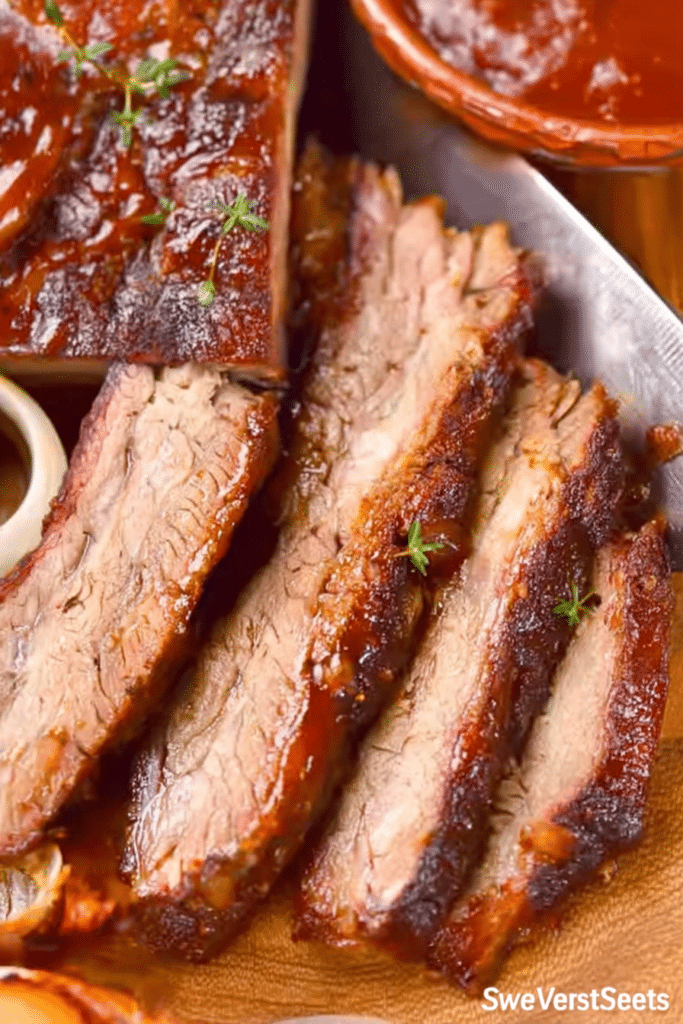
I’ve made this slow cooker beef brisket more times than I can count for weekend gatherings and casual dinner parties — it’s the kind of dish I set in my slow cooker in the morning and forget about until guests arrive. The low-and-slow approach gives you time to focus on the rest of the menu and your company, while the brisket does the heavy lifting and rewards you with deep, braised flavor and tender meat that slices beautifully.
When I pull the brisket from the cooker, the kitchen smells faintly sweet and smoky; the edges are darkened from the final broil and the center is silky when you slice it across the grain. It’s a visually impressive centerpiece — glossy, slightly charred on the edges, and easy to portion for a crowd. Early on I learned to save some of the cooking juices and use them in the finishing sauce — that step makes the difference between a good brisket and one guests ask for seconds of.
I’m writing this for hosts who want a straightforward plan: simple prep, predictable timing, and a few finishing touches that make the brisket feel special. I’ll share the equipment and ingredient essentials, exactly how I get fork-tender results, a reliable sauce strategy, and simple ways to serve leftovers that keep the party going.
Before we dig into the how-to and my favorite tips, a quick note: if you like hearty, long-cooked beef dishes, you might also enjoy this slow cooker beef stew for another delicious option.
If you love hearty dishes, try our slow cooker beef stew for another delicious option.
Why this slow cooker beef brisket is perfect for hosts and parties
This brisket recipe is built for busy hosts who want big flavor with minimal babysitting. Slow cooking means you can prep the night before or the morning of your event and let the machine do the rest. It serves a crowd without a complicated finish, and the final broil gives it the restaurant-style char that guests notice.
Practical benefits to keep in mind:
- Hands-off cooking frees you to prep sides and spend time with guests instead of hovering over the stove.
- The recipe scales well; a larger brisket means more mouths fed with the same amount of effort.
- Layered seasoning and a finishing sauce deliver a glossy, sticky exterior that photographs and tastes like you spent hours tending it.
Everything You Need for Slow Cooker Beef Brisket
Gathering the right ingredients and tools upfront makes the day-of process smooth. Smell the spice rub as you mix it — that aroma tells you flavor is already building. Below I describe what each component contributes and offer swaps to suit different global flavor profiles.
- * Beef brisket – The star cut; look for good marbling for the richest flavor. If you want a leaner mood, pick a flat cut but expect slightly less sauce absorption.
- * Garlic & onion powders – Built-in savory backbone that carries through the long cook.
- * Smoked paprika and chili powder – Add color and a warm, smoky note; swap for ancho or chipotle for deeper smoke.
- * Brown sugar and molasses – Provide caramelization and sweetness that becomes sticky when broiled; you can reduce sugar for less sweetness or swap to maple for a different profile.
- * Acid (vinegar) – Balances the sauce and cuts richness; apple cider vinegar is classic, but rice vinegar gives a milder tang for Asian variations.
- * Worcestershire and soy sauce – Add umami; omit soy for gluten-free versions or use tamari as a substitute.
- * Hot elements (cayenne, cracked red pepper) – Provide heat; adjust to taste or use a chili paste for more complex spice.
- * Olive oil – Helps the rub adhere and promotes browning if you sear first.
- * Garlic cloves (fresh) – Fresh aromatics that deepen during the braise; substitute with garlic paste in a pinch.
- * Equipment: slow cooker with tight-fitting lid – A 6-quart cooker works well for multi-pound briskets. If you have a programmable cooker, use the low setting for best tenderness. Consider a model with a sear function or removable insert for a quick oven finish.
- * Flavor variations – Swap the spice rub for jerk seasoning for a Caribbean twist, or add five-spice and hoisin elements for an Asian-style brisket. For another take on slow-cooked beef flavors, explore slow cooker Korean beef to see how sweet-salty-glazed profiles differ in technique and spice balance.
The Secret to Fork-Tender Brisket
The real secret is patience: low heat over many hours breaks down connective tissue and renders fat into silky juices. Marbling matters — a well-marbled point cooks down into mouth-coating richness, while a lean flat can be excellent when you avoid overcooking and preserve moisture.
Key checkpoints and troubleshooting I use in my kitchen:
- Low and slow is your baseline — I cook most briskets on low so the collagen has time to convert to gelatin without drying the meat.
- Check for fork-tenderness, not time — I start testing for doneness an hour before the nominal finish time; the brisket should pull apart with little resistance.
- Rest before slicing – I always rest the brisket at least ten minutes after broiling; it helps the juices redistribute so slices stay moist.
- Troubleshooting – If the brisket is tough, continue cooking and check every 30–45 minutes; if it’s drying, baste with reserved cooking juices and reduce any final high-heat time.
How the BBQ Sauce Builds Deep, Sticky Flavor
Think of the sauce as a layering agent: some goes into the cooker to flavor the meat during the braise, and some is reserved and concentrated with cooking juices for the final glaze. Sugar in the sauce caramelizes under high heat, creating that sticky, lacquered finish that makes guests reach for seconds.
Flavor mechanics I focus on:
- Sweet components (brown sugar, molasses) react with high heat to form a glossy crust during broil or grill finish.
- Acidity from vinegar cuts through richness and brightens the overall profile — it keeps the sauce from feeling cloying.
- Umami boosters (soy, Worcestershire) add savory depth so the sauce tastes complex rather than just sweet.
- Layering matters: a portion of the sauce goes into the slow cooker, and the remaining sauce is reduced with pan juices to intensify flavor before you baste and char the exterior. For a different savory-sweet profile, compare these techniques to those used in slow cooker Korean beef for insight into how soy and sugar balances can shift the dish.
How to Make Slow Cooker Beef Brisket (Step-by-Step)
- Prepare your slow cooker by spraying or lining the insert so cleanup is simple.
- Combine the dry seasoning and rub it all over the brisket; pat the meat so the rub adheres firmly.
- If you like, sear the brisket briefly in a hot skillet with oil to deepen the crust before braising — this is optional but adds color.
- Mix the sauce components in a bowl and pour about half into the slow cooker, covering the brisket. Reserve the other half of the sauce in the fridge for finishing.
- Cover the slow cooker and cook on low for the longer window (the most reliable option for tenderness) or on high for the shorter window if you’re pressed for time; check for fork-tenderness toward the end of the cook time.
- When the brisket is fork-tender, preheat your oven’s broiler (or prepare a hot grill). Transfer the brisket to a foil-lined baking sheet and spoon a little of the slow cooker juices into the reserved sauce to thin and flavor it.
- Baste the brisket with the sauce, then broil or grill until the edges begin to char and the sauce sets; baste again and finish until the top is sticky and slightly crisp.
- Let the brisket rest for about ten minutes to let juices settle, then slice thinly across the grain and serve with the remaining sauce on the side.
Pro Tip for slow cooker beef brisket: Adjusting Time, Moisture & Heat
- Adjust time by weight – Larger briskets need more time; I start checking earlier but expect long cooks for big pieces.
- Control moisture – If your cooker runs hot or the brisket is lean, add a splash of beef stock or water to keep the environment humid and to protect against drying.
- Know your cooker – Older slow cookers can run hotter; I reduce the low setting time slightly if my unit runs warm.
- Finish intensity – Broil briefly to caramelize the sauce; too long under the broiler will dry the edges, so monitor closely and baste once or twice.
- I learned this the hard way — a brisket that’s slightly underdone can always benefit from another hour on low; a dry brisket is much harder to rescue, so err on the side of moisture.
Easy Serving Ideas & Flavor Variations (tacos, sandwiches, salads)
This brisket is an entertainer’s dream because the leftovers are as useful as the main event. Here are versatile serving ideas and ways to twist the flavors.
- Classic platter – Thin slices served with extra sauce, coleslaw, and roasted vegetables for a sit-down meal.
- Sandwiches – Pile sliced brisket on crusty rolls with pickles and slaw; you can also use the meat for crockpot French dip sandwiches for a different finish — they’re a crowd-pleasing use of leftovers.For another great serving idea, consider making crockpot French dip sandwiches with leftover brisket.
- Tacos & bowls – Shredded brisket with fresh cilantro, diced onion, and avocado in tortillas, or over rice with pickled vegetables for a bowl.
- Salads – Warm brisket slices over a bed of peppery greens, roasted squash, and toasted seeds make a hearty meal-in-a-bowl.
- Global variations – Try an Asian-style glaze with hoisin and toasted sesame, or season the rub with smoked chile and allspice for a Caribbean-leaning brisket.
How to Store, Reheat and Make-Ahead Slow Cooker Beef Brisket
Storing and reheating correctly preserves texture and flavor so you can serve brisket later without losing what makes it special. When I plan ahead, I often make the brisket a day early — the flavors meld overnight and slicing is cleaner when the meat is slightly chilled.
- Refrigeration – Store sliced brisket in an airtight container with a little of the cooking sauce to keep it moist; it keeps well in the fridge for a few days.
- Freezing – For longer storage, freeze brisket in portions with sauce. Thaw in the fridge before reheating.
- Gentle reheating – Reheat slowly with added cooking juices or a splash of stock in a covered pan or low oven to prevent drying; avoid high direct heat, which tightens proteins and expels moisture.
- Make-ahead strategy – I sometimes let the brisket cool in its juices, refrigerate overnight, then reheat and broil briefly to refresh the glaze just before serving. If you want tips on storing leftovers for best results, this guide on storing leftover brisket is a good reference.Learn more about storing leftover brisket to ensure it stays tasty.
Frequently Asked Questions
Can I use other cuts of beef for this recipe?
Yes, while brisket is the traditional choice, cuts like chuck roast or flank steak can also work well for slow cooking. Just adjust the cooking time as needed based on the cut.
How do I know when the brisket is done cooking?
The brisket is done when it is fork-tender and easily pulls apart. This usually takes about 8-10 hours on low or 4-5 hours on high in the slow cooker.
Can I make the BBQ sauce from scratch?
Absolutely! Making your own BBQ sauce can add a personal touch. Feel free to mix your favorite ingredients to create a sauce that suits your taste.
What should I serve with slow cooker beef brisket?
Brisket is versatile! It pairs beautifully with sides like coleslaw, baked beans, or can be used in sandwiches, tacos, or salads.
How do I store leftover brisket?
Store leftover brisket in an airtight container in the fridge for up to 3 days. You can also freeze it for longer storage, up to 3 months.
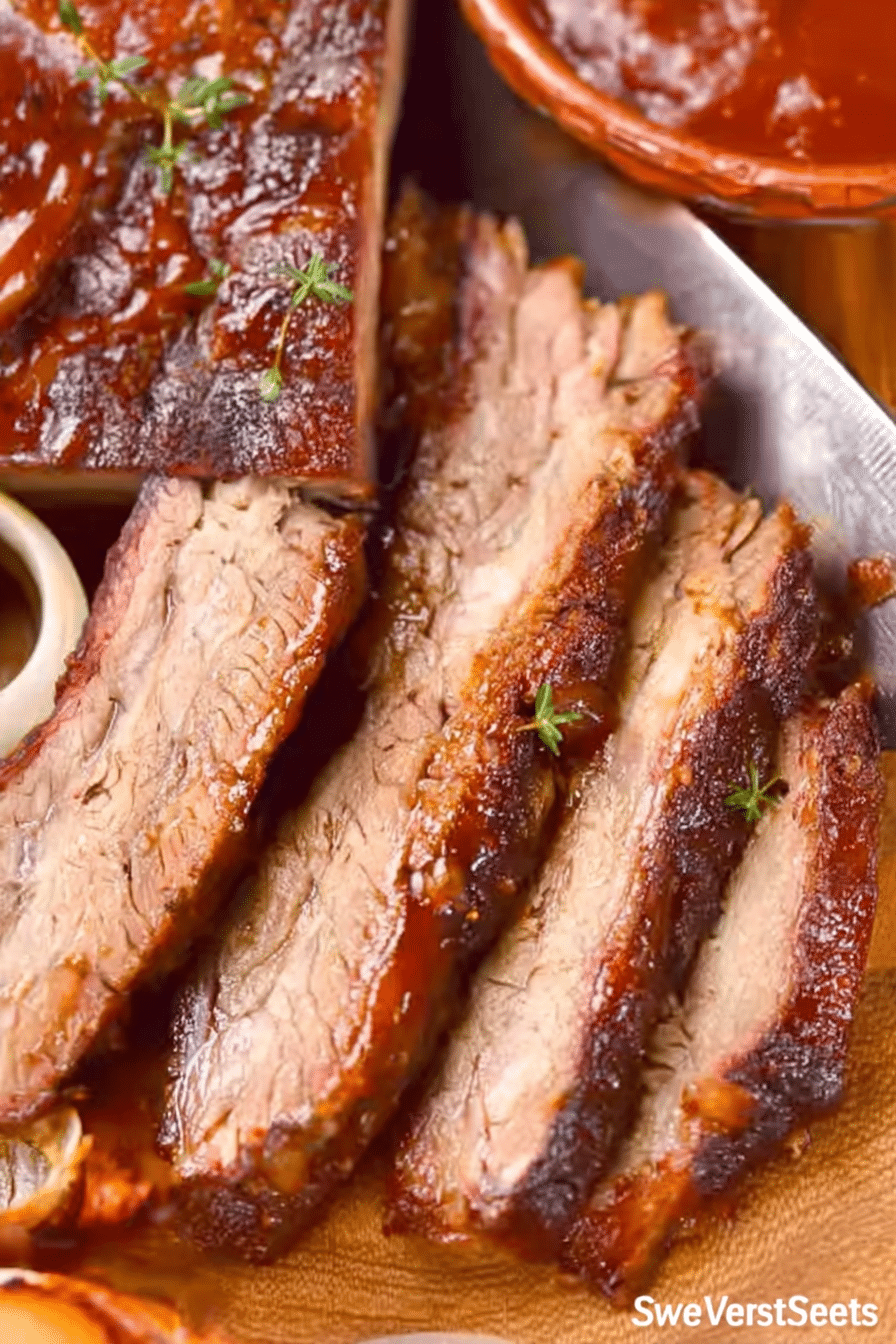
Slow Cooker Beef Brisket
Ingredients
Method
- Spray the inside of a 6-quart slow cooker with cooking spray.
- Combine seasoning ingredients into a bowl. Pat dry the beef brisket and rub well the seasoning all over it.
- Mix the sauce ingredients in a bowl until combined.
- Add the beef brisket to the slow cooker and completely cover it with half of the sauce.
- Refrigerate the remaining sauce to use later.
- Cover slow cooker with the lid and cook on low for 8-10 hours, or high setting for 4-5 hours, or until fork-tender.
- Preheat oven to 400 degrees F.
- When done, transfer the brisket onto a baking sheet lined with foil.
- Pour 1/2 cup of the slow cooker juices into the remaining sauce.
- Baste brisket with the sauce and broil (or grill) for about 10-15 minutes or until it begins to char and crisp on the edges. Baste again and broil (or grill) until sticky on top and charred on the edges.
- Let it rest for 10 minutes before serving.
- To serve, slice the brisket thinly across the grain and serve with the remaining sauce.