- Prep
- 20 min
- Cook
- 240 min
- Total
- 260 min
- Serves
- 6
- Calories
- 507 kcal
- Carbs
- 35.00 g
Introduction
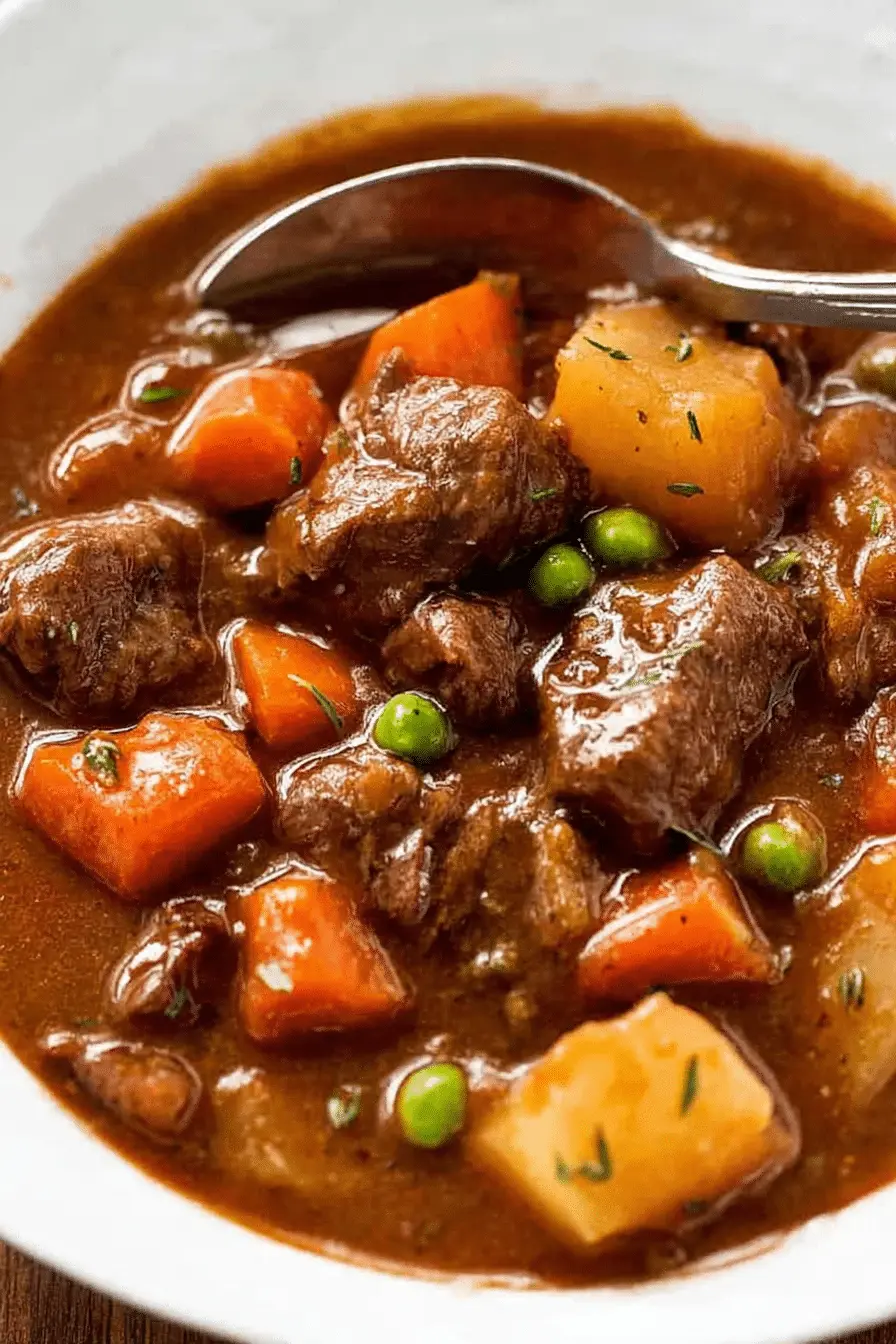
There’s something about a pot of beef stew simmered slowly that feels like a warm blanket on a cold night. I make this slow cooker beef stew all fall and winter: the house fills with the deep, roasted aroma of browned beef, the sweet scent of onions and garlic, and a hint of red wine that becomes mellow and almost raisiny as it cooks. It’s the kind of dish that turns busy weeknights into cozy dinners and sends leftovers to work the next day like a little jar of home. Using the slow cooker makes this recipe effortless: brown the meat, toss everything into the crock, go about your day, and come home to a stew that’s deep, rich, and spoonable. The long, low heat breaks down connective tissue in cheaper cuts of beef and turns them into butter-soft bites. This recipe is one I’ve dialed in after several winters of tinkering — little tweaks like browning in batches, adding a splash of wine to deglaze the pan, and stirring in cold butter at the end make a measurable difference in texture and flavor. For another comforting dish, check out our slow cooker chicken and dumplings.Ingredients for the Perfect Beef Stew
- Stew beef – the foundation: a tougher, well-marbled cut that becomes tender with slow cooking.
- Onions – provide sweetness and aromatic depth when softened.
- Garlic – adds savory warmth and a fragrant backbone.
- Red wine – a splash brightens the stew and loosens the browned bits from the pan.
- Beef broth – supplies the liquid body and savory base.
- Worcestershire sauce – brings umami and a faint tang that rounds flavors.
- Tomato paste – deepens color and adds concentrated, slightly sweet tomato flavor.
- Carrots – sweetness and texture; they should hold shape but become tender.
- Yukon gold potatoes – creamy, buttery, and forgiving; they thicken slightly as they break down.
- Bay leaves & rosemary – aromatic herbs that give a savory lift without overpowering.
- Frozen peas – stirred in at the end for a pop of color and sweet freshness.
- Olive oil & butter – for browning and finishing; butter whisked in at the end gives a velvety sheen.
- Flour – used to lightly dust the beef so it browns better and helps initial thickening.
- Optional color/finish agents – a few drops of gravy darkener if you like a darker-looking gravy.
Step-by-Step Instructions
Yield: 6 servings. Prep time ~20 minutes; cook time 3½–8 hours depending on setting. Follow these steps closely for the best, most reliable result.- Trim and cut the beef: Cut 2½ pounds of stew meat into roughly 1-inch cubes, trimming away any large, loose pieces of fat. Leave fine marbling; that fat melts into flavor as it cooks. Season the cubes with ½ teaspoon each of black pepper, garlic salt, and celery salt, then dust lightly with ¼ cup flour. The flour helps the beef brown and gives the stew a little initial body.
- Brown in batches: Heat 3 tablespoons olive oil in a large skillet over medium-high heat. Don’t crowd the pan — crowded meat steams instead of browns. Brown the cubes about 45 seconds per side just to get color. You’re aiming for little browned edges and fond on the pan, not a full crust. Transfer browned beef to the slow cooker as you go.
- Sauté aromatics: Reduce the skillet heat to medium and melt 1 tablespoon cold butter. Add about 2 cups diced yellow onion and sauté for 5 minutes until soft and translucent. Add 4 minced garlic cloves and cook 1 minute until fragrant; you’ll notice the smell switch from sharp to warm and slightly sweet. Add one cup of cabernet sauvignon (or merlot) and scrape the brown bits from the pan with a spatula — that deglazed liquid is pure flavor. Pour the onions, garlic, and wine into the slow cooker.
- Combine the rest: To the slow cooker add the browned beef, 4 cups beef broth, 2 beef bouillon cubes, 2 tablespoons Worcestershire sauce, and 3 tablespoons tomato paste. Stir until the paste is evenly distributed. Add 5 medium carrots cut into 1-inch chunks and 1 lb. baby Yukon gold potatoes halved or quartered. Tuck in 2 bay leaves and a sprig of rosemary.
- Slow-cook: Cover and cook on low for 7½ to 8 hours or on high for 3½ to 4 hours. Low and slow is preferred — the connective tissues in the beef break down into silky strands that feel luxurious on the tongue. If you’re short on time, high works, but check the potatoes and carrots; they can go from tender to mush in a short window, especially on high.
- Finish with peas and thicken if needed: Stir in 1 cup frozen peas during the last 15 minutes so they stay bright and not overcooked. Remove the bay leaves and rosemary stem. If the stew needs thickening, mix ¼ cup cold water with 3 tablespoons cornstarch and slowly whisk it into the hot stew; it will thicken as it comes back to a simmer. Alternatively, you can puree a cup of the cooked potatoes and carrots with a bit of liquid and stir back in for body.
- Mount with butter: Turn off the heat and swirl in 2 tablespoons cold butter to finish — this classic restaurant trick (monter au beurre) smooths out the sauce and gives it a glossy, velvety mouthfeel. If you want the stew darker, add 2–3 drops of gravy master for color only.
- Serve hot: Taste and adjust seasoning. If it tastes flat, add a pinch of salt — acid or salt usually correct balance more than sugar. A splash of red wine vinegar or a squeeze of lemon can brighten a stew that feels heavy.
Tips for Customizing Your Stew (hearty crockpot recipes)
I’ve made dozens of variations of this over the years. Here are practical swaps and flavor twists that actually work in a slow cooker.- Make it Italian – add a teaspoon each of dried oregano and basil, swap the rosemary for thyme, and finish with chopped parsley. A splash of balsamic instead of wine brightens it.
- Go Asian-inspired – use low-sodium soy sauce in place of some Worcestershire, add a tablespoon of toasted sesame oil at the end, and finish with thinly sliced scallions and a teaspoon of grated ginger in the aromatics step.
- Swap the veg – parsnips or turnips are excellent in place of some carrots for an earthier flavor; sweet potatoes add a gentle sweetness but will break down more, so add them later in the cook.
- Richer gravy – brown mushrooms sautéed with the onions deepen umami; they’ll absorb the wine and broth beautifully.
- Make it hearty – add a can of drained beans (cannellini or kidney) in the last hour for extra body and fiber.
Healthy Ingredient Substitutions
Want a lighter or gluten-free version? Small swaps preserve flavor and improve nutrition.- Low-sodium broth – keeps the stew from getting too salty; adjust final seasoning after cooking.
- Lean beef cuts – use chuck trimmed of exterior fat, or for a leaner option use a stewing cut with less marbling and extend low cooking time to keep it tender.
- More veg – bulk up with extra carrots, celery, mushrooms, and beans to reduce the meat-to-veg ratio while keeping it filling.
- Gluten-free – skip the flour dusting and thicken with cornstarch or potato starch (see next section).
- Plant-based option – swap beef for hearty mushrooms, tempeh, or cubed seitan and use mushroom or vegetable broth plus a splash of soy or tamari for umami.
How to Thicken Stew Without Flour
If you or guests are avoiding gluten, these methods give you a thick, satisfying stew without using wheat flour.- Cornstarch slurry – mix cold water with cornstarch (¼ cup water + 3 tablespoons cornstarch is a reliable measure), whisk into the simmering stew and allow it to thicken for a few minutes. It gives a glossy finish.
- Potato or arrowroot starch – use as you would cornstarch; arrowroot tolerates acidic stews a bit better.
- Puree some veg – scoop out a cup of potatoes and carrots, blend with a ladle of broth, and stir back in for natural body and added flavor.
- Beans & lentils – blitzed beans create a thick, creamy texture and add protein and fiber.
Serving Suggestions and Pairings
This stew is comfort food, so lean into rustic, simple accompaniments that soak up the sauce.- Crusty bread – a torn sourdough loaf is perfect for sopping and gives contrast: crisp crust vs. spoonable stew.
- Mashed potatoes – serve stew ladled over creamy mash for a plateful of comfort.
- Rice or egg noodles – great if you want to stretch the meal or feed more people.
- Bright salad – a simple green salad with a lemon vinaigrette cuts through richness.
Storage and Reheating Tips
Leftovers are where stew truly shines. It often tastes better the next day as the flavors meld.- Fridge – store in airtight containers for up to 3 days. It will thicken as it cools; loosen with a splash of broth when reheating.
- Freezer – cool completely, then freeze in portions for up to 3 months. Thaw overnight in the fridge before reheating.
- Reheating – gently reheat on the stove over low heat, stirring occasionally. Avoid boiling hard; high heat can make the potatoes break down further and the meat dry out.
- Make-ahead – assemble in the slow cooker insert the night before, keep covered in the fridge, then pop it into the crock and cook the next day (allow extra time to come to temperature if starting cold).
FAQ
Can you put raw beef in a slow cooker for stew? Yes, you can put raw beef in a slow cooker! It's actually how this recipe starts. Just add the beef to the base and top it with your cooking liquid and vegetables. How can I make the best beef stew in a slow cooker? Making the best slow cooker beef stew is easier than you think! Start by trimming the beef, then add your liquids, veggies, and let it cook until everything is tender and delicious. What are common mistakes when making beef stew? Some common mistakes include not searing the beef first, overcooking the vegetables, and forgetting to add an acidic component like wine or vinegar. Is it better to cook beef stew on high or low in a crockpot? It's generally better to cook beef stew on low for a longer time, as this allows the tough cuts of meat to tenderize properly. How can I thicken my beef stew without flour? You can thicken your stew by using cornstarch, potato starch, or pureeing part of the stew. Adding beans or lentils can also help achieve a thicker consistency.Conclusion: Why This Recipe is a Must-Try
If you’re after a truly cozy, no-fuss meal that rewards a little patience with big flavor, this slow cooker beef stew delivers every time. It’s forgiving, adaptable, and stores beautifully — a dependable weeknight hero or a relaxed weekend centerpiece. Follow the browning, deglazing, and monter au beurre tips and you’ll notice a richer sauce and silkier mouthfeel versus skipping those steps. It’s the kind of meal that makes the house smell like care and sends people back for seconds. If you love traditional flavors, don't miss out on this hearty old-fashioned beef stew. Go ahead: brown the beef, set the crock, and come home to a bowl that feels like a hug. And if you try a variation — Italian herbs, mushrooms, or a splash of balsamic — tell me how it turned out; I’m always tweaking this one and love swapping notes.Recipe Card
Slow Cooker Beef Stew: The Ultimate Cozy Family Recipe for Fall
- Prep
- 20 min
- Cook
- 240 min
- Total
- 260 min
- Serves
- 6
- Calories
- 507 kcal
- Carbs
- 35.00 g
Ingredients
- 2.5 poundsstew meat (see notes)
- 0.5 teaspoonblack pepper
- 0.5 teaspoongarlic salt
- 0.5 teaspooncelery salt
- 1/4 cupflour
- 3-6 tablespoonsolive oil
- 3 tablespoonscold butter (divided)
- 2 cupsyellow onions (diced)
- 4 clovesgarlic (minced)
- 1 cupcabernet sauvignon (or merlot)
- 4 cupsbeef broth
- 2 cubesbeef bouillon
- 2 tablespoonsWorcestershire Sauce
- 3 tablespoonstomato paste
- 5 mediumcarrots (cut into 1-inch chunks)
- 1 poundbaby Yukon gold potatoes (halved or quartered)
- 1 sprigrosemary
- 1 cupfrozen peas
- 1/4 cupcold water (optional)
- 3 tablespoonscorn starch (optional)
- 2-3 dropsGravy Master (optional, adds a richer, darker color)
Instructions
- 1
Cut meat into 1-inch cubes, discard any large pieces of fat. Fat marbleized into the meat is fine!
- 2
Sprinkle beef with black pepper, garlic salt, and celery salt. Toss to coat. Sprinkle flour over the meat and toss again.
- 3
Heat 3 Tablespoons olive oil in a large skillet over medium-high heat. Add the meat in batches, don’t overcrowd the pan. Brown on each side for 45 seconds. Add more oil if needed. Transfer to slow cooker.
- 4
Reduce heat to medium and melt 1 tablespoon of butter. Add onions and cook for 5 minutes. Add garlic and cook for 1 minute. Add a splash of wine and use a silicone spatula to loosen the brown bits in the skillet, this will add more flavor to the stew. Transfer the onions, garlic, and remaining wine to the slow cooker.
- 5
Add all remaining ingredients except for the peas, corn starch mixture, and 2 tablespoons of cold butter.
- 6
Cook on low for 450 minutes or high for 240 minutes, until the vegetables are softened and the potatoes are fork tender.
- 7
Add the peas during the last 15 minutes of cooking. Remove the bay leaves and rosemary stem.
- 8
Optional: To thicken, combine ¼ cup COLD water with 3 Tablespoons of cornstarch. Slowly add it to the stew, stirring to incorporate. It will continue to thicken upon standing.
- 9
Turn off the heat. Swirl in 2 tablespoons of cold butter for a smooth, velvety finish. This is a technique that chefs use called 'Monter au Beurre'. Optional: Add 3 drops of Gravy Master for an even darker color.
You might also like

Reviews
Be the first to review this.