- Prep
- 15 min
- Cook
- 45 min
- Total
- 60 min
- Serves
- 8
- Calories
- 818 kcal
Introduction
I make smoked queso all summer long. Over the years I’ve brought it to tailgates, pool parties, and late-night backyard hangouts, and every time the first thing people do is follow the smoke to the skillet. There’s something about that warm, hickory-scented cloud rolling past the grill that flips casual chips-and-dip into a gathering centerpiece. In my kitchen I’ve learned a few hard lessons — cheese that’s cut too large won’t melt evenly, and too-high heat turns silky into grainy fast. I now cube my cheeses so they melt predictably, keep the smoker low and steady, and stir at polite intervals so the texture stays smooth and glossy. The payoff is a dip that smells like a backyard firepit and looks like molten gold pooling among bright flecks of jalapeño and cilantro. If you want your next game-day spread to be the one guests talk about, smoked queso is the simplest showstopper. It invites sharing, keeps people hovering, and pairs with beer, beer-flavored banter, and stacked plates of barbecue. I’ll walk you through everything I do — from gear and ingredient choices to the small adjustments that tame the heat and keep the queso perfectly saucy.Why Smoked Queso Transforms Game Day and Backyard Cookouts
Smoked queso turns a familiar appetizer into a social moment. Sharing a skillet of molten cheese encourages people to gather close, pass plates, and trade stories between dips of chip and meat. The smoke adds a layer of savory complexity — it amplifies the cheese and meats without masking the bright pop of tomato and chili. Think of it as your standard queso with personality: richer aroma, deeper color, and a bit of crunchy char on a crusty chip that’s irresistibly photogenic.
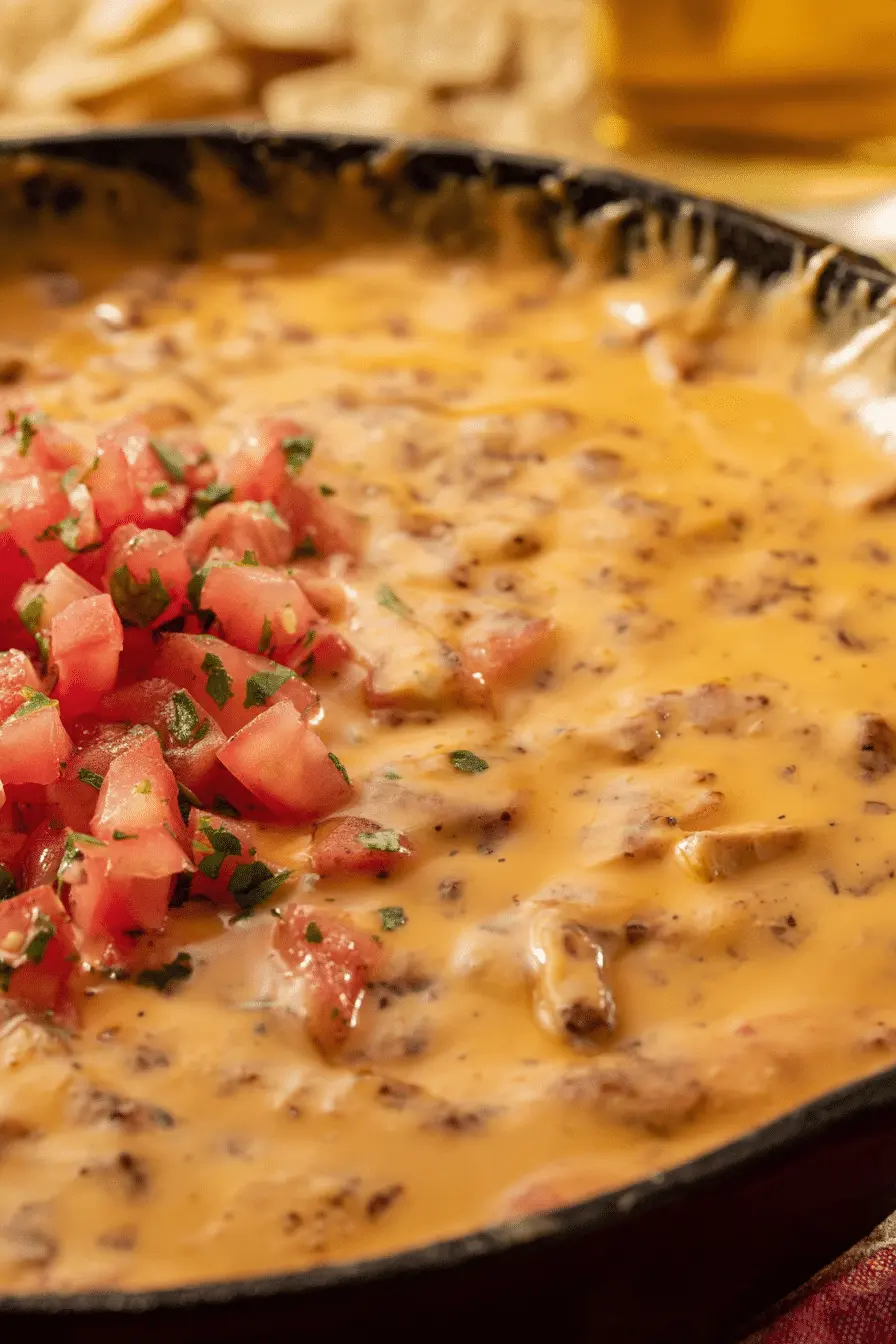
Picture this: a low cloud of smoke, a cast-iron skillet bubbling with creamy cheese, and the first spoonful sending savory steam into the air. Smoky aroma, flecks of green cilantro, and ribbons of melted pepper jack make it both a flavor and visual anchor for any party. It shines at tailgates, block parties, and sunset cookouts — anytime you want one dish that feeds a crowd and keeps people close.
Everything You Need for Smoked Queso
Before you fire up the smoker, line up your ingredients and tools so the build is smooth and the melt is predictable. Quality matters here: fresh cheeses and a good, well-browned sausage will make a huge difference.
- Ground sausage (or ground beef) – Provides savory fat and flavor; swap for leaner meats if you want less grease or use plant-based crumbles for a vegetarian option.
- American cheese – The melting backbone; contributes that silky, uniform texture most people expect from queso.
- Pepper jack – Adds spice and depth; use Monterey Jack for milder flavor or a sharper cheese for more bite.
- Rotel-style diced tomatoes and green chilies – Brightness and acidity to cut the richness; canned chilies are convenient but fresh tomatoes and charred peppers also work for a fresher bite.
- Pickled jalapeños – Controlled heat with tang; fresh jalapeños give crunch while pickled add acidity and mellow heat.
- Garlic powder and salt – Simple seasoning that layers behind the smoke and cheese.
- Cilantro – Stirred in at the end for a clean, herbal contrast to the smoky cheese.
- Milk or beer – Used to adjust consistency if the queso tightens up; beer adds flavor while milk keeps it neutral and creamy.
- Hickory (or oak/mesquite) wood chips – For that authentic barbecue aroma; choose milder woods for a subtler smoke.
- Equipment – A smoker (or grill set up for smoking), a 9×13 aluminum pan, cast-iron skillet, or heavy Dutch oven to hold heat evenly.
If you're a cheese lover, don’t miss our delicious Mexican cheese dip to enhance your spread.
How to Make Smoked Queso (Step-by-Step)
- Preheat your smoker to a steady low heat — I use around 275°F for predictable melting and good smoke absorption. Keep your wood chips on hand to maintain a gentle smoke flow.
- Brown the ground sausage (or your chosen meat) in a skillet over medium heat, breaking it into small crumbles as it cooks. Drain excess fat so the final queso isn’t greasy, but leave a little for flavor.
- Cube the cheeses before adding them to your pan. Smaller, uniform cubes melt faster and more evenly than hunks or shredded piles.
- Combine the cubed cheeses, browned meat, diced tomatoes with chilies, and pickled jalapeños in your skillet or heavy pan. Season with garlic powder and salt. Place the pan in the smoker.
- Smoke for about 30–45 minutes, stirring every 15–20 minutes to encourage even melting and to check consistency. Add milk or beer a splash at a time if the queso looks too tight — you want a pourable, glossy texture.
- In the last five minutes of smoking, stir in chopped cilantro so it stays bright and doesn’t wilt completely into the cheese.
- Serve hot from the skillet so the cheese stays melty. For a game-day spread, pair with chips, grilled tortillas, or spoon it over nachos.
Pair your smoked queso with some spicy Rotel cheese sausage balls for a delicious game day spread.
The Secret to Silky Queso: Cheese Choice & Cut
Texture comes down to two things: the cheese you choose and how you cut it. American cheese gives that dependable, emulsified creaminess because it contains stabilizers that prevent separation. Pepper jack brings flavor and a little kick, but it’s less forgiving—cut it smaller so it melts without clumping.
Fat content matters: higher-fat cheeses melt into silkier sauces. If you use leaner cheeses, expect to add more liquid and stir more often. I cut cheeses into small, even cubes so each piece melts at the same rate; uneven sizes give you pockets of unmelted cheese and overcooked bits.
Smoking Technique That Works for Cheese: Temp, Wood & Time
- Temperature: Keep the smoker low and steady around 275°F. Too hot and the cheese can separate or blister; too cool and you’ll waste time without good smoke absorption.
- Wood choice: Hickory is my go-to for robust barbecue flavor that stands up to sausage and chili; choose oak for a balanced smoke or mesquite for a stronger, more assertive note. Use mild wood if you prefer the cheese flavor to dominate.
- Smoke schedule: Add chips at the start and every 20 minutes or so to maintain a gentle smoke. You want a slow, steady curl of smoke — not a dense fog — so the cheese picks up savory notes without tasting burnt.
- Visual cues: Look for glossy, fully melted cheese with small streams of steam rising; the surface should be smooth, not separated or oily. Stir to integrate any pockets that seem thicker.
How to Control Heat: Tex‑Mex Spice Levels and Jalapeño Tips
- Jalapeño form matters: pickled jalapeños bring tang and mellow heat, fresh jalapeños give vegetal brightness and more immediate heat, and roasted jalapeños add smoky sweetness. Choose based on the flavor you want to highlight.
- Balance the spice: If you want to tone down heat, remove ribs and seeds from fresh jalapeños; to increase it, keep the seeds or add a pinch of cayenne or diced habanero sparingly.
- Cream to calm: Stirring in a bit more milk or beer will soften spice without removing it. Dairy buffers capsaicin, so creamier versions feel milder on the tongue.
- Adjust gradually: Always add heat a little at a time and taste. It’s easier to add more kick than to take it away.
Pro Tip for Smoked Queso: Lighter, Vegan & Customization Swaps
Note to the writer: The following Pro-Tips, Troubleshooting, and Variations are presented as bulleted lists for scannability.
- Vegan swaps – Use melting-friendly vegan cheeses (cultured cashew-based or certain soy-blend melts) and plant-based sausage crumbles; coconut cream or unsweetened non-dairy milk will adjust consistency.
- Lighter options – Choose lean ground turkey or turkey sausage, use lower-fat cheese blends that still melt well, and increase the proportion of diced tomatoes to lighten the overall richness.
- Dairy-free choices – Fortify texture with soaked cashews blended into a creamy base, then add a vegan melt for stretch; mis en place makes this smooth and fast.
- Flavor swaps – Swap hickory for applewood for a fruitier smoke, or add smoky paprika for extra color and depth without extra smoking time.
Pro-Tips
- Cube cheeses uniformly for the most predictable melt.
- Brown and drain the sausage well so the final queso isn’t greasy, but don’t strip all the fat — a little carries flavor and mouthfeel.
- Keep milk or beer on hand to adjust consistency quickly; add small amounts while stirring.
- Use a heavy pan (cast iron or Dutch oven) for even heat distribution and extended hold time at the table.
Troubleshooting
- Grainy or separated cheese: Reduce heat and whisk in a splash of milk or beer off the heat until smooth.
- Too thin: Let it sit in the smoker for a few minutes without stirring to thicken, or add more cubed American cheese and stir until integrated.
- Not smoky enough: Add a short additional burst of smoke at the end — don’t overdo it; a little goes a long way.
- Too spicy: Stir in more dairy (milk/cream) or add a spoonful of neutral yogurt if you’re comfortable with tang to mellow heat.
Variations
- Green-chile smoked queso: Use roasted Hatch chiles and reduce tomatoes for a bright, vegetal profile.
- BBQ queso: Fold in a little barbecue sauce and swap hickory for mesquite for a saucier, tang-forward dip.
- Nacho skillet: Stir in black beans and corn near the end and finish under a broiler for a bubbly toppled version.
How to Store, Reheat, and Serve Smoked Queso (Pairings & Presentation)
Leftovers are still delicious when handled correctly. Store cooled queso in an airtight container in the refrigerator for up to three days. To reheat, warm gently on the stovetop over low heat or microwave in short bursts, stirring between intervals. Add a splash of milk or beer as it comes back up to temperature to restore creaminess.
For serving, present the queso in the same cast-iron skillet you smoked it in — it keeps heat longer and looks rustic and inviting. Surround the skillet with sturdy tortilla chips, grilled flatbreads, sliced radishes, or pickled vegetables for contrast. If you want an alternative idea for your next party, consider pairing it with a layered dip option: for a unique twist, consider trying our layered queso blanco and taco dip for your next gathering.
Finish with fresh cilantro and a few extra pickled jalapeños on top for color and a hit of tang. Set the skillet on a trivet in the center of the table and let guests gather — that communal vibe is why I keep coming back to this recipe for every big game and summer barbecue.
Frequently Asked Questions
Can I use a different type of cheese for smoked queso?
Absolutely! While American and pepper jack cheeses are recommended for their melting properties, you can experiment with cheeses like cheddar or Monterey Jack for different flavors.
How do I make smoked queso spicier?
To add more heat, consider using more jalapeños or even adding diced habaneros or a dash of hot sauce. Adjust to your taste preference!
What if I don't have a smoker?
If you don't have a smoker, you can replicate the smoky flavor by using liquid smoke or by cooking it on a grill with the lid closed, adding wood chips in a smoker box.
How should I store leftovers?
Store any leftover smoked queso in an airtight container in the refrigerator for up to 3 days. Reheat gently on the stovetop or in the microwave, adding a splash of milk or beer if it thickens.
Can I make smoked queso vegan?
Yes! You can substitute the cheeses with vegan alternatives, use plant-based sausage, and opt for coconut cream for added creaminess.