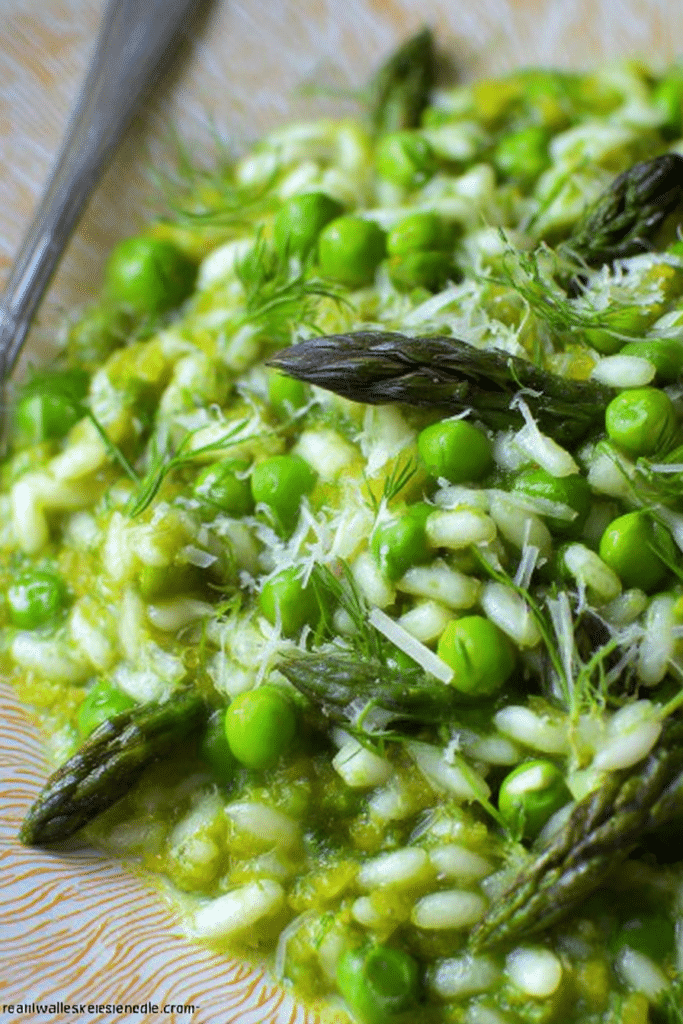
I make this spring green risotto when I want a dinner that feels special but doesn’t steal my entire evening. In my kitchen it’s a reliable weeknight hero: bright, green, and full of fresh spring flavors. I like that it comes together from pantry-friendly staples plus a few seasonal bits that add brightness.
Over the years I’ve learned how to keep risotto friendly for weeknights — a little prep, a few focused minutes at the stove, and you have a creamy, satisfying meal. I use a quick blanch for the asparagus and peas so the color stays electric, and a pea-parsley purée to keep the whole pot vivid without adding heavy cream.
I appreciate recipes that respect time without skimping on taste, and this one does exactly that. The aroma of fennel and shallot softening in butter and oil is enough to let you know dinner is on its way; the final pop of lemon and grated cheese finishes the plate with a bright, comforting note.
Why this spring green risotto is ideal for busy weeknights
This risotto fits a busy schedule because the total time is under an hour and much of the work is hands-on stove time that you can pair with a quick salad or a glass of wine. The ingredients are straightforward and often on-hand, and you can prep the veg in advance to shorten the evening fuss. The result is a bowl that looks and smells like spring: glossy, herb-scented, and the kind of green that makes a weekday dinner feel celebratory.
If you’re looking for a complete meal, consider pairing this risotto with a light spring vegetable soup.
Everything You Need for Spring Green Risotto
Gather a few fresh vegetables, simple pantry staples, and a couple of tools that make risotto easier and faster. Below I explain why each ingredient matters and what you can swap if needed.
- Arborio rice – The short-grain rice that releases starch and creates that creamy risotto texture; if you need a different mouthfeel, try a short-grain alternative (see variations).
- Fresh garden peas – They add sweetness and a vibrant green color; frozen peas work fine if you don’t have fresh.
- Asparagus – Offers a tender, grassy bite and textural contrast when blanched and added late.
- Fennel – Brings a gentle anise brightness that balances the peas; thin slices cook quickly and perfume the dish.
- Shallot & garlic – The aromatic base; you want them soft and fragrant, not browned.
- Parsley – Used in the purée for color, freshness, and a crisp herbal note.
- White wine or Sherry – Adds acidity and depth; it deglazes the pan and gives the risotto lift.
- Good-quality broth – The backbone of flavor; choose chicken for richness or vegetable for a vegetarian version.
- Parmesan – Stirred in at the end for savory umami and silky finish; use a good-quality cheese for the best flavor.
- Butter & olive oil – A combination gives flavor and helps control browning.
- Tools – A heavy-sided skillet or saucepan for even heat, a ladle for adding hot broth, and a blender or food processor for the pea-parsley purée.
The secret to a creamy risotto without constant stirring
There are three reliable techniques that let you achieve a creamy risotto without standing and stirring nonstop: manage the heat, add the broth slowly, and use the rice’s starch to your advantage.
- Control the heat: Keep the pan at a steady medium-high so the rice simmers gently; too hot and the liquid will vanish before the rice softens, too low and the rice won’t release starch properly.
- Slow broth addition: Add a ladle of hot broth, let it absorb nearly fully, then add another. This gradual hydration coaxed from the rice is what creates creaminess.
- Stir with purpose: You don’t need a constant whisking motion; stir often enough to keep the rice moving and to encourage even starch release—this produces the glossy finish you’re after.
- Finish off the heat: Off the stove, stir in butter, cheese and the pea purée to marry the textures into a silky bowl.
Sensory note: listen for a steady, gentle bubbling—not a frantic boil—and watch for the risotto to loosen into a creamy ribbon when you push the spoon through it.
Troubleshooting (short, scannable list):
- Rice still chalky after most of the broth is used? I usually add a bit more hot liquid and give it a few more minutes off-heat to finish.
- Risotto too thick? Stir in a splash of hot broth or water and it loosens right up.
- Too thin and soupy? Let it cook a minute longer without additional liquid — the rice will absorb and thicken the pot.
Why broth choice and temperature change everything
The broth you choose is the flavor foundation. A well-balanced stock adds depth; a weak one leaves the risotto flat. Use hot broth so the rice temperature stays consistent and the cooking time remains predictable — cold broth can slow the rice and force you to cook longer.
- Quality matters: A homemade or good-quality store-bought broth gives layered savory notes; chicken broth adds richness, while vegetable broth keeps it bright and vegetarian-friendly.
- Temperature matters: Keep the broth hot on a low simmer beside your pan so every ladle you add doesn’t cool the rice down.
- Flavor swaps: If you want a lighter, herbier base, infuse the broth briefly with herb stems or fennel fronds before you start.
Learn the art of making homemade vegetable broth to elevate the flavor of your risotto.
How to Make Spring Green Risotto (Step-by-Step)
- Bring a pot of water to a boil, blanch the asparagus and fresh peas briefly, then shock them in ice water to preserve their color; chop the asparagus into bite-sized pieces once cool.
- Heat your broth in a saucepan and hold over the lowest heat so it stays hot while you cook the rice.
- In a large heavy pan, warm olive oil and butter, then soften shallot, onion, garlic and thinly sliced fennel until fragrant and just tender (about 4–6 minutes).
- Add the rice and stir for about a minute so each grain is coated and starts to toast lightly—this step adds flavor and helps with texture.
- Pour in the Sherry or white wine over high heat so you hear a sizzle; stir until it’s absorbed.
- Add the first ladle of hot broth and reduce heat to maintain a gentle simmer; stir often so the rice releases starch but you don’t need to whisk constantly.
- Continue adding hot broth, one ladle at a time, waiting until the liquid is mostly absorbed before the next addition; this process usually takes around 18–22 minutes total for tender but slightly al dente rice.
- About two-thirds of the way through cooking (roughly 15–20 minutes in), fold in the blanched peas and asparagus so they finish cooking with the rice.
- When the rice is tender with a slight bite and the pot is creamy, remove from heat and stir in the pea-parsley purée until warmed through.
- Finish with grated Parmesan, a squeeze of lemon juice, and a bit more butter if you like for extra silkiness; season with salt and pepper to taste.
- Serve hot, with extra cheese on the side.
Timing tip: if you prep and blanch the vegetables before you start the rice, the active evening work drops considerably.
Pro Tip for spring green risotto with peas asparagus and fennel: use a pea-parsley purée
I make a quick purée of thawed peas and parsley to stir in at the end — it brightens the color and adds fresh herbal lift without thinning the risotto like extra liquid would.
- I blitz the peas and parsley with a little olive oil and a touch of the hot broth until it’s smooth and bright-green.
- Stir the purée in at the very end, off the heat, so the color and fresh flavor remain vibrant.
- The purée boosts vitamin content and gives a glossy, uniform green that looks amazing on the plate.
For an extra layer of flavor, consider topping your risotto with lemon garlic shrimp.
How to Store, Reheat and Make-Ahead Spring Green Risotto
Risotto stores well for a couple of days in the refrigerator. Transfer it to an airtight container once it’s cooled and keep it chilled. When reheating, do it gently to preserve creaminess:
- Reheat on the stove over low heat with a splash of hot broth or water, stirring to coax the texture back to silky.
- If using a microwave, rewarm in short bursts and stir in between, adding a bit of liquid as needed.
- To make ahead, stop the cooking just shy of done, cool quickly, and finish cooking on the day you plan to serve; this keeps the rice from overcooking when reheated.
Easy variations, swaps and wine-pairing suggestions
Below are quick swaps and pairings to customize the dish for dietary needs, seasonality, or what’s in your fridge. These are presented as a scannable list for fast choices.
- Dairy-free: Use olive oil instead of butter and omit the Parmesan, or stir in a nut-based grated “Parmesan” alternative at the end.
- Vegetarian: Use a rich vegetable broth instead of chicken broth for a fully vegetarian risotto.
- Grain swaps: Try pearled barley or farro for a chewier texture; note cooking times will change.
- Seasonal veg: Substitute blanched snap peas, ramps, or fava beans in spring; roasted mushrooms or spinach work well in cooler months.
- Herb twists: Add basil or tarragon to the pea purée for a different herbal accent.
- Wine pairings: Serve with a crisp unoaked white (like Pinot Grigio or Vermentino) or a dry rosé to complement the dish’s brightness and herb notes.
Explore easy variations and swaps that can enhance your spring green risotto experience.
Frequently Asked Questions
Can I use frozen peas instead of fresh for this spring green risotto?
Absolutely! You can use frozen peas, which are already thawed in this recipe, making it a convenient option.
What can I use if I don’t have dry Sherry on hand?
If you don’t have dry Sherry, you can substitute it with white wine or even a splash of apple cider vinegar for a bit of acidity.
Is there a vegetarian alternative for the chicken broth?
Yes! You can easily use vegetable broth instead of chicken broth to keep this dish vegetarian.
How do I ensure my risotto comes out creamy?
To achieve a creamy risotto, it’s essential to add the broth gradually and stir regularly. The release of starch from the arborio rice helps create that creamy texture.
Can I make this risotto ahead of time?
You can prepare the risotto ahead and store it in the fridge. When ready to serve, reheat gently on the stove with a splash of broth or water to regain its creamy consistency.
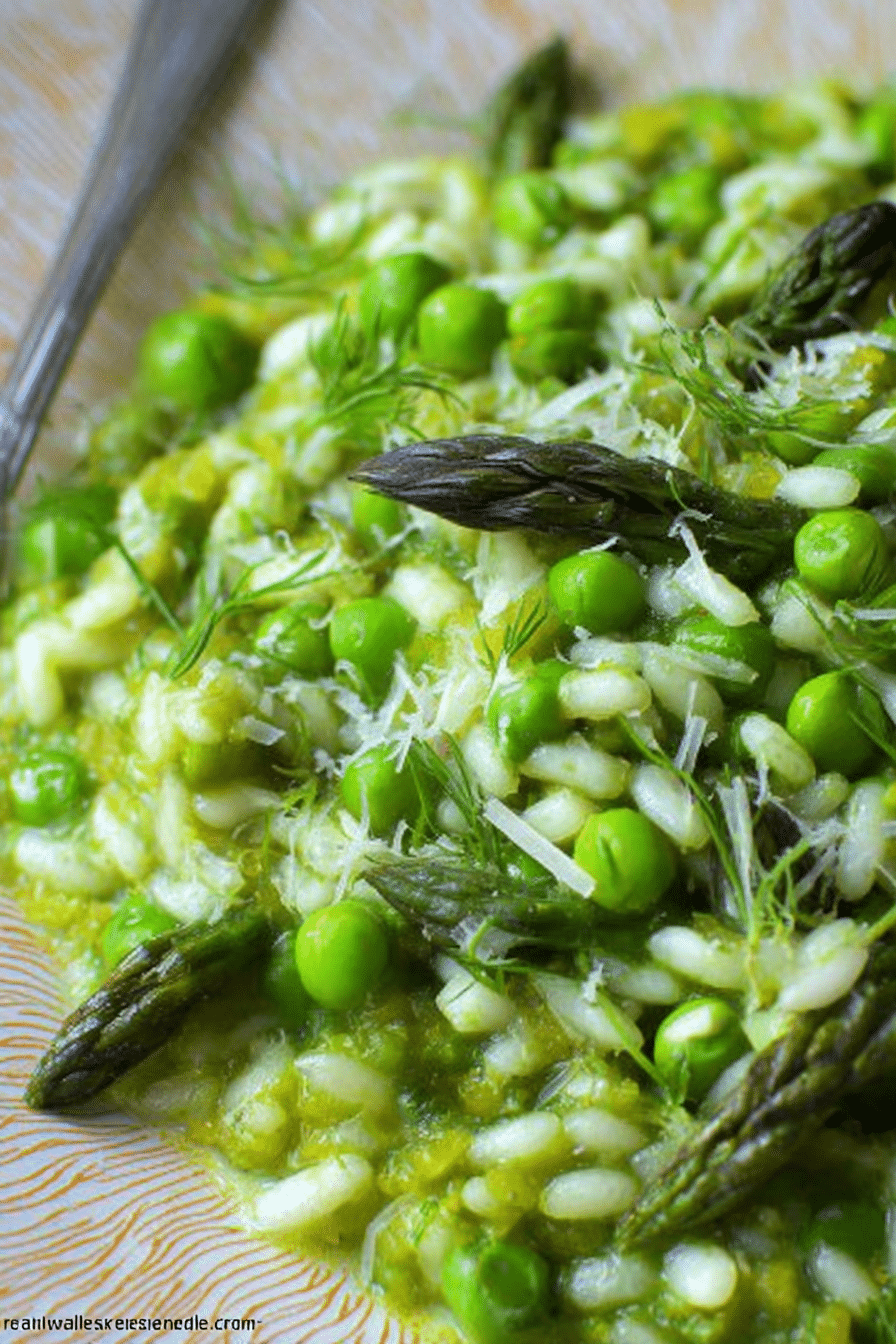
Spring Green Risotto with Peas, Asparagus and Fennel
Ingredients
Method
- Bring a pot of water to a boil and immerse the asparagus and the garden peas for 30 seconds. Drain and immediately plunge the vegetables into ice water. Let cool in the ice water, and then drain. Chop the asparagus into one inch pieces.
- In a food processor or blender, puree the thawed peas and parsley until smooth. Set aside.
- Heat the broth in a saucepan on the stove and leave it on very low heat as you begin the risotto.
- Heat the olive oil and butter in a large heavy pan. Saute the shallot, onion, garlic, and fennel for about 5 minutes, until the fennel is crisp tender.
- Add the rice and stir as you cook another minute.
- Add the Sherry to the pot and stir until it is absorbed. You want the heat to be hot enough so that you hear a good sizzle when the Sherry hits the pan. When the Sherry is absorbed, add your first ladle of broth and cook, stirring constantly, until it is absorbed.
- Continue to add the broth, stirring almost constantly, waiting for the liquid to be absorbed before adding more. After about 20 minutes, add the garden peas and asparagus, and continue cooking until the rice is tender and you have used most of the broth.
- When the rice is tender, stir in the pea and parsley puree. Continue to stir until it is hot throughout. Add the cheese and lemon juice. Add salt and pepper to taste.
- Serve hot with a little extra cheese.