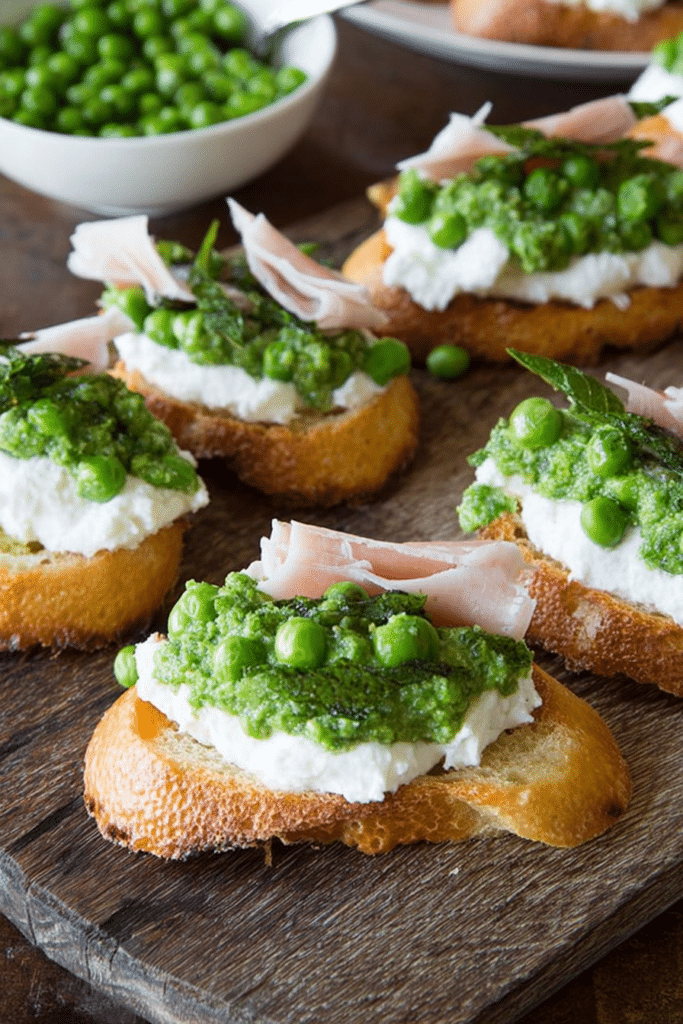
I make these Spring Pea Crostini the minute market peas start appearing on the stalls and the first herbs pop up in my pots. I remember the first time I served them at a small dinner — the platter arrived at the table and conversation paused; that vivid green is a small, instant celebration. In my kitchen this appetizer has become my easy, show-ready trick: simple components that come together fast and look like you spent hours fussing.
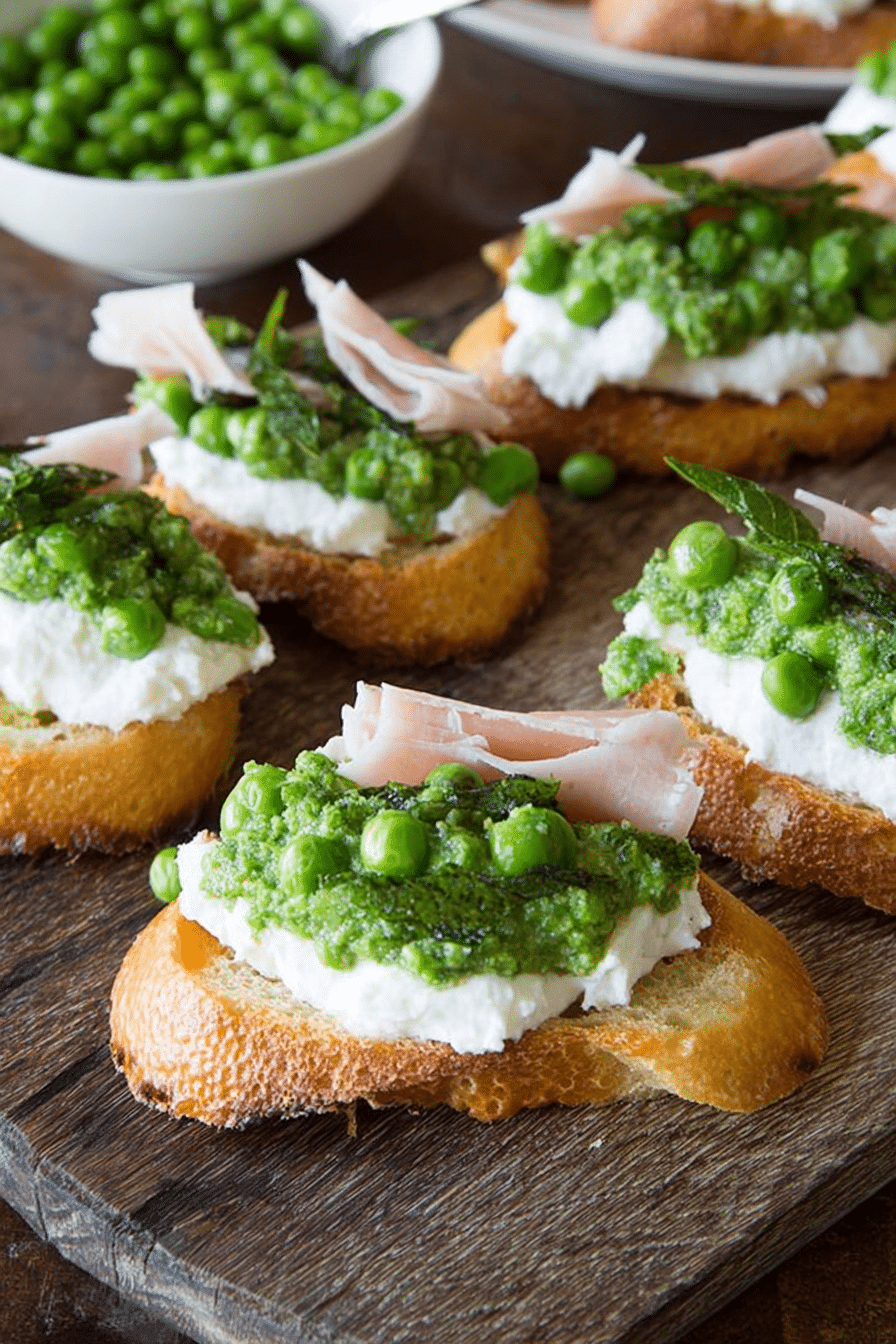
I like to think of these crostini as a small lesson in balance. There’s the cool, slightly sweet pea pesto, the billowy cream of Burrata, and the salty bite of prosciutto on top of a perfectly toasted crostini. Each element is straightforward, but when you layer them correctly the contrast is delightful: crisp, creamy, bright and savory.
Over the years I’ve learned a few small rules that turn good crostini into great crostini: use the freshest peas you can find, don’t overload the bread with wet toppings, and bring the Burrata to room temperature so it flows just the way you want. I also keep a few quick swaps in my back pocket so the platter works for almost any guest list or dietary need.
If you want a pairing to serve alongside, these crostini play nicely with other small bites. These cheesy garlic butter rollups make a fantastic appetizer alongside your spring pea crostini. Small additions like that help a spread feel intentional without adding stress.
Everything You Need for Spring Pea Crostini
Below I’ve listed the components I always gather before I start. I also note a few easy swaps so you can adapt for guests with dietary needs. For quick prep, a food processor is the single tool that speeds everything up.
- Frozen or fresh peas – The peas are the base of the pesto; fresh peas are lovely in season, frozen are perfectly convenient year-round.
- Fresh herbs (mint or basil) – Mint brightens the peas, basil brings a sweeter, peppery note; choose one based on what you prefer.
- Garlic – A quick hit of raw garlic keeps the pesto lively; roast it if you want a mellower flavor.
- California Dry Jack (or similar hard cheese) – Adds savory depth and helps bind the pesto; substitute with a hard aged cheese you like.
- Lemon juice – Balances the sweetness of the peas with acidity and keeps the color bright.
- Red pepper flakes – For a faint, pleasant warmth; optional if serving kids or sensitive guests.
- Kosher salt & black pepper – Seasoning is crucial; taste as you go so the pesto sings.
- Burrata – The creamy, showy finish; if unavailable, fresh mozzarella or ricotta makes a good stand-in.
- Prosciutto – Thin slices add salt and a silky texture; swap for smoked salmon or thinly sliced roasted vegetables for a different profile.
- Crostini or baguette slices – Provides the crunch and vehicle for toppings; gluten-free bread options work well here.
- Tools – Food processor for the pesto, a baking sheet for toasting, and a small spoon for assembling.
The Secret to Perfect Crostini Crunch
The crunch matters as much as the toppings. A soggy base collapses the whole idea, so this section focuses on texture and technique: how to get that auditory snap and enduring crunch beneath creamy Burrata.
- Use slightly stale or day-old bread when you can — it toasts more evenly and dries out just enough to stay crisp under wetter toppings.
- Slice the bread uniformly; aim for a thickness that gives crunch without being so thin it snaps under pressure. Thicker slices hold more topping but require longer to toast.
- Toast in a single layer on a baking sheet, turning once so both sides brown evenly. A quick brush of oil adds flavor and helps the surface caramelize.
- Allow crostini to cool completely on a rack before topping so steam doesn’t soften them. You want the crunch to remain the moment they hit the platter.
Herbs, Cheese, and Swaps: Fine-Tuning the Flavor
Once you’ve got the basics down, small swaps make each batch feel new. Think about the herb profile, the type of cheese that rounds out the peas, and other toppings for contrast.
- Mint vs. basil: Mint gives a cool, springy lift; basil adds a familiar sweetness. Choose based on which aroma you want to lead.
- Cheese swaps: California Dry Jack provides savory backbone; try Pecorino or aged Parmesan for a sharper edge, or a milder manchego for a nutty note.
- Topping variations: Add quick-pickled shallots, thinly sliced radish, or a drizzle of herb oil for extra brightness.
- Protein swaps: Replace prosciutto with smoked trout, roast chicken, or a citrusy marinated chickpea for variety and to accommodate diets.
Scaling for a Crowd: Make 12, 24 or 100 Crostini Without Stress
When I cook for a crowd I simplify: batch the pesto, toast the crostini ahead, and assemble just before guests arrive. The trick is staging so final assembly is quick and the crostini stay crisp.
- Multiply the pesto ingredients linearly, then taste and adjust acidity and salt after scaling so the balance holds.
- Toast large batches of crostini and store them in an airtight container once fully cooled to retain crunch.
- Keep Burrata whole until serving; portion it into bowls for quick plating so the cheese doesn’t dry out.
- Prepare prosciutto or alternate toppings on trays so you can dress crostini rapidly during final assembly.
How to Make Spring Pea Crostini (Step-by-Step)
Follow these steps and your platter will come together efficiently; pay attention to timing so everything is fresh when you serve. If you’d like a refresher on toasting basics, try our classic bruschetta recipe for the basics.
- Prepare the peas: If using fresh peas, blanch briefly and shock in ice water; if frozen, thaw and drain any excess liquid.
- Make the pea pesto: In a food processor, pulse peas with your chosen herb, garlic, hard cheese, lemon juice, red pepper flakes, and salt and pepper until slightly chunky and bright green. Taste and adjust seasoning.
- Toast the bread: Slice the baguette evenly, brush lightly with oil, and toast until golden and crisp on both sides. Cool completely.
- Assemble each crostini: Spread a thin layer of pea pesto on the crostini, add a spoonful or small piece of Burrata, and finish with a delicate fold of prosciutto. A small crack of black pepper is optional.
- Serve immediately so the contrast of warm, crispy bread and cool creamy cheese is preserved.
Pro Tip for spring pea crostini: Gluten-Free and Vegan Swaps
If you’re serving a mixed crowd, these swaps will let everyone enjoy the platter without losing the core flavor idea.
- Gluten-free bread: Use a sturdy gluten-free baguette or firm crackers that toast well; expect slightly different crunch but similar presentation.
- Vegan Burrata alternatives: Thick cashew cream or a plant-based cream cheese can mimic the creamy center; drizzle with olive oil for richness.
- Vegan protein: Replace prosciutto with marinated grilled mushrooms or thinly sliced roasted beets for a savory counterpoint.
- Flavor boosters: Nutritional yeast can add a savory, cheesy note to the pea pesto if you skip the hard cheese.
How to Store, Make-Ahead, and Serve Spring Pea Crostini
For stress-free entertaining, I prep components ahead and assemble just before guests arrive. Here’s how I keep everything tasting fresh.
- Pea pesto: Store in an airtight container in the fridge for up to three days. Press a piece of plastic directly on the surface to slow oxidation and keep the color vivid.
- Crostini: Toast ahead and keep in a sealed container at room temperature; re-crisp briefly in a warm oven if needed before serving.
- Burrata and prosciutto: Keep chilled until the last minute; bring Burrata to room temperature right before assembling so it softens and spreads luxuriously.
- Assembly timeline: Plan to finish assembly 10–15 minutes before serving so crostini remain crisp but the cheese is lively.
Pairing Suggestions with Wines or Beverages
A bright, herb-forward crostini asks for drinks that refresh the palate. Think crisp acidity and subtle fruit notes rather than heavy tannins. Consider serving your crostini with savory garlic mushrooms for a delightful combination alongside the drinks.
- White wine: A zesty Sauvignon Blanc or a Vermentino complements the pea and lemon, cutting through the creaminess of Burrata.
- Sparkling: Light sparkling wine or prosecco provides a cleansing effervescence that keeps the palate fresh between bites.
- Rosé: A dry rosé is friendly with prosciutto and the herb tones in the pesto.
- Non-alcoholic: Serve chilled tonic water with a twist of lemon, or a mint- and cucumber-infused sparkling water for a refreshing option.
Pro-Tips, Troubleshooting, and Variations
I present these as bulleted lists for quick scanning — practical notes I use in my kitchen when something goes sideways or when I want a different flavor profile.
- Pro-Tips (my go-to kitchen moves):
- Keep the Burrata whole until plating so it stays moist and dramatic when you break it open at the table.
- Pulse the pesto to a texture that still has a bit of pea body — completely puréed pesto can feel one-note.
- Finish with a gentle drizzle of good olive oil and a tiny sprinkle of flaky salt for a professional sheen.
- Pair with a warm mushroom dish for variety — try serving alongside some creamy garlic parmesan mushrooms for an elegant touch.
- Troubleshooting:
- If the crostini go soggy, make sure the bread is fully cooled before assembling and use a light spread of pesto rather than a puddle.
- If the pesto tastes flat, add a touch more acid (lemon) and salt; acid brightens the green flavors instantly.
- If the Burrata is cold and stiff, let it sit at room temperature for 15 minutes before serving so it softens and spreads.
- Variations:
- Add pickled elements like quick-pickled red onion or radish for a sharp counterpoint to the cream.
- Swap the prosciutto for thinly sliced pear and a drizzle of honey for a sweeter, seasonal play on the original.
- Use herb-infused olive oil in the pesto to layer more green aromatics into the bite.
Frequently Asked Questions
Can I use fresh peas instead of frozen peas for the crostini?
Absolutely! Fresh peas can be used if they are in season. Just make sure to blanch them before blending for the best texture.
What can I substitute for Burrata cheese?
If you can’t find Burrata, you can substitute it with fresh mozzarella or ricotta for a similar creamy texture.
How can I make the crostini gluten-free?
To make the crostini gluten-free, simply use gluten-free baguette or crackers instead of traditional bread.
Can I prepare the pea pesto in advance?
Yes! You can make the pea pesto ahead of time and store it in an airtight container in the fridge for up to three days.
What are some good wine pairings for Spring Pea Crostini?
A crisp white wine, such as Sauvignon Blanc or a light sparkling wine, pairs wonderfully with the fresh flavors of Spring Pea Crostini.
Spring Pea Crostini
Ingredients
Method
- In a large food processor, combine the peas, basil or mint, garlic, California Dry Jack cheese, lemon juice, red pepper flakes and salt and pepper. Pulse for 30 seconds. Taste and adjust seasoning as needed.½ cup fresh basil or mint, 1 clove garlic, ⅓ cup grated California Dry Jack cheese, 1 whole lemon (juiced), ½ teaspoon red pepper flakes, Kosher salt and freshly cracked black pepper to taste, as needed California Burrata cheese
- Slather a few tablespoons of the pea pesto on top of the crostini. Add a tablespoon or two of California Burrata cheese and then garnish with a piece of prosciutto.as needed Thinly sliced prosciutto, as needed Toasted Crostini
- Serve immediately.