- Prep
- 10 min
- Cook
- 30 min
- Total
- 40 min
- Serves
- 4
- Calories
- 343 kcal
- Carbs
- 53.00 g
On this page12 quick jumps
TOC
12 quick jumps
Introduction
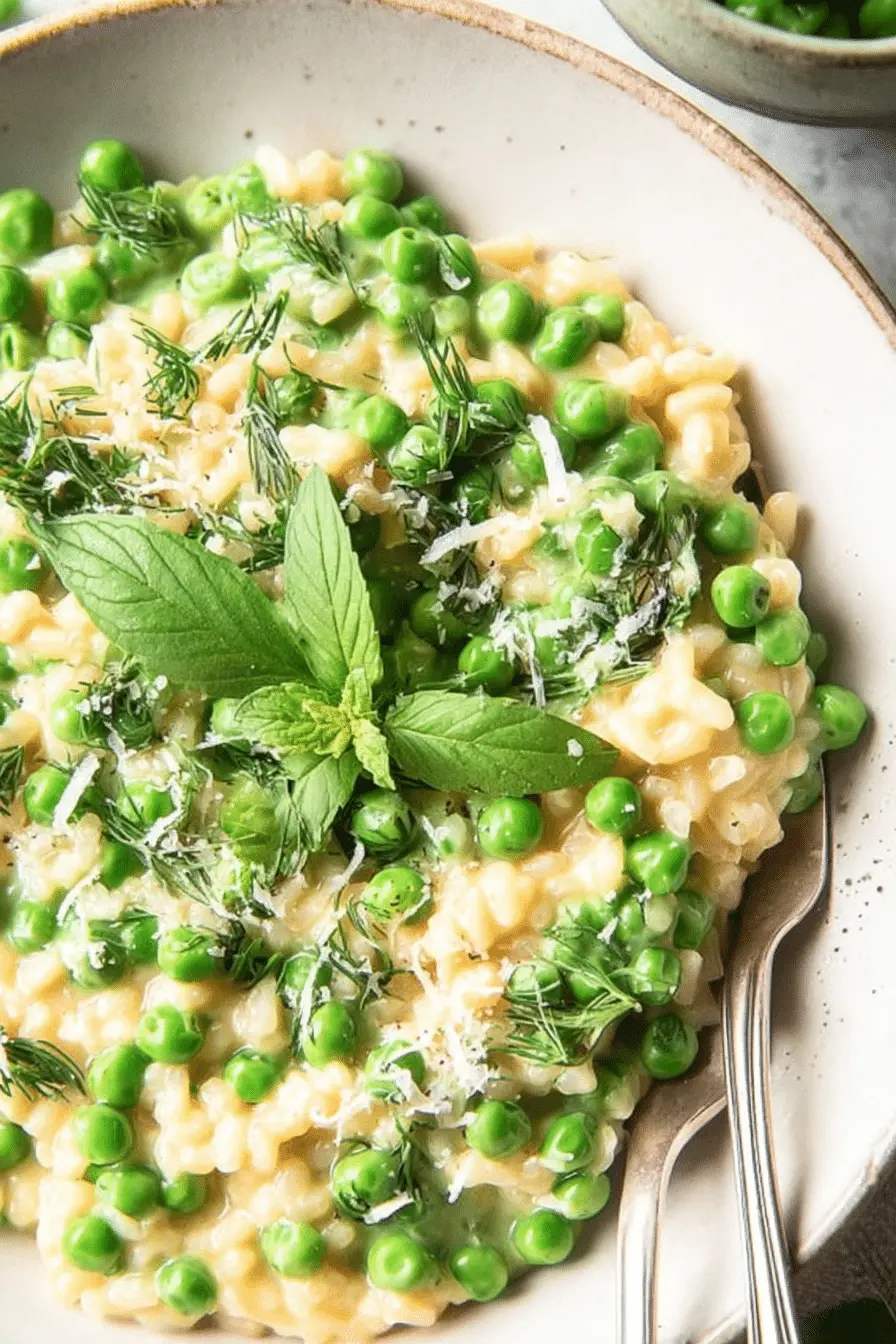
I make this spring pea risotto whenever I want something that looks special without derailing the evening. In my kitchen it’s the recipe I reach for when fresh peas are piling up at the market and I want dinner to taste like spring: vibrant green, lemon-bright, and silky with just enough parmesan to be comforting.
Over the years I learned that good risotto isn’t about fuss—it's about timing and attention. A few small choices (warm stock, a quick toast of the rice, and the right finishing butter and cheese) turn ordinary grains into something irresistibly creamy in under half an hour. I’ve tweaked this until it reliably hits that sweet spot between lush and light.
I love serving this for a casual dinner party because it’s fast to prep but impressive on the plate: a bowl of glossy rice dotted with emerald peas, flecks of mint, and a snap of lemon. Read on and I’ll walk you through the tools, techniques, and little tricks that make it come together without anxiety.
Note: the title reflects the speed—this is a risotto you can realistically make on a busy weeknight and still have time to breathe before your guests arrive.
Why this Spring Pea Risotto is the Quick, Flavor-Packed Dinner You Need
This dish pairs two things I look for in a weeknight recipe: speed and clear, fresh flavor. Fresh peas bring a sweet, vegetal brightness and a vivid color that frozen peas can’t always match, while gradual stock incorporation gives you that classic creamy texture without heavy cream.
- Fresh peas: brighten both taste and color; they make the dish feel seasonal.
- Gradual stock addition: creates a creamy mouthfeel by coaxing starches out of the rice—this is how you get richness without adding cream.
- Herb balance: mint, thyme, and a squeeze of lemon keep the risotto lively and prevent it from tasting cloying.
Everything You Need for Spring Pea Risotto
Here’s a conversational run-down of the ingredients and equipment that actually matter. I won’t bog you with exact measurements here—those belong in the recipe card elsewhere—just the reasons to include each item and smart swaps.
- Fresh peas – For the brightest color and snap; frozen are an acceptable emergency swap but fresh are worth hunting for at farmers’ markets.
- Arborio rice – Short-grain rice that releases starch and gives you that luxurious texture; for gluten-free alternatives, use short-grain risotto-style rice that’s labeled gluten-free.
- Parmesan (hard, aged) – Adds umami and salt; choose a dry, aged Parmigiano-Reggiano or a similar hard cheese that melts smoothly. Nutritional yeast is a good vegan alternative.
- Unsalted butter – Finishing with butter adds silkiness and sheen; you can use a dairy-free spread if needed.
- White wine – Adds acidity and depth; ensure it's a variety that’s gluten-free if that’s a concern.
- Vegetable or chicken stock – A clean-flavored stock keeps the dish bright. Use a low-sodium stock so you can adjust salt at the end.
- Shallot and garlic – Build the aromatic base without overpowering the peas.
- Lemon zest and juice – The citrus lifts the dish and balances richness.
- Fresh herbs (mint, thyme, basil) – Mint brings cool brightness; thyme adds earthiness; basil or parsley are pleasant alternatives.
- Equipment – A heavy-bottomed skillet or shallow pot for even heat, a ladle for adding stock, and a wooden spoon for stirring make the process smooth.
The Secret to Lusciously Creamy Risotto in 30 Minutes
There are a few technique-focused moves that shave time while keeping texture top-notch. I use these every time I cook risotto so the final result is reliably creamy but not gummy.
- Toast the rice briefly in butter and aromatics until edges turn translucent—this enhances nutty flavor and helps the grains hold their shape.
- Use warm stock throughout; cold stock shocks the grains and stalls cooking, making the process take longer and resulting in uneven texture.
- Add liquid in small, steady increments and stir often—this promotes even starch release and creates that signature glossy bind.
- Stir with purpose, not constant agitation: frequent, gentle stirring keeps the rice moving and encourages creaminess without breaking the grains down.
- Finish off the heat with butter and parmesan, and rest the rice for a minute to settle—the residual heat completes cooking and gives you a silkier finish.
Why Stock Temperature and Gradual Addition Matter
The temperature of the stock and how you add it are technical details that have dramatic effects on texture and flavor. I learned to respect them after one too many sticky, gluey batches.
- Warm stock keeps cooking steady: Adding simmering stock maintains a consistent simmer so rice cooks evenly; cold stock drops the pot temperature and slows starch release.
- Gradual addition controls starch: Introducing liquid in increments encourages the rice to release starch gradually, which creates creaminess without turning into paste.
- Maillard reaction for depth: Toasting rice and aromatics develops subtle caramelized notes—those browned bits contribute background savory flavor when deglazed with wine.
- Sensory cue: Watch and smell the pot—the rice should shimmer and smell toasty-plus-sweet as it absorbs the stock, a sign you’re on track.
Herb and Flavor Pairings: Mint, Thyme, Lemon, and More
Herbs and acids are your best friends here. The goal is to keep the risotto feeling spring-fresh while letting the parmesan and butter provide comfort.
- Mint – Adds a cool, aromatic lift; add at the end so it stays bright.
- Thyme – Works through the cooking for subtle earthiness; pair with lemon for balance.
- Basil or parsley – Use for a sweeter, herbaceous finish if mint isn’t your thing.
- Lemon zest & juice – Cuts richness and brightens the entire bowl; a little goes a long way.
- Unconventional twists – A tiny grate of nutmeg can warm the flavor profile; red pepper flakes add a gentle bite if you want contrast.
For a delicious appetizer that complements these flavors, try this pea bruschetta—it’s an easy way to echo the risotto’s bright pea notes on the table.
How to Make Spring Pea Risotto (Step-by-Step)
Follow these clear steps and you’ll have a bowl of creamy risotto with vibrant peas in about 30 minutes. I’m keeping the language practical so you can cook confidently.
- Bring your stock to a gentle simmer and keep it warm on a low burner; this prevents temperature shocks when you add it to the rice.
- Melt butter in your skillet over medium heat, then sweat diced shallot and garlic until fragrant and translucent—don’t let them brown aggressively.
- Add the arborio rice and stir for a couple of minutes so each grain is coated and slightly toasted; you should smell a toasty, nutty note.
- Pour in the white wine and scrape the pan to lift any browned bits; let the alcohol mostly cook off so only flavor remains.
- Add warmed stock in steady increments, stirring frequently and waiting until the liquid is mostly absorbed before adding more; the rice should be tender with a slight bite at the center when done.
- Fold in blanched fresh peas toward the end so they stay bright and slightly crisp; finish with grated parmesan, lemon juice, and a knob of butter off the heat for gloss and richness.
- Taste and season with salt and pepper at the end—aged parmesan can be salty, so adjust carefully.
- Serve immediately in shallow bowls, garnished with lemon zest and chopped mint or thyme.
If you enjoy our spring pea risotto, you might also love this spring green risotto featuring peas, asparagus, and fennel.
Note on Troubleshooting: I often see three common hiccups; here are quick fixes presented as a bulleted list so you can scan and solve fast.
- Too thick or gummy: You probably added too much liquid too fast or stirred too aggressively; add a splash of warm stock off the heat and stir gently to loosen the texture.
- Rice undercooked but liquid gone: Add more warm stock and give it a few minutes—risotto can take a touch longer than you expect near the end.
- Peas lost color: Blanch briefly and shock in ice water, or add frozen peas near the very end to avoid overcooking.
Serving suggestions: Serve with a simple arugula salad and crusty bread, or present alongside a light soup for a spring menu.
Pro Tip for Spring Pea Risotto: Gluten-Free Swaps and Smart Local Sourcing
Pro-Tips, Troubleshooting, and Variations are presented below as bulleted lists for quick scanning.
- Gluten-free swaps: Arborio rice is naturally gluten-free—double-check that your wine and stock are labeled gluten-free if sensitivity is a concern. For vegan options, swap parmesan for nutritional yeast and use a vegan butter substitute.
- Local sourcing: I buy peas from local farmers when I can; the freshness is obvious in both taste and color. Visit your local farmers' market early for the best picks.
- Best cheese choices: Pick a dry, aged hard cheese that melts evenly; buying from a cheesemonger allows you to taste and choose the right intensity.
- Pairing idea: For a stunning main course pairing, consider an herb roast leg of lamb—the roast’s savory profile complements the risotto’s spring brightness.
How to Store, Reheat, and Make-Ahead Spring Pea Risotto
Risotto is best fresh, but with the right care you can store and reheat it without losing that creamy texture. Below are practical, scannable tips.
- Storage containers: Use airtight containers and cool the risotto quickly before refrigerating; it will keep well for a couple of days.
- Reheating: Reheat gently on the stove over low heat with a splash of warm stock or water, stirring until the rice loosens and regains creaminess. Avoid the microwave when possible to prevent uneven heating.
- Make-ahead: Cook the risotto until just shy of done, then cool and store. Finish cooking with butter, cheese, and peas right before serving.
- Pairing for leftovers: For a complete meal that’s still easy to store and reheat, serve your risotto alongside a simple soup like this cream of asparagus soup.
Frequently Asked Questions
How long does it take to make spring pea risotto? This delicious spring pea risotto can be prepared in just about 30 minutes, making it a quick and flavorful option for dinner!
Can I use frozen peas instead of fresh peas? Yes, you can use frozen peas if fresh ones are not available. Just add them directly to the risotto without blanching.
What can I substitute for parmesan cheese? If you need a substitute for parmesan, you can use nutritional yeast for a vegan option or another hard cheese that you prefer.
How can I make this risotto gluten-free? You can make this risotto gluten-free by ensuring the white wine and vegetable stock are gluten-free, as arborio rice is naturally gluten-free.
Can I prepare this risotto in advance? While risotto is best enjoyed fresh, you can make it ahead of time. Just store it in an airtight container in the fridge and reheat it gently, adding a splash of stock as needed to restore creaminess.
Ingredients
- 1 1/2 cupsfresh peas
- 2 tablespoonsunsalted butter
- 1 largeshallot (diced)
- 2 clovesgarlic (minced)
- 1 cuparborio rice
- 1/2 cupwhite cooking wine
- 1 teaspoonfresh thyme
- 4 cupsvegetable stock
- 1/2 cupparmesan cheese (shredded)
- 1 tablespoonlemon zest
- 2 teaspoonslemon juice
- 1 tablespoonfresh mint
- —salt and pepper (to taste)
Instructions
- 1
Blanch the fresh peas in boiling salted water for 1-2 minutes and then immerse in ice water for about 20 seconds. Drain and set aside.
- 2
Heat the vegetable stock in a medium pot over medium heat until simmering and set aside.
- 3
In a large skillet, melt butter and sauté shallots and garlic for about 5 minutes, until soft.
Taste as you go. Recipes are a guide, not a contract.
- 4
Add arborio rice and toast for 2 minutes. Add white wine and de-glaze the pan.
- 5
Gradually add warmed vegetable stock, stirring until absorbed, until rice is fully cooked.
- 6
Stir in parmesan, blanched peas, lemon juice, and season with salt and pepper to taste.
- 7
Garnish with fresh herbs and lemon zest before serving.
Recipe Card
The Best Spring Pea Risotto — Ready in 30 Minutes
Keep it handy for later, send it to someone cooking with you, or open the clean print view.
- Prep
- 10 min
- Total
- 40 min
- Serves
- 4
You might also like

The 30-Minute Chili-Lime Tofu and Peach Skewers for Busy Summer Grills
May 14, 2026
How I Make Summer Skewers with Shrimp, Jalapeño & Plums
May 14, 2026
The Summer Peach Spinach Salad I Make Almost Every Week
May 14, 2026
The Summer Quinoa Salad I Make Almost Every Week
May 13, 2026
Reviews
Be the first to review this.