- Prep
- 20 min
- Cook
- 20 min
- Total
- 40 min
- Serves
- 6
- Calories
- 410 kcal
- Protein
- 7.30 g
- Carbs
- 72.50 g
- Fat
- 10.30 g
Introduction
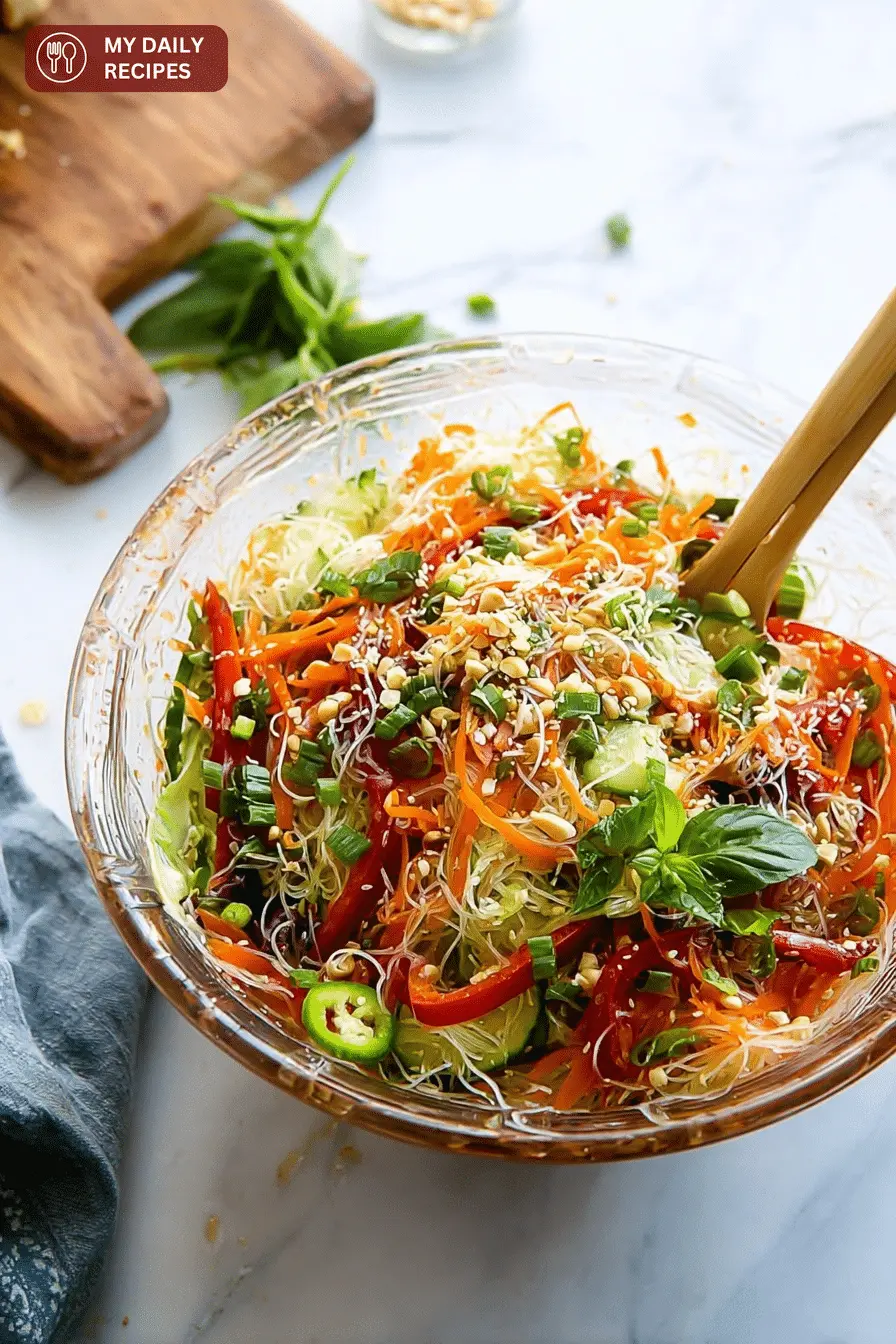
I first made this spring roll salad on a humid June evening when I wanted all the bright, fresh flavors of Vietnamese spring rolls without the time-consuming rolling. What started as a lazy-weeknight shortcut became a weeknight staple in my house—the same crunchy vegetables, the same fragrant herbs, and that punchy spicy ginger dressing, but tossed into a bowl so everyone can dig in without worrying about wrapping rice paper. The colors alone—purple cabbage, bright orange carrot ribbons, emerald herbs—make it feel like a celebration, even if you’re just eating at the kitchen counter. This salad is rooted in the same ingredients as traditional Vietnamese fresh spring rolls—rice noodles, crisp vegetables, fresh herbs, and a tangy-sweet sauce—so it tastes familiar even if the format is different. It’s fresh, fast, forgiving, and endlessly adaptable. Below I’ll walk you through what I use, why each piece matters, how I troubleshoot the few things that can go wrong, and a full recipe card so you can make it exactly like I do.Ingredients Needed for the Salad
- Rice noodles – slippery, soft strands that make the salad filling; use gluten-free rice vermicelli for gluten-free diets.
- Cabbage (green or purple) – provides crunch, color, and fiber; purple is prettier but either one works.
- Cucumber – cooling, hydrating bites to balance the dressing’s heat; seed if watery.
- Carrot – sweet and crunchy; julienne or use a peeler for ribbons.
- Sweet pepper – brings color and a fresh peppery note; red or yellow are good choices.
- Cilantro – aromatic green boost, gives that unmistakable Vietnamese finish; sub parsley if you’re not a cilantro fan.
- Mint – bright, cooling herb that lifts the whole bowl; basil also works for a different profile.
- Roasted peanuts – crunchy, nutty topping that contrasts the soft noodles and vegetables.
- Fresh ginger and garlic – the backbone of the spicy ginger dressing; grate or mince for the most aroma.
- Soy sauce (or tamari) – adds umami and salt; use gluten-free tamari or coconut aminos if needed.
- Rice wine vinegar – provides acidity to balance the sweetness and oil in the dressing.
- Sesame oil and neutral oil – sesame oil brings toasted notes while a neutral oil helps the dressing emulsify.
- Sweetener (agave or honey) – adds a touch of sweetness to balance the tang.
- Red pepper flakes – quick heat; swap for sriracha or chili oil for a different kind of spice.
Step-by-Step Instructions
I’ll walk you through the salad exactly as I make it in my kitchen. I like to prep by station: noodles first, dressing next, vegetables and herbs last. That order keeps everything at the right temperature and texture.- Make the dressing: In a blender or food processor, combine minced fresh ginger, garlic, soy sauce (or tamari), agave nectar, rice wine vinegar, sesame oil, a neutral oil (like canola), and red pepper flakes. Blend until smooth. Taste and season with salt and pepper, then refrigerate. I always taste the dressing on a spoon and adjust—if it’s too sharp, a little more agave calms it; if it’s flat, a splash more vinegar or a pinch of salt wakes it up. It should smell bright and gingery, not just oily.
- Cook the rice noodles: Follow the package directions. Usually this means soaking or briefly boiling until just tender. Rinse thoroughly with cold water until the noodles feel cool to the touch—this stops cooking and helps them firm up. Drain well and transfer to a large bowl. If the noodles tend to clump, toss with a teaspoon of neutral oil; this keeps them slippery but not greasy.
- Prep the vegetables and herbs: Shred the cabbage thinly, julienne the cucumber and carrots, and thinly slice the sweet pepper. Mince the cilantro and mint. Fresh herbs are where this salad sings—don’t skip them. I often reserve a few whole cilantro leaves for garnish; they look pretty and give little bursts of flavor as you eat.
- Toss everything together: Add the cabbage, cucumber, carrot, sweet pepper, cilantro, and mint to the bowl with the noodles. Toss to combine. Hold the dressing until right before serving to avoid soggy vegetables—this salad should be crisp and bright.
- Dress and garnish: When you’re ready to eat, drizzle the spicy ginger dressing over the salad and toss well so everything gets a thin, even coating. Taste and add salt or more soy if it needs brightening. Top with chopped roasted peanuts, extra cilantro, and a sprinkle of sesame seeds. Serve immediately.
Nutritional Benefits of Each Ingredient
Below I break down the main ingredients and what they bring to the table nutritionally. This is based on common nutrition profiles for each item—think vitamins, fiber, and simple benefits that make this salad a well-rounded choice.- Rice noodles – primarily carbohydrates for energy; gluten-free when made from rice, making them suitable for many diets.
- Cabbage – high in vitamin C and fiber; purple cabbage also offers anthocyanins, antioxidants that give it color and health benefits.
- Cucumber – hydrating, low-calorie, and a source of vitamin K; keeps the salad light.
- Carrot – rich in beta-carotene (vitamin A precursor) for eye health and adds fiber and a touch of natural sweetness.
- Sweet pepper – an excellent source of vitamin C and the pigments that provide vibrant color and antioxidants.
- Cilantro and mint – herbs provide small amounts of vitamins and antioxidants; they also aid digestion for some people and add powerful flavor without calories.
- Ginger and garlic – both offer anti-inflammatory and immune-supporting compounds and contribute to digestive comfort for many.
- Soy sauce (or tamari) – brings sodium and umami; use low-sodium versions or adjust to taste for a healthier sodium level.
- Peanuts – plant-based protein and healthy fats; they add satiety and texture, though they’re calorie-dense so a little goes a long way.
Variations and Substitutions
I test different versions all the time. Here are the swaps I’ve used successfully and why I recommend them:- Vegan protein: Add cubed, baked tofu or tempeh tossed in a little soy and sesame—both take the dressing well and make the salad more filling.
- Gluten-free: Use certified gluten-free rice noodles and replace soy sauce with tamari or coconut aminos. Taste and adjust—coconut aminos are a bit sweeter so you may want a touch more acid.
- Low-carb: Replace rice noodles with spiralized zucchini or konjac noodles; keep things cold and well-drained so the zucchini doesn’t water down the dressing.
- Thai-inspired: Swap cilantro and mint for Thai basil, add shredded cabbage and bean sprouts, and finish with lime wedges. Use fish sauce in the dressing if not keeping this vegan.
- Crunch upgrade: Add sliced snap peas or thinly sliced jicama for extra texture.
- Spice variations: Use sriracha for a smoother heat, or toasted chile oil for a smoky kick. If the dressing is too hot, balance it with more agave or a touch of coconut milk.
Tips for Meal Prep and Storage
I often make components ahead of time—this salad is extremely meal-prep friendly if you follow a few rules I’ve learned from repeatedly packing it for lunches:- Store the dressing separately in a sealed jar or container; it will keep 4–5 days in the fridge. If the oil solidifies a bit when cold, let it sit at room temperature and give it a quick whisk.
- Cook and rinse the rice noodles, then store them in an airtight container with a teaspoon of oil stirred through to prevent clumping. They’ll last 2–3 days refrigerated.
- Chop sturdier vegetables (cabbage, carrots, peppers) up to 2 days ahead and store in containers lined with a paper towel to absorb excess moisture. Delicate herbs like cilantro and mint are best stored wrapped loosely in a damp paper towel inside a bag—use within 24–48 hours.
- Avoid tossing the dressing with the salad until right before serving. Tossing early will soften the vegetables and make the salad soggy. For school or work lunches, pack components in separate compartments and combine at mealtime.
- If you need to reheat a protein (grilled shrimp or chicken), heat it gently and let it cool slightly before adding to the cold salad—hot protein will wilt the herbs and shock the noodles.
Serving Suggestions and Pairings
This salad works as a main or a side. Here are my favorite ways to serve it:- Dressings: Beyond the spicy ginger dressing, try a sesame-ginger vinaigrette, lime-chili vinaigrette, or a creamy peanut-lime sauce. If you go with peanut sauce, thin it with water or more vinegar so it doesn’t overwhelm the fresh vegetables.
- Proteins: Grilled shrimp, sliced chicken breast, baked tofu, crispy chickpeas, or seared tuna are all great options. I often keep a tray of grilled shrimp in the fridge to throw onto salads like this—takes it from side to main in two minutes.
- Sides: Fresh rice paper rolls, miso soup, steamed edamame, or sticky rice make for a fuller Asian-inspired menu. For a simple meal, serve it with warm flatbread or a crusty baguette to soak up any extra dressing.
- Presentation: I like to layer noodles first, then pile vegetables in color blocks, and finish with herbs and peanuts on top. It keeps the bowl visually appealing and makes people say, “Wow”—which is always nice.
FAQ
- Can I make this spring roll salad ahead of time? Yes — prep the dressing and chop the vegetables a day ahead. Store the dressing in a sealed container and keep the noodles and vegetables separately in the fridge; toss everything together just before serving to keep the salad crisp (components will keep 2–3 days refrigerated).
- How do I prevent the rice noodles and veggies from getting soggy? Rinse cooked rice noodles thoroughly with cold water and drain well, then toss with a tiny bit of oil to prevent sticking. Keep the dressing off the salad until right before serving and store delicate items (herbs, avocado) separately until plating.
- Is this recipe gluten-free and can it be made vegan? The salad can be gluten-free if you use gluten-free tamari or coconut aminos instead of soy sauce; rice noodles are typically gluten-free. The written recipe is already vegan, but you can add tofu or tempeh for extra protein if you like.
- What proteins or side dishes pair well with this spring roll salad? Great protein add-ins include grilled shrimp, sliced chicken breast, baked tofu, or crispy chickpeas. For a fuller meal, serve with fresh rice paper rolls, miso soup, or steamed edamame.
- How can I adjust the dressing’s spice level? The dressing uses red pepper flakes — start with 1/2 teaspoon for mild heat and increase to taste. You can also add sriracha or chili oil for different kinds of heat, or omit the chiles entirely for a mild version.
Conclusion
This spring roll salad is the kind of recipe I return to when I want something that feels fresh, looks beautiful, and actually fits into a busy week. It’s forgiving, easy to scale, and rewards small touches—like toasting the peanuts or using both cilantro and mint—for a big flavor payoff. Try making the dressing a day ahead to let flavors meld, and don’t be afraid to swap in proteins or extra vegetables depending on what’s in your fridge. If you make it, I’d love to hear what swaps you tried and how it turned out—share your tips so we can all learn a little bit. Enjoy the crunch, the ginger bite, and the bright herb finish; this is a bowl that travels well from quick lunch to dinner party centerpiece.Recipe Card
Delicious Spring Roll Salad Recipe with Spicy Ginger Dressing
- Prep
- 20 min
- Cook
- 20 min
- Total
- 40 min
- Serves
- 6
- Calories
- 410 kcal
- Protein
- 7.30 g
- Carbs
- 72.50 g
- Fat
- 10.30 g
Ingredients
- 3 tablespoonsminced fresh ginger
- 2 clovesgarlic, minced
- 2 tablespoonssoy sauce
- 1 tablespoonagave nectar
- 1/4 cuprice wine vinegar
- 1 tablespoonsesame oil
- 2 tablespoonscanola oil or vegetable oil
- 1/2-1 teaspoonred pepper flakes
- to tasteSalt and pepper
- 8 ozrice noodles
- 1-1/2 cupsshredded green or purple cabbage
- 1 smallcucumber, julienned
- 2 smallcarrots, julienned
- 1 mediumsweet pepper, julienned
- 1/4 cupminced cilantro
- 1/4 cupminced mint
- 1/4 cupchopped roasted peanuts
- to tasteAdditional cilantro and sesame seeds for topping
Instructions
- 1
In a food processor or blender, combine ginger, garlic, soy sauce, agave, vinegar, sesame oil, canola oil, and red pepper flakes to taste. Blend dressing until smooth.
- 2
Season dressing with salt and pepper to taste and refrigerate until ready to use.
- 3
Cook rice noodles according to package instructions. Rinse noodles well with cold water until noodles are completely cooled. Drain noodles and transfer to a large serving bowl.
- 4
Add cabbage, cucumber, carrot, sweet pepper, cilantro, and mint to rice noodles and toss to combine.
- 5
When ready to serve, drizzle dressing over salad and toss well to evenly coat. Season salad with salt and pepper to taste if needed and garnish with peanuts, cilantro and sesame seeds. Enjoy!
You might also like
Reviews
Be the first to review this.