- Prep
- 10 min
- Cook
- 5 min
- Total
- 15 min
- Serves
- 6
- Calories
- 206 kcal
- Carbs
- 12.00 g
Introduction
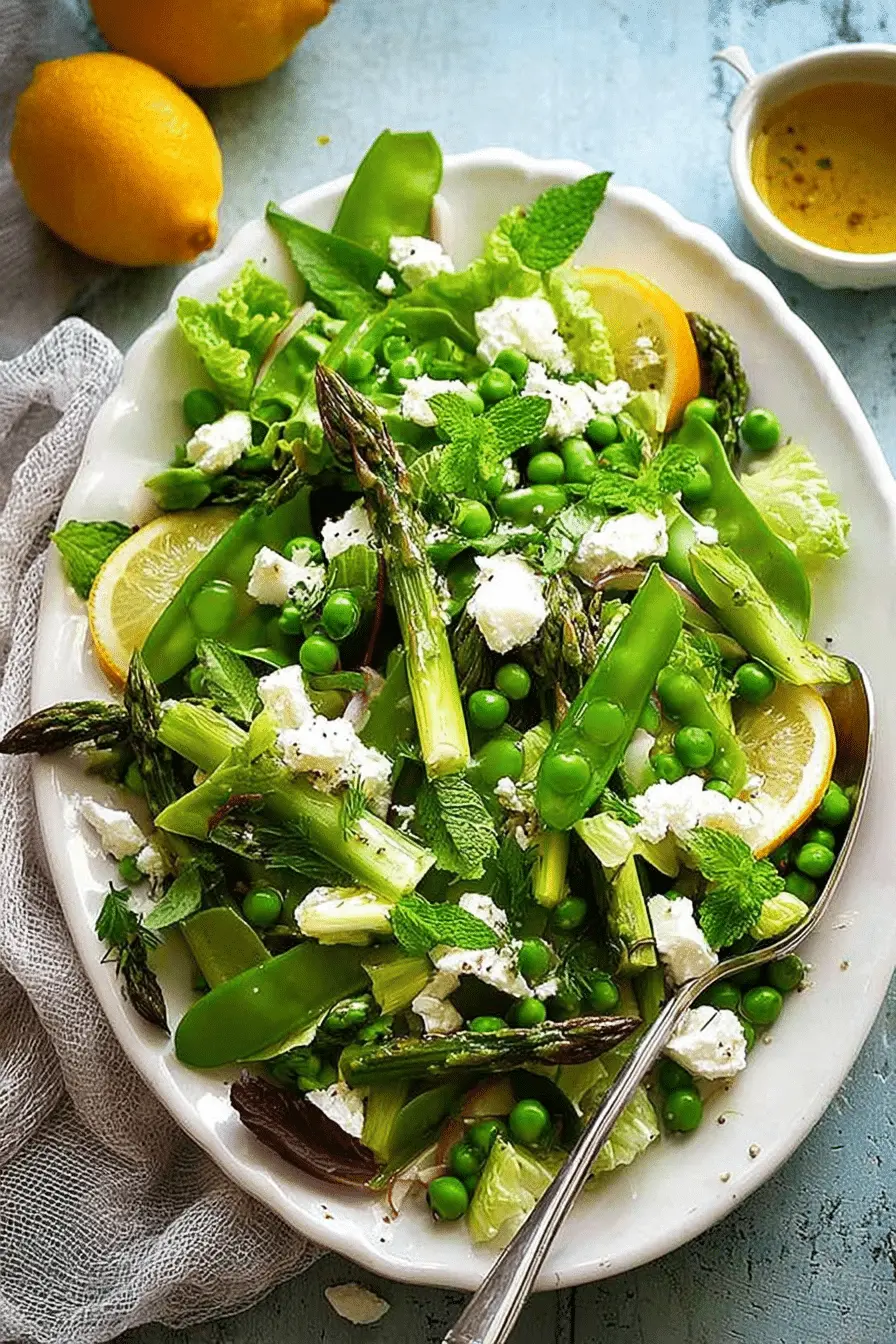
There’s a particular moment each spring when the market stalls change from winter heaviness to bright, brittle greens and tiny, sweet peas — and that’s when this spring salad with goats cheese shows up on repeat in my kitchen. I remember the first time I made it: the asparagus still snapped with a faint green sap smell when I trimmed the ends, the peas popped with a fresh, almost grassy sweetness, and the goats cheese added these small, pillowy tangy bites that made the whole salad feel indulgent without being heavy. Spring salads are more than a pretty plate. They’re a practical way to ride the season’s nutritional wave: fresh spring vegetables are higher in vitamins like C and K and have an energetic, clean flavor that helps digestion. Adding goats cheese gives the salad body — a creamy, slightly tangy counterpoint to crunchy vegetables — and a small amount goes a long way in satisfying cravings for richness. In short, this salad is light, nutrient-rich, and very forgiving to prepare.Key Ingredients in Our Spring Salad with Goat Cheese
- Asparagus – tender, snap-off spears that add a grassy, slightly sweet crunch when blanched briefly.
- Snow peas – delicate, crisp pods that give a clean, fresh snap and a lovely green color.
- Peas (fresh or frozen) – pop-in-your-mouth sweetness and texture; frozen peas are perfectly fine in a hurry.
- Baby cos / romaine lettuce – sturdy leaves with a mild, sweet flavor that hold up to dressing.
- Goats cheese – creamy and tangy; it provides richness and contrast to the bright vegetables (see serving swap ideas below).
- Fresh mint – bright, cooling lift that pairs beautifully with peas and lemon.
- Lemon – zest and juice add acidity and aroma that brighten the whole salad.
- Extra virgin olive oil – smooth, fruity fat that binds the dressing and carries flavors.
- Salt & pepper – tiny amounts are essential to make flavors pop.
Step-by-Step Recipe Instructions
Below is the tested recipe I use whenever spring produce starts to arrive. I’ve written the precise ingredient list and timing I rely on — these measurements are what I’ve tested for a salad that serves 4–6 as a side. If you want to skip the formal list, you can roughly follow the conversational ingredient notes above. Yield: 4 - 6 people as a side Prep time: 10 minutes Cook time: 5 minutes Total time: 15 minutesIngredients (tested)
- 3 bunches (24 spears) asparagus, woody ends snapped off
- 120g / 4oz snow peas, trimmed and string removed
- 1 head baby gem or cos lettuce (aka romaine), washed
- 2 cups fresh or frozen peas
- 90g / 3oz goats cheese
- 1 cup (loosely packed) fresh mint leaves, roughly torn
- 1 tsp lemon zest
- 2 tbsp (30ml) lemon juice
- 6 tbsp (90ml) extra virgin olive oil
- 1/4 tsp each salt and pepper
Instructions (with real-kitchen notes)
- Bring a large pot of water to a rolling boil. I use the biggest pot I have so the water cools less when I add the veg; that helps keep them bright green.
- Add the snow peas and boil for 1 1/2 minutes. When I first started making this, I overcooked the snow peas and they turned soft; timing here is crucial — you want a crisp snap.
- Add the asparagus spears and boil for another 1 1/2 minutes. From experience, thicker asparagus needs an extra 30 seconds — test by piercing the thickest part with a knife: it should be tender but still have some bite.
- Add the frozen peas and boil for another 30 seconds or until the water just returns to a simmer and the peas turn bright green. If you use fresh peas, treat them similarly and watch for color change; they often need slightly less time.
- Immediately drain everything and refresh the vegetables under cold running water until cooled — this stops the cooking and keeps color vibrant. I learned this the hard way after serving a pale, limp salad once; the shock of cold water is non-negotiable.
- Remove the asparagus and snow peas from the colander and blot gently with paper towels to remove excess water. Leave the peas in the colander to drain, giving them a gentle toss now and then — moisture is the enemy of crisp lettuce.
- Split the larger baby cos leaves down the middle and use small ones whole. If leaves are wet, pat them dry — dressing won’t stick if they’re saturated.
- Cut asparagus stems in half on a slight angle to create nicer presentation and easier bites.
- Make the dressing: shake the dressing ingredients (lemon zest, lemon juice, olive oil, salt and pepper) in a jar until emulsified. Taste and adjust: if it tastes flat, add a pinch more salt; if it’s too tart, a small drizzle of honey will round it out.
- Combine the lettuce, blanched asparagus, snow peas, and peas in a large bowl. Add torn mint leaves for freshness. Toss gently with the dressing just before serving — the lettuce should be glossy, not drenched.
- Arrange the salad on a platter and top with small chunks of goats cheese. I use my fingers to crumble the cheese into rough pieces so each forkful gets creamy pops.
- Serve immediately. Expect that the salad will be best in the first 20–30 minutes; it’s meant to be crisp and bright.
Unique Dressings to Pair with Goat Cheese Salads
Goats cheese works with both tart and sweet dressings. The key is balance: a little acidity to cut the cream, a touch of sweetness to highlight the peas, and enough oil to coat without weighing down the salad. Here are three dressings I test frequently and recommend.Balsamic Lemon Vinaigrette
Ratio: 1 part acid to 3 parts oil. For one salad, combine lemon juice, a splash of good balsamic, 3 parts olive oil, a pinch of salt and pepper, and a teaspoon of honey if your balsamic is very sharp. The balsamic adds depth and a gentle sweetness that’s lovely with goat cheese.Honey Mustard Dressing
Whisk together equal parts Dijon mustard and honey (start with 1 tsp each), 1 tbsp lemon juice, and 3 tbsp olive oil. Season with salt and pepper. This one gives a gentle spice that plays well with mint and peas.Citrus Vinaigrette with Mint
Zest of one lemon, juice of half a lemon, 3 tbsp olive oil, finely chopped mint, salt and pepper. This is my go-to when the peas and mint are strong — it feels clean and very springlike. Why homemade matters: store-bought dressings often contain stabilizers and excess sugar or salt that mute fresh produce. Homemade lets you control the acid-to-oil ratio and tweak to taste. If your dressing separates, give it a good shake just before using — or whisk a teaspoon of mustard into the mix to help emulsify.Dietary Alternatives and Modifications
If you’re looking for another delightful option, try our Cranberry Pecan Chicken Salad which is perfect for any dietary needs. I always try to make recipes inclusive, so here are a few swaps I’ve used successfully:- Vegan option: Swap goats cheese for a soft plant-based cheese or marinated tofu. I’ve used almond-based fromage frais — crumble it cold so it provides texture similar to goats cheese.
- Low-fat: Reduce the oil in the dressing and boost acidity with extra lemon or a spoon of plain yogurt to add creaminess without excess calories.
- Gluten-free additions: Add gluten-free cooked grains like quinoa or buckwheat for bulk if you want to make the salad a main. These stay pleasant at room temperature for picnics.
- Nuts & seeds: If you’re nut-free, use toasted pumpkin seeds or sunflower seeds for crunch. Toast briefly in a dry pan until they start to smell toasted — it’s a quick flavor upgrade.
Preparation Tips for Maximum Freshness
Here are tested tips from the real kitchen where I cooked this many times:- Choose produce that snaps: For asparagus, bend the spear near the base — it should snap cleanly. For snow peas, the pods should feel crisp and not leathery.
- Blanch and shock: Blanching removes raw edge and brings out color; shocking in cold water stops cooking. I always hold vegetables under the tap while tossing them to speed cooling.
- Dry completely: Moisture is the fastest path to a soggy salad. Use a spinner or blot with paper towels, especially for lettuce and asparagus.
- Make dressing last: Dress right before serving. If you must dress ahead, do it by no more than 15 minutes and reserve a bit of undressed veg to keep some crunch.
- Toast nuts/seeds carefully: Watch them — they go from fragrant to burned in under a minute. Heat a dry pan, add the nuts, shake frequently, and remove as soon as they smell toasty.
- Marinate sparingly: If you toss peas or asparagus in a little lemon and olive oil to infuse flavor, only do this for 10–20 minutes so they don’t soften excessively.
Frequently Asked Questions
How should I store leftover spring salad with goat cheese? It's best to store the leftover salad in an airtight container in the refrigerator. To keep the salad fresh, consider storing the dressing separately and adding it just before serving. Can I make this salad ahead of time? Yes! You can prepare all the ingredients ahead of time and store them separately. Just wait to dress the salad until right before serving to keep everything crisp. What can I substitute for goat cheese in this salad? If you prefer a different cheese, feta (especially soft Danish Feta), fresh mozzarella, bocconcini, or fresh ricotta are excellent alternatives. You can also omit cheese entirely for a lighter option! What drinks pair well with this salad? This fresh salad pairs wonderfully with a crisp white wine like Sauvignon Blanc or a light sparkling water with lemon. It's also great alongside a light beer or iced tea. Can I add other ingredients to the salad? Absolutely! Feel free to customize the salad with additional ingredients like nuts, fruits, or other seasonal vegetables to suit your taste.Serving Suggestions for Gatherings
For a delightful side option, consider pairing this salad with our Honey-Mustard Roasted Potatoes, which will impress your guests. When I serve this salad for a crowd, presentation and timing matter more than perfection. Arrange the leaves on a large platter, scatter the blanched vegetables so their colors alternate, and dot goats cheese on top last so it stays distinct. Serve the dressing in a pretty jar so guests can add their own — that keeps the table tidy and the salad crisp for those who graze over time. If you’re bringing it to a picnic, pack the components separately: greens in one container, blanched veg in another, cheese in a third, and dressing in a small bottle. Let people assemble on arrival; it feels communal and keeps textures right. Pairings: a dry Sauvignon Blanc or a citrus-forward sparkling wine brightens the lemon and mint. For non-alcoholic options, iced green tea with lemon or sparkling water with a twist of lime keeps the palate clean.Conclusion and Invitation to Share Your Variations
Over the years, this spring salad with goats cheese has become one of those easy, reliable dishes I turn to when the markets are full of shoots and greens. I love that it’s forgiving — if you miss a minute blanching, the salad still sings if you adjust with a brighter dressing or extra mint. I test minor variations all the time (a sprinkle of toasted pistachios, a handful of arugula for peppery bite, or chunks of soft Danish feta when I’m out of goats cheese) and I come back to this core method because it keeps the vegetables at the center. Try it, make it yours, and let me know how you change it — did you add fruit, nuts, a different herb? I read every note because recipes get better when shared. Share your thoughts with us on how this salad pairs beautifully with dishes like Mediterranean Chicken Gyros. One last tip from the real kitchen: taste your dressing against the vegetables before dressing the whole salad. If it’s missing lift, a squeeze more lemon fixes more often than more sugar. Happy spring cooking — and enjoy the snap, color, and tiny tangy bites of goats cheese that make this salad feel special.Recipe Card
Irresistible Spring Salad with Goats Cheese and Seasonal Greens
- Prep
- 10 min
- Cook
- 5 min
- Total
- 15 min
- Serves
- 6
- Calories
- 206 kcal
- Carbs
- 12.00 g
Ingredients
- 24 spearsasparagus, woody ends snapped off
- 120 gsnow peas, trimmed and string removed
- 1 headbaby gem or cos lettuce, washed
- 2 cupsfresh or frozen peas
- 90 ggoats cheese
- 1 cupfresh mint leaves, roughly torn
- 1 tsplemon zest
- 2 tbsplemon juice
- 6 tbspextra virgin olive oil
- 0.25 tspsalt
- 0.25 tsppepper
Instructions
- 1
Bring a large pot of water to the boil.
- 2
Add snow peas to pot, boil for 1 1/2 minutes.
- 3
Add the asparagus spears, boil for another 1 1/2 minutes.
- 4
Add frozen peas, and boil for another 30 seconds until the water just returns to a simmer, and peas turn bright green.
- 5
Immediately drain, refresh vegetables under cold running water until cooled to stop cooking process.
- 6
Remove the asparagus and snow peas, blot with paper towels to dry. Leave peas in colander to drain, giving them a toss now and then to help them dry.
- 7
Split the larger baby cos leaves down the middle, use the small ones whole.
- 8
Cut asparagus stems in half on a slight angle.
- 9
Shake Dressing ingredients in a jar.
- 10
Combine vegetables in a bowl, dress and toss.
- 11
Arrange salad on a platter. Top with small chunks of goats cheese. Serve immediately!
You might also like
Reviews
Be the first to review this.