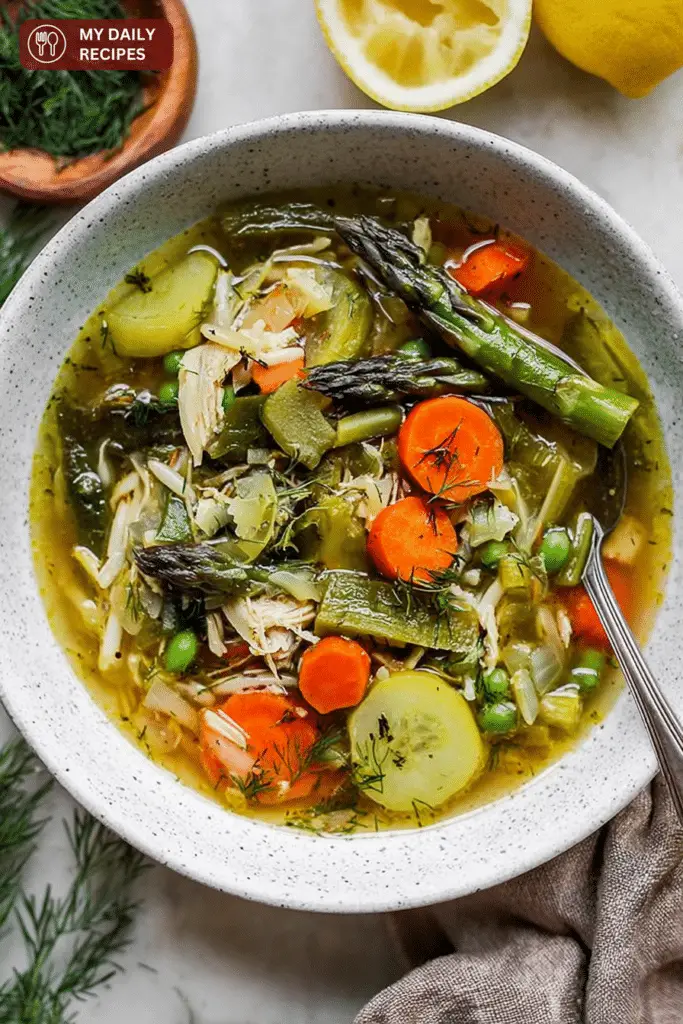
The first time I made this spring vegetable soup I remember the kitchen filling with that unmistakable scent of lemon and fresh herbs — bright, almost grassy, with a warm backbone of sautéed garlic and onions. Spring is the season when markets explode with tender asparagus, sweet peas, and the first bunches of dill and chard, and I wanted a bowl that tasted like that first walk through a sunny farmer’s market. This soup is exactly that: light, green, and comforting in the way one-pot meals can be — warm broth, tender vegetables, little pops of lemon at the end that wake everything up.
I cooked this recipe a handful of times over a few weekends while the weather nudged from winter to spring. The first batch I overcooked the orzo and ended up with a gluey texture — an embarrassing but useful mistake. After that I started stirring the orzo in at the very end, watching the little pearls plump and soften for exactly six minutes. The result was a glossy, spoonable soup that still had structure: bright-green snap peas that crackled under the teeth, soft carrots for sweetness, and flakes of shredded chicken for comfort when I wanted protein. If you prefer it vegetarian, white beans or a can of chickpeas bulk it up without masking the seasonal flavors.
Ingredient List: Fresh Veggies and Flavorful Additions
- Olive oil – used to gently sauté the aromatics and add a silky mouthfeel.
- Onion – builds a savory base; cook until translucent so it sweetens and mellows.
- Garlic – provides fragrant notes; watch closely so it doesn’t burn.
- Carrots – add natural sweetness and color; slice fairly thin for even cooking.
- Asparagus – the star of spring: tender tips and a pleasant snap when just-cooked.
- Snap peas – bring fresh crunch and a sweet, green flavor; add near the end to preserve texture.
- Leek – subtle oniony depth; use only the white and light-green parts and wash well.
- Italian seasoning – a blend that adds herbal backbone; fresh thyme or dill can be used instead.
- Vegetable or chicken broth – the soup’s canvas; low-sodium lets you control the seasoning.
- Orzo – tiny pasta that makes the soup more filling and gives it lovely body.
- Swiss chard (or spinach) – leafy green for color, iron, and a silky finish when wilted.
- Shredded chicken or white beans – for protein; chicken keeps it classic, beans make it vegetarian.
- Fresh dill – bright, herbaceous finish that screams spring.
- Lemon juice – the acid that lifts the whole pot and balances richness.
- Salt + pepper – seasoning is the final, most important step; taste and adjust.
Preparation: Step-by-Step Instructions for Success — spring vegetable soup
- Heat the pot and oil. Warm a large, heavy-bottomed pot over medium-high heat and add a drizzle of olive oil. You want the pan hot enough to make the onions sizzle gently when they hit the oil — that sound tells you the pan is ready. If the oil smokes, the heat’s too high; drop it down a notch.
- Sauté aromatics. Add chopped onion and minced garlic (and sliced leek if using). Stir, then let them cook for about 4–6 minutes until the onion turns translucent and the smell of raw garlic softens into sweet, toasty garlic. This step builds flavor; don’t rush it. If the garlic starts to brown, lower the heat immediately — burnt garlic tastes bitter.
- Add the firmer vegetables. Toss in the carrots, asparagus (trim the woody ends), snap peas, and a sprinkle of Italian seasoning. Season lightly with salt and pepper. Cook for 2–4 minutes while stirring — you want the asparagus to start brightening in color and the carrots to soften slightly but not fall apart. If you prefer your asparagus very tender, add the thicker stems a minute earlier than the tips.
- Pour in the broth and bring to a boil. Add your vegetable or chicken broth, scrape up any browned bits from the bottom with your spoon (that’s flavor!), cover the pot and bring to a gentle boil. Once boiling, reduce to a simmer — a rolling boil is unnecessary and evaporates liquid too quickly.
- Stir in orzo, greens, and protein. When the broth is gently boiling, add the uncooked orzo, chopped swiss chard, and shredded chicken (or a can of rinsed white beans for a vegetarian version). Stir, then set a timer for 6 minutes. This staggered timing prevents the orzo from absorbing all the broth and becoming mushy. If you’re making this ahead or freezing, undercook the orzo slightly — it will finish cooking when reheated.
- Finish with herbs and acid. Turn off the heat and stir in lots of chopped fresh dill and the juice of half a lemon (or a whole lemon if you love brightness). Taste and adjust salt and pepper. The lemon should make the flavors pop; if the soup tastes flat, try a pinch more salt before adding anything else — salt brings out hidden flavors more than sugar does.
- Serve and observe. Ladle into bowls and garnish with extra dill, a drizzle of olive oil, or a smear of grated Parmesan if you aren’t keeping it vegan. The soup should be glossy and slightly opaque from the orzo and chard, with vivid green vegetables that still maintain a bit of bite.
Technique notes and troubleshooting: If your soup ends up too thin, simmer it uncovered for a few minutes until it reduces and concentrates. If it tastes flat, reach for salt or a little more lemon — acid brightens. If the orzo is overcooked, the best fix is to add a handful of fresh greens and a splash of broth; the texture improves as the new ingredients change the mouthfeel. And if your broth tastes too salty from a canned broth, dilute with water and then adjust with lemon and herbs.
Nutritional Benefits of Each Vegetable
- Asparagus – high in vitamin K and folate; low in calories and great for digestive health thanks to its fiber and inulin content.
- Snap peas – a good source of vitamin C and fiber; their natural sweetness adds flavor without sugar.
- Carrots – rich in beta-carotene (vitamin A precursor) for eye health and immune support; also provide fiber and natural sweetness.
- Swiss chard (or spinach) – packed with iron, magnesium, vitamin K, and antioxidants; wilts down to a silky texture and boosts nutrient density.
- Leeks and onions – provide prebiotic fibers that feed good gut bacteria and add depth of flavor with relatively few calories.
- Garlic – contains compounds like allicin with antimicrobial properties and is associated with heart-health benefits when used regularly.
- Orzo – provides carbohydrates and energy; choose whole-grain orzo for more fiber, or substitute with brown rice or quinoa for extra nutrients.
- Chicken (if used) – lean protein source with B vitamins and minerals; balances the carbs from orzo for a more complete meal.
Dietary Accommodations: Vegan and Gluten-Free Variations
This recipe is flexible — here’s how to adapt it.
- Vegan – use a rich, low-sodium vegetable broth and swap the chicken for canned white beans, chickpeas, or cubed, pressed tofu. Finish with the dill and lemon for brightness. Consider a splash of nutritional yeast if you want a savory, cheesy note.
- Gluten-free – replace orzo with a gluten-free orzo (made from rice or corn), or use rice, quinoa, or small gluten-free pasta shapes. Also double-check your broth label, as some commercial broths can contain hidden gluten.
- Low-carb – skip the orzo and add a little extra shredded chicken or another low-carb vegetable like thinly sliced zucchini. The soup will still be satisfying because of the broth, vegetables, and herbs.
- Make-ahead & Freezing – for freezing, omit cooked orzo (or undercook it) because pasta swells and becomes mushy after thawing. Freeze the soup for up to 3 months and add fresh or reheated orzo when you reheat.
Tips for Sourcing Local Produce
I buy most of the vegetables for this soup at the farmer’s market when spring rolls in. Local produce tastes fresher because it’s picked at peak ripeness and sent to market quickly. Here are practical tips I use:
- Look for asparagus with firm, straight stalks and tightly closed tips — limp stalks mean it’s older.
- Choose snap peas that are bright green, plump, and not wrinkled. Give them a gentle squeeze; they should feel crisp.
- Inspect leafy greens for no yellowing or slimy stems. Swiss chard leaves should be supple and glossy.
- When buying leeks, slice one open at home — they can hide grit. Soak sliced leeks in water and rinse until the water runs clear.
- Join a CSA or visit your local farm stand for early-season varieties you won’t find in supermarkets. I often trade recipes with my farmer and learn which varieties are sweetest.
Serving Suggestions: Pairing with Sides or Bread
This soup is lovely as a light main or a hearty starter. My favorite pairings include:
- Crusty bread – a warm baguette or rustic country loaf soaks up the broth and gives textural contrast.
- Simple green salad – a lemony vinaigrette and peppery arugula add brightness and crunch.
- Cheese plate – a little aged Parmesan or Manchego complements the herbaceous dill and lemon. If serving with cheese, offer it grated so guests can sprinkle to taste.
- Garnishes – extra chopped dill, a drizzle of olive oil, a few lemon zest curls, or a scattering of toasted pepitas for crunch.
For presentation, ladle the soup into shallow bowls so the vegetables sit proudly on top of the orzo. A final grind of black pepper and a sprig of dill make it feel intentional and homey.
FAQ
Can I make this soup vegetarian or vegan?
Yes — swap the chicken and use low-sodium vegetable broth, then add plant proteins like canned white beans, chickpeas, or cubed firm tofu. Finish with the fresh dill and lemon as directed.
Is this recipe gluten-free?
Not as written because orzo usually contains wheat. Use a gluten-free orzo, or substitute with rice, quinoa, or a small gluten-free pasta. Also check your broth label for hidden gluten.
How should I store and reheat leftovers?
Refrigerate in an airtight container for 3–4 days. Reheat gently on the stove and add a splash of broth or water if it’s too thick. Note: cooked orzo can absorb liquid — if the soup has thickened in the fridge, stir in hot broth and heat slowly until it loosens.
Can I freeze the soup?
Yes, but for best texture freeze without the cooked orzo (or undercook the orzo). Freeze up to 3 months. Thaw in the fridge, reheat, then cook orzo fresh or stir in pre-cooked orzo at reheating.
Can I swap or add other spring vegetables?
Definitely — baby spinach, peas, zucchini, ramps, or young fennel work well. Add tender greens at the end and give heartier veggies (carrots, thicker asparagus) a bit more cooking time.
Conclusion: Enjoy Your Delicious One-Pot Meal
This spring vegetable soup is exactly the kind of recipe I reach for when I want to eat seasonally but also want comfort. It’s forgiving, fast once you’ve prepped your veg, and flexible enough to handle what’s in your fridge. Expect bright, herb-forward aromas, a spoonable, slightly glossy broth from the orzo, and vegetables that still have a bit of bite if you follow the timing above. I make it when friends drop by last-minute, when I need a nourishing lunch, or when I want a bowl that tastes like spring itself.
Try it as written, then make it your own: swap herbs, add beans, or leave out the orzo for a lighter, brothy version. If you try this recipe, tell me what you changed — did you add ramps or swap in quinoa? I’m always curious how a simple pot of soup becomes a family favorite in someone else’s kitchen.
Happy cooking, and here’s to fresh vegetables, a warm pot, and the slow unfurling of spring.
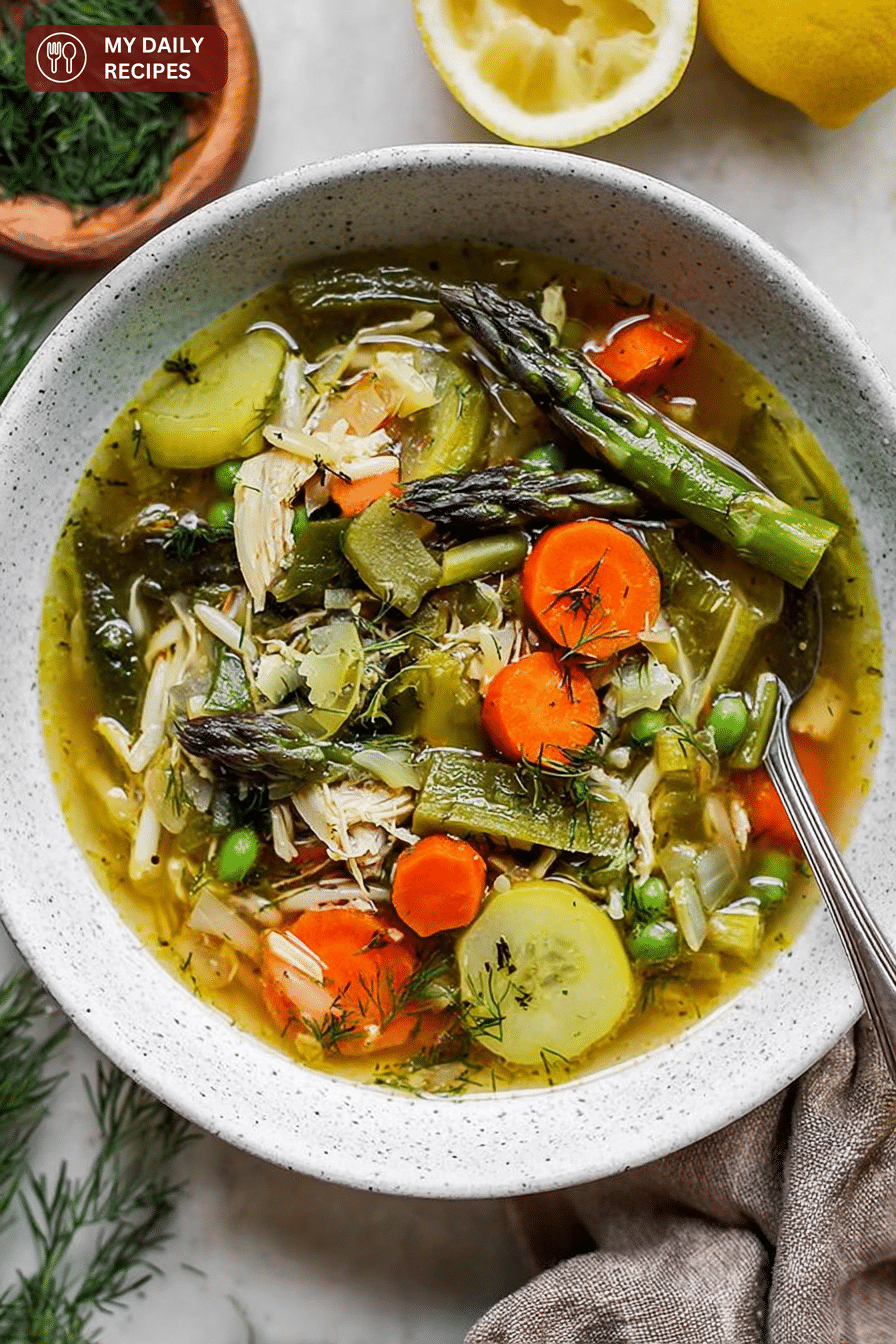
Spring Vegetable Soup
Ingredients
Method
- Heat olive oil in a large, deep pot over medium-high. Add in chopped onion and minced garlic. Stir and cook for 5 minutes.
- Add chopped carrots, asparagus, snap peas, leeks, and Italian seasoning to the pot. Season with salt and pepper, then stir and cook for about 3 minutes.
- Pour in vegetable broth. Cover the pot and bring broth to a boil.
- Once broth is boiling, stir in the uncooked orzo, chopped swiss chard, and shredded chicken. Cook for 6 minutes.
- Stir in the fresh dill and lemon juice. Taste and add more salt + pepper as needed, before serving into bowls.