- Prep
- 20 min
- Cook
- 12 min
- Total
- 32 min
- Serves
- 24
- Calories
- 121 kcal
- Carbs
- 19.00 g
On this page17 quick jumps
TOC
17 quick jumps
Introduction
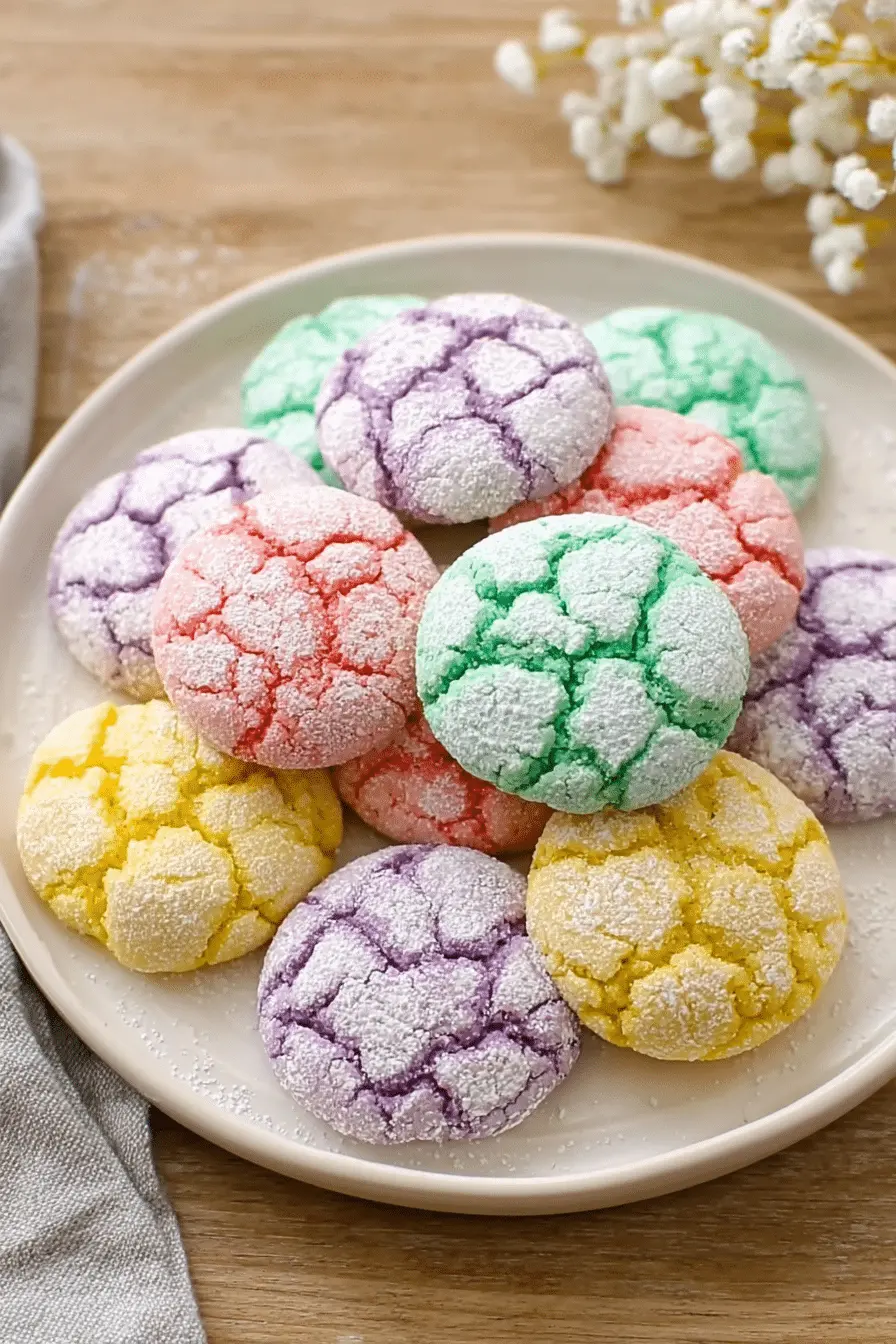
I make these Springtime Crinkle Cookies every season when friends start asking for something colorful but fuss-free. They have that nostalgic crinkled top dusted in powdered sugar and a tender, almost melt-in-your-mouth center—simple enough to throw together on a weekday evening, impressive enough for a spring brunch. In my kitchen I play with different pastel shades and small tweaks to the method until the texture is right: a tender crumb with just enough edge to hold that pretty crackle. The aroma of butter and vanilla as they bake is almost as good as seeing a platter full of soft, pale cookies waiting to be shared. I often bring these to potlucks because they travel well and look festive without much decorating. If you like citrus notes, pair them with a lemon option—try our Lemon Crinkle Cookies for a complementary bright cookie on the same spread.Why These Springtime Crinkle Cookies Are Perfect for Busy Spring Gatherings
These cookies stand out at spring events for a few specific reasons: their pastel palette reads like party décor so you don’t need extra piping or toppers; the dough is easy to portion ahead of time; and the bake time is short so you can pull trays from the oven while greeting guests. Visually they bring instant cheer (that soft pastel contrast against the powdered sugar is very photo-friendly), and the smell of vanilla and a hint of almond rolling through the house makes people stop what they’re doing. Because the dough chills well, you can shape and freeze cookie balls in advance, then bake them the day of your event—so you’re not tied to the oven for hours. For another spring-ready cookie to pair on a dessert table, consider adding a bright lemon option like Lemon Crinkle Cookies.Everything You Need for Springtime Crinkle Cookies
High-quality pantry staples and a few simple tools are all you need. Use the best butter and vanilla you can—they’re small details that make the texture and aroma sing. If you need a gluten-free option, a 1-to-1 gluten-free blend works well; I list more swaps below.- All-purpose flour (or gluten-free blend) – Provides structure; swap with a reliable gluten-free blend formulated for cookies.
- Baking powder – Gives a gentle lift for that soft interior.
- Salt – Balances sweetness and brings out flavor.
- Unsalted butter – The backbone of texture; room temperature butter helps create a light dough.
- Granulated sugar – For sweetness and a bit of chew in the crumb.
- Eggs – Bind and add tenderness; I suggest room temperature eggs for even mixing.
- Vanilla extract – Main flavor note; real vanilla makes a difference.
- Almond extract (optional) – Use sparingly if you like a subtle nutty lift.
- Powdered sugar (for coating) – Creates the crinkle effect and a snowy finish.
- Gel food coloring – Best for vivid pastel shades without adding too much liquid.
The Secret to Soft, Melt-in-Your-Mouth Crinkles
There are a few technique points that decide whether these cookies stay tender or turn firm. First, butter temperature matters: it should be softened so it creams easily with the sugar but not so warm that the dough becomes greasy. Proper creaming traps air that helps the cookie rise slightly and keeps the interior light. Second, mix just until the dry ingredients are incorporated. Overmixing develops gluten and can make cookies tough. Finally, watch the oven closely—pull them when the edges are set and tops have those telltale cracks; carryover heat will finish them so they stay soft inside. You can feel the texture when you break one open: a pillowy crumb that yields easily to your fingers.Why Chilling the Dough Makes All the Difference
Chilling the dough firms the butter back up so the cookies spread less in the oven; that’s how you get taller cookies with pronounced crackles instead of flat discs. The cold also gives the dough time for flavors to mellow and meld—the vanilla and almond notes become rounder and more pronounced after a short rest. When the dough feels cool and slightly stiff to the touch, it will hold its shape when rolled into balls and give you more control over color patches and sugar coating. That coolness also makes rolling in powdered sugar easier and less sticky.How to Get Even Pastel Colors Without Overmixing
Gel colors are concentrated, so a little goes a long way. Use a toothpick’s worth at a time and fold gently until the color is evenly distributed—stop as soon as there are no streaks. If you need a softer shade, add another tiny dab; if you want a stronger shade, let the dough rest and the color will read a touch deeper after chilling.- Work in small portions so you can control each color without overworking the whole batch.
- If the dough becomes tacky while coloring, chill it briefly before shaping.
- For marbled or two-tone cookies, fold one colored portion into another just a couple of times to keep distinct swirls.
How to Make Springtime Crinkle Cookies (Step-by-Step)
- Preheat your oven and line baking sheets with parchment or a silicone liner so cookies release cleanly.
- Cream softened butter and sugar until light and pale; this creates a tender texture and a subtle lift.
- Add eggs one at a time, mixing until each is just incorporated, then stir in vanilla and almond if using.
- Fold in dry ingredients until the dough comes together; avoid vigorous mixing once the flour is added to keep the cookies soft.
- Divide the dough into portions and add a tiny amount of gel coloring to each, folding gently until evenly colored—chill the dough for at least 30 minutes to firm it up.
- Portion chilled dough into tablespoon-sized balls, roll each in powdered sugar until fully coated, and space them about two inches apart on the sheet so they can spread and crack nicely.
- Bake until the edges are set and the tops have visible cracks; remove from oven and let cool on the baking sheet for a few minutes before transferring to a rack to cool completely.
- Troubleshooting hints: If cookies flatten too much, chill the dough longer; if they look underbaked in the center, give them an extra minute in the oven but avoid overbaking.
Pro Tip for Springtime Crinkle Cookies: Gluten-free & Vegan Swaps That Work
- Use a 1-to-1 gluten-free flour blend designed for baking—some blends include xanthan gum which helps mimic gluten’s structure.
- For vegan cookies, replace each egg with a flax or chia "egg" (mix ground seed with water), or a commercial egg replacer, and use dairy-free stick-style butter for best texture.
- If you rely on almond extract for flavor, use a touch more vanilla if nuts aren’t an option.
- Low-sugar options: swap part of the granulated sugar for a powdered erythritol blend formulated for baking, but expect a slightly different crumb and color.
- Want more detailed gluten-free guidance? Read this Pro Tip for Gluten-Free Baking for pantry swaps and handling tips.
How to Store and Make-Ahead Springtime Crinkle Cookies
These cookies keep their texture best in an airtight container at room temperature for several days. If you need to prepare ahead, shape the dough into sugar-coated balls, freeze them on a tray, then transfer to a sealed bag—bake straight from frozen, adding a minute or two to the bake time. For longer storage, fully baked cookies freeze well in layers separated with parchment. Label your containers with the date so you can track freshness. For more detailed storage methods, check this guide on How to Store Cookies Properly.Pairing Suggestions for Beverages to Complement the Cookies
These pastel cookies pair with a range of drinks depending on the vibe you want:- Light teas like chamomile or a mild Earl Grey bring a floral lift that complements subtle almond notes.
- Classic cold milk or a lightly sweetened iced latte balances the sugar and feels nostalgic.
- Homemade lemonade or a lemon spritzer adds a bright contrast—if you’re serving citrus alongside, try pairing with Glazed Lemon Cookies for variety.
The History of Crinkle Cookies
Crinkle cookies have a friendly, home-baked history rooted in simple techniques that create a pretty cracked top: a sugar coating over a dough that spreads and rises, cracking as it bakes. Over the decades, bakers have adapted this basic idea across cultures—using chocolate, citrus, or spice bases—and it became especially popular in mid-20th-century home baking where simple, visually appealing treats were prized for gatherings. The charm of crinkle cookies is their approachable look: imperfections in the cracks make each cookie unique, and that easy, homemade appearance is part of why they remain a springtime favorite.Pro-Tips
- Chill colored dough for at least 30 minutes; it’s easier to handle and produces sharper crackles.
- Use gel color, not liquid food coloring, to avoid changing dough consistency.
- Lightly dust powdered sugar right before serving for the freshest look.
- If making multiple colors, work on one color at a time to prevent cross-contamination of hues.
Troubleshooting
- I noticed dough that’s too soft tends to spread flat—if that happens, chill it longer or add a touch more flour to firm things up.
- If cookies come out dry, you likely overbaked; reduce oven time by a minute and test one tray first.
- If your colors bleed, you added too much liquid coloring; next time use a smaller amount of gel color and fold gently.
- For cracked tops that don’t form, make sure the dough is well coated in powdered sugar and bake on a moderately hot sheet so the surface sets while the interior expands.
Variations
- Add citrus zest to the dough (lemon or orange) for a fresh twist that pairs beautifully with pastel colors.
- Make marbled cookies by lightly folding two pastel doughs together for a swirled look.
- Swap in spices like cardamom or ground ginger for a warmer spring flavor profile.
- Top a few with a tiny sprinkle of colored sanding sugar before baking for extra sparkle.
Frequently Asked Questions
Can I make these crinkle cookies gluten-free? Yes! You can substitute the all-purpose flour with a gluten-free flour blend to make these cookies gluten-free. How do I store Springtime Crinkle Cookies? Store the cookies in an airtight container at room temperature for up to a week. You can also freeze them for longer storage! Can I use different colors for the gel food coloring? Absolutely! Feel free to use any pastel shades you like to customize the look of your cookies. What if I don't have almond extract? No problem! You can simply omit the almond extract or replace it with additional vanilla extract for flavor. Why is it important to chill the dough? Chilling the dough helps prevent the cookies from spreading too much during baking, resulting in a thicker, softer texture.Ingredients
- 2 cupsall-purpose flour
- 1.5 teaspoonsbaking powder
- 0.25 teaspoonsalt
- 0.5 cupunsalted butter, softened
- 1 cupgranulated sugar
- 2 largeeggs
- 1 teaspoonvanilla extract
- 0.5 teaspoonalmond extract (optional)
- 0.5 cuppowdered sugar, for coating
- —gel food coloring in pastel shades
Instructions
- 1
Preheat oven to 350°F (175°C) and line a baking sheet with parchment paper.
- 2
Whisk together flour, baking powder, and salt in a medium bowl.
- 3
In a large bowl, beat butter and sugar until light and fluffy. Add eggs one at a time, mixing well after each addition.
Taste as you go. Recipes are a guide, not a contract.
- 4
Stir in vanilla and almond extracts, then gradually fold in the dry ingredients to form a thick dough.
- 5
Divide dough into portions and add pastel gel food coloring to each, mixing until colors are even. Chill for at least 30 minutes.
- 6
Roll tablespoon-sized balls of dough in powdered sugar until fully coated. Place 2 inches apart on baking sheet.
- 7
Bake for 10–12 minutes or until tops crack and edges are set. Let cool on the sheet for a few minutes before transferring to a rack to cool completely.
Recipe Card
How I Make Springtime Crinkle Cookies — Soft, Pastel, 30 Min
Keep it handy for later, send it to someone cooking with you, or open the clean print view.
- Prep
- 20 min
- Total
- 32 min
- Serves
- 24
You might also like
How I Make Quick Blueberry Lemon Jam — Canning in 1 Hour
May 21, 2026
The 5-Ingredient Japanese Jelly Dessert I Make All Summer
May 21, 2026
The Homemade Peachy Gummies My Kids Love — Fun, Simple Treat
May 21, 2026
How I Make Green Tea Lemon Ginger Gummies for Daily Immune Support
May 21, 2026
Reviews
Be the first to review this.