- Prep
- 15 min
- Cook
- 20 min
- Total
- 40 min
- Serves
- 12
- Calories
- 250 kcal
Introduction
Introduction to Strawberry Danish
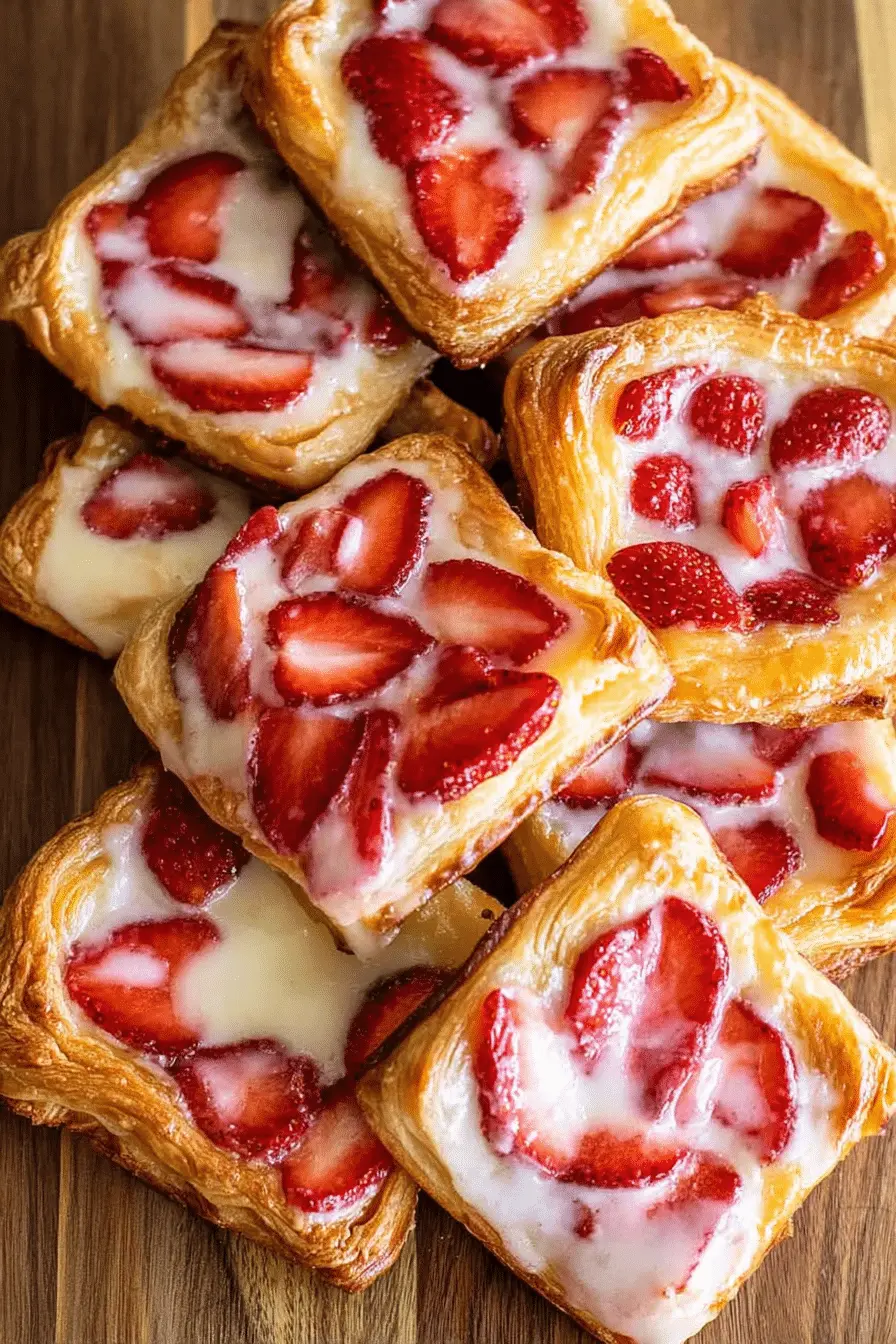
I remember the first time I tried to replicate a bakery strawberry danish at home: the kitchen smelled like caramelized butter and warm strawberries, my counter was dusted with flour, and the first batch came out a little flat because I had over-handled the pastry. Years of repeating the recipe — tweaking chilling times, experimenting with fillings, and learning how the dough responds — have given me a version I make whenever I want something that feels a little special but comes together without a dozen tricky maneuvers. There is something irresistible about a strawberry danish: the first bite is all about texture — a crisp, layered edge that gives way to a soft, buttery center, the gentle tang of sweetened cream cheese, and bright, slightly jammy strawberries. These danishes are classic bakery comfort food — common in cafés and weekend brunch spreads — but they’re surprisingly doable at home, especially using thawed puff pastry. Below I’ll walk you through a tested method that yields about 12 danishes, with notes on what to watch for and how to fix common problems.Ingredients You'll Need
- Strawberries – provide fresh, juicy topping and a bright, slightly acidic contrast to the rich cream cheese.
- Cornstarch – thickens the strawberry juices so the filling isn’t runny after baking.
- Sugar – adds sweetness to both the berries and the pastry topping; use slightly more for very tart strawberries.
- Cream cheese – the base of the filling; room temperature cream cheese whips smooth and gives a tangy, rich texture.
- Powdered sugar – sweetens the cream cheese filling and makes a smooth glaze if you choose to drizzle one.
- Vanilla extract – adds depth and rounds out the dairy sweetness in the filling and glaze.
- Puff pastry sheets – the backbone of the danish; use frozen sheets thawed until pliable but still cool.
- Egg – beaten with a touch of water to make an egg wash for shiny, golden edges.
- Strawberry jam – optional warming glaze that gives a glossy finish and intensifies fruit flavor.
- Milk – used to loosen the glaze if needed; a little goes a long way.
- Optional extra sugar – sprinkle on pastry edges for a crunch and sparkle.
- Vegan / Gluten-free options – use dairy-free cream cheese or silken tofu blended for a dairy-free filling, and swap in store-bought gluten-free puff pastry for a gluten-free version.
Step-by-Step Instructions
Below I give a straightforward sequence using basics from my kitchen. I include exact cooking times and yield so you can follow and expect consistent results: this makes about 12 danishes, takes roughly 15 minutes active prep plus chill and 20–25 minutes bake time.- Thaw the puff pastry — Pull the frozen puff pastry out of the fridge and let it thaw at room temperature for about 30–45 minutes. You want it flexible but still cool to the touch; if it gets sticky, pop it back in the fridge for 10 minutes. Why this matters: cold pastry keeps the butter in layers; warm pastry creams the butter into the dough and won’t puff properly.
- Preheat and prep — Preheat the oven to 400°F (204°C) and line two large baking sheets with parchment paper. Having your oven fully up to temperature ensures the pastry puffs quickly and crisps instead of slowly melting.
- Prepare the strawberries — Clean and slice about 4 cups of strawberries, then toss them with 1 tablespoon cornstarch and 1 tablespoon sugar in a mixing bowl. Let them sit for 15 minutes at room temperature so they release a little juice and the cornstarch begins to thicken the syrup. Cooking note: if your berries are very juicy, add an extra 1/2 teaspoon of cornstarch; if they’re on the sweet side, you can reduce added sugar by a teaspoon.
- Mix the cream cheese filling — In another bowl, beat 8 ounces (226 g) room-temperature cream cheese until smooth, then mix in 1/2 cup (60 g) powdered sugar and 1 teaspoon vanilla extract until velvety. Taste and adjust: if it tastes flat, a tiny pinch of salt (1/8 teaspoon) will sharpen the flavors. If it’s too thick to spread easily, a teaspoon of milk loosens it without making it runny.
- Cut and score the puff pastry — Unfold one pastry sheet and cut along the fold lines into three long rectangles, then cut each rectangle in half to make six smaller rectangles total per sheet. Using a small paring knife, lightly score a 1/4-inch border around each rectangle without cutting all the way through — this creates a raised edge when baked and gives you a little tray to hold the filling.
- Assemble — Smooth about 1 tablespoon (15 ml) of the cream cheese filling into the center of each rectangle, staying inside the scored border. Layer the sliced strawberries decoratively on top of the cream cheese — I do two thin overlapping rows so they hold together and heat evenly.
- Egg wash and topping — Lightly brush the exposed borders with the beaten egg mixture (1 large egg + 1 teaspoon water). If you like, sprinkle 2–3 tablespoons sugar across the top for a sparkly crunch. The egg wash helps the pastry develop a deep golden color.
- Chill before baking — If the puff pastry looks slightly warm or sticky after assembling, refrigerate the baking sheet for 15–20 minutes. This chilling step is one of my secret weapons — it helps the layers stay defined so the pastry puffs beautifully instead of spreading.
- Bake — Bake the danishes for 20–25 minutes at 400°F (204°C), or until the pastry is a light golden brown and puffed along the edges. You should hear a gentle crackle as the layers separate and crisp. If the tops are browning too fast before the centers set, tent loosely with foil for the last 5 minutes.
- Cool and finish — Cool the baked danishes on the hot baking sheet for 5 minutes, then transfer to a wire rack to cool to room temperature. Warm up 1/4 cup (60 ml) strawberry jam and brush it over the strawberries for a glossy finish, and dust or drizzle with a simple vanilla glaze made by whisking 1 cup (120 g) powdered sugar with 1–2 tablespoons (30–45 ml) milk and 1/2 teaspoon vanilla until smooth. Serve slightly warm or at room temperature.
Tips for Perfect Puff Pastry
I’ll be blunt: puff pastry is temperamental, but manageable. Here are practical rules I rely on every time I bake:- Keep it cold. The butter inside the layers must stay solid until it hits the oven. Warm butter merges into the dough and you’ll lose lift.
- Don’t overwork it. Handle the dough minimally — cut cleanly, score gently, and limit pressing. Finger warmth is the enemy of flaky layers.
- Score, don’t cut through. That little 1/4" border is what forms the raised rim and keeps the filling contained.
- Chill after assembling. Fifteen to twenty minutes in the fridge makes a noticeable difference in puff and shape.
- Even oven temperature matters. If your oven runs hot or cold, use an oven thermometer. Too hot and pastry browns before it rises; too cool and it becomes chewy.
- Use the right egg wash. A thin wash (egg plus a teaspoon of water) gives color without burning; brush only the edges so the filling doesn’t turn rubbery.
- Let it rest after baking. The pastry crisps further as it cools; cutting right away can compress the layers.
Storing and Reheating Leftovers
These danishes are best the day they’re made, but you can absolutely keep and reheat them with good results. If you have leftover dough, you can use it to make maple glazed donuts for a delightful treat the next day.- Refrigeration: Store cooled danishes in an airtight container in the refrigerator for up to 3 days. They’ll lose some crispness but remain tasty; bring to room temperature before reheating for best texture.
- Freezing: Freeze assembled but unbaked danishes on a sheet tray until solid, then transfer to a freezer bag for up to 1 month. Bake from frozen, adding 5–8 minutes to the bake time and keeping the oven temperature the same. Alternatively, freeze fully baked danishes wrapped individually; thaw in the fridge overnight before reheating.
- Reheating: The oven is your friend. Reheat at 350°F (175°C) for 7–10 minutes to revive crisp edges and warm the filling. Avoid the microwave unless you’re in a rush — it will make the pastry soggy. If you must use the microwave, zap for 10–15 seconds and then briefly crisp under the broiler or in a hot skillet.
Variations: Other Berries and Fillings
If you love experimenting, swap or add berries and fillings to change the flavor profile with minimal extra effort. For a fun twist, try making strawberry shortcake cupcakes as an alternative dessert option.- Blueberries – use whole berries tossed with a little cornstarch; bake a touch less if berries are small and tender.
- Raspberries – delicate and tart; I like to mix raspberries with a spoonful of jam because they can break down quickly.
- Blackberries – meatier, less sugary; add a bit more sugar or a spoonful of jam to balance tannins.
- Cream cheese + lemon zest – brighten the filling with 1 teaspoon lemon zest for a sharper, fresher note.
- Almond paste – use a thin layer under the cream cheese for a nutty, frangipane-like base; reduce sugar slightly.
- Dairy-free options – swap cream cheese for a vegan cream cheese or a silken tofu blend; texture will be slightly different but delicious.
Serving Suggestions and Presentation
Presentation is part of the joy. I often serve these on a wooden board or a simple white platter so the colors pop. A light dusting of powdered sugar or a thin glaze makes them look bakery-fresh. Consider pairing your strawberry danish with easy strawberry cream puffs for an irresistible dessert spread.- Garnishes: fresh mint leaves, a tiny sprinkle of flaky sea salt (if you used extra sugar), or slivered almonds for crunch.
- Accompaniments: whipped cream, a scoop of vanilla ice cream, or a small pot of extra warmed strawberry jam for extra dipping.
- Plating tips: arrange danishes in a circle for gatherings, add fresh whole strawberries on the platter, and use a small sifter to dust powdered sugar right before serving so it doesn’t melt.
Nutrition Breakdown
Nutrition will vary by brand of puff pastry, how much filling you use, and whether you add a glaze. Below are approximate values per danish when you make 12 from the ingredients listed (estimate):- Calories: ~320–380 per danish (depending on pastry size and amount of glaze/jam)
- Total fat: ~18–24 g (largely from puff pastry butter and cream cheese)
- Saturated fat: ~9–12 g
- Carbohydrates: ~36–45 g (includes sugars from fruit and added sugar)
- Fiber: ~1–2 g (strawberries contribute a bit of fiber)
- Protein: ~4–6 g (mostly from cream cheese)
- Sugar: ~12–18 g (will be higher if you brush on jam or add a glaze)
FAQ
- Can I use fresh strawberries instead of frozen ones?Absolutely! Fresh strawberries will work perfectly in this recipe and will add even more flavor.
- How can I make this recipe gluten-free?You can substitute regular puff pastry with gluten-free puff pastry available in stores, ensuring all other ingredients are also gluten-free.
- What can I use instead of cream cheese for a dairy-free option?You can use a dairy-free cream cheese alternative or a mixture of silken tofu blended until smooth for a similar texture.
- How do I store leftover strawberry danishes?Store them in an airtight container in the refrigerator for up to 3 days, or freeze for longer shelf life.
- What other fruit can I use in this recipe?You can use other berries like blueberries, raspberries, or blackberries for delicious variations!
Conclusion and Final Thoughts
Making strawberry danishes at home is one of those satisfying projects that feels more complicated than it is — especially when you follow a few proven techniques: keep the pastry cold, score a border, chill before baking, and finish with a glossy jam or simple vanilla glaze. I’ve tested versions with extra lemon zest, almond paste, and different berry combos, and this basic method reliably gives flaky, golden-puffed pastries with a creamy, bright filling. When I serve a tray of warm danishes to family or friends, there’s always that moment when the room quiets and everyone takes that first bite — that’s what keeps me baking these again and again. If you try them, let your oven and your berries guide you a bit: look for that light golden color, the gentle puff at the edges, and a shiny finish from the jam or glaze. For more strawberry-inspired desserts, check out our delicious strawberry cake, perfect for any occasion.Recipe Card
Easy Strawberry Danish Recipe: A Perfect Summer Treat
- Prep
- 15 min
- Cook
- 20 min
- Total
- 40 min
- Serves
- 12
- Calories
- 250 kcal
Ingredients
- 4 cupssliced strawberries
- 1 tablespooncornstarch
- 1 tablespoonsugar
- 8 ozcream cheese, room temperature
- ½ cuppowdered sugar
- 1 teaspoonvanilla extract
- 2 sheetspuff pastry, thawed
- 1 largeegg, lightly beaten with 1 teaspoon water
- 2 - 3 tablespoonssugar for topping, optional
- ¼ cupstrawberry jam, optional for topping
- 1 cuppowdered sugar for glaze
- ½ teaspoonvanilla extract for glaze
- 2 - 3 tablespoonsmilk for glaze
Instructions
- 1
Thaw puff pastry at room temperature for about 30 - 45 minutes. Preheat oven to 400 F (204 C) and line two baking sheets with parchment paper.
- 2
In a mixing bowl, combine sliced strawberries, sugar, and cornstarch. Mix well and let sit for 15 minutes.
- 3
In another bowl, mix room temperature cream cheese until smooth. Add powdered sugar and vanilla extract, mixing until well combined. Adjust flavor if necessary.
- 4
Unfold puff pastry sheet and cut along the folds to create six smaller rectangles. Score a border about ¼ inch from the edges.
- 5
Spread 1 tablespoon of cream cheese filling in the center of each rectangle and layer with fresh strawberries. Brush edges with beaten egg and sprinkle with sugar, if desired.
- 6
Chill in the fridge for 15 - 20 minutes before baking, to allow the pastry to puff up beautifully. Bake for 20 - 25 minutes until golden brown.
- 7
Cool on the baking sheet for 5 minutes before transferring to a cooling rack. Top with optional strawberry jam or a vanilla glaze made from powdered sugar, milk, and vanilla extract.
You might also like
Reviews
Be the first to review this.