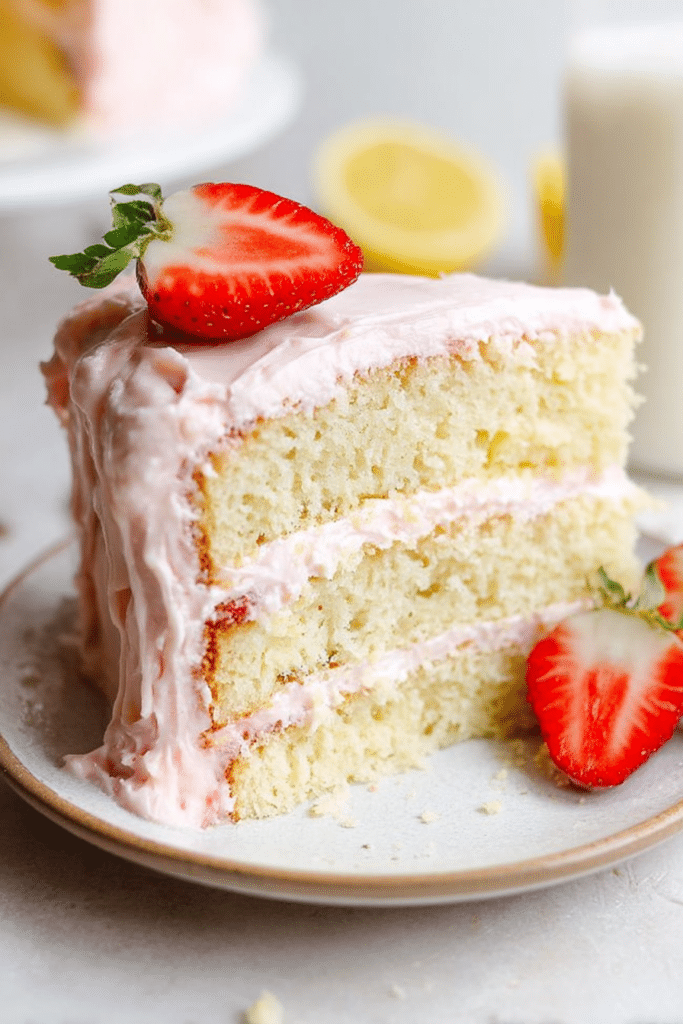
I bake this strawberry lemon cake whenever I want a centerpiece that looks as joyful as it tastes. I love how the pale yellow layers and the pink buttercream sit together—simple, elegant, and unmistakably festive. In my kitchen this cake has become my go-to for showers and backyard parties because it photographs beautifully and guests always ask for seconds.
I remember the first time I tested this recipe: the batter smelled of bright lemon and the kitchen felt like spring. I learned the hard way that a thin, confident crumb coat makes all the difference when you want clean slice lines at a party. Over the years I’ve adjusted little things—more sour cream for tenderness, a touch of oil to keep the crumb plush—and those tweaks are what I share here.
If you’re planning a gathering, this cake is forgiving and showy at the same time. It keeps well in the fridge, travels nicely with a chilled crumb coat, and the flavors stay lively even a day later. Read on and I’ll walk you through the why and the how with tips from my kitchen, so you can present a cake that feels both effortless and special.
Why This Strawberry Lemon Cake Is Perfect for Parties
This cake dresses up a table without demanding last-minute fuss. The vibrant colors and cheerful appearance make it an inviting choice; guests are drawn to the fresh strawberries and thin lemon slices on top. Because it’s layered, it feels celebratory—each slice is a moment worth sharing.
Sensory note: imagine the bright citrus aroma as you slice the cake and the gentle pink of the buttercream against the lemon layers. I find that pairing fresh fruit on top keeps the presentation lively and makes the cake feel seasonal and welcoming.
Everything You Need for Strawberry Lemon Cake
Use good-quality, fresh ingredients and a few reliable tools to make the process smooth. Prepare your pans and workspace before you start so you can work confidently—this is what separates a nervous bake from a composed one.
- All-purpose flour – The backbone for structure; if you need gluten-free alternatives, see the swap notes below.
- Cornstarch – Helps keep the crumb tender for a light, cake-like texture.
- Baking powder & baking soda – Leavening agents that give lift and a soft crumb.
- Salt – Balances the sweetness and brightens the lemon flavor.
- Granulated sugar – Provides structure and pairs with lemon zest for fragrance.
- Lemon zest & lemon juice – The primary flavor; use unwaxed lemons for the cleanest zest aroma.
- Butter – Adds flavor and richness; room-temperature butter whips in air for a lighter cake.
- Eggs – Give structure and help with rise; bring them to room temperature for best incorporation.
- Sour cream – Keeps the cake moist and adds a subtle tang; yogurt is an acceptable substitute.
- Vegetable oil – Keeps the crumb soft and helps the cake stay tender overnight.
- Butter and powdered sugar for buttercream – Use unsalted butter so you can control seasoning in the frosting.
- Freeze-dried strawberry powder – For concentrated strawberry flavor and vibrant color without extra moisture.
- Vanilla and milk – Round out the buttercream texture and flavor.
- Fresh strawberries and lemon slices – For garnish and a bright finish.
- Tools – A stand mixer or hand mixer, mixing bowls, a fine sieve for powdered sugar, an offset spatula, cake pans, parchment paper, and a cooling rack make the process easier and neater.
The Secret to a Moist, Fluffy Lemon Layer
The trick is balancing tenderening agents (sour cream and a splash of oil) with proper aeration from creamed butter and sugar. I’ve found that rubbing lemon zest into the sugar before creaming releases more citrus oils—this small step makes the lemon flavor feel fresh and immediate without being harsh.
When combining dry and wet ingredients, use a gentle folding technique: add half the dry, then the wet, then the rest of the dry. I often stop mixing when I can still see the tiniest streaks of flour, then finish folding by hand—this keeps the cake from turning dense.
Sensory focus: you should be able to notice a light, satiny batter that pours slowly from the spatula—smooth and slightly glossy. That texture bakes into a tender, moist crumb that’s perfect for layering.
Why Room-Temperature Ingredients Matter Here
Room-temperature butter traps air when creamed with sugar; those tiny air pockets help lift the cake during baking. Cold ingredients, on the other hand, resist integration and can cause batter to curdle, producing a heavier result.
I always place eggs and dairy on the counter about 30–60 minutes before baking. The difference is tactile: room-temp butter feels soft but not melted, and the batter will whisk up smooth and slightly fluffy—an instant clue that you’re headed toward a tender cake.
How Freeze-Dried Strawberry Powder Makes the Buttercream Pop
Freeze-dried strawberry powder concentrates flavor and color without introducing water. That means you get vivid pink color, an aromatic strawberry note, and a stable frosting that won’t soften the buttercream the way blended fresh strawberries can.
Compared with fresh strawberries, powdered freeze-dried fruit keeps the buttercream’s texture silky and holds up well at room temperature during service. Look for 100% freeze-dried strawberries (no additives) from reputable suppliers or specialty baking sections; they rehydrate slightly in the frosting and give a clear fruit flavor.
Sensory visualization: imagine a bright, fragrant pink buttercream that smells fruity and looks polished—perfect for party display.
How to Make Strawberry Lemon Cake (Step-by-Step)
- Preheat your oven and prepare your pans so you can move quickly when the batter is ready.
- Whisk together the dry ingredients and set them aside so they’re evenly aerated.
- Rub lemon zest into the granulated sugar until fragrant, then cream with room-temperature butter until light and airy—this builds the base for a tender cake.
- Beat in the eggs gradually so the batter remains emulsified and smooth; stop mixing once they’re incorporated.
- Add half the dry mix, then the sour cream, oil, lemon juice, and vanilla, followed by the remaining dry mix. Finish by folding gently with a spatula to avoid overworking the batter.
- Divide the batter into your prepared pans and bake until a tester comes out clean and the tops spring back—timing will depend on your pan size and oven.
- Cool the layers on a rack, then remove them from the pans once slightly cooled and let them come to room temperature before assembling.
- For the buttercream, sift powdered sugar and strawberry powder, beat your butter until creamy, then add the dry mix in batches. Adjust texture with a little milk if needed and flavor with vanilla.
- Build the cake by placing the first layer on your serving plate, adding an even layer of buttercream, then repeating. Apply a thin crumb coat, chill briefly to set, then finish frosting and decorate with fresh strawberries and lemon slices.
Common troubleshooting tips (quick reference):
- If the cake sinks in the center, your oven temperature may be too low or the batter was underbaked—use an oven thermometer and test with a skewer.
- If the crumb coat pulls bits of cake, chill the cake longer before applying the second coat.
- If the buttercream is too stiff, add milk a teaspoon at a time; if too soft, chill briefly and re-whip.
Pro Tip for Strawberry Lemon Cake: Gluten-Free & Vegan Swap Notes
I’ve tested a few swaps and these options keep the spirit of the cake intact while accommodating dietary needs. I list the gluten-free and vegan adaptations separately so you can pick what fits your event.
- Gluten-Free Options
- Use a reliable gluten-free all-purpose blend that contains xanthan gum for structure.
- Check that your baking powder and other packaged ingredients are labeled gluten-free.
- Expect slightly finer crumb—treat the layers gently when stacking to avoid crumbling.
- Vegan Options
- Replace eggs with a commercial egg replacer or a blend of aquafaba and a bit of baking soda for lift.
- Use plant-based sour cream or full-fat coconut yogurt to retain moisture.
- Swap butter for a firm plant-based butter for the cake and a stable vegan margarine or coconut-based spread for the frosting; chill the frosting slightly if it becomes too soft.
How to Store, Transport, and Make-Ahead Strawberry Lemon Cake
- To store assembled cake: keep it covered in the refrigerator for up to three days; bring to room temperature for about 30 minutes before serving to brighten flavors.
- To freeze layers: wrap each cooled layer tightly in plastic wrap and foil; freeze for up to three months. Thaw overnight in the refrigerator, then come to room temperature before frosting.
- To transport: apply a chilled crumb coat, place the cake on a flat, non-slip surface inside a cake carrier, and keep it cool in transit—an ice pack under the carrier helps if you have to travel.
- Make-ahead timeline: you can bake layers one day ahead and assemble the next day; buttercream can be made a day ahead and re-whipped briefly before use.
Easy Variations and Citrus Twists to Try Next Time
- Swap lemon for lime in the batter and top with candied lime slices for a zesty twist.
- Add a thin layer of lemon curd between layers for an extra burst of citrus brightness.
- Stir a splash of orange blossom water into the buttercream for a floral note that complements strawberries.
- Fold finely chopped fresh basil or mint into the frosting for a surprising herbaceous lift—pair with a lighter lemon cake for balance.
- Use other freeze-dried fruit powders (raspberry or blueberry) to tint the buttercream different shades and flavors for seasonal variations.
I hope these notes give you the confidence to make this cake for your next gathering. It’s a recipe that rewards small attentions—zesting the lemon into the sugar, chilling the crumb coat—and in return it gives a bright, festive centerpiece that feels like a celebration on the table.
Frequently Asked Questions
Can I use fresh strawberries instead of freeze-dried strawberry powder?
Yes, you can use fresh strawberries in the buttercream, but the texture and flavor may differ. Freeze-dried strawberry powder provides a concentrated flavor without adding excess moisture.
How can I make this cake gluten-free?
To make a gluten-free version, simply substitute the all-purpose flour with a gluten-free flour blend. Ensure that all other ingredients are also gluten-free.
Why do the ingredients need to be at room temperature?
Room-temperature ingredients mix more easily and evenly, which helps achieve a lighter and fluffier cake. Cold ingredients can cause the batter to curdle or not blend well.
How should I store the leftover cake?
Wrap the cake tightly in plastic wrap and store it in the refrigerator for up to 3 days. For longer storage, you can freeze it for up to 3 months.
Can I prepare the cake batter in advance?
You can prepare the cake batter in advance and refrigerate it for a short time, but it’s best to bake the cake shortly after mixing for optimal fresh flavors and texture.
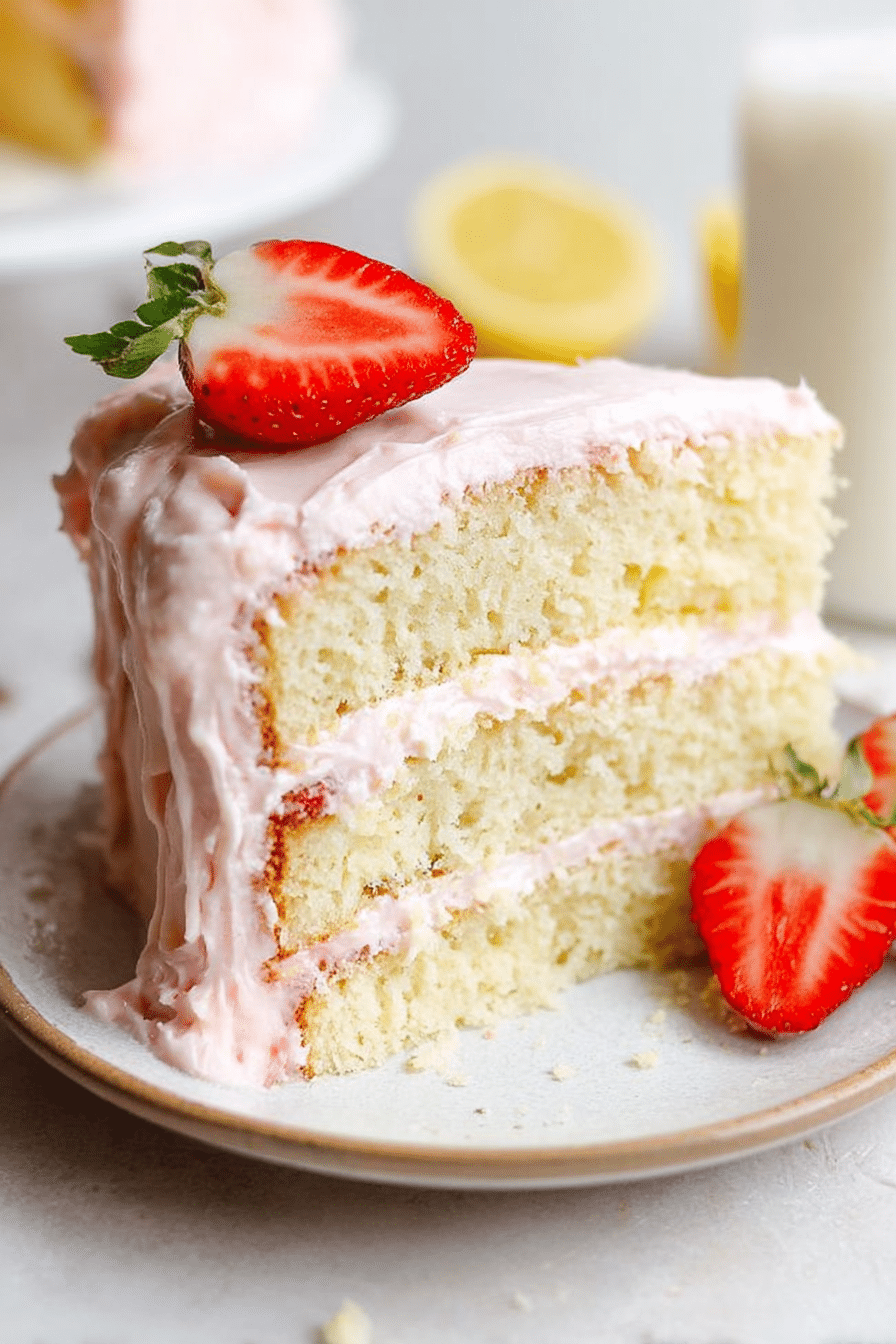
Strawberry Lemon Cake
Ingredients
Method
- Preheat the oven to 170ºC/340ºF and prepare a 3 x 20 cm/8-inch baking pan with parchment paper.
- Sift together the all-purpose flour, cornstarch, baking powder, baking soda, and salt.
- In a mixing bowl, add granulated sugar and lemon zest, rub together, then add butter and mix on high speed for 3 minutes.
- Add eggs two at a time, mixing until combined on low speed.
- Mix in half of the dry ingredients, then add sour cream, vegetable oil, lemon juice, and vanilla; mix until just combined. Add the remaining dry ingredients and mix until combined.
- Gently fold the batter to ensure all ingredients have combined.
- Divide batter into prepared pans and bake for 20-23 minutes until a cake tester comes out clean.
- Let the cakes cool on a rack, then remove from the pan and allow to cool completely.
- Sift the powdered sugar and freeze dried strawberry powder. Mix the butter in a stand mixer on medium/high speed for 4 minutes, then add sifted sugars in two parts, mixing until incorporated.
- Place the first cake layer on your serving dish, spread buttercream, add the next layer and repeat. Cover with a crumb coat and chill for 20 minutes.
- Add the remaining buttercream and smooth it out; decorate with fresh strawberries and lemon slices.