- Prep
- 180 min
- Cook
- 50 min
- Total
- 230 min
- Serves
- 8
- Calories
- 250 kcal
- Carbs
- 36.00 g
Introduction
I remember the first time I baked a strawberry rhubarb pie for my family: the house smelled like warm sugar and spring, and my grandmother wiped her eyes before she even took a bite. That memory is why I make this pie every spring — it’s the one dessert that tastes like a season and like home. Over the years I learned the mistakes to avoid and the small tricks that make this pie worth the fuss.
My kitchen still carries that same scent when the rhubarb comes in: a bright, tart note that wakes up the sweet strawberries. I like to set the filling to macerate a little while the dough chills, and that short wait always pays off when the fruit bakes down into a glossy, deeply flavored filling. I’ve baked this enough times to know where the crust wants help, and how a little patience makes everything come together.
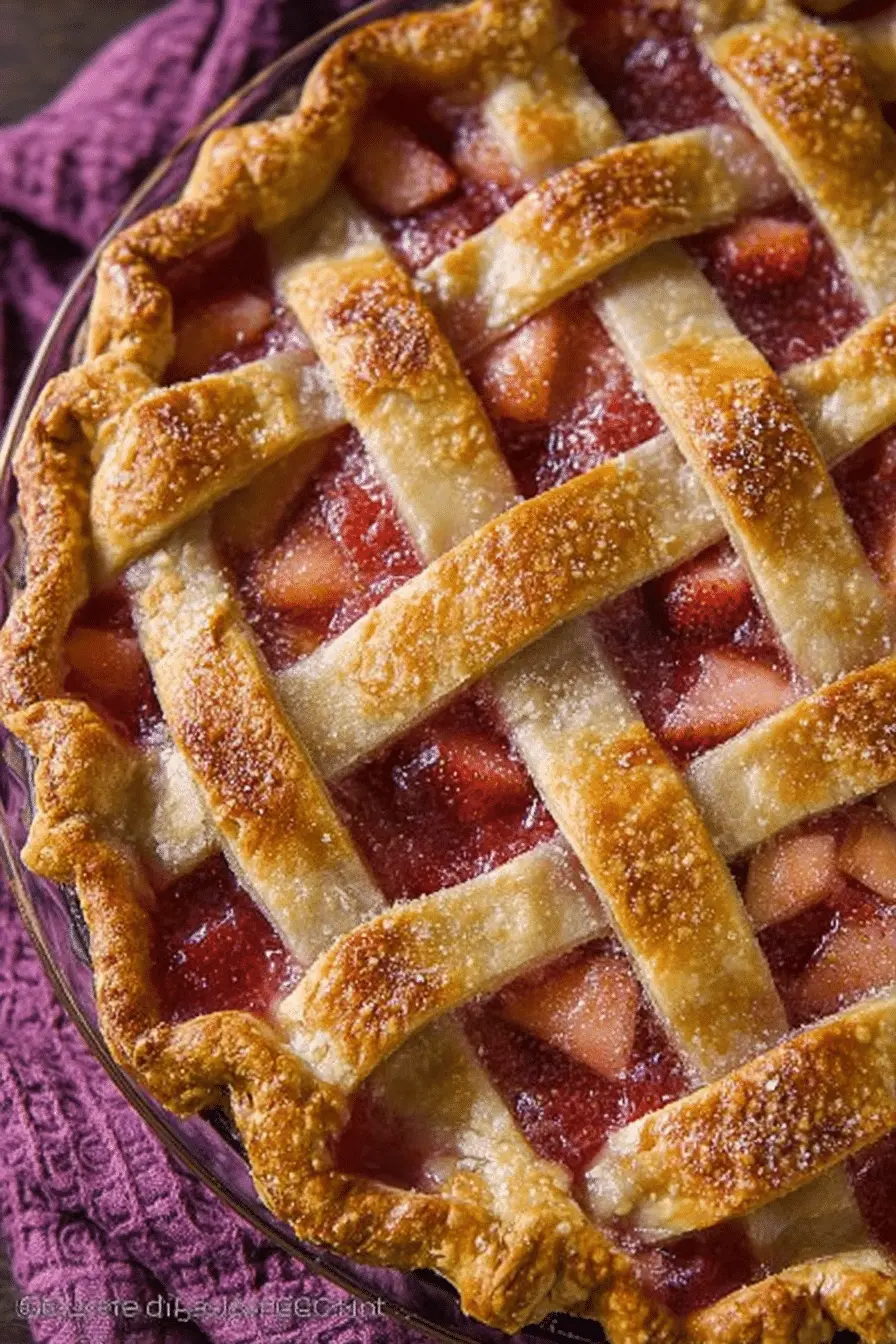
There’s comfort in the ritual — rolling the dough, weaving a lattice top if I’m feeling fancy, and watching the bubbles appear along the edges as it bakes. If you love fruity desserts, you will also enjoy our strawberry layer cake, which evokes similar warm memories from family gatherings.
Below I walk through the ingredients, the techniques I rely on, and practical tips to keep the filling thick and the crust crisp. This is the version I bake when I want a pie that holds together, slices neatly, and feeds a family crowd.
Why This Strawberry Rhubarb Pie Feels Like Home
Strawberry rhubarb pie has a way of marking the calendar: it’s a spring pie, a picnic pie, a “bring this to the potluck” pie. For me it’s one of those recipes that traveled from kitchen to kitchen — adapted, tested, and finally tamed. The memories are in the small things: the sticky fingers from tasting the filling, the rasp of a fork against the flaky crust, the hush that falls over the table once a warm slice is passed around.
The aroma is part of the appeal — bright strawberry sweetness layered with rhubarb’s tartness, sugar softening the edge of that rhubarb tang so the whole kitchen smells like a gentle rush of spring. These are the flavors I associate with family gatherings and late-afternoon celebrations.
When you’re in the mood for another strawberry-forward dessert, try our strawberry layer cake for a similar nostalgic feel and shared memories.
Everything You Need for Strawberry Rhubarb Pie
- * Pie crust – Your crust is the frame for everything; store-bought works in a pinch, but a cold, butter-based homemade crust gives the best texture.
- * Rhubarb – Provides bright acidity and structure; slice evenly so it cooks at the same rate as the strawberries.
- * Strawberries – Add sweetness, color, and aroma; choose ripe but firm berries to avoid excess mush.
- * Brown and granulated sugar – Brown sugar lends depth and caramel notes; granulated sugar balances tartness.
- * Cornstarch – The thickener that keeps the filling from running when the pie cools.
- * Salt – Cuts sweetness and lifts the fruit flavors.
- * Orange juice – A little brightens the filling more gently than lemon and complements both fruits.
- * Vanilla – Adds warmth in the background; it rounds out the fruit’s edges.
- * Butter – Dotted on top of the filling before you add the top crust for richness and a glossy finish.
- * Egg wash (egg + milk) – Gives the crust a golden color and helps any coarse sugar stick.
- * Optional coarse sugar – A little sparkle and crunch on top, if you like.
Quick note on nutrition: strawberries are high in vitamin C and antioxidants, and rhubarb contributes fiber and some vitamin K. Together they make a bright, fruit-forward filling that feels lighter than many other desserts — though the pie crust and sugar still make it a treat best shared.
The Secret to a Flaky, Non-Soggy Pie Crust
- Keep everything cold: cold butter and cold water are your allies. When the butter melts in the oven it creates steam pockets that give you flakiness.
- Don’t overwork the dough: mix just until it comes together. A few visible bits of butter in the dough are a good sign — they create layers as you bake.
- Chill between steps: rest the dough before rolling and again after placing it in the pie dish so it relaxes and stays firm during baking.
- Roll with gentle, even pressure and turn the dough frequently so you get an even circle without over-stretching one side.
- Prevent a soggy bottom by keeping excess fruit juices out of the shell: macerate, then pour off any large pools of liquid before filling the crust.
- Use a pie shield or foil on the edges after the first part of baking to prevent over-browning while the center finishes.
- If you’re worried about the bottom browning too slowly, bake the pie on a preheated heavy-duty baking sheet or pizza stone to give direct heat to the base.
Why Strawberries and Rhubarb Shine Together
Strawberries bring sweetness, floral notes, and that lush red color; rhubarb brings a tart, herbal brightness and firm texture. When baked, the strawberry’s sugars caramelize slightly while the rhubarb softens but keeps a wakeful acidity — together they create a balanced flavor profile that’s both comforting and lively.
This pairing has a long history in American home baking, often showing up in spring and early-summer pies when rhubarb stalks and strawberries are both at their best. The contrast of sweet and tart is why the combination remains a classic at family tables.
For another way to celebrate those same flavors, the delicious harmony between strawberry and rhubarb also appears in recipes like classic strawberry jam.
How to Make Strawberry Rhubarb Pie (Step-by-Step)
- Prepare your pie crust dough and chill it thoroughly so it’s firm when you roll it.
- Cube or slice the rhubarb and chop the strawberries so pieces are uniform; toss them gently with sugars, cornstarch, salt, orange juice, and vanilla, then let the mixture sit briefly to macerate.
- After a short rest, pour off any excess liquid that collects in the bowl — keep only the softened fruit and thickened bits for the filling.
- Roll one chilled dough disc into a large circle and line your pie dish, easing it into the edges without stretching; chill again if it softens.
- Spoon the prepared filling into the crust and dot with small pieces of butter for richness.
- Roll the second dough disc and either lay it over the filling with vents or cut it into strips to weave a lattice. Trim and crimp the edges to seal. Brush with the egg wash and sprinkle coarse sugar if you like.
- Start baking at a higher temperature to set the crust and encourage bubbling, then reduce the heat for the remainder of the bake. After the first portion of time, shield the edges so they don’t over-brown.
- The pie is done when the filling is bubbling around the edges and the crust is golden. Cool the pie at room temperature for several hours so the filling fully thickens before slicing.
- Troubleshooting (things I’ve learned):
- If juices are still thin after baking, I let the pie cool longer — sometimes overnight in the fridge helps it set firmer for neat slices.
- If the bottom looks soggy, next time I bake on a hot baking sheet to crisp the base earlier in the bake.
- If the crust is getting too dark, I add a foil shield earlier — the edges brown faster than the center finishes.
- If the filling becomes gluey, that usually means too much thickener or overcooked cornstarch; use just enough and avoid cooking the filling before it goes into the crust.
For another delightful use of strawberries, try our strawberry shortcake, which pairs perfectly with your fresh pie.
Pro Tip for strawberry rhubarb pie: Keep the Filling Thick and the Crust Crisp
- Use cornstarch as the primary thickener — it gives a clear, glossy finish and sets as the pie cools.
- Let the fruit macerate briefly, then pour off excess liquid so the filling you put in the crust is not watery.
- Chill the pie before baking if the dough softens while assembling; a cold crust bakes flakier.
- After baking, cool the pie fully at room temperature; I find 3–4 hours (or overnight in the fridge) gives the best slicing texture.
Beginner-Friendly Shortcuts and Time-Saving Tips
- Use a quality store-bought pie crust if you’re short on time — press it gently into the dish and finish with an egg wash for a homemade look.
- Frozen strawberries and rhubarb can work when out of season; thaw and drain well, then toss briefly with a little extra thickener to account for the released liquid.
- Make the dough ahead and freeze discs wrapped tightly; defrost in the refrigerator before rolling.
- Mix the filling the night before and store it in the fridge; drain off any accumulated liquid before filling the crust the next day.
How to Store, Make-Ahead, and Creative Variations
- To store: cool the pie fully, then cover loosely and keep at room temperature for a day or refrigerate for longer storage; refrigerated pie will keep several days.
- Make-ahead: you can assemble the pie and freeze it unbaked. Keep it tightly wrapped and bake from frozen, adding a little extra time to the bake.
- Reheating: warm slices gently in the oven for about 10 minutes to bring back the crispness in the crust.
- Creative variations:
- Stir a handful of raspberries or a splash of balsamic into the filling for a deeper fruit flavor.
- Top with a streusel instead of a top crust if you prefer a crumbly finish.
- Add a spoonful of almond extract or a sprinkle of finely chopped toasted nuts to the filling for a nutty note.
For a delicious twist on leftovers, consider making a strawberry-rhubarb crumble using any extra filling — it’s a lovely, rustic follow-up to the pie.
Gluten-Free and Vegan Adaptations
- Gluten-free crust – Use a reliable cup-for-cup gluten-free flour blend and add a bit of xanthan gum if your blend doesn’t include it; handle the dough gently and chill well.
- Vegan crust – Substitute plant-based butter and a non-dairy milk for the wash; solid vegan shortening or a firm vegan butter works best kept cold for flakiness.
- Thickening and sweeteners – Cornstarch works the same in both adaptations; for a vegan sweetener, maples or raw sugar are good alternatives to refined sugar.
- Finish – For a glossy top without egg wash, brush with a thin syrup made from sugar and water or a light non-dairy milk glaze and sprinkle coarse sugar.
Frequently Asked Questions
How many strawberries do you need for a strawberry rhubarb pie?
For a 10-inch pie with more filling, use about 2 and 1/2 cups of strawberries along with 4 cups of rhubarb and up to 1 and 1/4 cups of sugar.
What are common mistakes when making strawberry pie?
Common mistakes include cooking the filling too long after adding cornstarch and adding lemon juice too early, which can toughen the mixture and affect the pie's texture.
How do you keep a rhubarb pie from being runny?
To prevent a runny pie, mix the fresh fruit with sugar and let it sit for a while. This process, called maceration, helps draw excess liquid out of the rhubarb before baking.
Why is strawberry rhubarb pie so good?
The tartness of rhubarb beautifully contrasts with the sweetness of strawberries, creating a perfect balance of flavors that many people love.
Can I make this pie ahead of time?
Yes! You can prepare the pie in advance, and it's best to store it in the refrigerator. Just allow some time for it to cool after baking before storing.