- Prep
- 10 min
- Cook
- 15 min
- Total
- 25 min
- Serves
- 4
- Calories
- 306 kcal
- Protein
- 9.30 g
- Carbs
- 32.90 g
- Fat
- 16.20 g
- Sodium
- 940.50 mg
On this page30 quick jumps
TOC
30 quick jumps
Sun-Dried Tomato, Spinach and Quinoa Salad
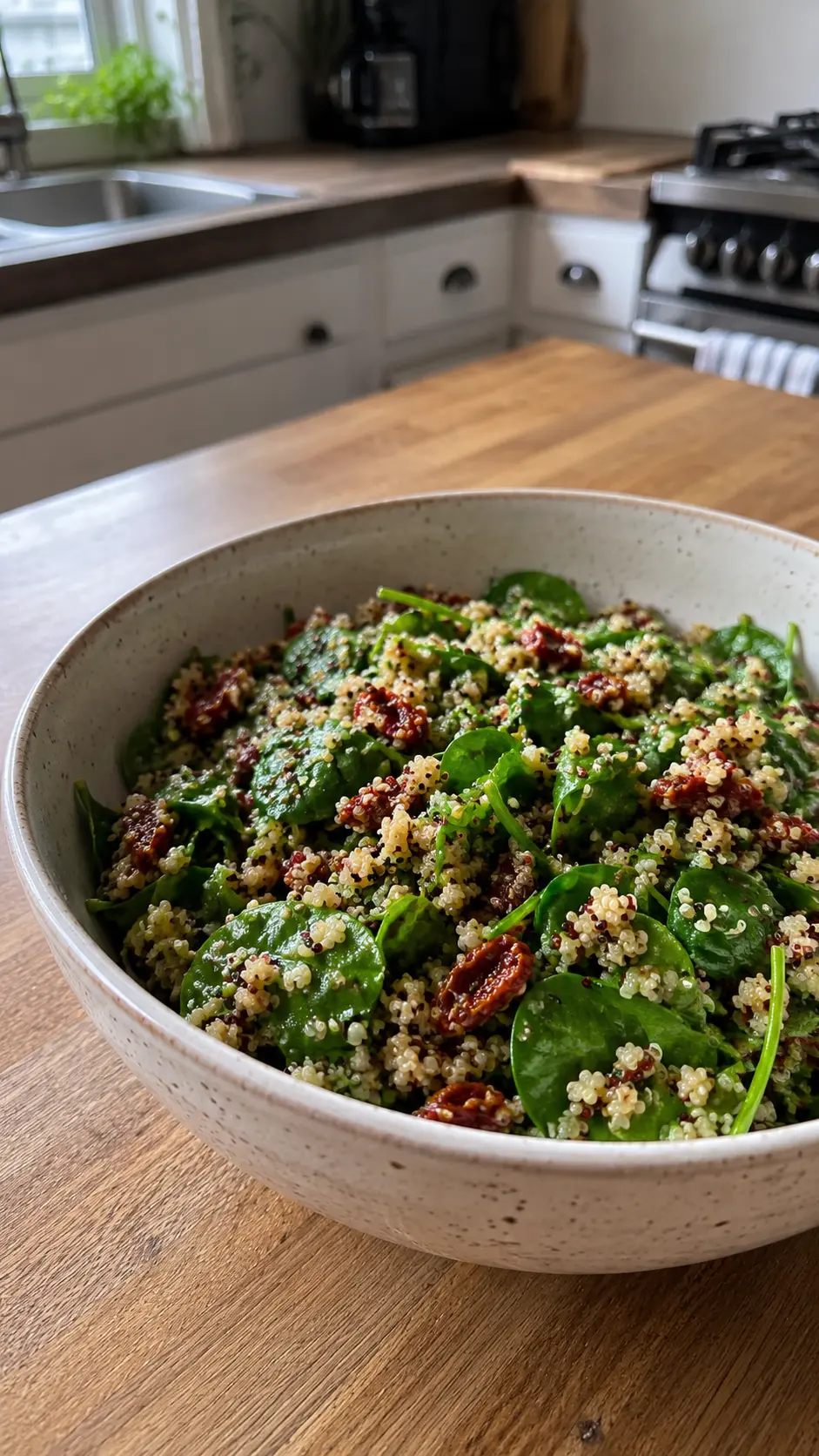
This sun-dried tomato, spinach and quinoa salad is a simple Mediterranean-inspired dish with fluffy quinoa, tender greens, intensely flavored sun-dried tomatoes, crunchy toasted almonds, and a bright lemon dressing.
It works because every ingredient brings something different to the bowl.
Quinoa gives the salad substance. Spinach keeps it fresh and green. Sun-dried tomatoes provide concentrated savory-sweet flavor. Toasted almonds add crunch, while lemon, garlic, Dijon mustard, and olive oil bring everything together with a tangy dressing.
The result sits somewhere between a grain bowl and a leafy salad.
It's filling enough to become a light lunch, but it also works beautifully as a side dish alongside roasted vegetables, soup, grilled foods, or a larger Mediterranean-style meal.
Another advantage is that the salad is just as useful for meal prep as it is for entertaining. It can be served slightly warm after the quinoa is cooked, at room temperature for a potluck, or chilled for an easy lunch the next day.
The key is getting the quinoa texture right and assembling the ingredients in an order that keeps the spinach fresh instead of completely wilted.
From Grain to Greens: What's Ahead
The Flavor Balance Behind This Salad
Getting Quinoa Light Instead of Mushy
Why Warm Quinoa Changes the Dressing
The Sun-Dried Tomato Advantage
How Much Should the Spinach Wilt?
Why Toasting Almonds Is Worth It
Understanding the Lemon Dressing
The Best Assembly Order
Turning a Side Salad Into Lunch
Build a Mediterranean Salad Board
Seasonal Ways to Adapt It
Potluck and Make-Ahead Strategy
Leftover Reinvention Ideas
Solving Common Texture Problems
Frequently Asked Questions
The Flavor Balance Behind This Salad
This salad has a short ingredient list, but it doesn't taste simple.
That's because several strong flavor contrasts are happening at the same time.
The quinoa itself is mild and slightly nutty.
Sun-dried tomatoes are concentrated, salty, sweet, and savory.
Fresh spinach brings a clean vegetal flavor.
Almonds contribute roasted nuttiness.
Then the dressing adds lemon acidity, garlic, mustard, olive oil, pepper, and a small amount of heat from red pepper flakes.
Rather than having one dominant ingredient, the salad depends on the balance between all of them.
If everything were salty, it would feel heavy.
If everything were acidic, it would feel sharp.
If everything were soft, it would lack interest.
The combination of bright + savory + fresh + crunchy is what keeps the salad interesting from one bite to the next.
Getting Quinoa Light Instead of Mushy
Quinoa seems simple to cook, but texture makes a noticeable difference in a salad.
For this kind of dish, you want grains that are tender and fluffy rather than wet or clumped together.
Mushy quinoa absorbs dressing differently and can make the finished salad feel heavy.
Rinse the quinoa first
Quinoa naturally has a coating called saponin that can taste bitter or soapy.
A thorough rinse in a fine-mesh strainer helps wash that coating away.
Move the quinoa around with your fingers while rinsing so water reaches all of the grains.
Use enough water—but not too much
The quinoa needs enough water to become tender, but excess liquid left in the pot can make it overly soft.
Once the grains have absorbed the cooking liquid, remove them from the heat rather than continuing to simmer.
Let the quinoa rest
Resting after cooking is one of the easiest ways to improve quinoa texture.
Cover the pot and let it sit briefly.
That resting period allows the remaining moisture to distribute more evenly.
Then fluff the quinoa with a fork.
Avoid aggressively stirring it with a spoon, which can compact the grains.
What Properly Cooked Quinoa Should Look Like
Cooked quinoa should look expanded and fluffy.
You'll notice a tiny spiral-like germ separating from many of the grains.
When you drag a fork through the pot, the quinoa should separate rather than forming a wet mass.
For this salad, slightly drier quinoa is actually useful.
It absorbs some of the lemon dressing while still maintaining individual grains.
That's what gives the salad a satisfying texture instead of making it feel like dressed porridge.
Why Warm Quinoa Changes the Dressing
One of the most interesting parts of this salad is that the dressing can be added while the quinoa is still warm.
That changes the way the flavors behave.
Warm quinoa absorbs dressing more readily than completely cold quinoa.
The lemon, garlic, mustard, and olive oil begin seasoning the grain itself rather than simply coating its exterior.
This is similar to dressing potatoes while they're warm when making certain potato salads.
The warm ingredient becomes more receptive to flavor.
However, there's an important distinction:
Warm quinoa is good for the dressing. Very hot quinoa is not ideal for the spinach.
That's where assembly timing becomes important.
Let the Quinoa Cool Slightly Before Adding Greens
If you throw delicate spinach directly into piping-hot quinoa, the leaves can collapse almost immediately.
That may be fine if you want a warm wilted spinach dish, but it's not the best texture for this salad.
Instead, dress the quinoa first and add the sun-dried tomatoes.
Let the mixture sit briefly.
The quinoa will still be warm enough to absorb flavor but cool enough that the spinach only softens slightly when added.
The ideal result is somewhere between raw and fully cooked spinach.
The leaves should remain green and recognizable while becoming just tender enough to mix naturally with the grain.
The Sun-Dried Tomato Advantage
Fresh tomatoes and sun-dried tomatoes behave very differently in salads.
Fresh tomatoes bring water, acidity, and a juicy texture.
Sun-dried tomatoes bring concentration.
As tomatoes dry, their flavor becomes much more intense.
A relatively small amount can season an entire bowl of quinoa.
Their chewy texture is also important.
The quinoa and spinach are both fairly tender, so those little pieces of sun-dried tomato introduce something more substantial to bite into.
Oil-packed sun-dried tomatoes are particularly useful because they're already soft enough to chop and mix into the salad.
Drain away excess oil before chopping so the salad doesn't become unnecessarily heavy.
How Small Should You Chop Sun-Dried Tomatoes?
Smaller pieces usually work better.
You want a bit of sun-dried tomato distributed throughout the bowl rather than several large pieces concentrated in only a few bites.
Aim for small strips or pieces that can mix naturally among the quinoa.
This also allows the lemon dressing to reach more of the tomato surface.
If your sun-dried tomatoes are especially firm, chop them a little finer.
Can Fresh Tomatoes Replace Sun-Dried Tomatoes?
They can, but the salad becomes a different dish.
Fresh tomatoes don't provide the same concentrated savory flavor.
They also introduce significantly more moisture.
Cherry tomatoes are the best fresh alternative because their flavor is usually concentrated and they hold their shape well.
Cut them in halves or quarters and add them toward the end.
If using fresh tomatoes, you may want an additional salty or savory ingredient—such as olives, feta, capers, or extra toasted nuts—to replace some of the intensity you lose when removing the sun-dried tomatoes.
Spinach or Arugula?
Both work, but they produce noticeably different salads.
Spinach
Spinach has a mild flavor and soft texture.
It allows the lemon dressing and sun-dried tomatoes to remain the most noticeable flavors.
Young baby spinach is particularly good because the leaves are tender enough to mix naturally with quinoa.
Arugula
Arugula has a peppery, slightly bitter flavor.
It makes the salad taste sharper and more assertive.
If you enjoy strong greens, arugula is an excellent choice.
Try a combination
You don't necessarily need to choose one.
Using half spinach and half arugula gives you the tenderness of spinach with some peppery bite from arugula.
Why Toasting Almonds Is Worth It
Raw sliced almonds provide crunch.
Toasted sliced almonds provide crunch and deeper flavor.
Heating nuts triggers browning reactions that bring out more roasted, nutty aromas.
It only takes a few minutes, but the difference is noticeable.
The challenge is timing.
Sliced almonds are thin, which means they can move from pale to burned very quickly.
Stay near the pan.
Stir frequently.
As soon as they become lightly golden and smell noticeably toasted, remove them from the heat.
Don't wait until every almond looks dark brown.
They continue cooking slightly from residual heat after leaving the pan.
Nut-Free Crunch Options
If almonds aren't suitable, you still want something crunchy in the salad.
Good alternatives include:
Pumpkin seeds
Sunflower seeds
Roasted chickpeas
Toasted hemp seeds
Crispy breadcrumbs
Crushed roasted pita chips
The goal isn't specifically to replace the almond flavor.
It's to replace the textural role of almonds.
Without something crunchy, quinoa + spinach + dressing can feel too soft.
Understanding the Lemon Dressing
A successful grain salad dressing needs enough flavor to season a fairly large volume of neutral ingredients.
Quinoa absorbs flavor, so a dressing that tastes merely pleasant on its own may almost disappear once mixed into the grain.
This dressing uses several ingredients that each solve a different problem.
Lemon juice brings acidity
Lemon keeps the salad bright and prevents the olive oil and nuts from making it taste heavy.
It also pairs naturally with spinach, garlic, and Mediterranean ingredients.
Olive oil provides body
Oil softens the sharpness of the lemon and helps distribute the seasonings throughout the quinoa.
Dijon mustard helps everything come together
Mustard contributes subtle tang and acts as a useful bridge between oil and lemon juice.
It also adds more depth than simply mixing oil and citrus.
Garlic creates savory intensity
Raw garlic provides plenty of flavor in a small amount.
Because it isn't cooked, finely mince or press it so it distributes evenly throughout the dressing.
Red pepper flakes add background heat
You aren't trying to turn the salad into something spicy.
A small pinch simply creates gentle warmth behind the lemon and garlic.
Taste the Dressing Before Adding It
This is a good habit for almost every salad.
Whisk the dressing, then taste a small amount.
Ask yourself:
Does it need more salt?
Is the lemon sharp enough?
Is the garlic overwhelming?
Would a little more pepper help?
Remember that the dressing will become milder once mixed with quinoa, so it can taste slightly more assertive on its own than you expect the final salad to taste.
The Best Assembly Order
Instead of putting everything into a bowl at the same time, assemble the salad in stages.
Stage 1: Toast the almonds
Do this while the quinoa cooks.
Transfer them out of the hot pan so they stop cooking.
Stage 2: Make the dressing
Whisk everything together and keep it ready.
Stage 3: Dress the warm quinoa
Once the quinoa is cooked and fluffed, add the dressing.
Toss thoroughly.
Stage 4: Add the sun-dried tomatoes
Mix them through the dressed quinoa.
This allows their concentrated flavor to spread throughout the salad.
Stage 5: Pause briefly
Give the quinoa a few minutes to cool.
Stage 6: Add the spinach
Toss gently so the leaves soften slightly without disappearing.
Stage 7: Add the almonds
Finish with toasted almonds so they retain as much crunch as possible.
Taste one final time before serving.
Turn the Side Salad Into Lunch
On its own, this salad makes a satisfying light meal.
But it's also an excellent base for additions.
Add chickpeas
Chickpeas keep the recipe plant-based while adding more substance.
Drain and rinse them before mixing them into the quinoa.
Add white beans
Cannellini or Great Northern beans work especially well with lemon, spinach, and sun-dried tomatoes.
Add lentils
Green or brown lentils provide an earthy flavor and hold their shape well.
Add edamame
Edamame brings color and a slightly firmer bite.
Add feta
Feta adds salty, creamy contrast.
Because feta and sun-dried tomatoes can both be salty, taste the salad before adding extra salt.
Add halloumi
Pan-fried halloumi can turn the salad into a more substantial warm meal.
Add an egg
A fried, poached, or soft-boiled egg is another easy way to make a bowl more filling.
Add roasted vegetables
Roasted zucchini, peppers, cauliflower, eggplant, or broccoli all fit naturally with the Mediterranean flavors.
Build a Mediterranean Salad Board
For entertaining, you don't have to serve this salad completely on its own.
Turn it into the center of a Mediterranean-style spread.
Arrange bowls or plates of:
Quinoa salad
Hummus
Olives
Roasted peppers
Cucumber
Cherry tomatoes
Warm pita
Falafel
Roasted chickpeas
Feta
Artichoke hearts
Lemon wedges
Guests can use the quinoa salad as a side or build larger bowls and plates around it.
This works especially well for lunch gatherings or casual dinners because many of the components can be prepared ahead.
Seasonal Ways to Adapt the Salad
The basic quinoa-spinach-sun-dried tomato combination works year-round, but seasonal additions can change it.
Spring
Add:
Asparagus
Peas
Radishes
Fresh herbs
Summer
Add:
Cherry tomatoes
Cucumber
Grilled zucchini
Fresh basil
Fall
Add:
Roasted butternut squash
Apples
Pumpkin seeds
Roasted Brussels sprouts
Winter
Add:
Roasted cauliflower
Kale
Citrus segments
Toasted walnuts
You don't need to use all of these.
Even one seasonal ingredient can make the salad feel different.
Make It More Herby
Fresh herbs fit this salad extremely well.
Try adding:
Parsley
Basil
Dill
Chives
Mint
Parsley is probably the easiest addition because its clean flavor works with almost everything else already in the bowl.
Basil emphasizes the tomato element.
Mint makes the salad taste brighter and more unusual.
A mixture of parsley and basil is an especially safe starting point.
A Potluck-Friendly Salad
Quinoa salads are useful for potlucks because they're easier to transport than many heavily dressed lettuce salads.
Still, a little planning improves the final texture.
If you're preparing the salad well ahead of serving, keep some or all of the spinach and toasted almonds separate.
Mix the dressed quinoa and sun-dried tomatoes in advance.
Then fold in fresh greens and crunchy almonds closer to serving.
This gives you the make-ahead convenience of a grain salad without sacrificing the fresh and crunchy elements.
For a larger group, serve it in a wide shallow bowl rather than a deep container.
That makes the spinach and toppings easier to distribute evenly.
Packing It for Lunch
This salad is an excellent packed lunch because quinoa holds up well in the refrigerator.
For the freshest texture, place the dressed quinoa and sun-dried tomatoes at the bottom of your container.
Add spinach above them.
Keep toasted almonds in a small separate container or reusable pouch.
At lunchtime, combine everything and toss.
If the quinoa has absorbed most of the dressing overnight, add a squeeze of fresh lemon or a tiny drizzle of olive oil before eating.
That can make leftovers taste freshly prepared again.
Warm, Room Temperature, or Cold?
One reason this recipe is versatile is that all three work.
Slightly warm
Freshly prepared quinoa gives the salad a comforting warm-grain quality.
The spinach softens slightly.
Room temperature
This may provide the best overall flavor.
Cold temperatures can mute aroma, so letting refrigerated salad sit briefly before serving makes the lemon, garlic, and sun-dried tomatoes more noticeable.
Cold
Straight-from-the-fridge quinoa salad is convenient and refreshing, especially for lunch.
If serving it cold, taste again before eating.
You may want an extra squeeze of lemon or pinch of salt.
Leftover Reinvention Ideas
Leftovers don't have to be eaten exactly the same way every day.
Stuff it into a pita
Add quinoa salad, hummus, cucumber, and extra greens to warm pita.
Turn it into a wrap
Use a large tortilla and add avocado, lettuce, or roasted vegetables.
Make a grain bowl
Add roasted vegetables, chickpeas, tahini sauce, and extra greens.
Use it as a stuffed vegetable filling
Spoon the quinoa mixture into roasted bell peppers or zucchini halves and warm everything in the oven.
Add it to soup
A small portion of cooked quinoa can be stirred into vegetable soup near the end of cooking.
Make a breakfast bowl
Warm the quinoa mixture slightly and top with a fried egg.
How to Store It Without Ruining the Texture
The quinoa portion stores very well.
The spinach and almonds are more sensitive.
For the longest-lasting texture, store the components separately when possible.
Keep:
Container 1: dressed quinoa and sun-dried tomatoes
Container 2: spinach or arugula
Container 3: toasted almonds
Then assemble portions as needed.
If you've already mixed the entire salad, refrigerate it in an airtight container.
The spinach will soften over time, but the flavors will continue to mingle.
Can You Freeze This Salad?
Freezing the fully assembled salad isn't ideal.
Fresh spinach loses its pleasant texture after freezing and thawing, and toasted almonds may soften.
The quinoa itself, however, freezes very well.
If you want to prepare ahead, cook a large batch of quinoa and freeze portions.
Thaw the grain in the refrigerator, then make the dressing and assemble the salad with fresh spinach, sun-dried tomatoes, and toasted almonds.
Solving Common Texture Problems
My quinoa is mushy
It may have absorbed too much water or cooked too long.
Use a controlled amount of water and stop cooking once it has been absorbed.
Letting the quinoa rest after cooking also helps.
The salad tastes dry
Quinoa can continue absorbing dressing as it sits.
Add a little lemon juice and olive oil before serving leftovers.
My spinach completely wilted
The quinoa was probably too hot when the spinach was added.
Give the dressed grain a few minutes to cool first.
My almonds aren't crunchy anymore
They were probably added too far in advance.
Store toasted almonds separately for meal prep and add them just before eating.
The salad tastes too salty
Sun-dried tomatoes can vary considerably in saltiness.
Taste them before adding extra salt to the salad.
If the finished dish is already too salty, adding more quinoa or spinach can help dilute the seasoning.
The lemon flavor is too sharp
Add a small drizzle of olive oil and toss again.
Additional quinoa or greens can also soften an overly acidic dressing.
The salad tastes bland
Start with salt.
Then check the acidity.
A little extra lemon juice, freshly cracked pepper, or a pinch of red pepper flakes can bring the flavors back into focus.
Let Texture Guide the Salad
The secret to a memorable sun-dried tomato, spinach and quinoa salad isn't adding dozens of ingredients.
It's making the ingredients already in the bowl perform different jobs.
Cook the quinoa until fluffy rather than wet.
Dress it while it's still warm enough to absorb the lemon-garlic flavor.
Give it a few minutes to cool before introducing the spinach.
Use sun-dried tomatoes for concentrated savory flavor.
Toast the almonds so they contribute real crunch rather than simply disappearing into the grain.
And taste everything again at the end.
Quinoa often needs more seasoning than you expect, especially after it absorbs dressing.
Once you understand that balance, this recipe becomes more than one fixed salad.
It becomes a useful formula:
fluffy grain + fresh greens + concentrated savory ingredient + crunchy topping + bright dressing.
Swap quinoa for another grain, spinach for another green, almonds for seeds, or add beans and roasted vegetables to make it more substantial.
The basic idea still works.
That's what makes this type of salad so useful for lunches, potlucks, meal prep, and easy weeknight meals: a few simple ingredients can be rearranged into something fresh, filling, and flexible without turning the recipe into a complicated project.
Ingredients
- 1 cupquinoa, rinsed in a fine-mesh colander
- ⅓ cupoil-packed sun-dried tomatoes, drained and chopped
- 2 cupsroughly chopped fresh spinach or arugula
- ⅓ cupsliced almonds
- ¼ teaspoon olive oil
- —Salt, to taste
- 2 tablespoonsolive oil
- 2 tablespoonslemon juice
- 2 clovesgarlic, pressed or minced
- 1 teaspoonDijon mustard
- teaspoon teaspoonsalt
- —Pinch of red pepper flakes
- —Freshly ground black pepper, to taste
Instructions
- 1
To cook the quinoa, combine rinsed quinoa and 2 cups of water in a medium saucepan. Bring to a boil over medium-high heat, then reduce to a gentle simmer and cook until the quinoa absorbs the water, about 15 minutes, adjusting the heat as needed. Remove from heat, cover, and let it rest for 5 minutes to fluff up.
- 2
While the quinoa cooks, prepare the dressing by whisking together olive oil, lemon juice, garlic, mustard, salt, and red pepper flakes. Add freshly ground black pepper to taste.
A well-seasoned pan is worth more than a drawer of gadgets.
- 3
To toast the almonds, heat ¼ teaspoon olive oil in a small skillet over medium heat until shimmering. Add the almonds and a pinch of salt, stirring frequently to prevent burning, until they are golden and fragrant. Transfer the toasted almonds to a medium serving bowl to cool.
- 4
Once the quinoa is cooked, fluff it with a fork and transfer it to your serving bowl. Drizzle the dressing over the quinoa and toss to combine. Add the chopped sun-dried tomatoes, then let it sit for a few minutes before adding the spinach to prevent wilting. Toss again, adjusting seasoning with additional salt and pepper if needed, and serve immediately.
FAQs
Do I have to cook the spinach?
Can I use arugula instead?
Can I use kale?
Can I use farro instead of quinoa?
Can I use couscous?
Can I use brown rice?
Can I skip the almonds?
Do I have to toast the almonds?
What kind of sun-dried tomatoes should I use?
Can I use fresh tomatoes?
Can I make the dressing ahead?Can I make the dressing ahead?
Can I double the recipe?
Is this salad better the next day?
What can I serve with quinoa salad?
Recipe Card
Easy Sun-Dried Tomato, Spinach and Quinoa Salad
Keep it handy for later, send it to someone cooking with you, or open the clean print view.
- Prep
- 10 min
- Total
- 25 min
- Serves
- 4
You might also like
Quick Roasted Vegetable Medley
Enjoy this quick roasted vegetable medley, perfect for busy weeknights in just 30 minutes!
Aug 29, 2026
Quick and Easy Zucchini and Corn Fritters
Crispy zucchini and corn fritters that come together in 30 minutes, perfect for a quick meal any night of the week.
Aug 26, 2026
The Lemon Honey Salad Dressing I Make for Microgreens
May 23, 2026
The Salad I Make All Summer — Peach Avocado Green Salad
May 23, 2026
Reviews
Be the first to review this.