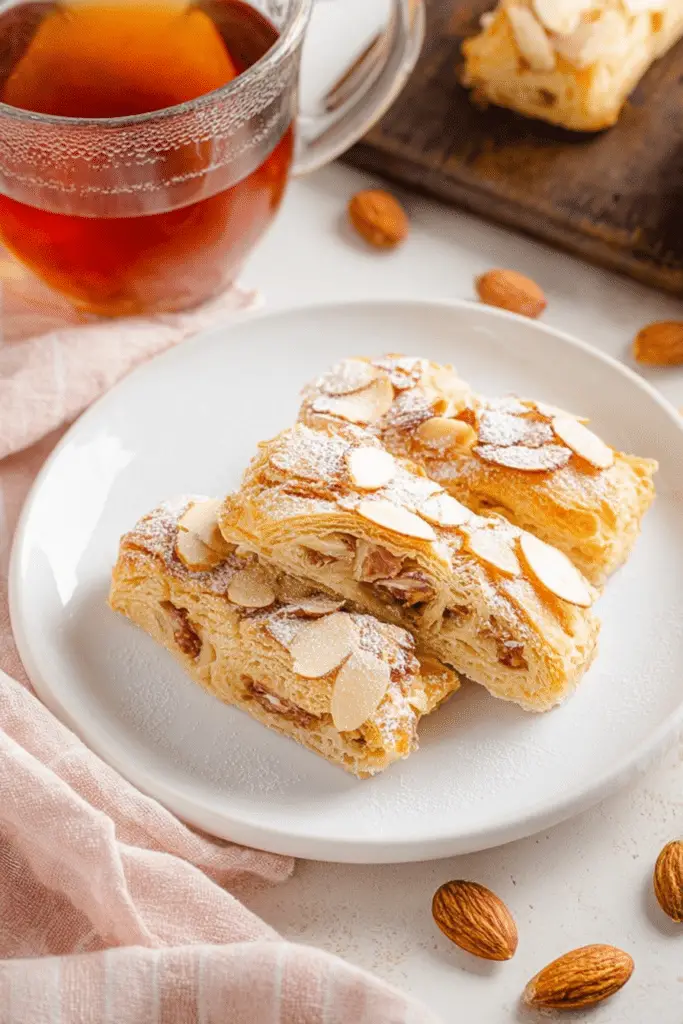
I remember the first time I baked a braided sweet almond pastry: the kitchen smelled like toasted almonds and warm butter, and I stood with a wooden spoon in hand, impatiently watching the edges turn golden. Almond pastries have been a comfort-food constant for me — something I make when I want a modestly showy bake that’s still fast enough for a weekend morning. These pastries show up across Europe and the Mediterranean in different shapes and names, from Italian almond-filled braids and German pastries to French petits gâteaux with frangipane. They’re a simple idea — buttery laminated dough wrapped around a sweet almond filling — but the little choices you make (thawing the pastry just enough, not letting the almond paste get greasy) change everything.
Almond pastries have a long history: almonds were prized in medieval Europe and the Middle East for their richness, and sugar and nuts became a staple combination in celebratory baking. Over time, that pairing evolved into almond paste and frangipane fillings used across many cultures. For me, this recipe is rooted in family weekend rituals — my partner and I will braid a batch while coffee brews and the kids argue over who gets the corner piece. It’s reliably comforting, slightly showy on the table, and a great canvas for small tweaks: a splash of vanilla, a scattering of sliced almonds, or a lemon-zest twist.
Ingredients Needed for Easy Almond Pastry
- Puff pastry sheet – the flaky, buttery base; use a thawed store-bought sheet for speed or homemade for the best flavor.
- Almond paste – the star filling; look for a firm log of almond paste or make your own from almond flour and sugar if you prefer.
- Granulated sugar – lightly sweetens the almond filling and helps with browning.
- Vanilla extract – adds warm, sweet aromatics that deepen the almond flavor (or a splash of amaretto for more almond punch).
- Large egg – beaten into an egg wash to give the pastry a glossy, golden finish and to help seal edges.
- Sliced almonds – for crunch and a pretty top; toast them briefly for a nuttier edge.
- Water – a tablespoon or so mixed with the egg for a smooth, spreadable wash.
- Almond flour (optional) – handy if you want to make a homemade almond paste or for gluten-free variations.
- Butter (optional) – a little melted butter can be folded into the filling for richness or brushed on the pastry before sprinkling almonds.
- Gluten-free puff pastry (alternative) – for gluten-free diets; keep it cold and handle gently to preserve layers.
Notes on ingredient quality: use a dense, good-quality almond paste (not the overly sweet marzipan unless you want extra sweetness). Real butter puff pastry tastes noticeably better than margarine-based sheets. If almonds are past their prime they’ll smell flat — always give them a sniff and, if in doubt, buy new.
Step-by-Step Instructions: Making Sweet Almond Pastry
I’ve written and retested this version a handful of times in my kitchen; here’s a clear, practical walkthrough so you’re not guessing at cues. Read through once, then follow the steps while your oven heats.
For tips on working with puff pastry layers and custard fillings that translate well to almond pastries, see our puff pastry custard cake recipe.
Prep and oven: Preheat your oven to 400°F (200°C). Line a baking sheet with parchment or a silicone mat. If your puff pastry is frozen, thaw it in the refrigerator overnight or on the counter until pliable but still cool — you want it cold so the butter layers stay solid until baking.
Making the almond paste (quick method)
- Break up the almond paste into chunks and place in a food processor with sugar and vanilla. Process until it’s smooth but still slightly textured — it should hold together when pressed but not be oily. If it’s too stiff, add a teaspoon of water or a drop of neutral oil to help it come together.
- Taste it. If it seems flat, a pinch of fine salt will brighten the flavor; if it’s too sweet, a squeeze of lemon or a drop of almond extract can add balance. Texture should be spoonable and thick, not runny.
Preparing the pastry
- Unfold the pastry sheet on your prepared pan. I like to gently roll it a little larger — not paper-thin, just enough to make a longer rectangle — because the filling compresses and you want good proportion of filling to pastry.
- Mark the center with a light line of pastry score or just eyeball it. Cut slits about 1 inch apart along the long edges, stopping about 1/2 inch from the centerline where the filling will sit. These will become the braiding strips.
Assembling the braid
- Spoon the almond paste mixture down the center in a log shape, leaving a little gap at each end so the braid can be sealed. I use an offset spatula to smooth the paste into a neat rope — it helps the pastry fold more cleanly.
- Starting at one short end, fold the strips over the filling on a diagonal, alternating sides to create a braid. Don’t rush; if the pastry starts to feel warm and soft, slide the pan into the fridge for 10 minutes. Keeping it cool preserves the layers so the braid puffs properly.
- Mix the egg with a tablespoon of water and brush it over the braid. The egg wash does three things: seals the pastry, gives a golden sheen, and helps sliced almonds stick. Sprinkle the sliced almonds evenly — for extra color, press a few into the paste so they’re visible on a sliced piece.
Bake: Bake at 400°F for 10 minutes, then lower the oven to 375°F and bake another 17–20 minutes until the pastry is deeply golden and the exposed almond filling has a toasted edge. The first time I tried this I underbaked it and the center was gummy; don’t be afraid of a little color on the top — that caramelization adds flavor. Let the braid cool on the pan for 10 minutes so the filling sets, then transfer to a rack to finish cooling.
Tips for Perfecting Your Almond Paste
Homemade almond paste is forgiving, but a few practical tips keep it from getting greasy or grainy.
- Texture cues – Almond paste should be moist and pliable. If it crumbles, it needs a touch of liquid (a teaspoon of water, light syrup, or a small beaten egg white). If it’s shiny and oily, you’ve over-processed or your almonds were too warm.
- Sweetness balance – If your almond paste tastes flat, don’t immediately add more sugar. Try a pinch of salt or a bit of vanilla to lift the flavors.
- Flavor variations – Stir in a little lemon zest, a dash of almond extract, orange blossom water, or a splash of rum for grown-up notes.
- Storage – Refrigerate almond paste for up to 2 weeks in an airtight container. Freeze for up to 3 months; thaw in the fridge and knead back to a smooth consistency before using.
If you want ideas for incorporating almond paste into handheld desserts, check out our mini cannoli cups for inspiration.
Gluten-Free Variations of Sweet Almond Pastry
Gluten-free lovers, rejoice: almond pastries adapt well because the almond filling is already gluten-free. The trick is the pastry layer.
- Store-bought gluten-free puff pastry – The easiest path. Handle gently and keep it chilled; it can be more fragile than wheat-based pastry but will still puff if cold and baked hot.
- Homemade gluten-free dough – Use a reputable 1:1 gluten-free flour blend, a bit of xanthan gum if your blend lacks it, and work cold butter in quickly. The texture won’t be identical, but a well-layered, chilled dough produces a tender, flaky result.
- Almond-flour crust – For a denser, shortbread-like base, combine almond flour with a little butter, sugar, and an egg, press into a rectangle, blind-bake briefly, then fill and finish under the broiler to toast the almonds on top.
Simple gluten-free sweet almond pastry recipe (tested): Use one sheet of store-bought gluten-free puff pastry, a log of almond paste (about 8 oz) mixed with a little sugar and vanilla, an egg wash, and sliced almonds. Assemble exactly like the regular version and bake at the same temperatures; add a few extra minutes if the pastry centers look pale.
Unique Serving Ideas for Almond Pastries
I like to stretch this pastry beyond breakfast. Here are some ways I’ve served it at home that always get comments:
- With seasonal fruit – Serve warm slices with roasted plums, poached pears, or a simple berry compote. The acidity cuts the richness beautifully.
- As dessert with cream – A scoop of vanilla ice cream or a dollop of lightly whipped mascarpone turns this into a casual restaurant-style dessert.
- Savory twist – Try a version with a smidge of grated parmesan and chopped rosemary mixed into the dough edge for a sweet-and-savory contrast (use sparingly).
- Tea pairing – Strong black tea, nutty oolong, or a bright espresso all work well; for a winter treat, serve with a spiced latte.
Try using almond paste or almond jam as a filling inspiration — similar to flavors we use in these homemade Pop-Tarts.
Storage and Reheating Instructions
Realistic storage notes so you don’t end up with soggy pastry.
- Room temperature – Keep on the counter for up to 24 hours in an airtight container; pastry will lose some crispness but stay tasty.
- Refrigeration – Store in the fridge for up to 3 days. The almond filling firms up and the top almonds can soften; a quick re-crisp solves that.
- Freezing – You can assemble the braid and freeze it unbaked for up to 1 month. Flash-freeze on a tray, then wrap tightly. Bake from frozen, adding 4–6 minutes to the time. Baked pastries freeze well for about 2 weeks; re-crisp in a 350°F oven until heated through.
- Reheating – Avoid the microwave unless you don’t care about crispness. Reheat in a 350°F oven for 8–12 minutes; for a quick crisp-up, broil 30–60 seconds while watching closely.
Common Problems and Fixes
Things I’ve messed up and how I fixed them:
- Gummy center – Usually from underbaking or a filling that was too wet. Fix: bake a little longer at lower heat so the pastry doesn’t burn but the center finishes, or chill the filled pastry for 15–20 minutes before baking.
- Greasy almond paste – Caused by over-processing or warm almonds. Chill the paste briefly and knead in a little powdered sugar or almond flour to absorb excess oil.
- Pastry won’t rise – Likely the pastry got too warm and the butter melted before baking. Chill it and bake in a hot oven straight from the fridge.
FAQ
What is almond paste and can I use marzipan or almond flour instead?
Almond paste is a mixture of ground almonds and sugar with a moist, pliable texture used as a filling. Marzipan can be used as a substitute (it’s usually sweeter and smoother), but almond flour isn’t a direct swap—use it to make a homemade almond paste by combining with sugar and a binder like egg white or syrup.
Can I make the pastry ahead of time or freeze it?
Yes. You can assemble the pastry and freeze it unbaked for up to 1 month (flash-freeze on a tray, then wrap). Bake from frozen adding a few extra minutes. Baked pastries can be frozen for about 2 weeks; reheat in a preheated 350°F oven until crisp.
How do I keep the pastry from getting soggy?
Keep the almond filling fairly thick (not watery), use an egg wash to seal edges, bake on a preheated sheet, and cool on a rack. If the filling seems wet, chill it briefly before assembling.
What are good gluten-free options for this recipe?
Use a store-bought gluten-free puff pastry or make a gluten-free dough with a reliable 1:1 gluten-free flour blend. Almond flour works great for the filling. Note that textures may be slightly different and the pastry can be more fragile.
Can I use frozen puff pastry and do I need to thaw it first?
Yes—use frozen puff pastry. Thaw in the refrigerator overnight or on the counter for 20–40 minutes until pliable but still cold. Keep it chilled while you work to get the best rise and flakiness.
Conclusion: Enjoying Your Sweet Almond Pastry
This sweet almond pastry is one of those recipes I return to when I want something both comforting and a little indulgent. Expect flaky layers, a tender almond center, and a lightly crunchy top from sliced almonds. It’s ideal for a brunch spread, a casual dessert, or a weekend treat. Share it warm with coffee or cool with a glass of milk — either way, slice it a bit thick; the almond paste is the point. If you try variations — gluten-free dough, lemon zest in the paste, or a drizzle of glaze — tell me which one won in your house. Food is best when it’s shared, and this braid tends to disappear faster than I expect.
When exploring the international history of almond-filled treats, consider how Italian classics like the classic bomboloni have influenced modern sweet pastries.
Yield: About 8 servings. Time: Roughly 50 minutes total, including prep and bake (plus thawing time if using frozen pastry).
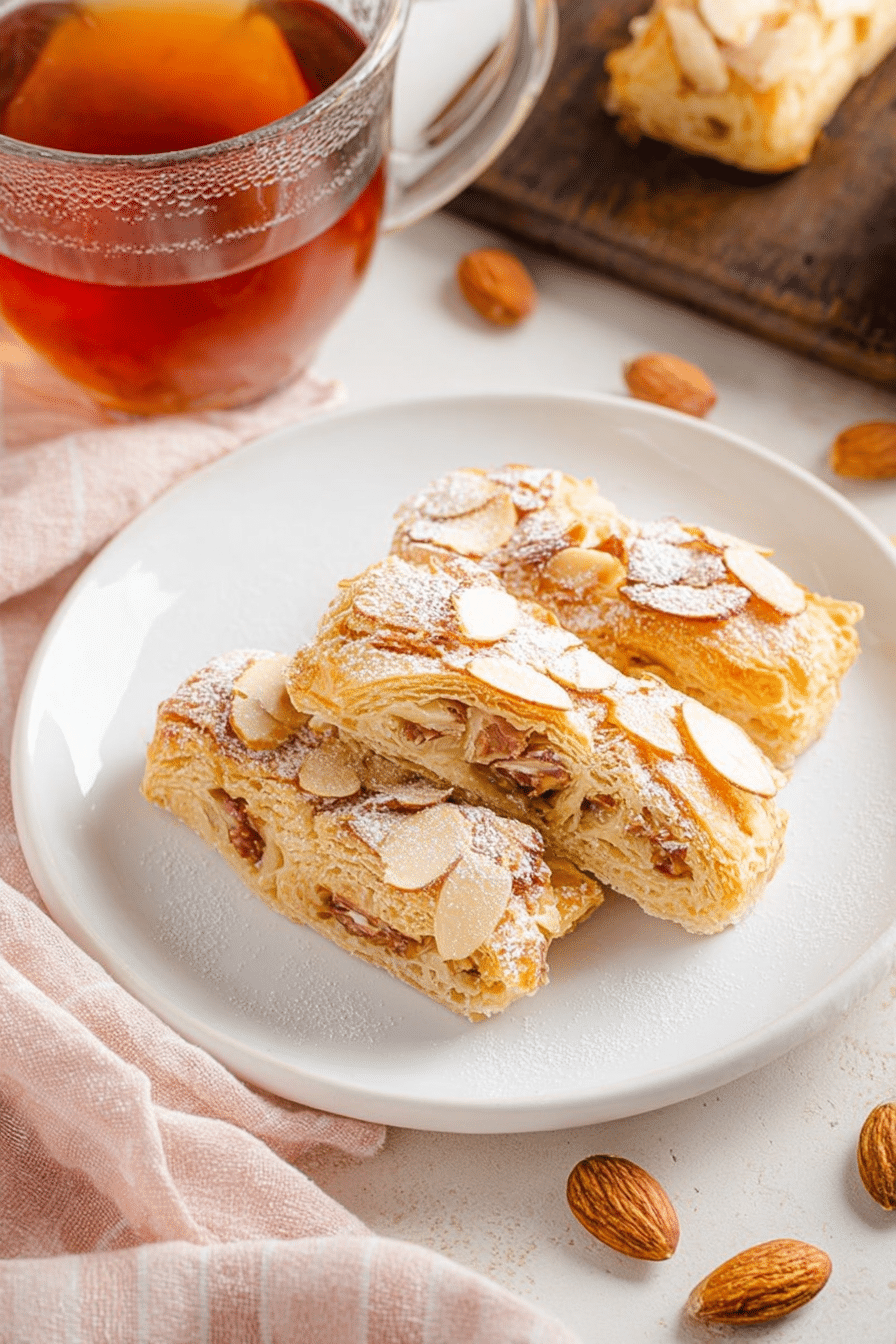
Sweet Almond Pastry
Ingredients
Method
- Preheat oven to 400°F. Line a baking sheet with parchment paper or a silpat.
- In a small bowl, whisk together egg and water. Set aside.
- In a food processor, combine almond paste, sugar, and vanilla extract until well combined.
- Unfold pastry sheet on prepared baking sheet. Gently roll it to be a little thinner.
- Cut slits 1 inch apart from the two sides of the pastry rectangle within 1/2 inch of the center mixture. Arrange the almond paste mixture down the center.
- Starting at one end, fold the pastry strips over the almond mixture on a diagonal, alternating sides. Brush with the egg wash and sprinkle with sliced almonds.
- Bake for 10 minutes, then lower the heat to 375°F and continue baking for 17 to 20 minutes until golden brown. Let cool for 10 minutes, slice, and serve.