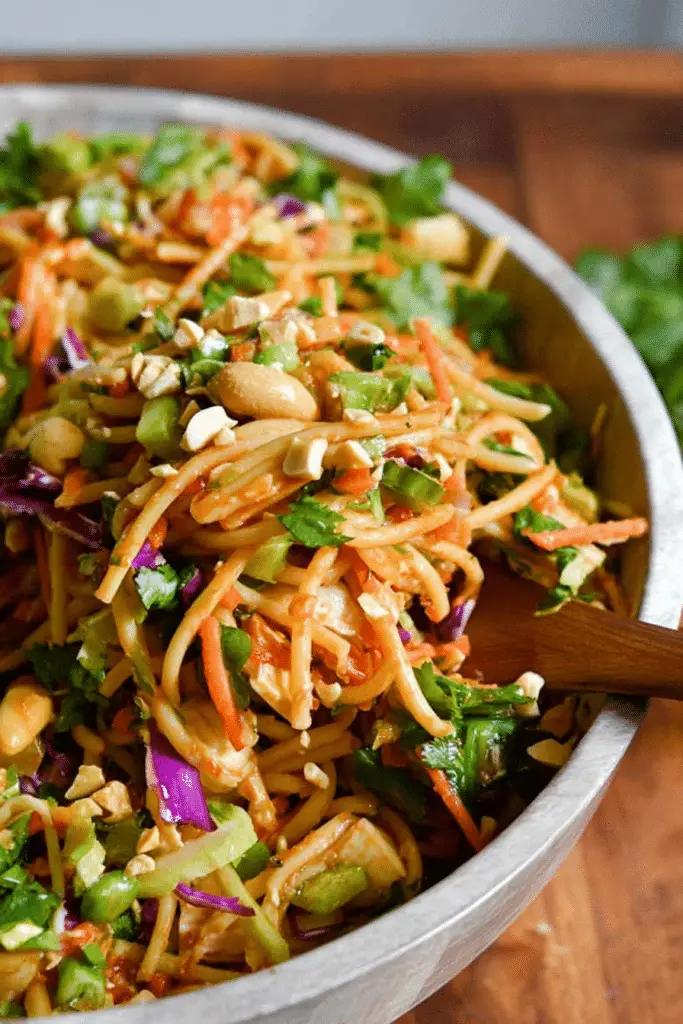
I first made this Thai Spring Roll Pasta Salad on a humid July evening when I wanted the bright flavors of fresh spring rolls but with fewer fiddly wrappers and a dinner that could feed a small crowd. The idea was simple: take everything I love about a Vietnamese-style fresh roll — crisp cabbage, fragrant herbs, crunchy carrots, cool cucumber, and a hit of tangy lime — and toss it with soft rice noodles and a luscious peanut dressing. The first bite is always the best part: cool, herby, with a little sticky-sweet peanut coating and a crack from chopped peanuts.
If you love the fresh flavors in spring rolls, our vegetable spring roll recipe is a great reference for the crisp fillings that inspired this pasta salad.
Why this mash-up works (and when to make it)
This salad sits at a happy intersection: it’s light enough for summer, sturdy enough for picnics, and colorful enough for a potluck. The rice noodles bring a soft, slippery texture that contrasts with crunchy carrots and peanuts. Fresh herbs—cilantro and mint—deliver aromatics that lift the whole bowl. I often make this for weekday dinners when I want something fast but not boring; it’s also my go-to for bringing to a friend’s backyard barbecue because it travels well when dressed just before serving.
Ingredients for the Salad
Below I describe each main ingredient and what it contributes. I keep amounts nearby when I’m cooking, but here I want to highlight roles and swaps so you understand why each component matters.
- Rice noodles – provide a soft, slippery base that soaks up dressing; use vermicelli or short rice noodles and rinse well after cooking to stop them from getting gummy.
- Purple cabbage – adds bright color and crunch, plus a slightly peppery bite that stands up to the dressing.
- Romaine lettuce – offers a mild, crisp leaf texture; shredded romaine keeps the salad light and adds volume without overpowering.
- Cucumber – cooling and hydrating; deseeded and diced, cucumber adds a juicy snap that contrasts the peanut sauce.
- Carrots – sweet, crunchy ribbons or shreds give texture and a friendly pop of sweetness.
- Cilantro – herbal lift; use leaves and tender stems for fragrance and freshness.
- Mint – bright, cooling notes that cut the richness of the peanut dressing.
- Green onions – provide an oniony bite without being overpowering; thinly sliced for even distribution.
- Bean sprouts (optional) – delicate crunch and fresh snap, great if you want extra texture.
- Shrimp – tender, slightly sweet protein; cooked shrimp is my usual choice but chicken, tofu, or tempeh all work.
- Peanuts – chopped for crunch and that unmistakable peanut finish; substitute toasted sesame seeds or crushed roasted chickpeas if nut-free.
- Soy sauce / Tamari – salty umami backbone for the dressing; tamari keeps it gluten-free.
- Rice vinegar – bright acidity to balance the peanut butter and oil.
- Sesame oil – a little goes a long way; adds toasty, savory depth.
- Garlic & fresh ginger – aromatic base for the dressing; ginger gives a bright, spicy note.
- Creamy peanut butter – the dressing’s star, creating that silky mouthfeel and nutty sweetness.
- Sriracha – optional heat to taste; balances the sweet and salty components.
- Honey or sweetener – rounds the edges of the dressing and melds flavors together.
- Lime – fresh lime juice brings immediate brightness and lifts every bite.
- Water – used sparingly to thin the dressing to a pourable consistency.
For ingredient ideas and a similar flavor profile, check out our spring roll salad — many of the same herbs and veg translate perfectly to pasta.
Preparation Instructions
Below is the tested method I use every time. I keep the dressing simple and finish the salad just before serving so textures remain lively. The timings are forgiving, but I’ll note where to watch closely.
- Cook the rice noodles: Bring a large pot of water to a rolling boil. Add rice noodles and cook according to the package instructions until just tender—usually a minute or two for thin vermicelli, slightly longer for thicker rice noodles. The visual cue is a translucent, soft noodle with no opaque center. Immediately drain and rinse under cold water until the noodles are cool; this stops cooking and removes surface starch so they don’t clump. Toss with a teaspoon of sesame oil while they sit to prevent sticking.
- Prep the vegetables and herbs: While the noodles cook, shred the purple cabbage and romaine finely so they mix well with the noodles. Use a sharp knife or box grater for the carrots — I prefer a coarse shred so each forkful has texture. Dice the cucumber into small, bite-sized pieces; if the seeds are watery, scrape them out so the salad doesn’t get soggy. Chop cilantro and mint roughly — big leaves toss better than tiny bits that wilt quickly.
- Cook and chop protein (if using): For shrimp, I use pre-cooked, peeled shrimp and roughly chop them. If you’re starting from raw shrimp, sauté briefly in a hot pan with a drizzle of oil until they curl and turn pink—watch closely, they go from translucent to opaque fast and overcooking makes them rubbery. For tofu, press briefly to remove excess moisture and pan-fry until browned on both sides for chew and flavor.
- Make the peanut dressing: In a bowl, whisk together soy sauce (or tamari), rice vinegar, a splash of sesame oil, minced garlic, grated fresh ginger, creamy peanut butter, sriracha (if using), honey, lime juice, and a little water to thin. If your peanut butter is thick, warm it for 15–30 seconds in the microwave so it blends smoothly. The dressing should be thick but pourable — when you lift the whisk it coats the back of a spoon. If it’s too thin, add a spoonful more peanut butter; if too thick, add water a teaspoon at a time.
- Assemble: In a large salad bowl, combine the cooled rice noodles with shredded cabbage and romaine. Top with cucumber, carrots, cilantro, mint, green onions, bean sprouts (if using), and chopped shrimp. Drizzle the dressing over the top, scatter chopped peanuts, and toss gently to combine. Taste and adjust: add more lime if you want brightness, more soy for salt, or a touch more honey to tame heat.
- Serving cues: Serve immediately for best texture. You want the noodles tender, vegetables crisp, and peanuts crunchy. If you leave it too long after dressing, cabbage softens and the peanuts absorb moisture; that’s fine for leftovers but not ideal for presentation.
Nutritional Overview
This salad is an appealing mix of macronutrients: carbohydrates from rice noodles, protein from shrimp (or tofu/edamame), and healthy fats from peanut butter and sesame oil. The vegetables contribute fiber, vitamins, and a low-calorie volume that makes the dish feel substantial without being heavy.
Based on the original recipe proportions, a single serving is roughly in the 300–350 calorie range with around 15 g fat, 25–30 g carbohydrate, and 15–20 g protein. The exact numbers will shift if you add more nuts, swap in tofu, or use a larger portion of noodles. Vegetables supply vitamin A (from carrots), vitamin C (from cabbage and lime), and potassium (from cucumber). Using tamari and a moderate amount of honey keeps sodium and added sugars under control compared with many store-bought dressings.
Vegan Variations of this Recipe
Making this salad vegan is straightforward and something I do often when I want a plant-forward meal. Here are the swaps I rely on:
- Shrimp → Tofu or tempeh – press and pan-sear tofu for a crisp exterior; or cube and crisp tempeh for a nuttier flavor.
- Honey → Maple syrup or agave – keeps the dressing sweet without animal products.
- Soy sauce – already vegan; use tamari if you need gluten-free.
- Extra protein – edamame is a great, fast option that mixes easily and adds color.
Easy swaps: replace the shrimp with baked tofu, tempeh, or edamame. Use maple syrup or agave instead of honey, and ensure your peanut butter and sriracha are vegan. The soy sauce-based dressing is already vegan-friendly.
Meal Prep Tips and Storage Options
I meal-prep this salad a lot. Here’s my process to keep everything tasting fresh through the week:
- Do ahead: Cook rice noodles and cool them completely. Chop cabbage, carrots, cucumber, and herbs and store them in airtight containers. Cook any proteins and keep them separate from the veggies.
- Keep dressing separate: Store the peanut dressing in a jar in the fridge for up to a week — the oil may separate, just shake or whisk to recombine.
- Assemble later: Toss noodles and veggies with dressing no more than a day before serving if you want peak texture; for travel or potlucks, dress right before you serve.
- Storage times: Prepped noodles and veggies: up to 3 days in the fridge. Cooked shrimp or tofu: up to 3 days. Assembled salad with dressing: best same day, acceptable up to 24 hours if refrigerated.
Creative Ingredient Substitutions
Part of what makes this recipe fun is how flexible it is. Here are swaps I actually test in my kitchen and what to expect:
- Rice noodles → Soba or thin wheat pasta – soba adds a nutty buckwheat note; wheat pasta changes the texture and will hold more dressing.
- Peanuts → Sesame seeds or roasted chickpeas – sesame seeds add a toasty finish; roasted chickpeas give a satisfying crunch for nut-free diets. For a crunchy, vegan-friendly topping idea, consider adding some crispy roasted chickpeas instead of peanuts.
- Cabbage → Napa or kale – napa is softer and milder; kale needs massaging (a splash of lime and a pinch of salt) to tenderize.
- Shrimp → Chicken – thinly sliced, cooked chicken breast or thigh will work; cook gently to avoid drying out.
- Soy sauce → Coconut aminos – lowers sodium and keeps it gluten-free.
Exploring Dressings Beyond Peanut Sauce
Peanut sauce is classic here, but I often switch things up. Each dressing shifts the salad’s personality:
- Sesame-ginger dressing – toasted sesame oil, rice vinegar, a touch of soy, grated ginger, and a little maple syrup for sweetness. This makes the salad more savory and toasted.
- Lime vinaigrette – lime juice, rice vinegar, a neutral oil, a little honey, and fish sauce or soy for umami. Bright, lighter, and very refreshing.
- Sriracha-lime sauce – sriracha, lime, a bit of peanut butter or tahini for body, and soy for salt. Spicy and tangy, with a slightly creamy mouthfeel.
Looking for a spicy-creamy alternative to peanut sauce? Try the flavors from our bang bang sauce guide as a bold dressing option.
Troubleshooting & Expert Tips
Here are the small problems you’ll actually meet and how I fix them:
- No flavor or flat dressing: Often it needs acid or salt, not sugar. Add a splash more lime or rice vinegar, and a pinch more soy sauce to wake it up.
- Noodles clumping: Rinse thoroughly under cold water. Toss with a little sesame oil while they cool. If they’ve already stuck, a quick toss with warm water and a fork will loosen them.
- Peanut dressing too thick: Thin slowly with warm water, one tablespoon at a time, until it pours but still coats the spoon.
- Veggies turned soggy: Don’t dress too early. Store vegetables dry in the fridge and combine with dressing at the last minute.
Conclusion and Serving Suggestions
To wrap up: this Thai Spring Roll Pasta Salad is a reliable, bright, and flexible dish I make at least once a month in summer. Expect a mix of soft noodles, crunchy veg, fresh herbs, and a creamy nutty dressing. Serve it family-style in a big bowl or portion it into individual containers for a grab-and-go lunch. It pairs beautifully with grilled skewers, a cold beer, or simply a wedge of lime and extra chopped peanuts on the side.
For parties, I like to set the salad out with the dressing on the side so guests can choose how saucy they want it. Leftovers are fantastic the next day if you keep the dressing separate until serving, and any added lime brightens it back up.
FAQ
Can I make the Thai Spring Roll Pasta Salad ahead of time?
Yes — prep smartly. Chop the vegetables and herbs and cook the rice noodles ahead. Store the dressing separately. Keep noodles and veggies refrigerated in airtight containers for up to 3 days. If the salad contains cooked shrimp or other proteins, combine them with the salad only the day you plan to eat it (or store the fully assembled salad for up to 1 day). The dressing will keep about a week in the fridge.
How can I make this recipe vegan?
Easy swaps: replace the shrimp with baked tofu, tempeh, or edamame. Use maple syrup or agave instead of honey, and ensure your peanut butter and sriracha are vegan. The soy sauce-based dressing is already vegan-friendly.
What type of noodles should I use and how do I prevent them from clumping?
Use rice noodles (vermicelli or similar) and cook them according to package instructions until just tender. Rinse well under cold water to stop cooking and remove starch, then toss with a teaspoon of sesame oil or a little dressing to keep them from sticking together.
I have a peanut allergy — what can I use instead of peanut sauce?
Swap the peanut butter for sunflower seed butter or tahini for a similar creamy texture. You can also use a sesame-ginger or lime-vinaigrette dressing (sesame oil, rice vinegar, soy sauce/tamari, ginger, and a sweetener) for a nut-free flavor.
Is this salad gluten-free?
It can be. Rice noodles are naturally gluten-free, but regular soy sauce contains gluten. Use tamari or coconut aminos to keep the dressing gluten-free, and check labels on condiments like sriracha to be sure.
Thanks for reading — if you try this, I’d love to hear what protein swap you went with or how you adjusted the dressing. Share a photo or a note and tell me if you doubled the herbs like I always do when I’m feeling generous.
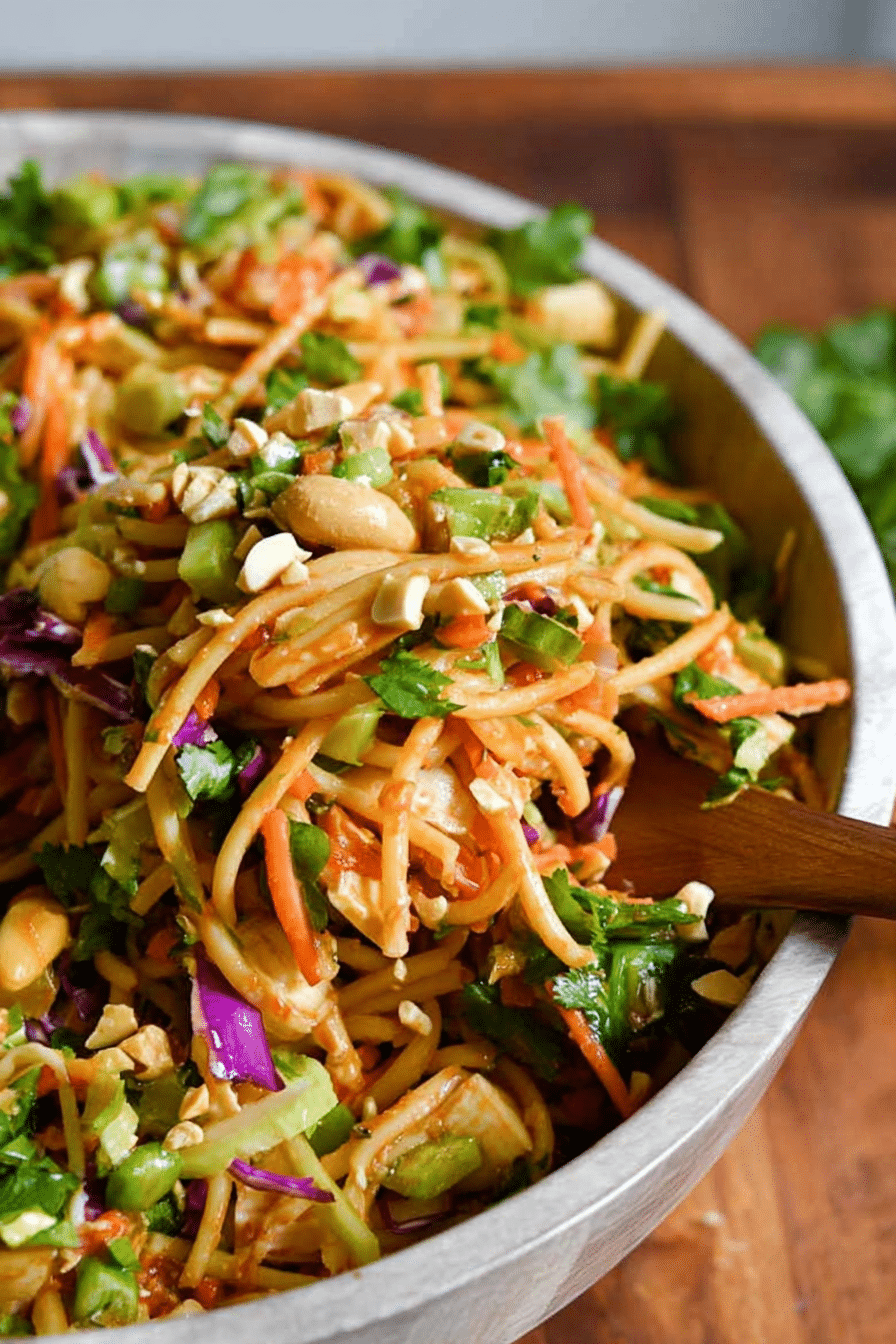
Thai Spring Roll Pasta Salad
Ingredients
Method
- In a large salad bowl, add rice noodles, cabbage and romaine lettuce. Top with cucumber, carrots, cilantro, mint, green onions, bean sprouts and shrimp. To make your dressing whisk together all ingredients until smooth. Drizzle the dressing over the salad, top with chopped peanuts and toss to combine.