- Prep
- 60 min
- Cook
- 35 min
- Total
- 275 min
- Serves
- 18
- Calories
- 420 kcal
- Carbs
- 54.00 g
Introduction
I make this tres leches cake whenever there is a reason to gather — birthdays, graduations, or the small Sunday dinners that end up lasting late into the night. I learned early on that the cake’s power lies not in fancy decorations but in its memory-making texture: a light, airy sponge that sips up a milky syrup until it feels almost custardy. In my kitchen it’s become the dessert everyone requests when comfort and celebration meet.
There were a few attempts before I found the right balance: times I poured the milk too quickly and flooded the bottom, or beat the egg whites too aggressively and lost that feather-light crumb. I adjusted the technique, paid attention to the little signals (the way the batter looks, the sound of a fork through a slice), and now the cake reliably sings at every table I bring it to. I’ll share the practical tricks I use so you get the same dependable result.
Beyond technique, this cake is sentimental — the smooth, pale topping dusted with cinnamon always looks festive and tastes like comfort. I’ll also show how to make simple swaps for dietary needs, and give short, scannable pro-tips and troubleshooting notes so you can make it for any crowd with confidence.
Why This Tres Leches Cake Is the One to Make for Celebrations
Tres leches is a traditional Central American dessert usually saved for special occasions, and for good reason: it dresses a table with its quiet, elegant white top and feeds a crowd without fuss. I bring this cake to gatherings because it’s as much about the memory as the flavor — a slice often prompts stories, second helpings, and the slow, satisfied silence of people savoring something familiar and soothing.
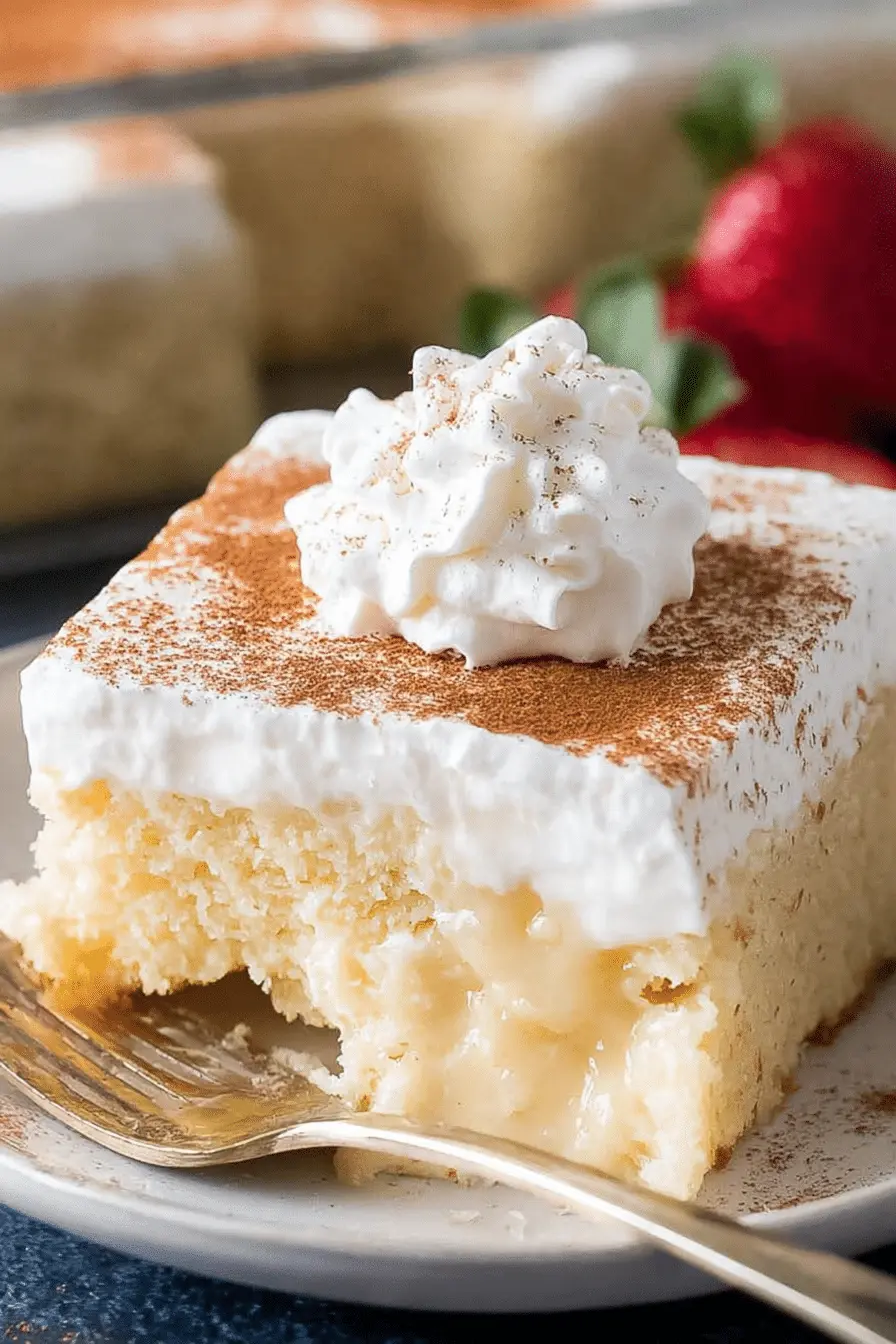
What makes it a crowd favorite is its contrast of textures: the sponge should be airy but porous, and the milk soak should be rich without feeling syrupy. Visually it’s lovely — a smooth white blanket of whipped cream, a hint of cinnamon, and slices that hold together but release moisture as you lift them. Sensory note: the scent is sweet and vanilla-forward with a touch of condensed milk caramel; the first bite should be cool and lush, the fork gliding through easily.
I remember serving this after a family reunion and watching three generations reach for the same plate. Moments like that explain why this cake shows up at birthdays and holidays — it’s simple, adaptable, and quietly celebratory.
Everything You Need for Tres Leches Cake
Use fresh, high-quality ingredients and a few basic tools — they make a noticeable difference in the final cake. Below I list the essentials and what to look for when choosing substitutions.
- Eggs (whites and yolks separated) – Whites provide lift; yolks add richness. Use room-temperature eggs for best volume from the whites.
- Butter – Adds tender crumb and flavor. A good unsalted butter gives the cake a clean, creamy base.
- Granulated sugar – For structure and caramelized flavor in the sponge; sugar amount affects browning and crumb.
- Vanilla extract – Anchors the milk mixture and brings warmth to the sponge.
- All-purpose flour – Provides structure; if substituting gluten-free flour, use a blend formulated for cakes.
- Baking powder & salt – Small amounts that impact rise and flavor balance; don’t skip the salt.
- Milk – Part of the batter; the milk you choose here affects tenderness and flavor.
- Sweetened condensed milk – The concentrated sweetness and body in the soak; homemade versions deepen flavor if you have the time.
- Evaporated milk – Adds creaminess without extra sweetness, balancing the condensed milk.
- Heavy cream – Used in the soak or for the whipped topping; richer cream makes a silkier finish.
- Powdered sugar – Stabilizes whipped cream and sweetens it smoothly.
- Ground cinnamon (optional) – A light dusting adds warm aroma and visual contrast.
- Kitchen tools – Clean mixing bowls (no grease), an electric mixer or stand mixer with a whisk, a spatula for folding, a 9x13 pan or similar, a skewer or fork for poking holes, and a sieve or fine mesh for dusting cinnamon.
For your cake, consider using homemade condensed milk to enhance the flavor.
The Secret to the Perfect Soaked Texture
The ideal tres leches is neither dry nor soggy — it’s moist throughout with a slight custardy feel where the milk has settled. Achieving that depends on a few technique points and patience.
- Cool the cake slightly before soaking so the top isn’t piping hot; warm cake can repel the milk or cause it to pool at the bottom.
- Use a fork or skewer to make holes that penetrate the cake to the pan; this creates channels for the milk to reach the center and bottom instead of sliding off the top.
- Pour the milk mixture slowly and evenly over the cake, allowing it time to absorb between pours. Rushing this step is the most common mistake and leads to uneven saturation.
- After pouring, cover and chill the cake for several hours or overnight — this gives the milk time to distribute and the texture to set. Overnight chilling produces the best, most stable texture for slicing.
- Typical mistakes to avoid: pouring too much at once, not making enough holes, and serving too soon. If the cake seems overly dense after soaking, it was likely over-mixed before baking or the whites were deflated.
When done right, you’ll notice the fork glide through the slice with a small, satisfying whisper rather than a muffled thud — that’s the sound of a properly soaked yet stable cake.
Which Milks to Use — Choices and Flavor Impact
The classic trio is sweetened condensed milk, evaporated milk, and a lighter milk or cream. Each contributes differently: condensed milk brings sweetness and thick texture, evaporated milk adds creamy body without extra sugar, and whole milk or cream softens the intensity and adds silkiness.
- Sweetened condensed milk – The backbone of the soak; if you prefer less sweetness, reduce the relative amount or mix with unsweetened alternatives.
- Evaporated milk – Balances sweetness with creaminess; it keeps the soak from becoming cloying.
- Whole milk or heavy cream – Adjusts richness; more cream equals a thicker, more luxurious mouthfeel.
- Coconut, almond, or oat milk – Use these for alternative flavor profiles or dairy-free needs. Coconut gives tropical depth; almond is lighter and slightly nutty; oat is neutral and creamy.
- Testing sweetness and creaminess – Taste a spoonful of your combined milk mixture before pouring. It should be sweet and milky but not overwhelmingly sugary; if it’s too sweet, temper it with a splash of plain milk or cream.
Small changes in the milk mix change the cake’s color and sheen — coconut milk lends a faint ivory tone and a whisper of coconut aroma, while evaporated milk keeps the soak pale and smooth.
The Role of Egg Whites in a Light Sponge
Egg whites are the lift mechanism in this sponge. When beaten properly they trap air, which expands in the oven and creates the cake’s signature light crumb. The yolk-based portion of the batter gives moisture and richness, so the two parts must be treated differently and combined gently.
- Use room-temperature eggs for the best volume; whites whip more readily when they’re not cold.
- Ensure bowls and beaters are perfectly clean and free of any fat — even a trace of oil or yolk will prevent whites from reaching full volume.
- Add sugar gradually to the whites while whipping to stabilize the foam and produce glossy, stiff peaks.
- Fold the whites into the yolk batter carefully: cut through the center, lift, and rotate the bowl. Stop folding as soon as the mixture looks uniform — over-folding deflates the air and yields a dense cake.
- If your whites start to weep or lose volume, stop and use them immediately; they don’t recover once collapsed.
Visually, egg whites transform from a clear, viscous liquid into bright white, billowy peaks that hold a shape. That change is one of the most satisfying signals that the cake will be light and airy.
How to Make Tres Leches Cake (Step-by-Step)
Below are the practical steps I follow in my kitchen. Time each step reasonably but trust visual cues: color, texture, and smell will guide you as much as minutes on a clock.
- Preheat the oven and prepare a 9x13 pan by greasing it well so the cake releases cleanly and the edges don’t stick.
- Beat egg whites until foamy, then add sugar gradually and whip to stiff, glossy peaks — this gives the sponge its lift.
- In the same bowl or a separate one, cream the butter with remaining sugar until pale, then add egg yolks one at a time and stir in vanilla for flavor.
- Whisk together the dry ingredients (flour, baking powder, salt) and alternate folding them into the yolk mixture with milk, keeping the batter smooth and slightly thick.
- Gently fold the whipped egg whites into the batter in two or three additions, using wide, sweeping motions to preserve air.
- Spread the batter evenly in the prepared pan and bake until the top is golden and a toothpick comes out clean or with a few moist crumbs.
- Allow the cake to cool until just warm; do not invert. Poke holes across the surface with a fork or skewer, reaching the bottom to create channels for the milk soak.
- Whisk together the milk soak (sweetened condensed milk, evaporated milk, and cream, plus vanilla), taste and adjust sweetness if desired, then pour it slowly and evenly over the cake, letting it settle between pours.
- Cover and refrigerate for at least several hours, preferably overnight, so the soak distributes and the texture sets.
- When ready, whip heavy cream with powdered sugar and vanilla to stiff peaks and spread over the chilled cake. Dust lightly with cinnamon if you like.
Top your tres leches cake with a delightful strawberry cold foam for an extra layer of flavor.
Pro Tip for tres leches cake: Dairy-Free, Gluten-Free & Flavor Swaps
I provide these as short, scannable lists so you can adapt the cake to dietary needs or play with flavors. Pro-Tips, Troubleshooting, and Variations are presented below as bulleted lists for quick reference.
- Dairy-free swaps – Replace condensed and evaporated milk with thickened coconut milk or canned coconut cream combined with a bit of maple syrup for sweetness; use a coconut-based whipped topping or stabilized aquafaba for the finish.
- Gluten-free option – Use a cup-for-cup gluten-free baking blend formulated for cakes and be gentle when folding to preserve structure.
- Flavor swaps – Add lemon or orange zest to the batter for brightness, fold in a small amount of cocoa to the batter for a chocolate version, or swirl fruit purée into the top layer before chilling for a fruity note.
- Seasonal fruit toppings – Fresh berries, poached stone fruit, or caramelized pineapple create beautiful contrast and freshen the richness of the soak.
- Pro-Tips – Use room-temperature ingredients; always taste the milk mixture before pouring; chill the cake long enough to let flavors meld; stabilize whipped cream with a little powdered sugar for cleaner slices.
- Troubleshooting – If the cake is too dense, you likely overfolded the whites. If it’s soggy in one area, you may have poured unevenly or missed poking holes there. If egg whites won’t peak, check for grease on utensils or stray yolk.
- Variations – Try a coconut-forward version with toasted coconut on top, a coffee-infused soak for a tiramisu-like feel, or a light vanilla-bean version using scraped beans for aromatic complexity.
If you're hosting a celebration, pair your cake with our best ever guacamole for a vibrant appetizer.
How to Store, Make-Ahead, and Serve Tres Leches Cake
This cake actually gets better with a bit of time in the fridge — the flavors meld and the texture becomes more cohesive. Below are straightforward storage and serving notes to keep it tasting its best.
- Storage – Keep the cake covered and refrigerated; it will stay moist and fresh for several days. For the cleanest slices, chill thoroughly before cutting.
- Make-ahead – You can bake the sponge a day ahead, poke holes, and pour the milk mixture the night before serving; whip and spread the topping the morning you serve it for the best texture.
- Serving tips – Use a sharp, thin knife warmed briefly under hot water and wiped dry between slices to get even pieces. Garnish with a dusting of cinnamon or fresh fruit for color and contrast.
For a sweet finish, serve slices of tres leches cake alongside a moist lemon poppy seed loaf.
Frequently Asked Questions
Can I use different types of milk for the tres leches topping?
Absolutely! While sweetened condensed milk, evaporated milk, and whole milk are traditional, you can experiment with different types like almond, coconut, or oat milk for unique flavors.
How long should I let the cake soak in the milk mixture?
For the best results, let your tres leches cake soak in the milk mixture for at least several hours, or overnight if possible, to fully absorb the flavors.
What if my egg whites don’t form stiff peaks?
If your egg whites aren’t forming stiff peaks, make sure your bowl and beaters are completely clean and free of any grease. Additionally, ensure that no yolk gets into the egg whites.
How can I make this recipe dairy-free?
To make a dairy-free tres leches cake, substitute the milk, evaporated milk, and condensed milk with dairy-free alternatives like coconut or almond milk. Use vegan whipped cream for the topping.
Can I prepare the cake in advance?
Yes, you can prepare the tres leches cake a day or two in advance. Just keep it covered in the refrigerator until you're ready to serve it for optimal taste and texture.
Recipe Card
How I Finally Nailed Tres Leches Cake — A Classic Mexican Recipe
- Prep
- 60 min
- Cook
- 35 min
- Total
- 275 min
- Serves
- 18
- Calories
- 420 kcal
- Carbs
- 54.00 g
Ingredients
- 5 largeeggs (whites and yolks separated)
- ½ cupbutter (softened)
- 2 cupsgranulated sugar (divided)
- 1 ½ teaspoonsvanilla extract
- 2 cupsall-purpose flour
- 2 teaspoonsbaking powder
- 1 teaspoonsalt
- 1 cupmilk
- 14 ozsweetened condensed milk
- 12 ozevaporated milk
- ½ cupheavy cream
- ½ teaspoonvanilla extract
- 1 ½ cupsheavy cream
- ½ cuppowdered sugar
- ½ teaspoonvanilla extract
- —Ground cinnamon for sprinkling (optional)
Instructions
- 1
Preheat oven to 350F (175C) and spray a 9x13 glass baking dish with baking spray. Set aside.
- 2
Place egg whites in a large bowl or in the bowl of a stand mixer and beat until foamy. Gradually add 1 cup (200g) of sugar, increasing speed to high and beating until thick and glossy with stiff peaks.
- 3
In the same bowl, place softened butter and the remaining 1 cup (200g) of sugar, and beat until creamy. Add egg yolks one at a time, stirring after each addition, then mix in vanilla extract.
- 4
In a separate bowl, whisk together flour, baking powder, and salt. Alternately add milk and flour mixture to the egg yolk mixture, mixing until combined.
- 5
Gently fold the egg white mixture into the batter until fully combined.
- 6
Spread the batter into the prepared pan and bake for 35-40 minutes.
- 7
Let the cake cool for 30-60 minutes. Then mix together condensed milk, evaporated milk, heavy cream, and vanilla extract for the topping.
- 8
Poke holes all over the cooled cake and pour the milk mixture over it. Chill for several hours or overnight.
- 9
Prepare whipped cream by beating heavy cream with powdered sugar and vanilla until thickened. Spread over the cake and sprinkle with cinnamon if desired.
- 10
Slice and serve. Enjoy!
You might also like
Reviews
Be the first to review this.