- Prep
- 60 min
- Cook
- 30 min
- Total
- 90 min
- Serves
- 50
- Calories
- 150 kcal
Introduction
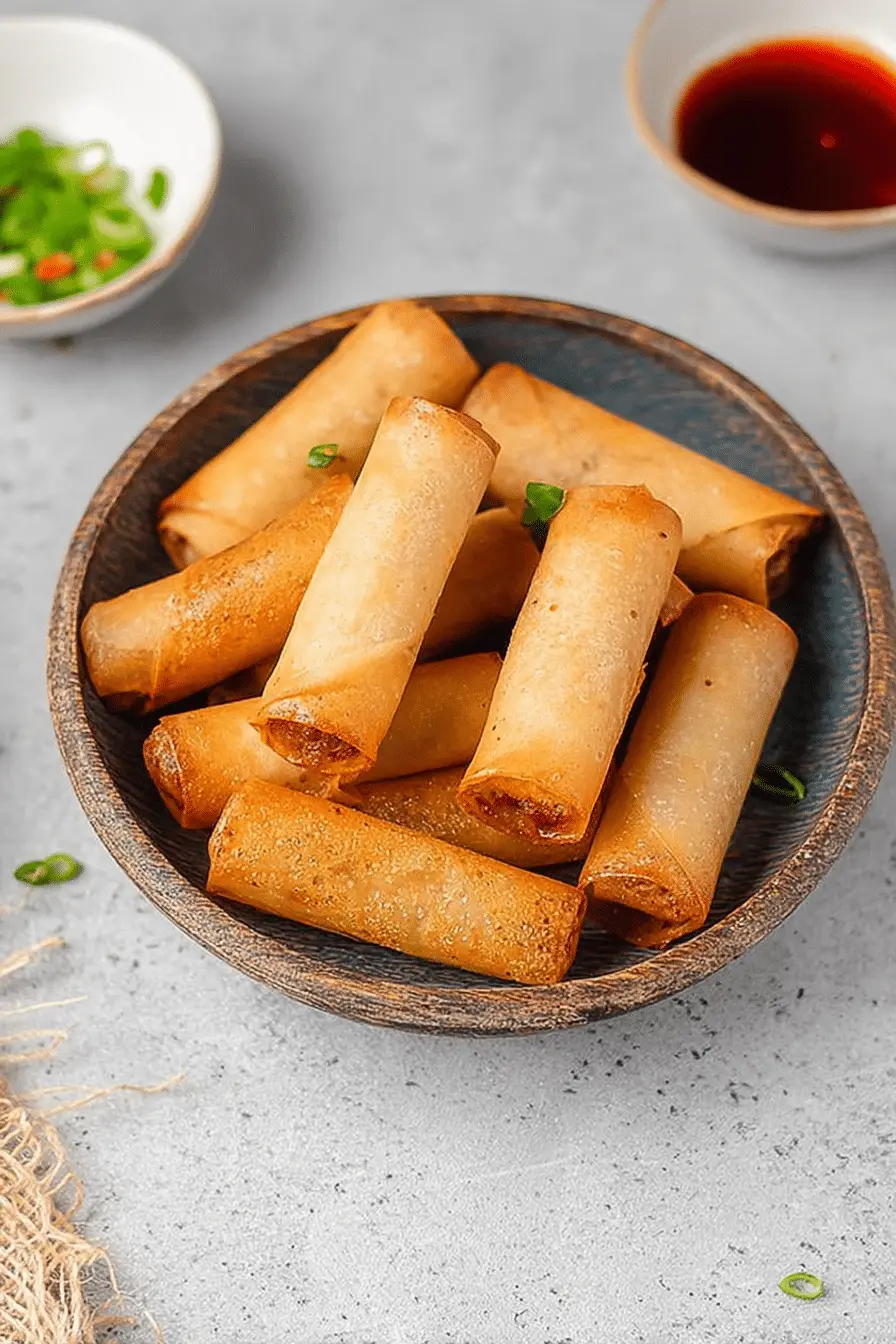
I still remember the sound of my aunt’s hands rolling lumpia on a Saturday afternoon — the wrappers whispering as she tucked the filling, the kitchen smelling faintly of garlic and oil. Vegan Filipino spring rolls are my plant-based answer to that nostalgia: the same bright, savory flavors we all love from lumpiang shanghai but made without meat. These are golden, slightly crackly on the outside and soft, savory on the inside. They work as party finger food, a crunchy snack with a cold beer, or the crunchy side to a bowl of rice and greens. What I love about this version is how approachable it is: simple ingredients like carrots, cabbage, tofu or a plant-based ground meat, a few aromatics, and spring roll wrappers. You can deep-fry for the classic texture, or air-fry for a lighter version. I make a big batch when I have guests, and truthfully, I’ve made smaller batches on weeknights when I want something comforting and fast. Over the years, I tested different plant proteins and wrapper techniques until I landed on the combination that gives me that familiar crunch and satisfying interior every time.Ingredients You’ll Need
- Rice paper or lumpia wrappers – the exterior that crisps up; rice paper gives a glassy crunch while lumpia wrappers brown faster.
- Carrots – add sweetness, texture, and color; grate or finely chop so they blend into the filling.
- Cabbage – provides bulk and fiber; thinly shredded so the filling stays moist but not wet.
- Green onions – give a sharp, fresh lift that cuts through the oil.
- Garlic – fragrant and savory; cook briefly in the filling or pulse raw for a bolder garlic note.
- Tofu or tempeh (or plant-based ground) – the protein backbone; use firm tofu crumbled or a packaged plant-based ground for a meatier texture.
- Water chestnuts or mushrooms – provide crunch (water chestnuts) or umami (mushrooms); both help mimic the bite of traditional lumpia filling.
- Nori or seaweed – optional but gives a subtle savory, almost 'meaty' undertone when you're skipping pork.
- Soy sauce or tamari – salt and umami; tamari for gluten-free.
- Flax egg – acts as a binder for the filling and helps the wrapper seal.
- Oil for frying – neutral oils like vegetable or peanut are traditional for deep-frying; for air-frying use a light coating of oil on the rolls.
- Dipping sauces – sweet-and-sour, banana ketchup, or a peanut dip make great companions.
Step-by-Step Instructions
I structure the assembly like a small production line: filling bowl, wrapper stack, small cup of water for sealing, and a tray lined with paper towels for draining. That setup keeps the process moving, especially when you're making many at once. Below is a detailed walkthrough that follows the tested recipe I use regularly.- Thaw and prep wrappers. If you buy frozen wrappers, thaw them according to package directions or the night before. If using rice paper, have a shallow bowl of warm water for softening. Keep wrappers covered with a damp towel while you work to prevent drying out.
- Make the flax egg. Mix flaxseed meal with water and let sit for about 15 minutes until thickened — it should have a slightly gelatinous texture. This binds the filling so it doesn’t fall apart when frying.
- Process the vegetables and aromatics. In a food processor, pulse water chestnuts (or mushrooms), green onions, carrot, torn nori, and garlic until very finely chopped. The filling should be uniform so it rolls tightly and fries evenly. I usually pulse in short bursts so I don’t turn crunchy water chestnuts into paste.
- Combine the filling. In a large bowl, mix the processed veg with crumbled tofu or plant-based ground, soy sauce, salt, pepper, and the flax egg. Taste the mixture — if it tastes flat, add a little more soy sauce (salt) rather than sugar. At this stage you should have a cohesive, slightly wet mixture that holds together when pinched.
- Prepare your frying setup. For deep-frying, fill a deep pot with 2–3 inches of oil and heat to 350°F (about medium-low if you don't have a thermometer). If the oil is too hot, the wrapper will brown before the inside heats through; too cool and the rolls soak up oil and get greasy. I test with one roll first: it should take about 4–5 minutes to turn golden brown.
- Assemble the lumpia. Keep a cup of water nearby. Lay one wrapper flat, place about 1 1/2 tablespoons of filling near the bottom, fold the bottom over and tuck tightly, fold in the sides, then roll into a cigar shape. Wet the edge with a dab of water to seal. Press gently but firmly — you want a tight roll so the filling doesn’t expand and split the wrapper while frying.
- Fry or air-fry. Fry in batches (5–8 at a time depending on pot size) until golden and crisp, about 4–5 minutes. Drain on paper towels. For air-frying, brush or spray with oil and cook at 375°F for about 8–12 minutes, turning once, until evenly browned. The texture will be slightly different — air-fried rolls are less oily but still crunchy.
- Serve. Serve immediately with your chosen dipping sauces. These are best hot and crispy; they lose their peak crunch after sitting for too long.
Nutritional Benefits of Key Ingredients
These spring rolls are a plant-forward snack: plenty of fiber, some protein, and vitamins from the vegetables. If you want a fuller meal, pair with a simple salad or steamed rice.- Carrots – rich in beta-carotene (vitamin A) for eye health and adds natural sweetness.
- Cabbage – high in fiber and vitamin C, helps add bulk without many calories.
- Tofu (or plant-based ground) – a solid plant protein source providing iron and calcium when fortified.
- Water chestnuts – add crunch and are low in calories, contributing texture without fat.
- Nori – supplies iodine and a hit of umami that deepens flavor on a low-salt diet.
- Flaxseed – offers omega-3s and helps bind the filling in an egg-free way.
Best Dipping Sauces for Spring Rolls
Dipping sauce is where these rolls really sparkle — sweet, tangy, or nutty sauces all work. Here are a few easy favorites I rotate through.- Peanut sauce – creamy, slightly sweet, and rich. Mix peanut butter with a little soy sauce (or tamari), lime juice, a touch of maple syrup, and water to thin. Add chili flakes for heat.
- Sweet chili sauce – store-bought works fine, but you can simmer rice vinegar, sugar, minced chili, and a cornstarch slurry until glossy.
- Soy + garlic vinegar dip – simple and authentic: soy sauce, a generous splash of cane or white vinegar, minced garlic, and a pinch of sugar to balance.
- Banana ketchup – a uniquely Filipino pairing that's sweet and tangy; delicious with lumpia.
Tips for Customizing Your Filling
One of my favorite things about lumpia is how forgiving it is. Here are ways I switch things up depending on the season or pantry.- Make it gluten-free – swap regular soy sauce for tamari and use certified gluten-free wrappers.
- Low-carb option – skip wrappers and bake the filling in small ramekins topped with panko or crushed nuts for crunch.
- Seasonal veggies – add shredded zucchini in summer (squeezed dry) or roasted sweet potato in fall for sweetness.
- Herbs and aromatics – a little cilantro or basil brightens the filling; kaffir lime or lemon zest adds unexpected freshness.
- Spicy kick – fold in chopped chiles or a teaspoon of sambal oelek to the filling for heat that pairs well with sweet dips.
Cultural Significance of Lumpiang Shanghai
Lumpiang Shanghai is a staple at Filipino gatherings — birthdays, holidays, and potlucks — because it’s shareable, portable, and satisfying. The name ‘lumpia’ traces back to Chinese spring rolls but has evolved in the Philippines into something uniquely local: smaller, crisp, and often served with sweet or tangy condiments. The ‘Shanghai’ variation traditionally uses ground pork, but the spirit of the dish is adaptable. In my family, rolling lumpia is a communal activity: people stand around the table, rolling and laughing, passing trays to be fried. That communal aspect — cooking together and sharing food — is the heart of why this dish endures. To learn more about a traditional version of this favorite dish, check out our Delicious Filipino Lumpia.Frequently Asked Questions about Vegan Filipino Spring Rolls
- Can I make the filling ahead of time? Yes! You can prepare the filling a day in advance. Just store it in an airtight container in the fridge until you're ready to assemble the spring rolls.
- What dipping sauces pair well with vegan spring rolls? Some popular dipping sauces include sweet and sour sauce, banana ketchup, garlic and vinegar, or a peanut sauce. Feel free to experiment with your favorites!
- How can I keep the spring rolls from getting soggy? To prevent sogginess, make sure to dry your fresh ingredients thoroughly before rolling. Additionally, serve them immediately after frying for the best texture.
- Can I make these spring rolls gluten-free? Absolutely! Just use gluten-free spring roll wrappers and ensure that any sauces or seasonings you use are also gluten-free.
- How should I store leftovers? Store any leftover spring rolls in an airtight container in the refrigerator. They are best enjoyed within a day or two, reheated in an air fryer or oven to retain crispiness.
Practical Troubleshooting & Pro Tips
Here are mistakes I made the first few times I adapted this recipe and how I fixed them:- Wrapper cracking – if the wrapper cracks when you roll, it’s either too dry or you’re pulling it too tight. Keep wrappers covered with a damp towel and handle rice paper gently.
- Overly greasy rolls – usually from oil that’s too cool. Use a thermometer if you can; if not, heat slowly and test one roll first to find the sweet spot.
- Filling falls out – packing the filling too loosely or overfilling causes this. Use slightly less filling and roll tight.
- Soggy filling – excess moisture from shredded veggies causes this. Squeeze grated veggies in a towel or let them sit in a sieve to drain before combining.
- No binder available – if you don’t have flax meal, a little cornstarch dissolved in water or aquafaba can help seal the filling.
Make-Ahead, Freezing, and Serving Notes
I often make these ahead for parties. Assemble the rolls on a baking sheet and freeze them in a single layer until solid, then transfer to a freezer bag. Fry or bake from frozen — you’ll need a minute or two extra in the oil. Leftovers in the fridge are best reheated in a 375°F oven or air fryer for 5–8 minutes to bring back the crunch. Don’t expect them to be as perfect as fresh, but they’ll still be delicious.Conclusion and Final Thoughts
These vegan Filipino spring rolls give you that chewy-salty interior and golden exterior I grew up loving, without the meat. They’re adaptable, forgiving, and a great party food that brings people together. If you try them, start by making a small batch to practice your rolling technique and oil temperature, then scale up once you’re comfortable. Share photos, swap fillings, and most of all, enjoy the ritual of rolling and eating together — that’s what lumpia has always been about in my kitchen. Happy rolling! If you make these, tag a friend and tell me which dipping sauce you paired them with — peanut? banana ketchup? I’m always testing new combos.Recipe Card
Vegan Filipino Spring Rolls Recipe: A Delicious Twist on Lumpiang Shanghai
- Prep
- 60 min
- Cook
- 30 min
- Total
- 90 min
- Serves
- 50
- Calories
- 150 kcal
Ingredients
- 2 tablespoonsflaxseed meal
- 6 tablespoonswater
- 1 can (8 oz)water chestnuts (drained)
- 1/2 cupgreen onions (roughly chopped)
- 1 largecarrot (roughly chopped)
- 1 sheetnori (torn into small pieces)
- 4 clovesfresh garlic
- 3/4 lb.Impossible Foods plant-based ground beef
- 1 tablespoonsoy sauce ((or tamari))
- 1/4 teaspoonsalt
- 1/4 teaspoonpepper
- 1 packlumpia or spring roll wrappers
- as needed for fryingoil
- as desireddipping sauces
Instructions
- 1
If your wrappers are frozen, thaw them according to the package directions, or the night before.
- 2
Prepare the flax egg by mixing together the flaxseed meal and water in a small bowl and setting it aside for 15 minutes to thicken.
- 3
In the bowl of a large food processor, add in the water chestnuts, green onions, carrot, nori and fresh garlic. Process until everything is very finely chopped and uniform in consistency.
- 4
Transfer this mixture to a large bowl along with the vegan ground beef, soy sauce, salt and pepper, along with the prepared flax egg. Mix everything well until evenly combined. Set aside.
- 5
Prepare your frying oil. Fill your pot with 2-3 inches of oil and heat it to 350 degrees.
- 6
Fill a small cup with water and keep it handy for later. Carefully peel one sheet of wrapper off of the pile and place it straight down onto a clean work surface. Place 1 1/2 tablespoons of filling towards the bottom of the wrapper and spread it out into a long line.
- 7
Fold the bottom over the filling and tightly tuck it under. Roll the lumpia tightly into a long cigar shape. Dip your fingers into the cup of water and then use that to wet the ends of the wrapper.
- 8
Line a large plate or platter with paper towels and set side.
- 9
Test the oil with one lumpia to see if it is hot enough. It should take about 4-5 minutes to become golden brown.
- 10
Once the oil is at optimal heat, working in batches, add about 5-8 lumpia to the oil and fry the lumpia for 4-5 minutes, or until golden brown. Place the lumpia on the paper towel lined plate to drain off excess oil.
- 11
Serve immediately with dipping sauce of choice. Enjoy!
You might also like
Reviews
Be the first to review this.