- Prep
- 20 min
- Cook
- 60 min
- Total
- 80 min
- Serves
- 4
- Calories
- 430 kcal
- Protein
- 16.50 g
- Carbs
- 52.00 g
- Fat
- 18.40 g
On this page11 quick jumps
TOC
On this page
11 quick jumps
Introduction
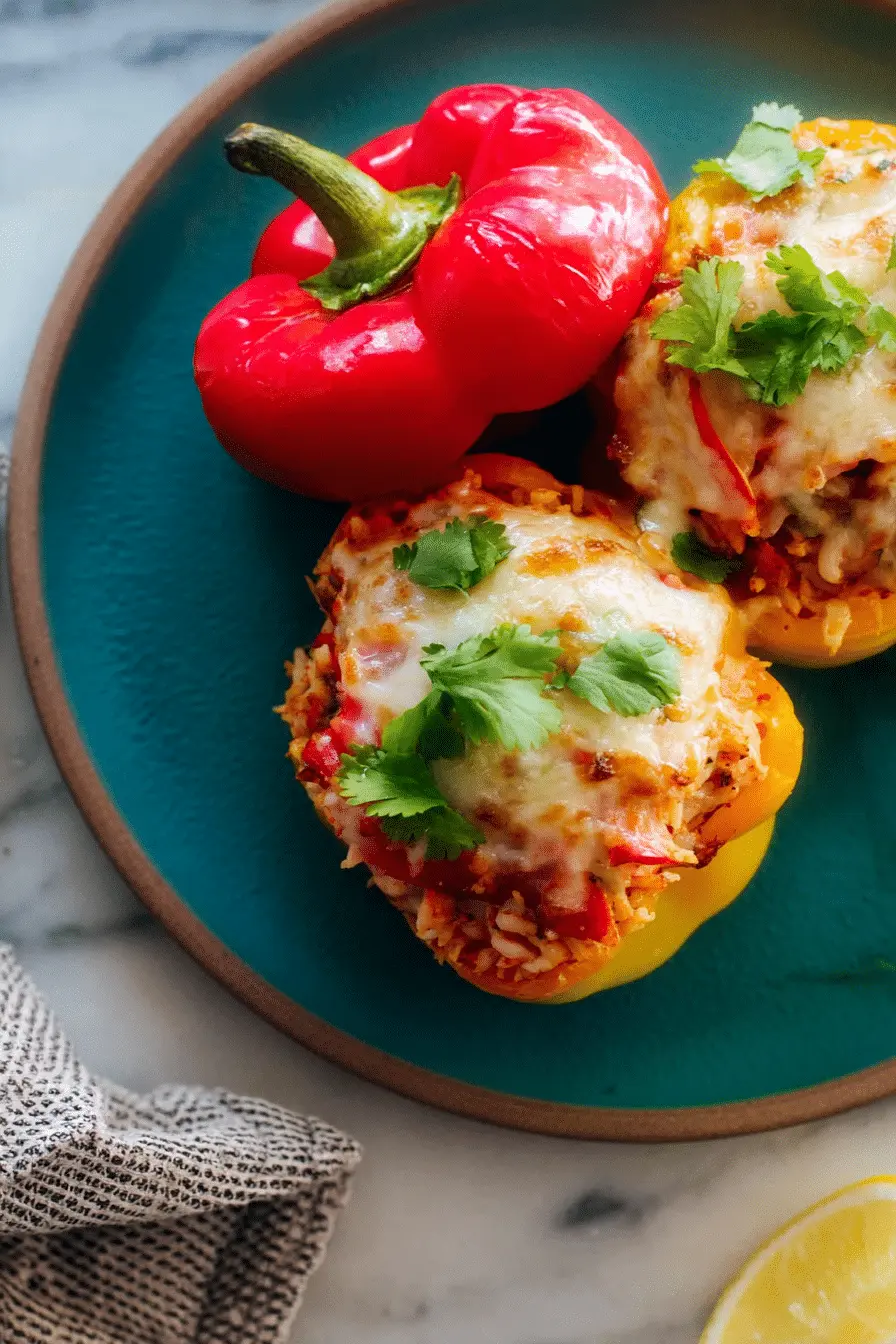
I remember the first time I roasted a tray of bell peppers until their skins started to wrinkle and pop — the kitchen smelled like sweet pepper and warm tomato, and I knew I was onto something simple and satisfying. Vegetarian stuffed peppers are exactly that: hollowed bell peppers filled with a savory, often grain-and-bean-based mixture, then baked until everything is melded and fragrant. They’re a weekday staple in my house because they’re colorful, forgiving, and they travel well from fridge to lunchbox. These are the kind of stuffed peppers I default to when I need a make-ahead dinner that still tastes bright the next day. The version I write up below is inspired by my favorite Mexican flavors — pinto beans, rice, tomatoes, lime, and a little melted cheese — but later I’ll walk through Italian, Mediterranean, Eastern European, and Middle Eastern twists. I tested this recipe multiple times to land on the timing and filling consistency that keeps the peppers tender but not soggy and the filling moist but not runny.Key Ingredients
- Bell peppers – they’re the vessels: sweet, sturdy, and available in many colors. I like large red or orange peppers because they roast and sweeten beautifully.
- Rice or quinoa – a grain base that adds heft and soaks up flavor. Brown rice gives nuttiness; quinoa adds protein and a slightly fluffy texture.
- Beans (pinto or black) – provide bulk, texture, and plant protein; they keep the filling satisfying without meat.
- Onion and garlic – the aromatic backbone. Cooked until soft, they lend roundness and depth to the filling.
- Tomatoes – juicy acidity to brighten the filling. Cherry tomatoes or diced canned tomatoes both work; the liquid helps bind the mix.
- Cilantro and lime – a finishing combo that adds brightness, especially for Mexican-style fillings.
- Olive oil – used for roasting peppers and sautéing; it brings flavor and carries spices.
- Spices (chili powder, cumin, salt, pepper) – essential for seasoning. Chili powder and cumin give a smoky-warm profile; salt is what makes everything pop.
- Cheese (optional) – a handful of shredded cheese melts into a comforting finish; use plant-based cheese to keep it vegan.
- Optional veggies (zucchini, corn, mushrooms) – easy add-ins that bulk up the filling and introduce more textures and colors.
Step-by-Step Cooking Instructions
Below is the tested recipe I used when developing and retesting these stuffed peppers. It yields 8 stuffed pepper halves (large peppers halved), which is enough for 4 main-dish servings or 8 side servings. Follow these steps closely — I include notes on what I noticed during testing and what to watch for.- Roast the peppers:Preheat the oven to 425 degrees Fahrenheit. Arrange the halved peppers in a large baking dish or on a rimmed baking sheet. Drizzle with a tablespoon of olive oil and sprinkle with salt and pepper; rub the oil over both sides so each pepper is lightly coated. Roast for 20–25 minutes until the edges blister and the peppers are fork-tender. You’ll see little charred spots and a glossy surface — that’s when the sugars have started to caramelize and the aroma turns sweet and almost jammy. Set aside but keep the oven on for the final bake. Cooking note: if your peppers aren’t blistering after 25 minutes, your oven may run cool; switch to broil for a minute or two but watch them closely so they don’t burn.
- Cook the rice:While the peppers roast, bring a large pot of water to a boil. Rinse ½ cup long-grain brown rice in a fine-mesh colander until the water runs clear, then add it to the boiling water. Boil uncovered for about 30 minutes until tender, drain, and return to the pot. I tested using pre-cooked rice and freshly cooked rice; both work, but freshly drained rice absorbs the filling flavors better. If you use quinoa, cook according to package instructions (usually about 15 minutes). Timing tip: if you’re short on time, you can use 1 ½ cups cooked rice from a previous batch — it shaves off 30 minutes and still tastes great.
- Prepare the filling:Heat 2 tablespoons olive oil in a large skillet over medium heat until it shimmers. Add a chopped large yellow onion and ½ teaspoon salt, and cook, stirring often, until the onion is tender, about 5 minutes. Add a pint of halved cherry tomatoes and cook until the tomatoes soften and release some juice, another 4–5 minutes. You’ll notice the skillet smell go from bright-acidic to round and savory as the tomatoes collapse. Stir in chopped cilantro, minced garlic (4 cloves), 1 ½ teaspoons chili powder, and 1 teaspoon ground cumin; sauté while stirring for 30–60 seconds until the garlic is fragrant. Remove from heat and stir in the cooked rice, 1 can (1 ½ cups) rinsed pinto beans, a tablespoon of lime juice, and several turns of freshly ground black pepper. Taste and add another pinch of salt if needed — salt is the simplest fix when a mixture tastes flat. Filling observation: the right consistency should be moist but not watery. If it’s too loose, drain any excess tomato juice before stuffing or add an extra spoonful of rice. If it’s dry, a splash of broth or a little olive oil will bring it back.
- Stuff the peppers:Pour off any pooled juice from the roasted peppers, then spoon the filling into each pepper generously. If the peppers were large, you’ll have just enough; if you have extra filling, serve it on the side — it’s delicious spooned over greens or eaten as a warm bowl. Top each stuffed pepper with about 4 ounces (roughly 1 cup total) of grated part-skim mozzarella or cheddar if you like melty cheese. Pro tip: I use the back of a spoon to press the filling down slightly so each pepper is evenly packed. Don’t over-pack; the rice expands a little during the final bake and you want to avoid spills.
- Final bake and finish:Bake the stuffed peppers at 425°F for 12–13 minutes until the cheese is golden in spots and the filling is heated through. The oven’s high heat gives the cheese a quick color and ensures the pepper edges brown slightly. I like to broil for 1 minute at the end if the tops need an extra kiss of color — watch carefully so nothing burns. Serve warm with extra cilantro, sliced avocado, salsa, or a dollop of sour cream (or vegan sour cream). Leftovers keep well in the fridge for up to 4 days; they’re even easier to reheat without collapsing if you re-warm them in a 350°F oven for 10–15 minutes rather than the microwave.
Nutritional Benefits of Stuffed Peppers
Stuffed peppers are a smart, nutrient-dense option: the pepper itself delivers vitamin C, vitamin A precursors, and fiber, while the rice and beans provide complex carbohydrates, protein, and additional fiber. The version above is balanced so it feels filling without being heavy.- Calories and macronutrients: The tested recipe comes in at about 430 calories per stuffed pepper half serving, with roughly 18.4 g fat, 52.3 g carbohydrates, and 16.5 g protein (these numbers reflect the optional cheese — omit or use a plant-based option to adjust fat and calories).
- Protein: Combining rice and pinto beans creates complementary amino acids, boosting the protein quality compared with either alone. Adding quinoa or a sprinkle of pumpkin seeds increases protein further.
- Fiber: Beans and peppers are both fiber-rich, which helps satiety and steady blood sugar after a meal.
- Vitamins and minerals: Bell peppers offer vitamin C and carotenoids. Beans bring iron and folate; cilantro and lime provide antioxidants and pleasant acidity that signals freshness.
Regional Variations on Stuffed Peppers
One of the joys of stuffed peppers is how easily they adopt flavors from around the world. Swap a few core ingredients and you’ve got a new dish entirely.- Mexican-style – the version above: pinto beans, chili powder, cumin, cilantro, lime, and cheese. Serve with salsa and avocado.
- Italian-style – use rice mixed with sautéed onion, garlic, chopped tomatoes, basil, oregano, and finish with mozzarella and a drizzle of marinara.
- Mediterranean – a filling of quinoa, kalamata olives, roasted eggplant, lemon, parsley, and crumbled feta; a sprinkle of sumac brightens things.
- Eastern European – use barley or buckwheat with mushrooms, sauerkraut, and dill for a heartier, tangy take.
- Middle Eastern – a mixture of bulgur or rice with lentils, pine nuts, raisins, baharat or allspice, and lots of parsley makes a fragrant, warming option.
Pairing Suggestions for Sides and Sauces
Think of stuffed peppers as a complete package, but they shine with a few thoughtful sides or condiments:- Fresh salad – a crisp green salad with citrus vinaigrette cuts through the richness and adds contrast in texture.
- Grains or beans – serve extra filling as a warm side; a simple herby couscous also pairs well.
- Roasted vegetables – caramelized carrots or a tray of roasted broccoli add color and another textural element.
- Sauces – for Mexican flavors, salsa or guacamole; for Mediterranean, tzatziki or a lemony yogurt sauce; for Italian, a spoonful of marinara. These sauces add moisture and brighten each bite.
Cooking Tips for Perfect Stuffed Peppers
After making this several times I learned a few things that consistently save the dish:- Avoid soggy peppers: Roast the peppers until just tender and drain any excess juices from the cavity before stuffing. Overcooking fresh tomatoes in the filling can add too much water — cook just until they’re soft.
- Stuffing consistency: The filling should be moist but cohesive. If it’s too wet, add more cooked rice or a handful of breadcrumbs; if it’s too dry, stir in a splash of broth, lime juice, or olive oil.
- Fresh vs. pre-cooked ingredients: Freshly cooked rice and recently drained beans absorb flavors more reliably than old, dry rice. But if you’re in a hurry, pre-cooked rice and canned beans are perfectly acceptable — just adjust the seasonings to taste.
- Baking time adjustments: If your peppers are small, reduce the final bake by a few minutes. For very large peppers, add a couple minutes so the filling heats through. Always check with a fork: the pepper should be tender but still hold its shape.
- Make-ahead: You can assemble the peppers and refrigerate them up to 24 hours before baking. Bring them to room temperature for 20 minutes before baking and add a few extra minutes to the bake time if they’re cold from the fridge.
Frequently Asked Questions
For a satisfying meal that complements stuffed peppers, try our homemade tortilla soup as a wholesome addition.- What do you put in stuffed peppers as a vegetarian?For vegetarian stuffed peppers, you can use ingredients like bell peppers, rice, beans (like pinto or black beans), diced vegetables (onions, tomatoes, zucchini), spices (like cumin and chili powder), and optionally some cheese for topping.
- What is a good substitute for meat in stuffed peppers?You can substitute meat with options like plant-based ground meat (such as Beyond Meat or Impossible Burger), lentils, or robust beans. These ingredients provide great texture and flavor while keeping the dish vegetarian.
- Can I make stuffed peppers ahead of time?Yes! You can prepare the stuffed peppers ahead of time and store them in the fridge for up to 24 hours before baking. Just cover them well and bake when you're ready to serve.
- How do I store leftovers?Leftover stuffed peppers can be stored in an airtight container in the fridge for up to 4 days. Reheat them in the oven or microwave until heated through.
- Can I freeze stuffed peppers?Absolutely! Stuffed peppers freeze well. Make sure they are fully cooled before wrapping them tightly in freezer-safe containers. They can be stored for up to 3 months. Thaw in the fridge before baking.
Conclusion and Serving Suggestions
Vegetarian stuffed peppers are one of those recipes I come back to again and again because they’re flexible, colorful, and genuinely comforting. They work for a quick family dinner, a make-ahead meal prep option, or a pretty centerpiece for casual company. In my kitchen, I’ll often roast a tray and then vary the fillings across the peppers — one Mexican-inspired, one Mediterranean — so everyone gets their favorite without making separate dishes. Serve them straight from the oven with a bright salsa or yogurt sauce, a wedge of lime, and a scattering of cilantro. If you’re prepping for a crowd, arrange the peppers on a platter with contrasting garnishes — sliced avocado, lemon wedges, or a small bowl of pickled onions — so the plate pops. Most importantly, don’t be afraid to experiment: swap grains, test different beans, and adjust the spices until the filling sings for your palate. If you try this recipe, I’d love to hear what swaps you made and which variation became your favorite. Happy cooking — and enjoy the heat, the sweetness, and that satisfying first forkful when pepper, rice, beans, and melted cheese (if you used it) come together.Ingredients
- 4 largered bell peppers (halved from stem to base, seeds and membranes removed)
- 1 tablespoonextra virgin olive oil (as needed)
- ½ cuplong-grain brown rice ((or 1 ½ cups cooked rice))
- 2 tablespoonsextra virgin olive oil
- 1 largeyellow onion (chopped)
- 1 pintcherry tomatoes (halved or quartered if large)
- ½ cupfresh cilantro (plus more for garnish)
- 4 clovesgarlic (pressed or minced)
- 1 ½ teaspoonschili powder
- 1 teaspoonground cumin
- 1 can (1 ½ cups)pinto beans (rinsed and drained)
- 1 tablespoonlime juice
- 4 ouncesgrated part-skim mozzarella or cheddar
Instructions
- 1
Preheat the oven to 425°F and roast the halved peppers for 20-25 minutes.
- 2
Cook the rice by boiling in water for 30 minutes, then drain.
A well-seasoned pan is worth more than a drawer of gadgets.
- 3
In a skillet, cook onion and tomatoes, then add cilantro, garlic, spices, rice, beans, and lime juice.
- 4
Stuff the roasted peppers with the filling and top with cheese. Bake for 12-13 minutes.
- 5
Serve warm with garnishes of choice.
Recipe Card
Delicious Vegetarian Stuffed Peppers: A Flavor-Packed Family Favorite
Keep it handy for later, send it to someone cooking with you, or open the clean print view.
- Prep
- 20 min
- Total
- 80 min
- Serves
- 4
You might also like
recipe
The 30-Minute Chili-Lime Tofu and Peach Skewers for Busy Summer Grills
May 14, 2026
Cook this nextExplore
recipe
How I Make Summer Skewers with Shrimp, Jalapeño & Plums
May 14, 2026
Cook this nextExplore
recipe
The Summer Peach Spinach Salad I Make Almost Every Week
May 14, 2026
Cook this nextExplore
recipe
The Summer Quinoa Salad I Make Almost Every Week
May 13, 2026
Cook this nextExplore
Reviews
Be the first to review this.