- Prep
- 15 min
- Cook
- 75 min
- Total
- 105 min
- Serves
- 8
- Calories
- 240 kcal
- Carbs
- 19.40 g
On this page14 quick jumps
TOC
14 quick jumps
Introduction
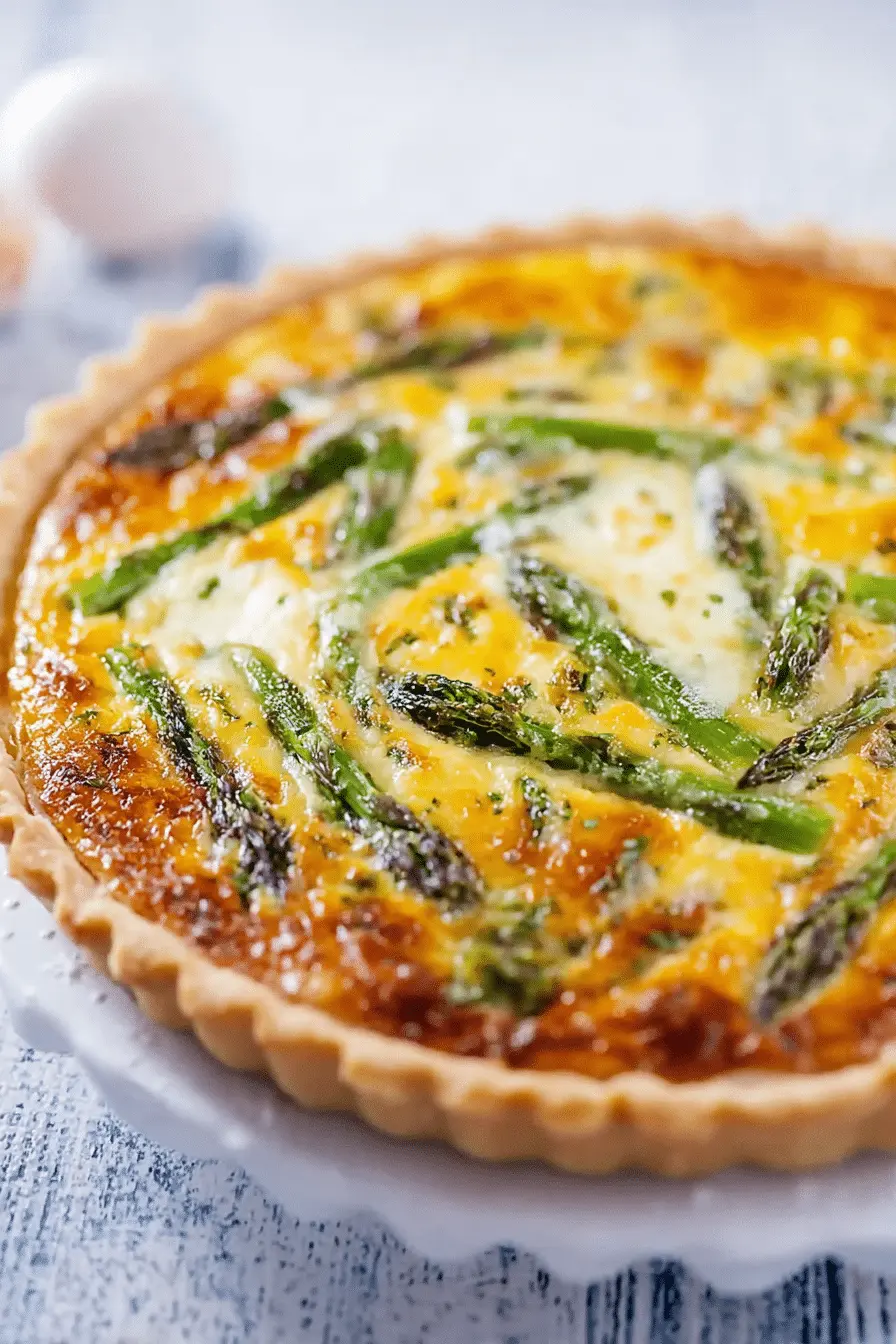
I make this asparagus quiche every spring when the market piles of bright green spears start showing up. I like that it looks impressive on the table but is forgiving in the oven, which makes it ideal for cooks who are still building confidence. In my kitchen I lean on a store-bought deep-dish crust when time is tight and save my effort for the filling — the result is a golden shell holding a creamy custard and tender asparagus.
When I first tried different feta amounts and egg-to-cream ratios, I learned what makes the texture sing: a custard that’s silky but not runny and asparagus that's cooked just enough to stay vivid and slightly tender. I’ll share the small timing tricks that keep the crust crisp and the filling perfectly set.
I enjoy making this for a casual weekend brunch or a small spring gathering because it can be made ahead, reheated gently, or served at room temperature. If you want an elegant pairing, this quiche goes nicely with richer mains — for an extra-special spread try pairing it with creamy garlic butter lobster tails for contrast and color.
My goal here is to make the steps simple and reassuring so you can enjoy the process. A few clear techniques — blind-baking, balancing the custard, and quick asparagus prep — will take this from good to reliably great every time.
Why this asparagus quiche is perfect for busy spring brunches
This quiche fits busy brunches because it combines straightforward prep with seasonal flavor. If you’re short on time, using a ready-made deep-dish crust gets you most of the way there without sacrificing texture. The bright, slightly grassy taste of fresh asparagus lifts the rich custard and salty feta, so the overall dish feels light and spring-appropriate.
Sensory note: picture a golden rimmed crust, the gentle aroma of baked eggs and tangy cheese, and vivid green asparagus peeking through the surface. It’s crowd-pleasing and simple to scale for guests. For another way to spotlight asparagus in a main, try this variation that pairs the veg with roasted chicken: asparagus stuffed chicken breast.
Everything You Need for Asparagus Quiche
Below I walk you through the ingredients and tools in plain terms so you can gather everything before you start. I include substitutions if you need gluten-free or dairy-free options.
- All-purpose flour – For dusting when you roll dough; not needed if you use a ready-made crust.
- Deep-dish pie dough or store-bought deep-dish crust – The crust holds a tall filling; for a gluten-free option, use a ready-made gluten-free deep-dish crust or a simple almond-flour crust.
- Asparagus – The star ingredient; pick firm, snap-able stalks for the freshest flavor. Frozen can work if thawed and well-drained.
- Scallions (green onions) – Bring a gentle onion brightness without overpowering the custard.
- Feta cheese – Adds salty tang; goat cheese or ricotta are good substitutes for a different finish.
- Eggs – The structure for the custard; they determine how firm the quiche will be.
- Half-and-half or milk + cream – Provides creaminess; use lower-fat milk for a lighter version or non-dairy creamer for a dairy-free approach.
- Kosher salt and black pepper – Season thoughtfully; feta adds saltiness so taste the custard before baking.
- Kitchen tools – A deep-dish pie plate, rolling pin if making dough, pie weights (or dried beans), parchment or foil, a sharp knife, and a rimmed baking sheet to catch any spills.
The secret to a tender, not-soggy crust
Blind-baking is the simple trick that keeps the bottom crisp so your quiche isn’t soggy. I always chill the shaped dough before it goes in the oven; that helps the fat solidify so the crust holds its shape and browns evenly.
- Chill the shaped crust in the refrigerator for about 20 minutes before baking to firm the fat and prevent shrinking.
- Line the chilled crust with parchment or foil and fill it with pie weights or dried beans; weigh it down to stop air pockets and bubbling.
- Bake the crust until the edges are set and the base looks dry; remove the weights and return the crust to the oven briefly so the bottom can finish browning.
- Let the blind-baked shell cool slightly before filling; pouring a hot custard into a hot shell increases steam and can soften the crust.
Why the egg-to-cream ratio matters (and how to tweak it)
The balance between eggs and dairy defines whether your quiche is firm and sliceable or soft and custard-like. I guide beginners toward straightforward swaps depending on the texture you prefer.
- More eggs = firmer set. If you plan to serve slices that hold together for plates, lean toward a slightly higher egg proportion.
- More cream = silkier, richer custard. If you want a softer, luxurious bite, increase the cream component.
- For a lighter version, use lower-fat milk in place of some of the cream; expect a less rich mouthfeel but still a pleasant texture.
- If using salty cheese like feta, reduce added salt in the custard and taste before baking.
Quick hacks: trim and prep asparagus in minutes
Preparing asparagus can be fast if you use a couple of simple techniques. I use these when I’m prepping multiple quiches or when time is tight.
- Snap, don’t measure: hold a stalk and bend it until it breaks; the snap shows the natural division between tender and fibrous parts. Use the snapped end as a guide for trimming the others.
- For even cooking, cut the asparagus into uniform pieces so each piece cooks at the same rate.
- To preserve color and sharpen flavor, briefly blanch the trimmed pieces in boiling water for a minute, then plunge into an ice bath. Drain thoroughly to remove excess moisture before adding to the quiche.
- If you’re in a rush, slice the tips off and arrange them on top with the cut stalks underneath; the tips cook faster and give a beautiful look.
How to Make Asparagus Quiche (Step-by-Step)
Follow this clear sequence; I’ve included common mistakes and how to avoid them so your first quiche turns out well.
- Par-bake the crust: Chill the shaped dough, line it with foil or parchment, add pie weights, and bake until set. Remove weights and bake a little longer until golden.
- Trim and prepare asparagus: Snap or cut the woody ends, cut into even pieces, and optionally blanch and cool to retain bright color.
- Prepare the mix-ins: Thinly slice scallions and crumble the feta so they distribute evenly through the filling.
- Make the custard: Whisk eggs with the dairy and seasoning until smooth; taste lightly for salt, keeping in mind the feta adds saltiness.
- Assemble: Scatter half the feta and scallions in the shell, spread the asparagus, then top with remaining feta and scallions so every bite has mix-ins. Pour the custard slowly into the shell, leaving a small gap at the rim to prevent overflow.
- Bake: Place the quiche on a rimmed sheet and bake until the edges are set and the center still has a slight jiggle; the residual heat will finish it as it rests.
- Rest before slicing: Let the quiche cool for at least 15 minutes so the custard holds together. Cutting too early is a common mistake that causes a runny center.
Pro Tip for asparagus quiche: Blind‑bake and balance the custard
These are the small moves I use to make this quiche reliable every time. I keep the language simple because the techniques are small and high-impact.
- Chill the crust before blind-baking so it doesn’t slump and the edges stay defined.
- Use pie weights to prevent bubbling; if you don’t have weights, dried beans work fine.
- Check doneness by gently shaking the pan: the edges should be set while the center still jiggles slightly — that tells you it will finish without overbaking.
- If you’re unsure, insert a thin knife near the center; it should come out mostly clean with a few moist crumbs, not a pool of custard.
- I often reduce added salt in the custard, tasting first, because the feta supplies a lot of seasoning.
Troubleshooting
I include the things I’ve learned the hard way so you don’t have to. When I have a problem, these checks usually fix it.
- Curdled custard or grainy texture — I find this happens when the oven is too hot or the custard was overwhisked; lower the oven slightly and whisk gently next time.
- Soggy bottom — ensure the crust was blind-baked long enough and cooled slightly before filling; reduce extra-moist ingredients or pre-cook them briefly to release water.
- Too salty — omit added salt from the custard and adjust after tasting; feta contributes significant saltiness.
- Crust shrinks — don’t stretch the dough when lining the pan; chill thoroughly to relax the gluten before blind-baking.
How to Store, Reheat, and Make-Ahead Asparagus Quiche
Quiche is forgiving when it comes to make-ahead and leftovers. I often bake it a day ahead and reheat gently so it tastes fresh.
- Store cooled leftover quiche in an airtight container in the refrigerator for up to three days.
- To freeze, wrap slices tightly and freeze for up to two months; thaw overnight in the refrigerator before reheating.
- Reheat gently in a low oven so the crust stays crisp — a moderate oven will warm the center without drying the custard. Avoid the microwave for long reheating, which can make the filling rubbery.
- For make-ahead convenience, blind-bake the crust and keep it wrapped in the fridge for a day; assemble and bake on the day you plan to serve.
Variations on Asparagus Quiche
If you like to experiment, here are ideas that keep the technique the same but change the flavor profile. I encourage trying one change at a time so you can see how it alters the final quiche.
- Swap cheeses: try goat cheese for tang, gruyère for nuttiness, or ricotta for a lighter texture.
- Add vegetables: spinach, mushrooms, or roasted peppers work well; sauté high-moisture veggies first to prevent extra liquid.
- Add protein: cooked bacon, diced ham, or smoked salmon are classic pairings that deepen the flavor.
- Herb variations: fresh dill, chives, or tarragon bring brightness and pair well with asparagus.
- Gluten-free crusts: use a store-bought gluten-free deep-dish crust, or make an almond-flour tart shell for a nutty base.
- Vegan option: use a firm tofu-based filling blended with nutritional yeast and a plant-based cream to mimic custard structure.
- If you want smaller portions, try mini crusts for individual servings — or for a related approach, try a mini spinach feta quiche.
Serving suggestions: serve slices warm or at room temperature alongside a crisp green salad, fresh fruit, or crusty bread for a light spring meal. The tart pairs well with both casual and slightly fancier brunch spreads.
Frequently Asked Questions
Can I use frozen asparagus for this quiche?
Yes, you can use frozen asparagus! Just be sure to thaw and drain it well to avoid excess moisture, which can make the quiche soggy.
What can I substitute for feta cheese?
You can substitute feta cheese with goat cheese or ricotta for a different flavor profile. Just keep in mind that the taste and texture will vary!
How do I store leftovers of asparagus quiche?
Store any leftovers in an airtight container in the refrigerator for up to 3 days. You can also freeze the quiche for up to 2 months; just ensure it's wrapped tightly.
Can I add other vegetables to this quiche?
Absolutely! Feel free to add vegetables like spinach, bell peppers, or mushrooms to enhance the flavor and nutrition of your quiche.
Why is blind-baking the crust important?
Blind-baking helps to set the crust and prevent it from becoming soggy when you add the wet custard filling. It's a crucial step for a perfectly baked quiche!
Ingredients
- —All-purpose flour (for dusting)
- 1 crustDeep dish pie crust (homemade or frozen)
- 8 to 12 ozAsparagus
- 3 mediumScallions
- 4 ozFeta cheese
- 3 to 4 largeEggs
- 1 cupHalf-and-half (or equal parts whole milk and heavy cream)
- 1 to 1 1/4 tspKosher salt
- —Freshly ground black pepper
Instructions
- 1
Preheat the oven to 375ºF and prepare the crust.
- 2
Prepare the filling ingredients by cutting asparagus and scallions.
- 3
Mix eggs, half-and-half, salt, and pepper for the custard.
Taste as you go. Recipes are a guide, not a contract.
- 4
Fill the crust with vegetables and pour custard over the top.
- 5
Bake for 40 to 45 minutes until edges are set and center jiggles slightly.
- 6
Let cool for at least 15 minutes before serving.
Recipe Card
The Asparagus Quiche I Make Every Spring — Fast & Fresh
Keep it handy for later, send it to someone cooking with you, or open the clean print view.
- Prep
- 15 min
- Total
- 105 min
- Serves
- 8
You might also like

The 30-Minute Chili-Lime Tofu and Peach Skewers for Busy Summer Grills
May 14, 2026
How I Make Summer Skewers with Shrimp, Jalapeño & Plums
May 14, 2026
The Summer Peach Spinach Salad I Make Almost Every Week
May 14, 2026
The Summer Quinoa Salad I Make Almost Every Week
May 13, 2026
Reviews
Be the first to review this.