- Prep
- 15 min
- Cook
- 30 min
- Total
- 45 min
- Serves
- 4
- Calories
- 450 kcal
Introduction
These baked sage chicken meatballs nestled on a bowl of creamy parmesan orzo became one of my go-to weeknight dinners the minute I tested them. The first time I made them I remember the kitchen filling with warm sage and browned butter notes — that sweet-herb aroma that signals comfort. The meatballs themselves are light and tender because of the soaked bread in the mix, while the orzo turns into a silky, slightly cheesy bed that soaks up juices from the meatballs. It’s cozy without being heavy, and it scales well for company or a family meal. I cooked a batch on a rainy Sunday afternoon, which is when testing shines — you notice the small things. The bread soaked just long enough to mash in with your hands and keep the meatballs from drying out in the oven. The sage leaves crisp up in butter and smell almost candied when they hit the hot pan. I plated this for two and still had leftovers that tasted even better the next day when the flavors had time to settle.Ingredients List for Easy Prep
Below is a complete list of the ingredients I used while testing and the exact amounts for a reliable result. In the instructions I’ll walk you through the why behind each addition.- Fresh Italian bread (2 oz) – diced and soaked to keep meatballs tender and bind the mixture without using too much egg.
- Warm water (½ cup) – helps the bread break down so the meatballs stay moist.
- Butter (about 2 tbsp + 2 tbsp) – used both for sweating shallot/garlic and for browning the sage, which deepens flavor.
- Shallot (1, minced + 1 thinly sliced) – adds a delicate, sweet onion flavor less assertive than yellow onion.
- Garlic (4 cloves, minced + 1 tsp granulated garlic) – fresh garlic for aroma and granulated to boost background savory notes.
- Crushed red pepper (¼ tsp) – a subtle kick to lift the meatballs; optional if you prefer no heat.
- Ground chicken thigh (1 ½ lbs) – thigh meat keeps the meatballs juicy; breast will be leaner but drier unless you compensate.
- Grated Parmesan cheese (¼ cup + ¼ cup to finish) – savory, nutty, and helps with binding; use good-quality Parm for best flavor.
- Fresh sage (2 tbsp chopped + 8 leaves) – the star herb; chopped in the meatballs and whole leaves crisped for garnish.
- Fresh parsley (2 tbsp chopped) – brightens the meatballs and balances the sage.
- Kosher salt (½ tsp plus to taste) – seasons meat and the orzo; adjust to your saltiness preference.
- Olive oil (a drizzle) – used to dress the sheet pan and finish; prevents sticking and aids browning.
- Orzo (1 cup) – cooks quickly and creates a creamy texture when simmered with stock and cream.
- Dry white wine (1 cup) – deglazes and adds acidity and depth; can be swapped for extra stock if you avoid alcohol.
- Fresh thyme sprigs (a small handful tied) – perfume for the orzo while it simmers; remove before serving.
- Chicken stock (1 ½ cups) – the cooking liquid for the orzo; richer stock gives better flavor.
- Heavy cream (⅓ cup) – makes the orzo silky; you can use whole milk for a lighter version but it’ll be less rich.
- Fresh spinach (about 2 cups / 2 oz) – wilts into the orzo for color, nutrition, and a little texture contrast.
- Freshly cracked black pepper – finishing touch to lift flavors.
Step-by-Step Instructions for Meatballs
Below I walk through the meatball process the way I do it in my kitchen. I include little checks I use to avoid common pitfalls.- Preheat the oven to 450°F and line a sheet pan with parchment; lightly oil the parchment. The high oven temp helps the meatballs brown without drying out because they stay in the oven less time than at lower temperatures.
- Place the diced fresh Italian bread in a large mixing bowl and pour warm water over it. Push the bread down so it’s submerged and let it sit for at least 5 minutes. This step is crucial — the soaked bread acts like a panade and keeps the meatballs tender. If your bread is very stale, it will absorb more water; if it clumps, give it another minute to break down.
- Heat a 12" skillet over medium heat and add the butter. Once it melts and foams slightly, add the minced shallot and garlic. Sauté until softened and aromatic, about a minute — you’ll smell the sharp raw garlic turn mellow and sweet; that’s your cue to move on. Stir in the granulated garlic and the crushed red pepper, then turn off the heat. Let this mixture cool slightly before adding to the meat to avoid cooking the meat in your hands.
- Add the ground chicken thigh, grated parmesan, chopped sage, chopped parsley, kosher salt, and the cooled shallot/garlic mixture to the bowl with the soaked bread. Use your hands to combine gently — overworking the meat will make the meatballs dense. Mix just until everything is incorporated and you don’t see big dry streaks of bread or clumps of seasoning.
- Form the mixture into approximately 15 meatballs, each about 2 ounces. Pack them reasonably tightly so they hold together in the oven but don’t compress them so firm they become heavy. I use an ice cream scoop for consistent sizing, then roll each ball in my palms once to seal the surface.
- Place the meatballs on the prepared sheet pan, leaving a little space between each. Drizzle a touch of olive oil over them; this promotes browning. Bake on the top rack for 25–30 minutes, or until they’re golden and cooked through. A visual cue: they should be firm to the touch and have a little give. If you use a thermometer, aim for 165°F internal temperature.
- When they’re out of the oven, let them rest for a few minutes. Resting allows meat juices to redistribute and keeps the interior moist. If a meatball looks dry, that usually means it was overworked or overbaked; next time reduce handling and check oven temperature accuracy.
Cooking the Parmesan Orzo: A Gourmet Touch
Timing the orzo so it’s ready when the meatballs come out is easier than it sounds. I usually get the orzo started while the meatballs are in the oven so everything finishes together warm and fresh.- After removing the cooked meatball skillet contents and wiping it clean, return the skillet to medium heat and add the remaining butter. Let it melt and begin to brown slightly — the butter should smell nutty but not burnt. Add the whole sage leaves and let them crisp in the butter; you’ll hear small sizzles as moisture leaves the leaf and it becomes paper-thin. Use a slotted spoon to transfer the crispy sage to a paper towel. These are gorgeous, crunchy garnishes.
- Add the thinly sliced shallots to the browned butter and season with a pinch of salt. Cook for about 2 minutes until softened and translucent but not browned — you want gentle sweetness, not caramelization.
- Stir in the orzo and toast it for a minute so the grains pick up butter and start to color slightly. Pour in the dry white wine and add the tied thyme sprigs. Bring to a simmer and let the wine reduce slightly for around 2 minutes — this step infuses the orzo with bright acidity and deep flavor.
- Stir in the chicken stock and bring to a simmer again. Reduce heat to medium-low and cook for about 6 minutes, stirring often. Orzo cooks fast; you want it tender but still a touch al dente because it will finish in the creamy sauce.
- Add the heavy cream, fresh spinach, and grated parmesan. Stir continuously as the cream warms, the spinach wilts, and the cheese melts into a glossy, slightly thickened sauce. Taste and season with salt — if the dish tastes flat, add salt rather than more cheese. Remove and discard the thyme sprigs.
- If the orzo looks too loose, simmer a minute longer; it will thicken as it cools. If it thickens too much, loosen with a splash of stock or water. The finished orzo should be creamy, slow-moving, and cling to the back of a spoon.
Serving Suggestions and Pairings
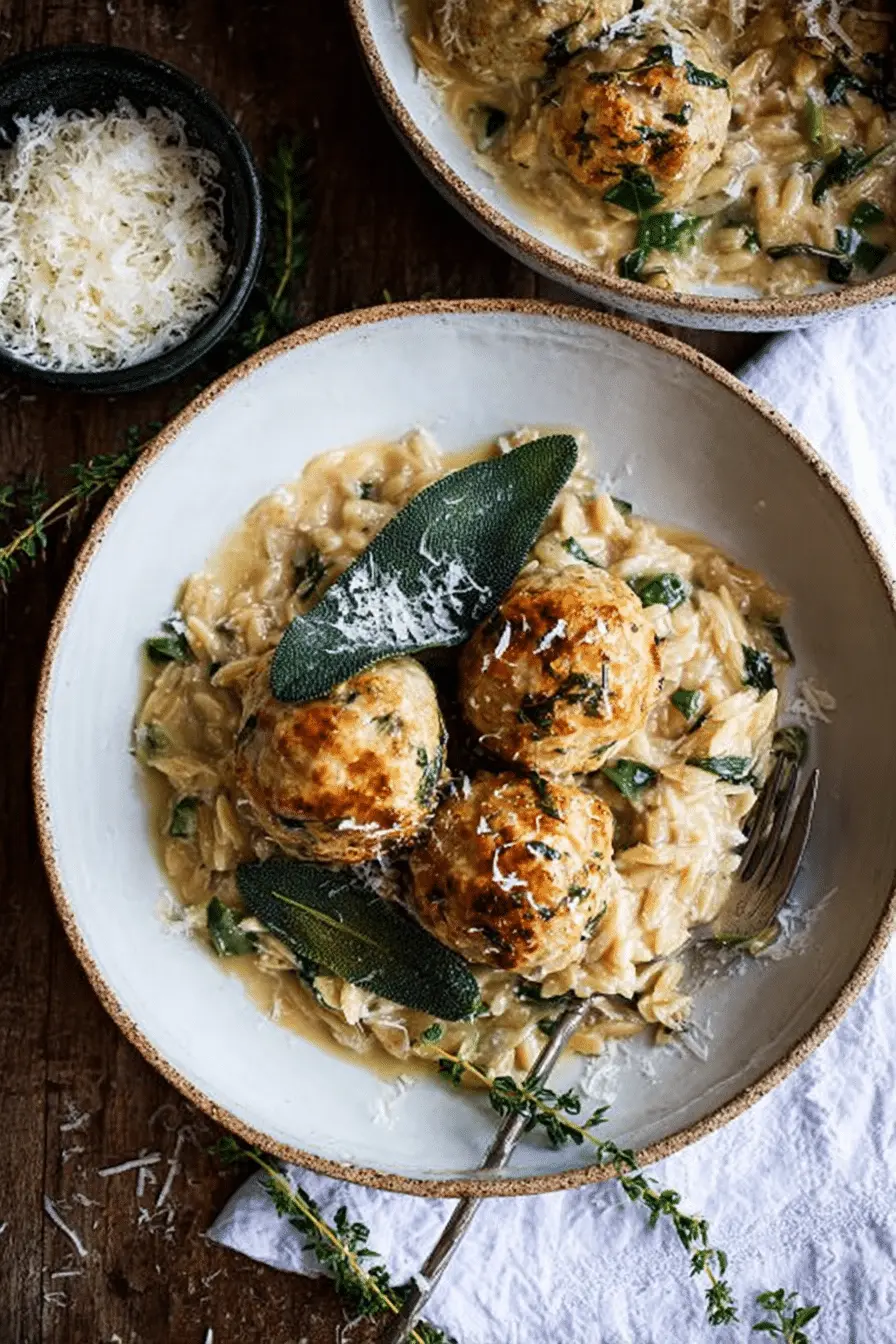
Serve the meatballs warm over a generous bed of creamy parmesan orzo. Spoon some of the orzo onto the plate, nestle 3–4 meatballs on top, and finish with cracked black pepper, extra parmesan, and the crispy sage leaves for texture. Fresh parsley or a thyme sprig makes it look homey and intentional. If you love orzo, try our creamy chicken and orzo skillet as another comforting dish. Pair your meatballs with some garlic parmesan roasted Brussels sprouts for a flavorful side. Presentation tip: use shallow bowls so the orzo forms a bed and the meatballs sit on top rather than being buried. A final drizzle of good olive oil or a squeeze of lemon over the whole plate brightens the richness.Nutritional Information and Health Benefits
Here’s a practical breakdown to guide expectations. This dish is protein-forward thanks to the ground chicken, and the spinach adds a boost of vitamins. The heavy cream and parmesan add richness, so if you're watching calories you can reduce portion sizes or swap the cream for whole milk. Per serving (approximate for 1/4 of the recipe): protein-rich with a moderate amount of fat from butter and cream, carbohydrates mainly from the orzo, plus fiber and micronutrients from spinach and herbs. Using chicken thighs increases flavor and juiciness; choosing lean breast reduces fat and calories but may need extra moisture. Health benefits: chicken provides high-quality protein and B vitamins; sage and thyme contribute antioxidants; spinach adds iron and vitamin K. If heart health is a focus, use lower-sodium stock and scale back on added butter or cream. For more delicious ways to enjoy chicken, consider our creamy garlic chicken, which also offers great health benefits.Dietary Variations: Gluten-Free and Dairy-Free Options
This recipe is flexible. If you need gluten-free or dairy-free adjustments, here are tested swaps that keep texture and flavor in balance.- Gluten-free breadcrumbs or bread – replace the Italian bread with gluten-free bread to make the meatballs tender without gluten. You may need slightly less water depending on the bread’s absorbency.
- Gluten-free orzo or small pasta – use a gluten-free orzo-style pasta or couscous alternative. Quinoa also works but gives a different texture.
- Dairy-free cheese alternative – nutritional yeast can add a cheesy flavor if you avoid dairy; flavor and melt properties differ so add toward the end and taste frequently.
- Butter swaps – use olive oil or a dairy-free butter alternative for sautéing and crisping the sage.
User-Submitted Tips and Variations
I’ve collected a few reader-tested ideas that worked well when I tried them in my kitchen:- Herb swaps: Some readers replaced sage with a mix of rosemary and thyme for a piney aroma — it’s nicer if you’re serving people who aren’t big on sage.
- Texture change: A reader pan-fried the meatballs for 2–3 minutes per side to develop a deeper crust, then finished in the oven for 15–20 minutes to reach safe internal temperature.
- Veg boost: Folded roasted mushrooms or sun-dried tomatoes into the orzo for extra umami and color.
- Make-ahead: Assemble the meatballs and freeze them raw on a sheet pan; once frozen, transfer to a bag and bake from frozen at 450°F for about 35–40 minutes or until internal temp reaches 165°F. I do this when I want a fast dinner on a weeknight.
FAQ
Can I make the chicken meatballs ahead of time? Absolutely! You can prepare the meatballs ahead of time and store them in the refrigerator for a day or two. Just bake them fresh when you're ready to serve. What are some good substitutes for orzo? If you don’t have orzo, you can use other small pasta shapes like ditalini or couscous. Quinoa is another great gluten-free option that works well in this dish! How do I store leftovers of this dish? To store leftovers, simply place the meatballs and orzo in an airtight container and refrigerate for up to three days. Reheat gently on the stovetop or in the microwave. Can I freeze the meatballs? Yes, you can freeze the uncooked or cooked meatballs! Just make sure to freeze them in a single layer first, then transfer to a freezer-safe container or bag. What can I serve with the baked sage chicken meatballs? Pair your meatballs and orzo with a light salad, steamed vegetables, or a refreshing beverage like a crisp white wine or sparkling water.Conclusion: Enjoy Your Wholesome Meal
These baked sage chicken meatballs with parmesan orzo are the sort of dish that rewards a little attention: crispy sage leaves, silky orzo, and tender, herb-studded meatballs. I find myself making them when I want something that feels special but doesn’t need a huge time investment. If you try them, watch the panade step (the soaked bread) and the timing on the orzo — those two things make the recipe sing. Make the recipe yours by swapping herbs, adding vegetables, or adjusting richness. Then plate with a few fresh herbs and invite someone to sit down and eat with you — that’s the whole point. Happy cooking — and if you change something that turns out especially well, drop a note in the comments so the next reader can try it too.Recipe Card
Baked Sage Chicken Meatballs with Parmesan Orzo: A Gourmet Twist on Comfort Food
- Prep
- 15 min
- Cook
- 30 min
- Total
- 45 min
- Serves
- 4
- Calories
- 450 kcal
Ingredients
- 2 ozfresh Italian bread, diced
- ½ cupwarm water
- 2 tbspbutter
- 1shallot, minced
- 4 clovesgarlic, minced
- 1 tspgranulated garlic
- ¼ tspcrushed red pepper
- 1 ½ lbsground chicken thigh
- ¼ cupgrated parmesan cheese
- 2 tbspchopped fresh sage
- 2 tbspchopped fresh parsley
- ½ tspkosher salt
- 2 tbspbutter
- 8sage leaves
- 1 cuporzo
- 1 cupdry white wine
- 1 small handfulfresh thyme sprigs, tied in kitchen twine
- 1 ½ cupschicken stock
- ⅓ cupheavy cream
- 2 ozfresh spinach (approximately 2 cups)
- ¼ cupgrated parmesan cheese, plus more for serving
- —freshly cracked black pepper
Instructions
- 1
Preheat the oven to 450°F. Prepare a sheet pan with parchment paper and lightly oil it. Soak the diced bread in warm water for at least 5 minutes.
- 2
In a skillet, heat butter over medium heat. Add shallot and garlic. Cook until softened, then stir in garlic and red pepper flakes.
- 3
In the bowl with soaked bread, add ground chicken, parmesan, sage, parsley, salt, and the cooked shallot mixture. Mix and form into 15 meatballs, place on sheet pan, and bake for 25-30 minutes.
- 4
In the same skillet, melt butter and add sage leaves. Crisp the leaves, remove, then add shallots and orzo to the pan. Stir in white wine and thyme, and simmer for 2 minutes.
- 5
Add chicken stock, simmer, reduce heat, then add heavy cream, spinach, and parmesan. Stir until spinach wilts and parmesan melts.
- 6
Serve meatballs over orzo. Garnish with crispy sage, cracked pepper, and extra parmesan.
You might also like



Reviews
Be the first to review this.