Tags
- Prep
- 45 min
- Total
- 45 min
- Serves
- 6
- Calories
- 198 kcal
- Carbs
- 7.30 g
Introduction
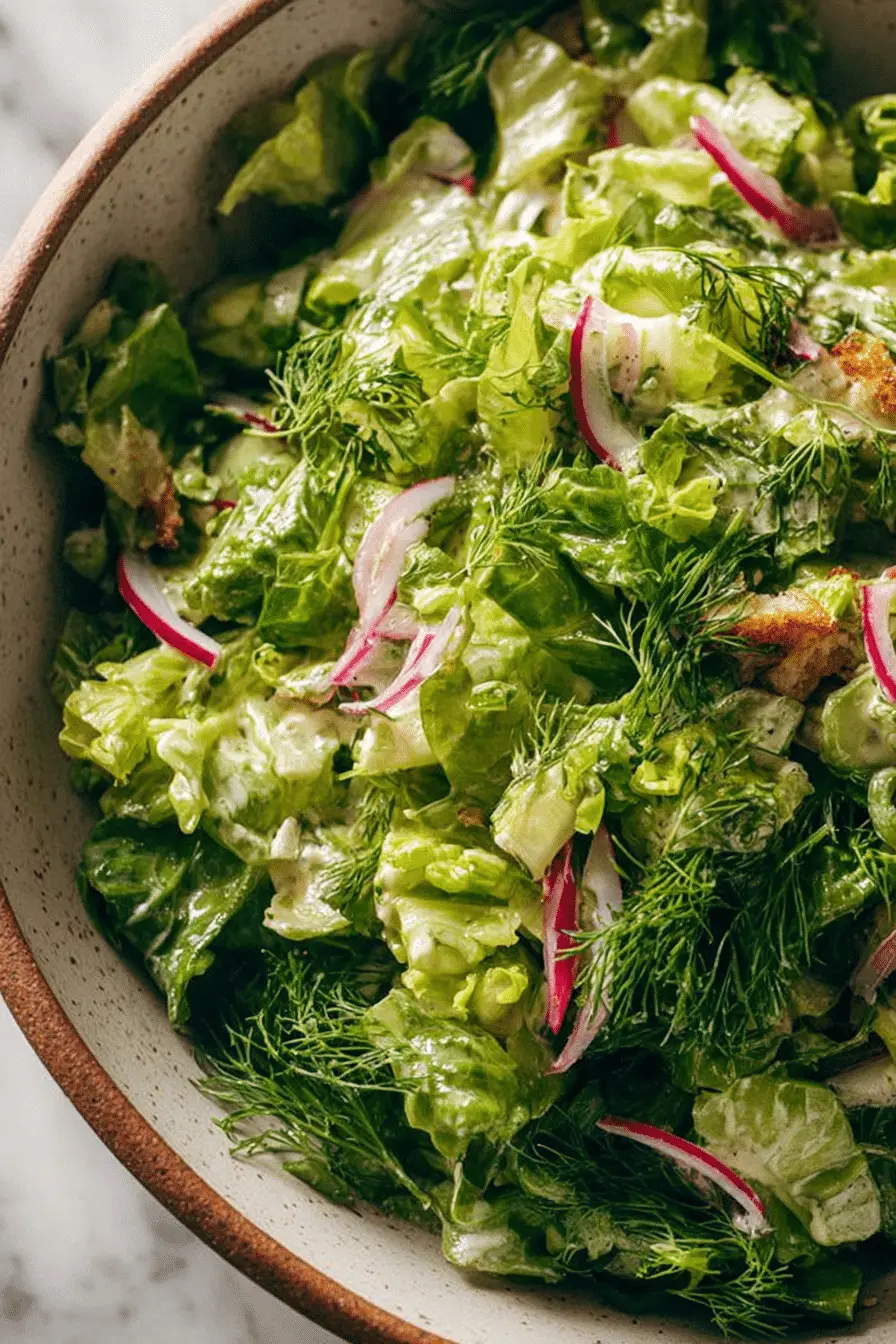
I still remember the first time I tried a true bistro salad in a tiny Parisian café: it looked so simple—greens, herbs, a few ribbons of onion—but the flavor was startlingly bright and perfectly balanced. That same feeling is exactly what Liz's Bistro Salad delivers: crunchy romaine, buttery lettuce, a scattering of fresh tarragon, dill, and chives, sharp-pickled onions, and a mellow lemon-citrus vinaigrette. Bistro salads grew out of casual French dining where the focus is on fresh ingredients and straightforward technique. They bridge wholesome, local produce with a little gourmet flair—perfect for a weeknight side or a light, elegant lunch. Over the years I've made versions of this salad dozens of times—sometimes with leftover rotisserie chicken, sometimes all-vegetable for company—and each time the core idea stays the same: top great greens with herbs and a vivid dressing, and don’t overcomplicate it. In this article I’ll walk you through the history of the bistro salad, how I make Liz's version at home, what to watch out for, and plenty of seasonal and dietary variations so you can make it your own.Ingredients You'll Need
- Red onion – thinly sliced and quick-pickled to add a bright, tangy crunch that cuts through the oil in the dressing.
- Vinegar – used in the pickling liquid; brings acidity that wakes up the whole salad.
- Water and a pinch of salt + sugar – these tame the raw edge of onion and keep the bite balanced.
- Romaine heart – gives structure and crunch; chop it into bite-sized ribbons so every forkful has texture.
- Butter lettuce – soft, tender leaves that contrast the romaine and make the salad feel more delicate.
- Tarragon – anise-like and aromatic; a little goes a long way and it’s classic in French bistros.
- Dill – bright and slightly grassy; use it torn or chopped for even distribution.
- Chives – mild, oniony herb to finish with a gentle sharpness.
- Canola oil (or neutral oil) – gives body to the vinaigrette without overpowering the herbs; you can swap olive oil for a fruitier finish.
- Lemon juice – fresh-squeezed for brightness; it livens the dressing and pairs especially well with the herbs.
- Salt and a touch of sugar – salt balances flavors and sugar softens the acidity; taste and adjust.
- Dijon mustard or mayo – emulsifies and gives the dressing a silky texture; mayo makes it richer if you prefer.
Step-by-Step Recipe Instructions (Liz's Bistro Salad)
Yield: 4-6 servings as a side. Total time: about 45 minutes (most of that is resting time for the pickled onions). Full ingredient list with measurements (for accuracy):- 1 red onion, thinly sliced
- 1/4 cup white or red wine vinegar
- 1/2 cup water
- a pinch of salt and sugar for the pickling liquid
- 1 romaine heart, stem removed and chopped
- half a head of butter lettuce, stem removed, gently torn
- 2 tablespoons fresh minced tarragon
- 1/2 cup fresh dill, chopped or torn
- 1/4 cup fresh chives, minced
- 1/2 cup canola oil
- 3 tablespoons lemon juice (more to taste)
- 3/4 teaspoon salt
- 1 teaspoon sugar
- 1 teaspoon dijon mustard or mayo
- Pickle the onions first. Place thinly sliced red onion in a jar. Pour in the vinegar until the jar is about a third full, then top with water until the onion is covered. Add a pinch of salt and a touch of sugar, give it a shake, and refrigerate. I often do this in the morning; after a few hours the onion loses most of its harshness and becomes pleasantly tangy. If your onions taste too sharp after an hour, give them more time—overnight is even better. The color deepens and the slices become silkier, which I love. (Note: the original recipe calls for specific volumes—see the ingredient list above.)
- Make the dressing. I shake the dressing ingredients in a jar so it emulsifies quickly: canola oil, lemon juice, salt, sugar, and a spoonful of Dijon or mayo. The dressing should smell bright and lemony and feel slightly viscous when you tilt the jar. Taste for balance—if it tastes flat, add a little more salt; if it’s too thin, a tiny bit more mustard or mayo will thicken it and help it cling to the greens. Keep the dressing in the fridge if you’re not using it right away; give it a shake before dressing the salad.
- Prep the greens and herbs. Chop the romaine into bite-sized ribbons and gently tear the butter lettuce—tear, don’t chop, to keep those tender edges intact. Mince the tarragon, chop or tear the dill, and mince the chives. I like to layer the herbs through the greens instead of piling them on top so each forkful gets a sprinkling of herb aroma. If you wash the greens in a salad spinner, spin them until they’re just damp; this helps the dressing cling without making the leaves soggy.
- Toss just before serving. Add greens to a large bowl, scatter the herbs, add some pickled onions to taste, and drizzle with the dressing. Toss gently—if you overdress right away the leaves will wilt. You want the leaves glossy and lightly coated, not drenched. Taste and adjust with salt and freshly cracked pepper.
- Serve and enjoy. The finished salad should be a mix of textures: soft lettuce, crisp romaine ribs, bright snap from herbs, and the slight chew and zing of the pickled onions. If you like, finish with an extra sprinkle of chopped herbs or a little lemon zest for an aromatic lift.
Preparing Homemade Dressing
Pair your bistro salad with our Creamy Garlic Parmesan Mushrooms to enhance the overall flavor experience. Homemade dressing is a game-changer. It’s fresher, customizable, and you control the salt and sugar. Here are three dressings I rely on depending on the season and mood:- Classic lemon-herb vinaigrette – whisk or shake together neutral oil, fresh lemon juice, Dijon mustard, a pinch of sugar, and salt. This mirrors Liz's dressing: it’s bright, silky, and lets the herbs sing.
- White wine vinegar vinaigrette – for a sharper, more acidic kick, swap half the lemon for white wine vinegar and use a fruity olive oil. Add a touch of honey in cooler months to offset the acidity.
- Herbed mayo vinaigrette – for a richer, creamier dressing use a little mayo in place of mustard, thin with lemon and oil, and stir in finely chopped herbs. This is lovely if you want a more comforting, substantial dressing—great for an autumn salad with roasted root vegetables.
Seasonal Variations and Local Produce
Bistro salads are ideal for seasonal swaps—use what’s best at the farmer’s market and the salad will sing.- Spring – baby lettuces, pea shoots, radishes, and a few blanched asparagus tips. Tarragon shines here; add sliced strawberries for a sweet-tart contrast.
- Summer – ripe cherry tomatoes, cucumber ribbons, sweet corn kernels, and basil alongside the tarragon and dill. A lemon-vinegar dressing keeps it light.
- Fall – roasted beets, shaved fennel, and thin apple slices pair beautifully; swap some herbs for parsley and finish with toasted walnuts for crunch.
- Winter – sturdy greens like kale or radicchio, roasted root vegetables, and a heartier dressing (a spoonful of mayo or olive tapenade) make it feel seasonal and comforting.
Dietary Adaptations: Vegan and Gluten-Free Options
Making this bistro salad inclusive is straightforward.- Vegan – omit mayo or use a plant-based mayo; swap honey (if used) for maple syrup. All the base salad ingredients are naturally vegan—just use a neutral oil and mustard or aquafaba-based emulsifier if you want creaminess.
- Gluten-free – the recipe is naturally gluten-free as long as your mustard or other condiments don’t contain hidden gluten. If you add croutons or grains, choose certified gluten-free options.
- Protein swaps – for protein, try grilled chicken (for non-vegans), seared salmon, pan-fried tofu, or a scoop of cooked chickpeas. For vegan protein with texture, I like roasted chickpeas tossed in smoked paprika.
Best Pairings with Main Dishes
For a luxurious touch, serve your bistro salad alongside Lemon Garlic Lobster Tails. Enjoy your salad with Mediterranean Chicken Gyros to complete your meal. Why these pairings work: the salad’s acidity and herbal brightness cut through fatty or buttery mains—think pan-roasted fish, grilled lamb, or a rich chicken fricassee—refreshing the palate between bites. For vegetarian mains, the salad pairs beautifully with warm grain bowls, mushroom dishes, or a cheesy tart; the acidity balances richness and the herbs lift the overall plate.Tips for Preparing Ahead
- Pickle the onions in advance. They keep in the fridge for several days and often taste better after a day. I make a jar at the start of the week and use them on sandwiches and bowls, too.
- Wash and store greens correctly. Spin them dry and store in a breathable container lined with paper towels. This preserves crispness for a couple of days. Avoid dressing them until the last minute.
- Make dressing ahead. Keep it in a sealed jar in the fridge for up to a week; bring it to room temperature and shake well before using. If the oil solidifies a little, warm the jar briefly in a bowl of warm water.
- Herbs. Chop only what you need; chopped herbs lose aroma faster than whole leaves. If prepping early, tuck whole sprigs into a damp paper towel and refrigerate.
Conclusion and Final Thoughts
Liz's Bistro Salad is one of those staples I make over and over because it’s forgiving, fresh, and endlessly adaptable. The pickled onions are the trick that lifts it from “nice” to “memorable,” and a balanced homemade dressing makes all the difference. Expect bright, herb-forward flavors, a satisfying mix of textures, and a salad that plays well with everything from simple grilled fish to a celebratory roast. Try it once as written, and then start swapping in seasonal produce, different herbs, or proteins. Keep notes on what you like—once you find your favorite balance of acid, oil, and herbs, it becomes your go-to bistro salad for busy weeknights and casual dinner parties alike.FAQ
- What ingredients do I need for Liz's Bistro Salad? You'll need a red onion, vinegar, romaine heart, butter lettuce, fresh herbs like tarragon, dill, and chives, canola oil, lemon juice, salt, sugar, and Dijon mustard or mayo to create this refreshing salad!
- How long does it take to prepare this salad? The total preparation time for Liz's Bistro Salad is about 45 minutes, which includes pickling the onions and assembling the salad.
- Can I make this salad vegan? Absolutely! You can easily make this salad vegan by omitting any non-vegan ingredients like the Dijon mustard or mayo, using a plant-based dressing, and simply focusing on the fresh veggies and herbs.
- What dressings go well with bistro salad? A simple vinaigrette works beautifully with bistro salads. You can make a homemade version using olive oil, vinegar, mustard, and herbs to complement the fresh ingredients.
- Can I prep the ingredients in advance? Yes, you can prep the salad ingredients ahead of time! Wash and chop your greens and herbs, and store them in airtight containers. Keep the dressing separate until you're ready to serve to maintain the freshness.
Recipe Card
Delicious Bistro Salad: A Fresh Take for Your Dining Table
- Prep
- 45 min
- Total
- 45 min
- Serves
- 6
- Calories
- 198 kcal
- Carbs
- 7.30 g
Ingredients
- 1red onion, thinly sliced
- 1/4 cupwhite or red wine vinegar
- 1/2 cupwater
- a pinchsalt and sugar
- 1romaine heart, chopped
- 1/2 headbutter lettuce, torn
- 2 tablespoonsfresh minced tarragon
- 1/2 cupfresh dill, chopped or torn
- 1/4 cupfresh chives, minced
- 1/2 cupcanola oil
- 3 tablespoonslemon juice
- 3/4 teaspoonsalt
- 1 teaspoonsugar
- 1 teaspoondijon mustard or mayo
Instructions
- 1
Place the onions in a jar; fill with vinegar and water, add salt and sugar, shake, and refrigerate for a few hours or a few days.
- 2
Shake all dressing ingredients in a jar until bright and mellow.
- 3
Prep all salad greens; chop romaine and herbs, and tear lettuce leaves into bite-sized pieces.
- 4
Toss greens, herbs, pickled onions, and dressing together just before serving.
- 5
Taste and adjust; add salt and pepper to taste.
You might also like
Reviews
Be the first to review this.