- Prep
- 20 min
- Cook
- 20 min
- Total
- 40 min
- Serves
- 4
- Calories
- 421 kcal
- Protein
- 11.70 g
- Carbs
- 32.80 g
- Fat
- 28.70 g
Introduction
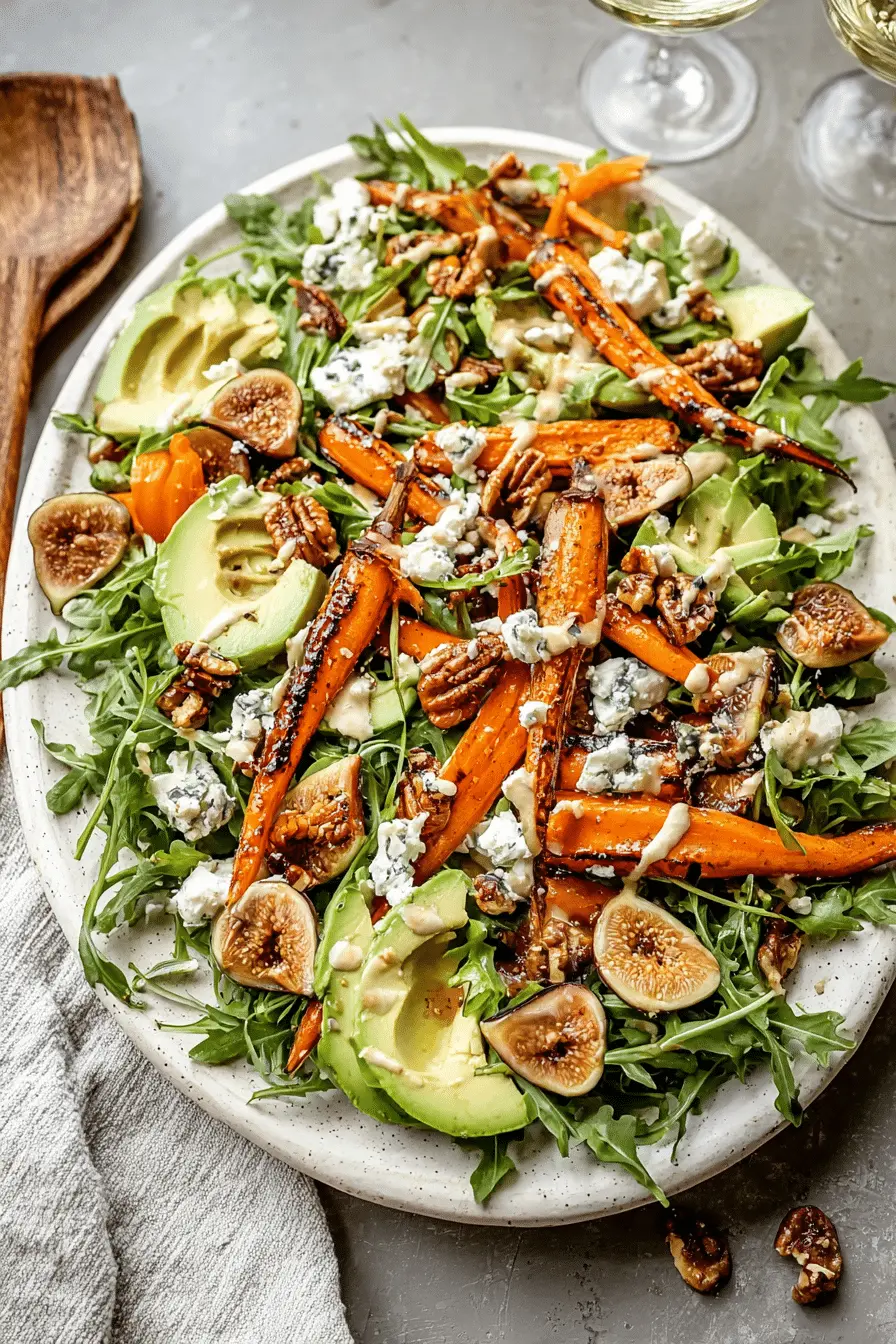
I make this carrot arugula salad on busy weeknights and on slow Sundays — it’s one of those recipes that feels thoughtful without taking over the whole evening. I love how the peppery arugula and sweet figs play against creamy avocado and tangy goat cheese, and the maple tahini dressing ties everything together with a subtle sweetness and a silky mouthfeel. It comes together in about 40 minutes from start to finish, which makes it a reliable option for lunches, light dinners, or bringing to a small family gathering. In my kitchen I usually grill the carrots when the weather allows — the edges caramelize and you can smell that sweet, slightly charred aroma long before you sit down to eat. When it’s not grilling weather, roasting works just as well and still produces tender, flavorful carrots. I’ll walk you through both methods so you can pick the one that fits your rhythm. I also like that this salad is easy to customize: add roasted chickpeas for protein, swap goat cheese for a dairy-free alternative, or swap fresh greens depending on what’s in season. The textures — crisp arugula, tender carrots, creamy avocado, chewy figs and crunchy walnuts — make it feel complete, even if you keep the dressing simple.Why This Carrot Arugula Salad Is Perfect for Healthy, Busy Days
This salad is a great fit for busy routines because it mixes quick raw elements with a small cooked component that adds real depth. Total time is about 40 minutes, but much of that is hands-off while carrots are grilling or roasting. You can prep several components in parallel: toast the walnuts while the carrots cook, and whisk the dressing in a few minutes while the oven or grill is warming. Visually it’s bright and inviting: the deep green of arugula, orange carrots, pale goat cheese, and the jewel-like figs. The contrast between raw and cooked keeps every bite interesting — peppery, sweet, creamy, and crunchy. Nutritionally, arugula gives you leafy greens with a pronounced peppery bite, while carrots bring beta-carotene and natural sweetness. This combination makes it easy to feel satisfied without heaviness.Everything You Need for Carrot Arugula Salad
Choose the freshest ingredients you can find — they really matter for a salad where each component stands out. If possible, buy local or organic produce for the best texture and flavor. Consider pairing this salad with a side for a fuller meal: Consider adding some sides to your meal, like maple glazed roasted beet skewers for an extra burst of flavor.- Arugula – The peppery green that gives the salad its lively backbone; substitute mixed baby greens if arugula’s too strong.
- Carrots – I use large carrots that hold up to grilling or roasting and become sweet and tender when cooked.
- Dried Figs – Provide natural sweetness and a chewy contrast; fresh figs work when in season.
- Walnuts – Add crunch and toasty nuttiness; toast them briefly in a dry pan to intensify flavor.
- Goat Cheese – Brings tang and creaminess; see vegan swaps below if you prefer dairy-free.
- Avocado – Creamy mouthfeel and healthy fats that help your body absorb fat-soluble vitamins.
- Roasted Chickpeas (optional) – A simple way to boost protein and add another crunchy element.
- Tahini – The dressing’s rich, sesame-based base; it gives body and a savory note that balances maple syrup.
- Maple Syrup – Natural sweetener that complements the roasted carrot sweetness without overpowering it.
Why This Salad Is So Nutritious
This salad covers several nutritional bases: leafy greens, colorful vegetables, healthy fats, fiber, and optional protein. The bright colors also indicate a range of vitamins and antioxidants — beta-carotene from carrots converts to vitamin A, arugula contributes vitamin K and folate, and avocado supplies monounsaturated fats that are good for heart health. The walnuts deliver omega-3s and a satisfying crunch, while figs bring natural sugars and fiber for slower digestion. Pairing fats like avocado with leafy greens helps you absorb fat-soluble nutrients, so each bite is more nourishing. Beyond the nutrients, I find this salad works well at family meals because it’s approachable for different tastes: kids often like the sweeter carrots and figs while adults appreciate the more assertive arugula and goat cheese.Maple Tahini Dressing: Balancing Sweet & Tangy
The dressing is simple but key: tahini adds a silky, sesame richness, lemon juice brings brightness, and maple syrup provides a warm sweetness that plays nicely with roasted carrots. Dijon gives a touch of savory depth and garlic powder rounds it out without requiring fresh garlic every time. Each ingredient has a job — tahini for body, acid for lift, and sweetener to harmonize. If you need alternatives, use agave or brown rice syrup in place of maple for different dietary preferences; for a lighter option, swap some tahini for plain yogurt (or a non-dairy yogurt). Other dressing ideas if you want variety: a lemon vinaigrette with olive oil and a touch of honey (or maple), or a simple balsamic reduction drizzled lightly on top. These options keep the salad fresh while giving you flexibility for dietary needs.The Secret to Tender, Flavorful Carrots
Getting carrots tender and flavorful is a matter of heat, timing, and seasoning. Both grilling and roasting coax the carrots’ natural sugars to the surface so you get caramelized edges and a soft interior. Here’s what I do depending on your method:- Grilling method — Preheat grill to medium-high so the carrots get char marks without burning; turn them occasionally so they cook evenly and take about 15–25 minutes depending on thickness.
- Roasting method — Toss carrots with oil, season with salt and pepper, and roast at a hot oven temperature until caramelized and tender (usually around 30 minutes for thicker pieces).
- Seasoning tip — A simple drizzle of oil, salt, and pepper is often enough; finish with a squeeze of lemon to brighten the sweetness after cooking.
- Timing note — Watch closely as they near doneness; overcooked carrots can become mushy, while undercooked ones stay too firm to balance the greens.
How to Make Carrot Arugula Salad (Step-by-Step)
Follow these steps to keep prep efficient and ensure the salad has balanced textures. I recommend multitasking where possible — you can start the carrots, then toast nuts and mix the dressing while they cook.- Prep the carrots: cut them so they cook evenly and season with oil, salt, and pepper.
- Cook the carrots: grill or roast until tender with some caramelized edges; flip or turn halfway through for even color.
- Toast the walnuts: in a dry skillet over medium heat until fragrant, watching closely so they don’t burn.
- Make the dressing: whisk tahini with lemon juice, maple syrup, Dijon, a pinch of garlic powder, and warm water to loosen to your preferred consistency; season with salt and pepper.
- Assemble: lay arugula on a platter or in a bowl, arrange the cooked carrots, figs, avocado slices, toasted walnuts, and goat cheese (or your swap) on top.
- Finish: drizzle the dressing over everything and season with a little more black pepper or flaky salt to taste; serve immediately.
- Common mistake to avoid — don’t overdress the salad. Keep extra dressing on the side if you’re prepping ahead so the greens don’t get soggy.
Pro Tip for Carrot Arugula Salad: Dairy-Free & Vegan Swaps
Here are simple swaps and ideas to make this salad friendly for dairy-free and vegan eaters, and to help you tailor it to different tastes. I include these notes from many times I’ve made this for friends with varying diets — it’s easy to make everyone feel included.- Goat cheese substitute — Use a vegan cream cheese, crumbled tofu seasoned with lemon and salt, or sprinkle nutritional yeast for a cheesy note.
- Tahini alternatives — If tahini is unavailable, try almond butter or sunflower seed butter for a similar creamy effect (adjust salt and acid to balance).
- Sweetener swaps — Maple syrup works for vegans; agave or date syrup are fine too.
- Protein boosts — Add roasted chickpeas, cooked quinoa, or grilled tempeh for plant-based protein that keeps the salad filling.
- Emotional note — I find making these small substitutions helps people feel seen at the table; a simple dairy-free swap often makes the salad a shared favorite at family meals.
How to Store, Meal Prep & Try Seasonal Variations
Plan ahead by cooking components separately: store the cooked carrots, toasted nuts, and dressing in airtight containers and keep the greens and avocado separate until serving. This keeps textures bright and makes the salad meal-prep friendly for several days.- Storage tips — Store the dressing in its own jar and refrigerate; keep assembled salads undressed when possible and add avocado at the last minute to prevent browning.
- Make-ahead strategy — Pack the components in individual containers for easy lunches: greens in one container, carrots and toppings in another, dressing in a small jar.
- Seasonal variations — Swap figs for fresh berries in summer, add roasted pears or apples in fall, or use citrus segments in winter to keep the salad lively year-round.
- Benefits of seasonal eating — Choosing in-season produce boosts flavor and nutrition and supports local growers while keeping your meals interesting.
Frequently Asked Questions
Can I make this salad ahead of time? Yes! This carrot arugula salad keeps well in the fridge for 2-4 days. Just store the salad and dressing separately and mix them right before serving for the best freshness! What can I substitute for goat cheese? If you're looking for a dairy-free option, you can use vegan cream cheese or sprinkle some nutritional yeast for a cheesy flavor. Feta cheese is another great alternative if you still want cheese but don’t have goat cheese. Is this salad suitable for a vegan diet? You can easily make this salad vegan by swapping out the goat cheese for a dairy-free alternative and using maple syrup in the dressing instead of honey. How can I make the dressing thicker? To achieve a thicker dressing, simply reduce the amount of warm water you add to it. Start with less water and whisk in more until you reach your desired consistency. What can I add to boost the protein in this salad? You can add roasted chickpeas, grilled chicken, or even quinoa to increase the protein content of the salad. These options will make it even more filling!Recipe Card
How I Make the Best Carrot Arugula Salad — Fig, Goat Cheese & Avocado
- Prep
- 20 min
- Cook
- 20 min
- Total
- 40 min
- Serves
- 4
- Calories
- 421 kcal
- Protein
- 11.70 g
- Carbs
- 32.80 g
- Fat
- 28.70 g
Ingredients
- 4 largecarrots, cut in half vertically (stems/tops removed)
- 1 tablespoonavocado oil
- 5 ouncesbaby arugula
- ¾ cupdried fig halves
- ⅓ cupwalnuts, halves and pieces
- ⅓ cupgoat cheese, crumbles
- 1 largeavocado, sliced
- ½ cuproasted chickpeas ((optional, for extra protein))
- ¼ cupdrippy tahini
- 2 tablespoonsfresh lemon juice
- 1-2 teaspoonspure maple syrup
- ½ teaspoondijon mustard
- ¼ teaspoongarlic powder
- 2-3 tablespoonswarm water, to thin out dressing
- ¼ teaspoonsalt
- to tastefreshly ground black pepper
Instructions
- 1
Add vertically cut carrots to a large bowl or a platter and drizzle with avocado oil then season with freshly ground salt and pepper. Use tongs or clean hands to coat the carrots with the oil.
- 2
Preheat the grill to medium high heat (about 400°F) and grill the carrots for 15-25 minutes total or until slightly tender, flipping halfway through. Alternatively, roast them at 400°F for 30 minutes on a baking sheet lined with parchment paper.
- 3
Toast walnuts in a dry skillet over medium heat, stirring occasionally until toasted and fragrant, about 5 minutes. Set aside.
- 4
While the carrots are cooking, make the dressing: in a medium bowl, whisk together tahini, lemon juice, maple syrup, dijon, garlic powder, and salt and pepper. Add warm water one tablespoon at a time until desired consistency is reached.
- 5
Add arugula to a platter and layer with grilled carrots, dried figs, toasted walnuts, goat cheese, avocado slices, and roasted chickpeas (if using).
- 6
Drizzle tahini dressing over the salad and season with salt and pepper. Divide into bowls and enjoy!
You might also like
Reviews
Be the first to review this.