- Prep
- 15 min
- Cook
- 25 min
- Total
- 40 min
- Serves
- 4
- Calories
- 569 kcal
- Carbs
- 16.60 g
Introduction
I make these Chicken Florentine Meatballs when weeknight life needs to feel a little more put-together without extra fuss. I love that they give me a big hit of protein from lean ground chicken and parmesan, plus a sneaky serving of veggies thanks to zucchini folded into the meatballs and fresh spinach in the sauce. In my kitchen they’ve become the go-to when I want a fast, satisfying meal that still feels wholesome. What keeps me coming back to this recipe is the speed: about forty minutes from start to finish, which fits perfectly into a busy evening. The sundried tomatoes add a concentrated sweet-tang that balances the cream, and the lemon zest and basil at the end keep the dish bright so it never feels heavy. I test small tweaks—more zucchini, a touch less cream—until the texture and flavor are exactly how I like them. I also appreciate how forgiving the method is. A few careful steps—squeezing the shredded zucchini, not overworking the meat, and finishing the meatballs in the sauce—make all the difference. I’ll share those practical tips below so you can get tender, juicy meatballs and a silky sauce every time.Why These Chicken Florentine Meatballs Are Perfect for Busy, Health-Conscious Dinners
These meatballs hit the marks most of my readers tell me matter: high protein, added vegetables, and a homey, restaurant-worthy finish in under an hour. The lean ground chicken and grated parmesan create the core protein; zucchini and spinach raise the fiber and micronutrient profile so the meal feels balanced. For a busy cook, the workflow is efficient: assemble, bake, then make a one-pan sauce to finish—minimal hands-on time and an easy cleanup. Sensory note: picture warm, golden meatballs with flecks of green, the aroma of garlic and shallot, and a glossy cream sauce dotted with wilted spinach and bright basil. That contrast of tender meat and silky sauce is exactly what makes this feel satisfying yet thoughtful.Everything You Need for Chicken Florentine Meatballs
- Lean ground chicken – The primary protein; choose a package labeled for meatballs or a lean grind so the texture stays light rather than dense. If your ground chicken seems very wet, pat it to remove excess moisture before mixing.
- Zucchini – Grated and well-squeezed, zucchini adds moisture and bulk without heaviness; it keeps lean meatballs from drying out.
- Panko or breadcrumbs – A binder that gives structure and helps meatballs hold together while keeping them tender. If you prefer gluten-free, use a certified gluten-free breadcrumb alternative.
- Egg – The binder that helps everything set. If you need an egg-free option, try a flaxseed or chia egg substitute, but expect a slightly different texture.
- Parmesan – Adds savory umami and helps thicken the sauce; also contributes to the meatball’s flavor and texture.
- Garlic, Italian seasoning, salt, pepper – Basic flavor anchors; adjust to taste. Garlic provides aromatic depth while the dried herbs give an Italian backbone.
- Butter, shallot, garlic – The aromatic base for the sauce; butter gives richness and shallot adds a subtle sweetness.
- Sundried tomatoes – Intensely flavored bits that bring sweetness and tang; they punctuate the creamy sauce and prevent it from tasting one-note.
- White wine and chicken broth – Wine deglazes the pan and adds acidity; broth provides savory body. Use a low-sodium broth if you’re watching sodium.
- Heavy cream or lighter alternatives – Heavy cream yields the silkiest sauce; swap in a milk-based option plus a stabilizer (see the sauce section) to reduce calories while keeping creaminess.
- Fresh spinach – Wilted into the sauce for color, nutrients, and texture contrast; it also stretches the sauce so a little goes a long way.
- Lemon zest and fresh basil – Bright finishing notes; a tiny amount of zest cuts the richness and fresh basil ties the flavors together.
- Tools – A rimmed baking sheet lined with parchment paper for easy cleanup, a large skillet for the sauce, and a meat thermometer for reliable doneness.
How Adding Zucchini and Spinach Boosts Nutrition (and Flavor)
Zucchini and spinach aren’t just filler; they change the meal’s nutrition and texture profile in meaningful ways. Zucchini brings fiber and a mild, slightly sweet vegetal note that pairs well with chicken. When you grate and thoroughly squeeze out the liquid, that moisture helps the meatballs stay tender during baking instead of drying out. Spinach folded into the sauce adds iron, magnesium, and extra fiber, and it brings a pop of color and freshness so the dish reads lighter on the plate. The wilted greens also provide a pleasant textural contrast—soft ribbons against the meatball exterior. For additional flavors, serve these meatballs with Mediterranean spinach and feta crisps!The Secret to Tender Meatballs: Tips for Texture and Moisture with Lean Chicken
Lean ground chicken can be delicate and prone to drying; the technique matters more than exotic ingredients. The chief culprits of dry meatballs are overmixing and failing to balance moisture and binders. Handle the mixture gently—fold ingredients with your hands until evenly combined, then stop. Overworking the meat develops proteins that tighten the final texture. Sensory check: the mixture should feel cohesive and slightly tacky, not dense or gummy. If it’s too wet, add a little more panko; if too dry, a splash of broth or a lightly beaten egg can help. Always squeeze as much water as you can from shredded zucchini; retained moisture will make the meatball loose and prone to falling apart. Safety note: use a quick-read meat thermometer to verify doneness—165°F is the safe internal temperature for ground poultry. Rest the meatballs a few minutes after baking and before saucing; this lets juices redistribute so they stay moist when you finish them in the sauce.How to Keep the Sauce Creamy Without Extra Calories
If you want the mouthfeel of a luxurious sauce without loading on fat, there are straightforward swaps and techniques that keep creaminess intact. One reliable method is to use a smaller amount of heavy cream combined with a lower-fat milk; reduce gently so the sauce concentrates without breaking. Another approach is to temper plain Greek yogurt: pull the pan off the heat, whisk in a spoonful of warmed sauce into the yogurt to raise its temperature, then stir that back into the skillet. That preserves creaminess and adds protein. For a non-dairy thickener, a cornstarch slurry or a very small amount of arrowroot dissolved in cold liquid stirred into the simmering sauce will thicken without adding calories. Adding grated parmesan at the end not only seasons the sauce but helps it cling and thicken. If you enjoy similar rich but lighter dishes, try pairing this meal with a simple creamy chicken option like this creamy garlic chicken for variety on your rotation.How to Make Chicken Florentine Meatballs (Step-by-Step)
- Preheat your oven and prepare a rimmed baking sheet with parchment for easy cleanup.
- Shred the zucchini and use a clean towel or cheesecloth to press out as much liquid as possible; return the dry shreds to the bowl.
- To the zucchini, add the ground chicken, panko, beaten egg, grated parmesan, garlic powder, Italian seasoning, and salt and pepper. Use your hands to gently combine until just mixed—stop as soon as the ingredients are uniform.
- Form the mixture into evenly sized meatballs so they cook at the same rate, placing them on the prepared sheet with a bit of space between each.
- Bake until a thermometer reads 165°F in the center of a few meatballs; timing will depend on size but expect roughly a short bake (about the time it takes to set and brown lightly).
- While meatballs bake, warm butter in a large skillet and sauté minced shallot and garlic until fragrant. Add chopped sundried tomatoes and cook briefly to release their oils.
- Deglaze the pan with white wine and let it reduce to concentrate flavor, then stir in chicken broth and cream and bring to a gentle simmer.
- Stir in grated parmesan until melted, then add chopped spinach and cook until wilted. Nestle cooked meatballs into the sauce and spoon it over them, simmering until warmed through and the sauce has slightly thickened. If it becomes too thick, loosen with a splash of broth.
- Finish with lemon zest and torn basil, then serve over pasta, zoodles, or crusty bread as you like.
- Food-safety reminder: keep raw poultry separate from ready-to-eat items and wash hands and surfaces thoroughly after handling the mixture.
- Alternate cooking methods: you can pan-sear meatballs first for browning before finishing in the oven or grill gently on skewers for a smoky note—just monitor closely so they don’t dry out.
Pro Tip for Chicken Florentine Meatballs: Low-Carb Swaps and Quick Sauce Shortcuts
- Low-carb base options: serve the meatballs over zucchini noodles (zoodles) or cauliflower rice to keep carbs low while staying filling.
- Quick sauce shortcut: skip the wine and sauté a touch more shallot, then add broth and a splash of cream substitute; finish with parmesan and spinach for speed.
- Make-ahead: bake meatballs, cool completely, then freeze in a single layer before transferring to a freezer bag—reheat in sauce straight from frozen for an easy dinner.
- Pesto swap: if short on time, toss cooked meatballs with a spoonful of pesto and a splash of broth for an herby, fast finish.
- Try a spicy alternative for variety: if you're looking for a fun twist on meatballs, try making our buffalo chicken meatballs for a spicy alternative!
- Note to reader: these Pro-Tips are presented as bulleted items so you can scan them quickly when planning your dinner.
Troubleshooting
- If meatballs are dry: avoid overmixing and ensure you squeezed moisture from zucchini; consider adding a bit more grated parmesan or a splash of broth to the mix for added fat and moisture.
- If meatballs fall apart: increase the binder slightly (more breadcrumbs or a beaten egg) and let the formed meatballs rest in the fridge for a short time before baking to firm up.
- If sauce is grainy or separated: lower the heat and stir in cheese off-heat or temper yogurt before adding; high heat can cause dairy to split.
- If sauce is too thin: simmer a bit longer to reduce, or whisk a small cornstarch slurry into the sauce and simmer until it thickens.
- When in doubt, I check internal temperature with a thermometer—reliably hitting 165°F keeps the meatballs safe and avoids overcooking from guesswork.
Variations
- Ground turkey swap: use ground turkey for a very similar lean profile and flavor.
- Vegetarian option: make a lentil-and-mushroom meatball that follows the same binder and bake/finish method for a plant-based take with similar texture.
- Cheesy ricotta meatballs: fold ricotta into the mixture for extra tenderness and richer mouthfeel while keeping overall calories moderate.
- Sundried tomato alternatives: use roasted red peppers for a sweeter, smokier note if you prefer.
- Lighter sauce: reduce cream, increase broth, and finish with an extra handful of spinach for a lighter pan sauce that still clings to the meatballs.
How to Store, Reheat, and Meal-Prep Chicken Florentine Meatballs
Store cooled meatballs and sauce together in airtight containers in the refrigerator for up to three days, or freeze portions for up to three months. For freezing, place a single layer of meatballs on a sheet until firm, then transfer to a freezer-safe bag with sauce in a separate container if possible; this prevents the sauce from diluting the texture during a long freeze. To reheat, gently warm the sauce in a skillet over low-medium heat and nestle in refrigerated or thawed meatballs until just heated through; avoid high heat which can toughen the meat. If reheating from frozen, warm the sauce first, then add frozen meatballs and simmer until fully heated. For meal-prep, portion with a low-carb base or whole-grain pasta and a side of greens so you have a balanced plate ready to go. For meal prep inspiration, check out these coconut curry chicken meatballs that store well and are perfect for quick meals! Serving suggestion: spoon the meatballs and sauce over your preferred pasta or zoodles, finish with extra parmesan, lemon zest, and torn basil for a bright lift. This dish pairs well with a simple green salad or garlic-roasted vegetables for a full, balanced weeknight meal.Frequently Asked Questions
Can I use ground turkey instead of ground chicken for the meatballs? Yes, you can easily substitute ground turkey for ground chicken in this recipe. The flavors and texture will be similar, and it remains a healthy option! How can I make the sauce lighter while keeping it creamy? To lighten the sauce while maintaining a creamy texture, you can use a combination of low-fat milk or unsweetened almond milk with a bit of cornstarch. It will help achieve creaminess without the extra calories. Tempering small amounts of Greek yogurt off-heat is another good option. What can I substitute for panko breadcrumbs? If you don't have panko breadcrumbs, you can use regular breadcrumbs or even crushed crackers as a substitute. Just ensure they are fine enough to bind the meatball mixture. How do I store leftover Chicken Florentine Meatballs? Store leftover meatballs in an airtight container in the refrigerator for up to 3 days. You can also freeze them for up to 3 months! What type of pasta pairs well with Chicken Florentine Meatballs? Almost any type of pasta can work well, but we recommend fettuccine, linguine, or even whole wheat pasta to complement the creamy sauce beautifully.Recipe Card
The Chicken Florentine Meatballs I Make for Weeknight Meal Prep
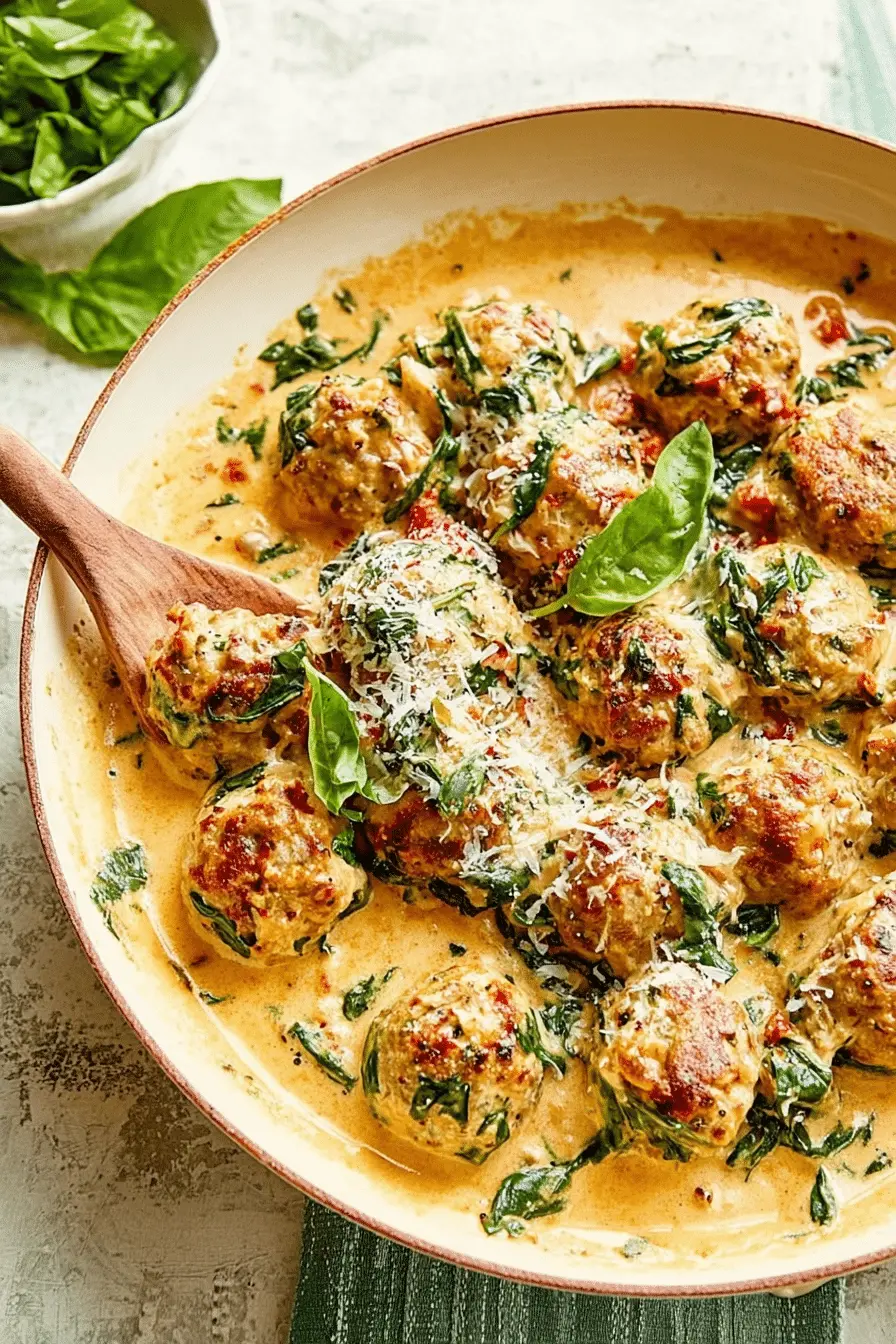
- Prep
- 15 min
- Cook
- 25 min
- Total
- 40 min
- Serves
- 4
- Calories
- 569 kcal
- Carbs
- 16.60 g
Ingredients
- 1 smallzucchini
- 1 poundlean ground chicken
- ½ cuppanko breadcrumbs
- 1 largeegg
- 1.5 ouncesgrated parmesan cheese
- 1 teaspoongarlic powder
- 1 teaspoonItalian seasoning
- 1 teaspoonkosher salt
- —Freshly ground black pepper
- 2 tablespoonssalted butter
- 1 mediumshallot
- 3 clovesgarlic
- ¾ cupsundried tomatoes
- ½ cupdry white wine
- ½ cuplow sodium chicken broth
- ¾ cupheavy cream
- 1 to 2 ouncesgrated parmesan cheese
- 1 to 2 cupsspinach
- —Lemon zest
- —Torn fresh basil
- —Cooked pasta of choice
Instructions
- 1
Preheat the oven to 400 degrees F. Line a large baking sheet with parchment paper.
- 2
Shred the zucchini and squeeze out the moisture. Add to a large bowl.
- 3
Prepare the meatballs by mixing ground chicken, panko, egg, parmesan, garlic powder, Italian seasoning, salt, and pepper. Form into meatballs and place on the baking sheet.
- 4
Bake for 15 to 18 minutes until the internal temperature reaches 165 degrees F.
- 5
Prepare the sauce in a skillet by melting butter, then adding shallots, garlic, and sundried tomatoes. After 2 minutes, add white wine and reduce by half. Then mix in chicken broth and heavy cream, letting it simmer.
- 6
Stir in parmesan and spinach, then return the meatballs to the skillet. Cook until the sauce thickens, garnishing with lemon zest and fresh basil. Serve over pasta or with bread.
You might also like

Reviews
Be the first to review this.