- Prep
- 15 min
- Cook
- 20 min
- Total
- 35 min
- Serves
- 4
- Calories
- 417 kcal
Introduction
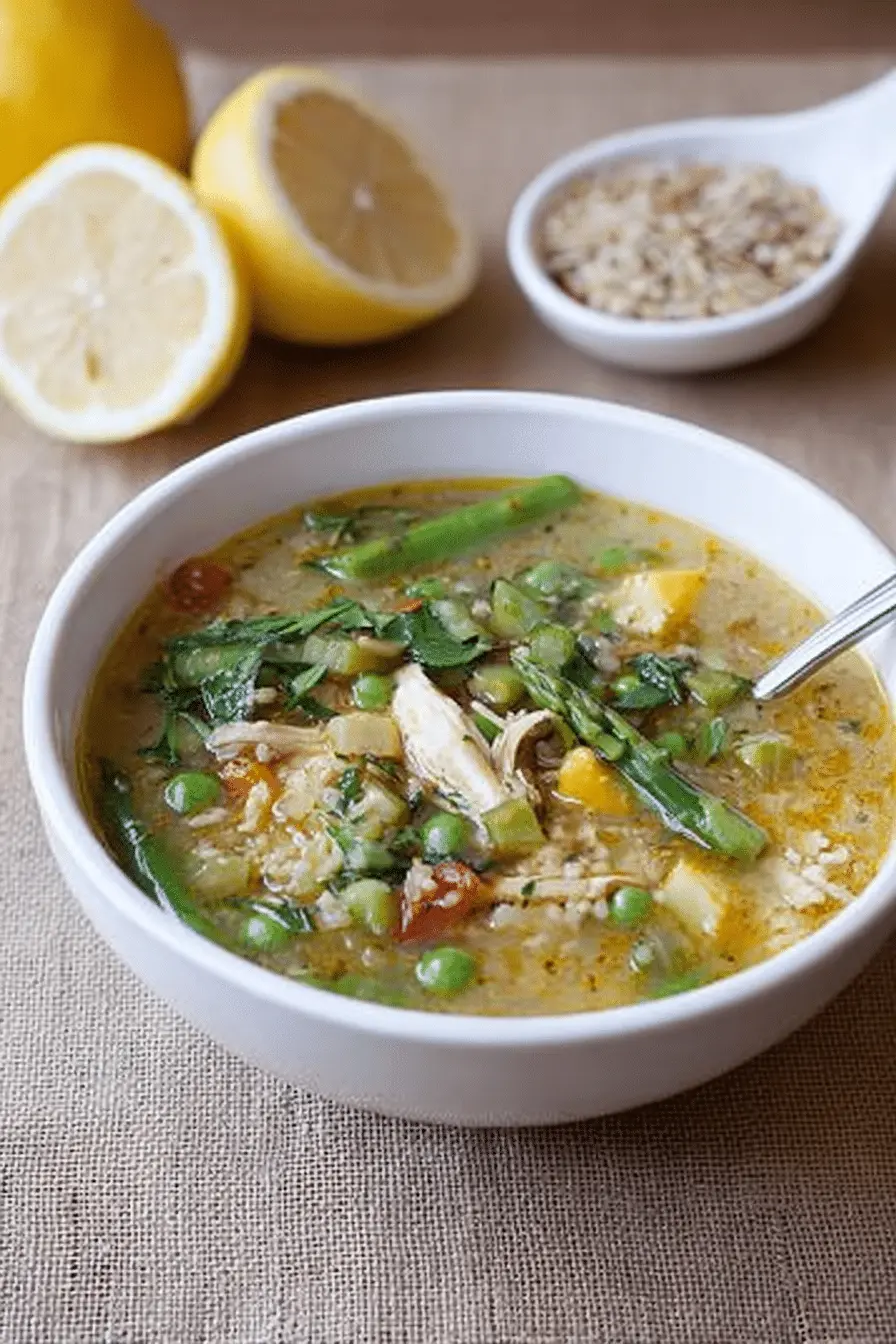
There’s something about a steaming bowl of chicken soup that makes the whole kitchen feel like a hug. I make this chicken soup with spring veggies whenever I want something light yet deeply comforting — the kind of bowl that warms your hands and clears the fog of a long day. It’s familiar across cultures: broth that soothes, simple ingredients that sing, and a bright lemon finish that lifts everything. I’ve cooked this version dozens of times, tweaking the timing so the peas snap bright instead of going mushy and so the lemon remains fresh and not overpowering. This recipe is built on a gentle, warm chicken stock, bright lemon, tender carrots and leeks, sweet peas, tiny zucchini, shredded chicken, and a scoop of cooked quinoa for body. It’s flexible too — use leftover rotisserie chicken, swap quinoa for rice or small pasta, or turn it vegetarian with beans and mushroom broth. If you want more reflections on why a bowl of soup feels like home, check out our comforting chicken soup post for additional stories and tips.Health Benefits of Chicken Soup
Chicken soup isn’t just cozy; it actually helps. A warm broth rehydrates and soothes the throat, which is why people reach for soup when they’re coming down with a cold. The steam helps clear nasal passages and the salt in a homemade stock can help loosen mucus. Homemade broth concentrates nutrients — collagen, amino acids, and minerals — especially if you’ve simmered bones for a long time. That gelatinous mouthfeel you sometimes see in refrigerated homemade stock is a sign of collagen, which can be good for gut comfort and digestion. Protein from the chicken helps maintain strength when you’re under the weather, and vegetables add vitamins, fiber, and color. Using fresh ingredients over a canned broth increases the vitamin content and cuts down on excess sodium and stabilizers that sometimes make commercial broths taste flat. That said, a good low-sodium store-bought broth will still get you a long way if you’re short on time. Expect this soup to be refreshing and light rather than heavy. The lemon brightens the palate and helps with nutrient absorption, while the warm liquid supports hydration. If you’re watching calories or carbs, leave out the quinoa or replace it with extra veggies — the soup will still be satisfying.Ingredients You'll Need
- Butter – gives a rounded, silky mouthfeel and helps brown the aromatics gently.
- Olive oil – a drizzle alongside the butter prevents burning and adds a fruity note.
- Leek – the white part sweats down into a sweet, oniony base that’s softer and milder than onions.
- Carrots – tiny diced pieces give sweetness, color, and body; multicolored carrots add visual charm.
- Garlic – presses through for a fragrant lift; don’t let it brown or it will turn bitter.
- Salt & Black pepper – salt amplifies flavors; pepper adds a mild bite.
- Herbes de Provence – a gentle herb mix that adds Provence-like brightness; thyme or rosemary would also work.
- Chicken stock/broth – the backbone of the soup; homemade gives the best flavor, but a good low-sodium store option is fine.
- English peas (fresh or frozen) – add sweetness and a pop of color; frozen peas are convenient and still bright.
- Baby zucchini – small dice so they cook quickly and stay tender-crisp.
- Cooked chicken – shredded or cubed; leftover or rotisserie chicken works beautifully.
- Lemon zest & juice – brings light, citric lift that keeps the soup from tasting heavy.
- Cooked quinoa – a nutty, gluten-free grain that adds body without heaviness; rice or small pasta are fine swaps.
- Fresh basil – added at the end for herbal brightness and aroma.
- Lemon wedges – for garnish and an extra spritz of freshness at the table.
- 2 tablespoons butter
- 1 tablespoon olive oil
- 1 leek, quartered, and white part sliced
- 2 carrots, peeled and diced small (multi-colored carrots optional)
- 2 cloves garlic, pressed
- Salt
- Black pepper
- 1 teaspoon Herbes de Provence
- 4 cups warm chicken stock/broth
- 1 cup fresh English peas (or frozen peas)
- 1 cup baby zucchini, small dice
- 2 cups cooked chicken, shredded or cubed
- 2 teaspoons lemon zest
- 2 tablespoons fresh lemon juice
- 2 cups cooked quinoa
- 1/4 cup chopped, fresh basil leaves
- 4 lemon wedges, for garnish
Step-by-Step Cooking Instructions
Make sure you have your cooked quinoa and chicken ready before you start the final steps — it makes finishing the soup quick and keeps the textures spot on.- Heat a medium-large soup pot over medium heat and add the butter and olive oil. Once the butter has melted, add the sliced leek and diced carrots. Sweat them gently for about 3–5 minutes until the carrots start to soften and the leeks look translucent. You want them softened, not browned — that preserves a sweet, clean flavor.
- Add the pressed garlic and stir just until aromatic (about 30 seconds). Add a pinch or two of salt and some black pepper, then sprinkle in the Herbes de Provence and stir to combine. The salt now helps draw moisture out of the vegetables and builds the base of the broth.
- Pour in the warm chicken stock and bring to a gentle simmer. Partially cover with a lid and simmer for about 15–20 minutes, or until the carrots are tender when pierced with a fork. If your stock is very cold, let it come up gradually — a violent boil will make the broth cloudy.
- Turn the heat off. Add the peas (if using frozen, just stir them in), diced baby zucchini, shredded or cubed chicken, lemon zest, and lemon juice. Stir and let the residual heat gently bring the peas and zucchini to crisp-tender and bright green — about 3–4 minutes. This step keeps the vegetables vibrant and the chicken juicy instead of overcooked.
- Taste and adjust seasoning. If the soup tastes a bit flat, add a small pinch of salt first — salt unlocks flavor. If it needs brightness, add a little more lemon juice. If it’s too tart, a tiny pinch of sugar can balance it, but use sparingly.
- To serve: place roughly 1/2 cup cooked quinoa in each bowl, ladle the hot soup with veggies and chicken over the top, sprinkle with fresh basil, and serve with a lemon wedge for extra squeeze at the table. The quinoa absorbs some broth and gives a pleasing chew.
Why these steps matter (and what can go wrong)
Sweating the leek and carrots rather than browning them keeps the broth clear and sweet. High heat early on will brown aromatics and change the flavor profile — the soup will be deeper but less bright. Simmering gently allows flavors to blend without reducing the volume too much. Don’t add peas and zucchini to the simmering stock; add them at the end with the chicken and turn the heat off. If you add them earlier they’ll lose color and become mushy. If the chicken is raw and you want to poach it in the stock, bring the stock to a gentle simmer and poach until the internal temperature hits 165°F (74°C), then shred — cooking time will vary with breast vs. thigh.Customizations for Dietary Needs
I test recipes with small swaps all the time, and this soup is forgiving. Below are tested options and how they affect the final bowl.- Gluten-free – This whole recipe is naturally gluten-free if you use gluten-free broth and quinoa or rice instead of pasta. Avoid some store-bought broths with added wheat-based thickeners.
- Dairy-free – Swap the butter for an extra drizzle of olive oil or a neutral oil; the soup will be slightly less rounded but still silky if you skim a little fat from the cooked chicken or add a splash of good olive oil at the end.
- Low-carb / Keto – Skip the quinoa and add extra low-carb veg (bok choy, spinach, or cauliflower florets). The broth, chicken, and lemon still shine without grains.
- Vegetarian / Vegan – Use a rich vegetable broth, replace the chicken with chickpeas, white beans, cubed, firm tofu, or a mix of mushrooms and beans for body. Boost the umami with a splash of tamari/soy or a teaspoon of miso dissolved in a little warm broth. Expect a slightly earthier flavor without chicken fat — add a finishing spoon of nut butter or a drizzle of sesame oil for richness if you like.
Tips for Using Leftover Chicken
Leftover or rotisserie chicken is your best shortcut. It saves time and gives excellent flavor: shred or cube the meat and add it in the final warming step so it stays tender. If you only have raw chicken, you can poach it in the warm stock until cooked through and shred it — I often do this when I want the broth to taste meatier. Save leftover bones: roast them briefly and then simmer with onion, carrot, celery, bay leaf, and peppercorns for several hours for a homemade stock. Strain, cool, and refrigerate or freeze in portions. Reusing bones is economical and reduces waste — plus homemade stock has depth that canned broth can’t match.Serving Suggestions and Variations
This soup is a lovely everyday meal and also good for guests. Here are serving ideas I use depending on mood:- Serve with a hunk of crusty bread or a buttered roll — the bread soaks up that lemony broth in the best way. For a soft, homey accompaniment, warm a small loaf or toast slices with olive oil and garlic.
- Top with a drizzle of olive oil or a sprinkle of finely grated Parmesan if you don’t need to keep it dairy-free.
- For a bright, Mediterranean twist on this classic, try our Greek lemon chicken soup with orzo as a flavorful variation.
- Regional idea: add chopped cilantro, a squeeze of lime, and omit the Herbes de Provence for a Latin-inspired version. Or add ginger, a splash of fish sauce, and cilantro for an Asian-leaning bowl.
- Seasonal veggies: in autumn swap baby zucchini for diced butternut squash; in winter add diced parsnips or a handful of kale at the end.
- Serve your chicken soup with a warm loaf of homemade bread for a cozy, comforting meal that guests will love.
Storage, Make-Ahead Notes, and Safety
Cool soup quickly — transfer to shallow containers and refrigerate within two hours. Stored in the fridge it will keep 3–4 days. For freezing, remove the cooked quinoa and store it separately; quinoa can become gummy after freezing and thawing. Freeze the soup (without quinoa) up to 2–3 months. Thaw overnight in the refrigerator and reheat gently on the stove. Reheat slowly so the chicken stays tender and the veggies keep some texture. If the soup thickens in the fridge, thin with a splash of warm stock or water when reheating. Taste and adjust salt and lemon before serving — flavors often mellow during refrigeration and benefit from a brightness boost when reheated.Troubleshooting Quick Guide
- If the broth tastes flat: add a small pinch of salt — it usually fixes it. Acid (lemon juice) can brighten too.
- If vegetables are mushy: they were cooked too long. Next time add peas and zucchini at the very end with the chicken.
- If chicken is dry: use dark meat next time or add shredded rotisserie chicken at the end rather than cooking raw chicken in a high boil.
- If soup is too salty: add an extra cup of unsalted stock or a peeled, halved potato simmered in the soup for 10 minutes (remove potato before serving) to draw off some salt.
Conclusion and Final Thoughts
This chicken soup with spring veggies is one of those recipes I make without thinking when I want comfort with a bright finish. It’s forgiving, quick to pull together if you have cooked chicken and quinoa on hand, and flexible enough to become whatever your pantry needs. The small details — sweating the leeks, turning off the heat before adding peas, and finishing with lemon and basil — are what keep it vibrant every time. Invite people over, ladle it into bowls, and watch how quickly it becomes something warming that everyone remembers. I’d love to hear how you adapt it. Maybe you’ll add a spoon of pesto, swap in baby bok choy, or stretch it for a crowd with extra stock and veggies. Share your variations in the comments and let me know what small tweak turned this into your go-to comfort bowl.FAQ
Can I make this soup ahead of time or freeze it? Yes. Cool completely first. For best texture, freeze the soup without the cooked quinoa (quinoa can get mushy); store cooked quinoa separately and add it when reheating. Freeze up to 2–3 months, thaw overnight, and reheat gently on the stove. Can I use rotisserie or leftover chicken instead of cooking chicken specifically for this recipe? Absolutely. Shredded rotisserie or leftover chicken is a time-saver and works perfectly. If using raw chicken, poach it in the warm stock until cooked through and then shred. What can I substitute for quinoa if I don’t have any or want a different texture? Substitute cooked rice, small pasta (gluten-free if needed), farro, or leave out grains for a lower-carb version. If you omit grains, add extra veggies or beans for more body. How can I make this soup vegetarian or vegan? Use a rich vegetable broth, swap the chicken for chickpeas, white beans, cubed tofu, or extra mushrooms, and boost umami with soy sauce/tamari or miso. Keep the lemon and herbs for brightness. How do I avoid overcooking the vegetables and chicken? Follow the timing in the recipe: sweat leeks and carrots 3–5 minutes, simmer the broth 15–20 minutes until carrots are tender, then turn off the heat before adding peas, zucchini, and cooked chicken—let them warm 3–4 minutes so they stay bright and crisp-tender.Recipe Card
Comforting Chicken Soup with Spring Veggies – A Cozy Recipe
- Prep
- 15 min
- Cook
- 20 min
- Total
- 35 min
- Serves
- 4
- Calories
- 417 kcal
Ingredients
- 2 tablespoonsbutter
- 1 tablespoonolive oil
- 1leek, quartered and sliced
- 2carrots, peeled and diced small
- 2cloves garlic, pressed
- to tasteSalt
- to tasteBlack pepper
- 1 teaspoonHerbes de Provence
- 4 cupswarm chicken stock/broth
- 1 cupfresh English peas (or frozen peas)
- 1 cupbaby zucchini, small dice
- 2 cupscooked chicken, shredded or cubed
- 2 teaspoonslemon zest
- 2 tablespoonsfresh lemon juice
- 2 cupscooked quinoa
- 1/4 cupchopped, fresh basil leaves
- 4lemon wedges, garnish
Instructions
- 1
Place a medium-large soup pot over medium heat, and add in the butter and olive oil until melted. Add in the sliced leek and diced carrots, and sweat for about 3-5 minutes, or until slightly tender and the leeks are becoming translucent.
- 2
Add in the garlic, and once aromatic, add a pinch or two of salt and pepper, and the Herbes de Provence; stir to combine.
- 3
Next, add in the warm chicken stock/broth and bring to a gentle simmer; cover partially with a lid, and cook for about 15-20 minutes, or until carrots are tender.
- 4
Turn off the heat and add in the English peas, diced baby zucchini, shredded or cubed chicken, lemon zest, and lemon juice; stir to combine and let the peas/zucchini cook in the hot stock for about 3-4 minutes.
- 5
To serve, add about 1/2 cup of cooked quinoa to a bowl, and ladle the soup with the veggies and chicken over top. Sprinkle with fresh basil and squeeze additional lemon juice from the lemon wedges if desired.
You might also like



Reviews
Be the first to review this.