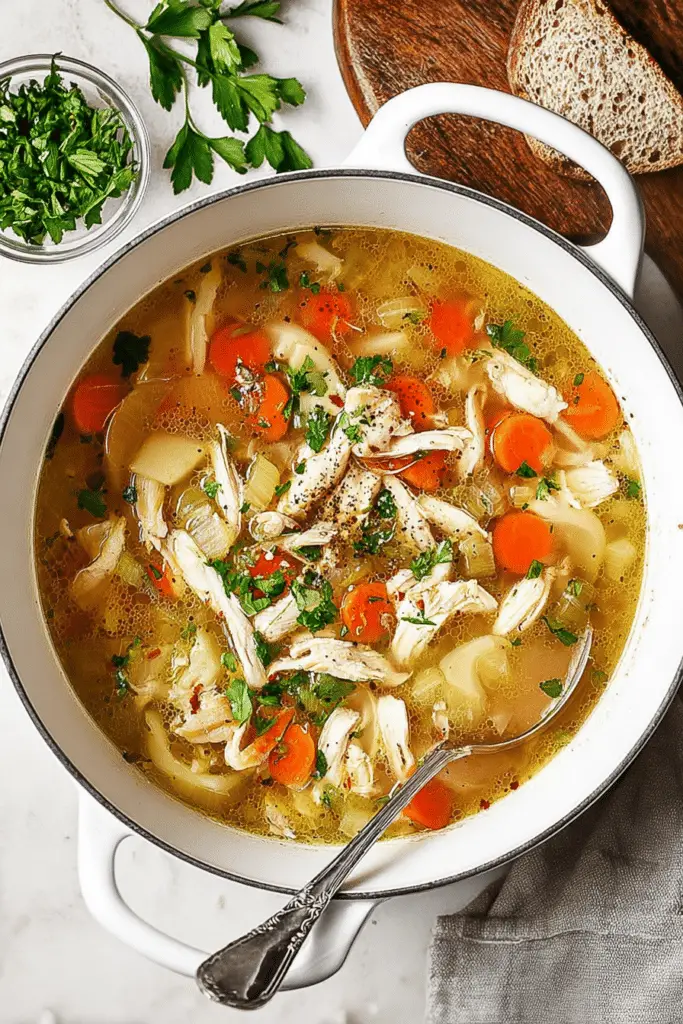
Chicken soup is a cherished dish found in countless cultures around the globe, each bringing its unique twist to this comforting classic. From the rich, hearty versions found in Eastern Europe to the aromatic broths of Southeast Asia, chicken soup has long been revered for its soothing qualities, especially when one is feeling under the weather. The warmth of a bowl of chicken soup often evokes memories of family gatherings, home-cooked meals, and the nurturing love that accompanies them. Many people find that a bowl of chicken soup provides not only physical warmth but emotional solace, reconnecting us with the comforting embrace of home and family traditions.
The universality of chicken soup, combined with its healing properties, is what draws people to it time and again. Whether you serve it on a chilly day, when someone is feeling ill, or simply as a family meal, its ability to provide comfort is unmatched. In this article, we’ll explore the nutritional benefits, the essential ingredients, cooking techniques, creative customizations, and much more.
Nutritional Information and Health Benefits
Chicken soup is far more than just a delicious comfort food; it’s also packed with nutritional benefits. The ingredients commonly found in chicken soup contribute to a wholesome dish that can bolster your health. Let’s break down some of its core ingredients:
- Chicken – The star of the recipe, chicken provides high-quality, lean protein. It’s crucial for muscle strengthening and immune support.
- Vegetables – Carrots, celery, and onions are staples in chicken soup and provide essential vitamins, minerals, and dietary fiber. Carrots are rich in beta-carotene, which supports vision and immune function.
- Herbs – Fresh herbs like thyme and tarragon not only elevate flavor but also bring anti-inflammatory properties to the table. They are known for their potential to aid digestion and enhance overall wellness.
- Broth – Using low-sodium chicken broth allows you to control the salt content while still incorporating hydration benefits. Staying hydrated is crucial for overall health, especially during cold and flu season.
Research indicates that chicken soup may exhibit anti-inflammatory properties beneficial during respiratory infections. Additionally, the warm steam can help alleviate nasal congestion. Overall, chicken soup serves as an excellent source of hydration, nutrients, and rejuvenation during sickness. Whether you’re on a low-carb diet or looking for keto-friendly variations, chicken soup can be adapted easily by focusing on non-starchy vegetables and healthy fats.
Ingredients You’ll Need
Creating the ultimate chicken soup begins with the freshest ingredients. Here’s a breakdown of what you’ll need:
- Extra virgin olive oil – This heart-healthy fat is perfect for sautéing aromatic vegetables while adding depth to the flavor.
- Carrots – Sweet and nutritious, they add flavor and a vibrant hue to your soup while being packed with vitamins.
- Parsnips – These root vegetables contribute a subtle sweetness and earthy flavor that complement the other ingredients well.
- Celery – A key soup ingredient, celery enhances the overall depth and aroma of your dish.
- Onion – Adds a rich base layer of flavor as it caramelizes during cooking.
- Leek – With its mild taste, leek offers a delicate onion-flavor that enriches the soup.
- Garlic – This aromatic adds a savory aroma and is known for its immune-boosting benefits.
- Kosher salt – Enhances the flavors of all ingredients and is essential for bringing the soup together.
- Black pepper – Provides a hint of warmth and complexity.
- Boneless skinless chicken breasts – The main protein source that makes your soup hearty and satisfying.
- Fresh thyme – This herb contributes a beautiful flavor profile, well-known for its aromatic scent.
- Fresh tarragon – Provides a lovely anise-like flavor that complements chicken beautifully.
- Bay leaf – Adds depth and a subtle complexity to the broth.
- Low-sodium chicken broth – The foundation of your soup, helping to meld all flavors together while maintaining a healthy sodium level.
- Fresh parsley – Adds freshness and a pop of color right before serving.
See the recipe card below for the full list of ingredients and measurements.
Step-by-Step Cooking Instructions
Now that you’ve gathered your ingredients, let’s dive into the cooking process. Here’s a detailed, easy-to-follow guide for making the ultimate chicken soup.
- Sauté the Vegetables: Begin by heating a drizzle of olive oil in a large pot over medium heat. Add in the peeled and sliced carrots, parsnips, celery, leeks, and diced onions. Stir frequently for about 4 to 5 minutes until they start to soften. Then, add minced garlic, kosher salt, and freshly ground black pepper, and continue stirring for another minute to let the garlic fragrance fill your kitchen.
- Poach the Chicken: Into the pot, add the chicken breasts, fresh thyme, tarragon, bay leaf, and pour in the low-sodium chicken broth. Bring this mixture to a gentle boil, then reduce the heat to low, covering the pot. Let the soup simmer for about 15 minutes or until the chicken is cooked through.
- Shred the Chicken: Using tongs, carefully remove the chicken breasts to a cutting board. With two forks, shred the chicken into bite-sized pieces. Return the shredded chicken back into the pot and allow it to simmer for an additional 1 to 2 minutes.
- Final Touches: Before serving, carefully remove the herbs – the thyme, tarragon sprigs, and bay leaf from the pot. Stir in the roughly chopped fresh parsley, and taste the soup to adjust seasoning if necessary. You can garnish each bowl with additional parsley and freshly cracked black pepper for added flavor.
After mastering chicken soup, you can try your hand at a comforting dish like creamy chicken and broccoli pasta.
Creative Variations and Customizations
One of the wonderful aspects of chicken soup is how adaptable it can be to various tastes and dietary needs. Here are some creative variations and customizations to inspire your next cooking adventure:
- Asian-Inspired Soup: Add ingredients like ginger, shiitake mushrooms, and bok choy. Wok hei can enhance flavors, and a splash of soy sauce or sesame oil adds authenticity.
- Mediterranean Twist: Substitute chicken broth with vegetable broth for a lighter base. Introduce ingredients like zucchini, bell peppers, olives, and a hint of lemon juice for brightness.
- Low-Carb Version: Focus on leafy greens like spinach or kale instead of starchy vegetables like carrots. This keeps carbs low while adding nutrition.
- Dietary Restrictions: For a gluten-free version, simply ensure the broth and other flavoring ingredients are certified gluten-free. You could also experiment with various herbs and spices to enhance flavors as per personal preferences.
Looking for more soup inspiration? Try our delicious Italian meatball soup for a flavorful twist.
Using Leftovers in Chicken Soup
Embracing sustainability in your cooking often means finding ways to repurpose leftovers creatively. Chicken soup provides an excellent opportunity to make use of leftover chicken and vegetables:
- Leftover Roasted Chicken: Instead of cooking fresh chicken every time, shred leftover roasted chicken and toss it into your soup toward the end of cooking to infuse flavor.
- Vegetables: Any leftover vegetables hanging around in your fridge can easily be added into the pot—think about bell peppers, spinach, or even corn.
- Grains and Pasta: Incorporate leftover rice or cooked pasta to make the soup more filling.
You can also transform leftover ingredients into a delicious hearty beef barley soup.
FAQs About Chicken Soup
To further enhance your understanding and preparation of chicken soup, we’ve compiled some frequently asked questions:
- Can I use leftover chicken for this soup? Absolutely! Leftover chicken works perfectly in this recipe. Just add it in at the end to warm it up and infuse the flavor.
- What can I substitute for parsnips? If you don’t have parsnips on hand, you can easily substitute them with additional carrots or sweet potatoes for a similar sweetness.
- Is this soup freezer-friendly? Yes, this chicken soup freezes well! Just let it cool completely before transferring it to an airtight container. It should keep in the freezer for up to three months.
- What herbs can I use if I don’t have fresh thyme and tarragon? You can use dried herbs instead, but remember to use less since they are more concentrated. Alternatively, Italian seasoning or a mix of dried basil and oregano can also work well!
- How can I make this soup low-carb? To make it low-carb, simply omit the starchy vegetables like carrots and parsnips, and focus on adding more leafy greens like spinach or kale for flavor and nutrition.
Conclusion and Serving Suggestions
At the end of the day, a steaming bowl of chicken soup offers not only nourishment but comfort, warmth, and a taste of home. It’s a dish that invites creativity, whether by using up what’s in the fridge or adapting it to suit individual tastes. We encourage you to make this soup your own and share it with loved ones. Serve your chicken soup alongside crusty bread or a fresh salad for a complete meal that delights the senses!
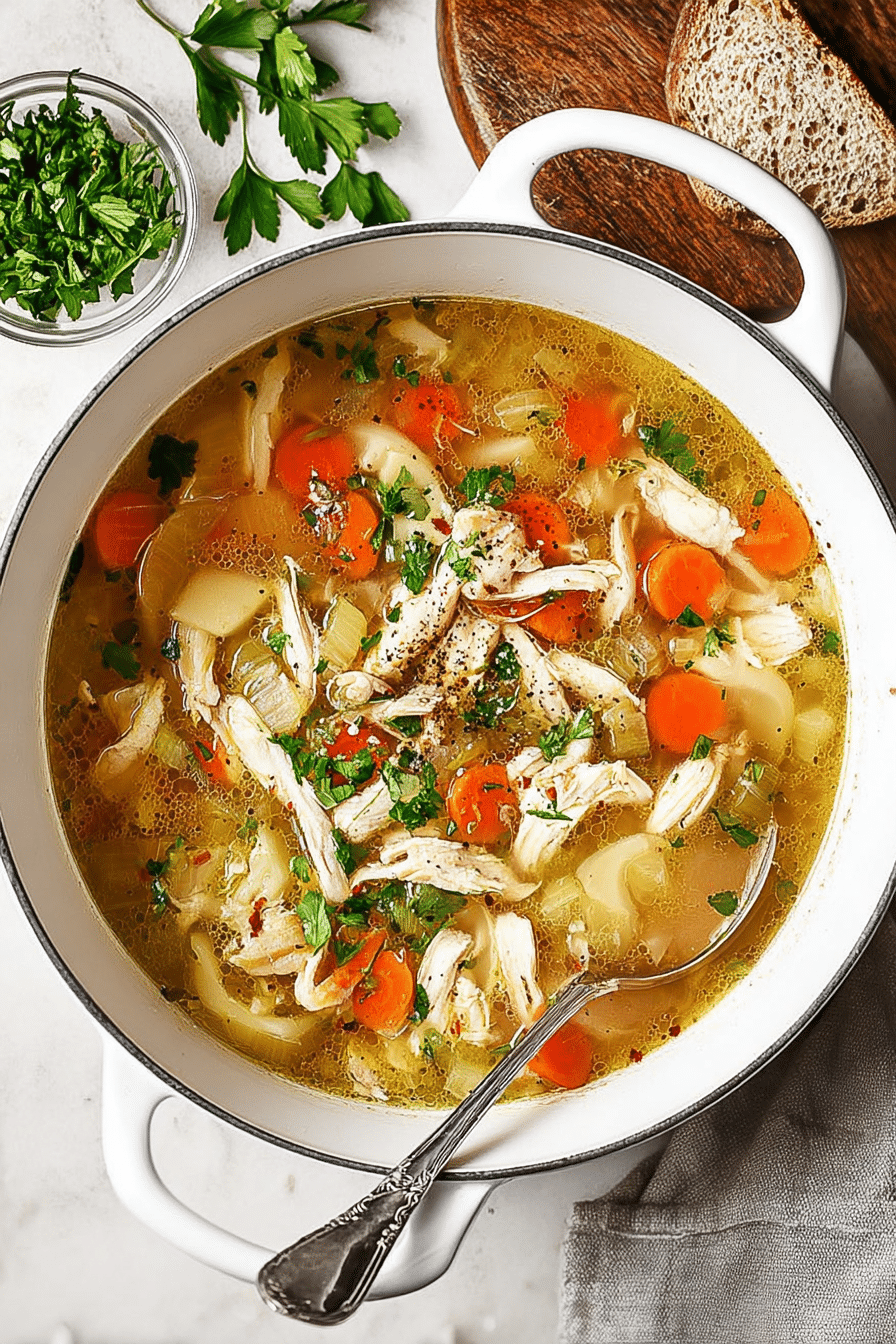
Ultimate Chicken Soup
Ingredients
Method
- Heat the oil in a large pot on medium heat. Add the carrots, parsnips, celery, leek, and onion to the pot and cook for 4 to 5 minutes, stirring frequently. Add the garlic, salt, and pepper, and stir for another minute.
- Add the thyme, tarragon, bay leaf, chicken, and broth. Bring to a boil, then reduce the heat to low and cover the pot. Simmer the soup for 15 minutes, or until the chicken is fully cooked.
- With tongs, remove the chicken to a cutting board and then gently shred the chicken with two forks. Place the shredded chicken back into the pot and simmer for an additional 1 to 2 minutes.
- Remove the sprigs of thyme, tarragon and the bay leaf. Stir in the parsley, and garnish with additional fresh parsley and black pepper before serving.