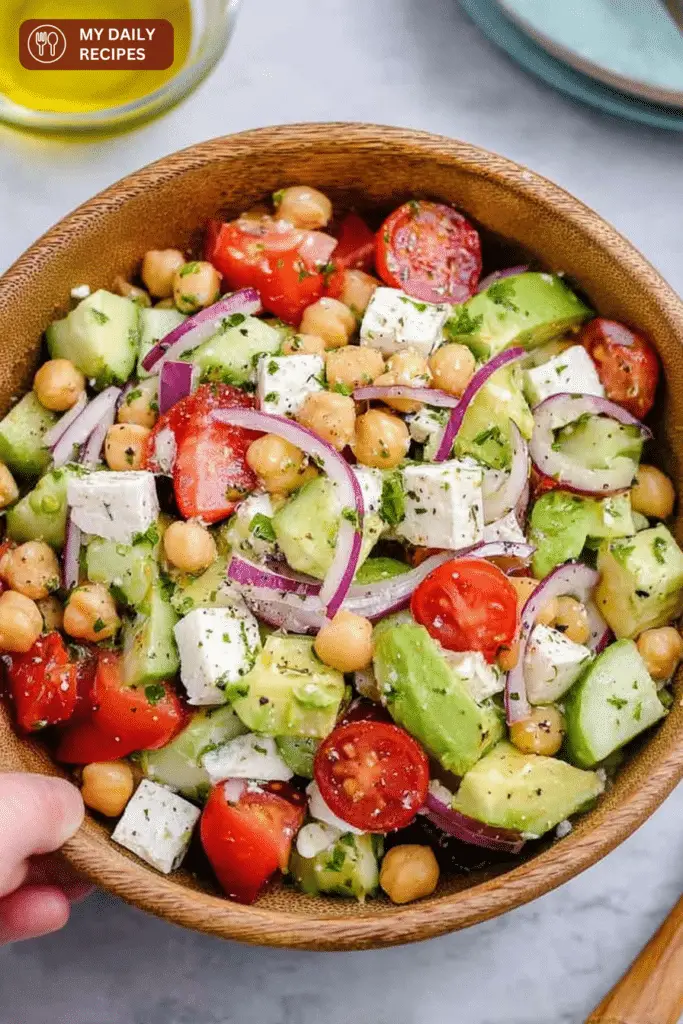
I first threw this chickpea feta and avocado salad together on a humid July evening when I needed something bright, fast, and forgiving — and it stuck with me. The recipe is one of those weekday life-savers I make when I want something that feels fresh but also actually fills you up. In my kitchen it’s become a go-to for packed lunches, a last-minute side for friends, or a quick solo dinner with warm pita on the side. The mix of creamy avocado, briny feta, and firm chickpeas gives you texture in every bite: a little soft, a little chewy, and always satisfying. The lemon-olive oil dressing brings everything together without smothering it.
People are more interested in plant-forward meals than ever, and for good reason: quick salads that actually feel like a meal are invaluable. This chickpea salad fits that bill — it’s protein-packed from the chickpeas, rich from the avocado, and tangy from the feta and lemon. It’s also endlessly adaptable: make it vegan, make it gluten-free, bulk it up with grains, or keep it light and spoon it over greens. Below I’ll share exactly how I make it, the little things I look for in the kitchen, and how to avoid the small mistakes that can turn a simple salad into a soggy one.
Ingredients
- Chickpeas – the hearty backbone; I use canned for speed but will discuss cooking dried if you prefer — they provide protein and body.
- Feta cheese – adds salty tang and creaminess; swap for vegan feta or firm tofu for a dairy-free option.
- Avocado – brings rich, buttery texture; add last to avoid over-mashing and toss gently.
- Cherry tomatoes – for sweet acidity and bright color; you can halve or quarter depending on size.
- Cucumber – cool, hydrating crunch; seed or peel if you prefer less water in the salad.
- Red onion – thinly sliced for a sharp bite; soak briefly in cold water if raw onion is too assertive.
- Cilantro (or parsley) – fresh herb for brightness; parsley is milder if you’re not a cilantro fan.
- Olive oil – the dressing base; use extra-virgin for flavor, not just fat.
- Lemon (juice and zest) – acid that lifts flavors and helps slow avocado browning.
- Garlic – pressed or finely minced for a savory note; one clove is plenty for the lemon-olive base.
- Kosher salt and black pepper – seasoning to taste; a pinch or two of salt brightens the whole salad.
Preparation Steps
I like to work in a large mixing bowl so I can dress and toss without over-handling the avocado.
- Prepare the chickpeas. If you’re using canned chickpeas (what I usually do on weeknights), drain and rinse them well under cold water to remove canned brine. I pat them dry with a towel — moisture is the enemy of a crisp-feeling salad. If you have time and want a nuttier texture, spread drained chickpeas on a baking sheet, toss with a little olive oil and sea salt, and roast at 425°F for 15–20 minutes until the edges are slightly golden and they make a tiny crackle when you bite them. Roasted chickpeas add a lovely contrast, but they change the texture from soft to crunchy, so skip roasting if you want the classic spoonable salad.
- Dice the vegetables. I halve cherry tomatoes and quarter larger ones. For cucumbers, I dice into mid-sized pieces so they don’t overwhelm a forkful — if your cucumbers are watery, scrape out the seeds first or use English cucumbers. Thinly slice the red onion into half-moons; if the onion’s too sharp, plunge the slices in cold water for 5–10 minutes and then drain — it takes the edge off without killing the flavor. When dicing avocado, cut around the pit, twist the halves apart, scoop with a spoon, and cut the cubes while still in the skin so they’re a consistent size. Avoid mashing — the salad should be chunky.
- Mix the dressing. In a small bowl or measuring cup, whisk together a drizzle of olive oil, the zest and juice of a lemon, and a pressed garlic clove. Taste before you add salt; the feta contributes saltiness, so start with a little and increase if needed. The lemon juice acts as both flavor and a mild preservative for the avocado — it slows browning and brightens the whole bowl.
- Combine and toss gently. Add the prepped vegetables, chickpeas, and chopped cilantro to your large bowl. Add the diced feta on top so it doesn’t break up while stirring. Pour the dressing over everything, then fold gently with a large spoon or spatula. The goal is to coat without pulverizing the avocado. You want a salad that’s lightly glossy, not swimming in dressing. I often stop halfway and taste: if it tastes flat, a squeeze more lemon or a pinch more salt usually fixes it — sugar rarely helps savory salads.
- Rest and serve. Let the salad sit for 5–10 minutes at room temperature if possible; this relaxes the flavors and lets the lemon and olive oil marry. If you’re serving later, keep the dressing separate and add avocado right before serving. I like to give it a final sprinkle of fresh herbs and a crack of black pepper just before plating.
What can go wrong? The most common mistakes are over-mashing the avocado, oversalting before tasting, and adding the dressing too early if you’re not eating right away. If the salad comes out bland, add acid first (lemon) then salt. If the avocado is a bit underripe and firm, cube it smaller so it blends better in each bite. If it’s too soft, you can still use it: toss gently and treat the salad more like a creamy mash tossed with chickpeas and feta.
Nutritional Benefits of this chickpea salad
One reason I keep this salad in rotation is how well-balanced it is nutritionally. Chickpeas are an excellent plant protein and a strong source of dietary fiber, which helps you feel full longer. A typical serving from this recipe clocks in around 368 kcal with about 13 g protein, so it’s substantial enough to be a light main or a generous side.
Avocado contributes healthy monounsaturated fats that are good for heart health and help your body absorb fat-soluble vitamins. Feta provides calcium and adds a salty, tangy contrast; choose a reduced-sodium feta if you’re watching salt. Olive oil brings more healthy fats and antioxidants. Cherry tomatoes contribute vitamin C and lycopene, while cucumber offers hydration and a cooling crunch. Altogether, the salad gives you protein, fiber, healthy fat, and a decent amount of vitamins and minerals — a simple, nutrient-dense meal.
Quick nutrition reference from the original recipe estimate: about 368 kcal per serving, 23 g fat, 34 g carbohydrate, and 13 g protein. These numbers will shift if you roast the chickpeas, add a grain like quinoa, or increase the feta.
Meal Prep Tips
For busy weeks I prep elements in advance. Here’s my tested approach that keeps the salad tasting fresh:
- Batch-cook or drain and rinse several cans (or a big pot of dried) of chickpeas, then cool and store them in an airtight container in the fridge. They keep 3–4 days.
- Chop cucumbers, tomatoes, and onion ahead of time and store them in separate containers so they don’t make each other soggy. I put onion in its own jar so its flavor doesn’t migrate too strongly.
- Make the dressing and keep it in a small jar in the fridge. Shake to recombine before using.
- Store diced avocado separately and add only when you’re ready to eat. To prevent browning, toss avocado with a small squeeze of lemon juice and press plastic directly onto the surface in an airtight container.
- If you want the salad as a grab-and-go lunch, assemble chickpeas, veggies, and dressing in a mason jar with the dressing at the bottom — keep avocado and feta on top or in a separate small container so they stay fresh.
If fully dressed with avocado, best eaten the same day. Stored separately (chickpeas, veggies, dressing) it will keep 2–4 days in the refrigerator.
Flavor Variations
I’ve tested many spins on this: some I loved, others less so. Here are the reliable variations that work every time.
- Herbs: Swap cilantro for parsley, basil, or dill depending on the season. Basil makes it sweeter and more summery; parsley is clean and neutral.
- Spices: Add ground cumin for warmth, smoked paprika for depth, or a pinch of chili flakes for heat. I often add a dusting of ground cumin when serving to give a subtle, earthy note.
- Protein additions: Stir in cooked shredded chicken or seared tofu for extra protein. Grilled shrimp also pairs beautifully.
- Grains: Toss with cooked quinoa, bulgur, or farro to make it heartier. Quinoa is my favorite if I’m prepping lunches — it soaks up the dressing and makes the salad more filling.
- Dairy-free/vegan: Use vegan feta or cubes of firm, pressed tofu and consider adding toasted nuts or seeds (pumpkin, sunflower) for the salty bite.
- Dressings: Switch the lemon-olive oil to a lemon-tahini dressing for creaminess, or a red wine vinegar-balsamic vinaigrette for a sharper profile.
Pairing Suggestions
This salad is flexible — think of it as the supporting actor that lifts many mains or as the star on a casual plate. Here are pairings that have worked in my kitchen:
- Grilled chicken or fish: the salad’s acidity cuts through richer proteins.
- Quinoa or rice bowls: use the salad as a flavorful topping for a balanced grain bowl.
- Warm pita or flatbread: scoop the salad into warm folds for a sandwich-like experience.
- Roasted vegetables: pair with caramelized eggplant or roasted bell peppers for a Mediterranean spread.
- On a bed of greens: make it into a composed salad with spinach or arugula for extra volume.
Conclusion
If you’re looking for a salad that’s quick, nourishing, and adaptable, this chickpea feta and avocado salad is worth a regular spot in your week. It’s easy to make, forgiving of imperfect produce, and satisfying enough to be a meal on its own or a bright side dish. Try the base version first, then tweak with herbs, spices, or an extra protein depending on what you have in the fridge. If you make it, I’d love to hear how you changed it — leave a note about your favorite tweak so others can try it too.
FAQ
Can I make this salad vegan?
Yes — swap the feta for a vegan feta or firm tofu, or add toasted nuts/seeds for bite. The olive oil–lemon dressing works the same.
How long will the salad keep in the fridge?
If fully dressed with avocado, best eaten the same day. Stored separately (chickpeas, veggies, dressing) it will keep 2–4 days; add avocado just before serving.
Can I use dried chickpeas instead of canned?
Yes. Soak overnight and simmer 1–1.5 hours until tender (or pressure cook ~25–30 minutes). Drain, cool, then use as in the recipe. Cooking dried chickpeas gives a slightly creamier interior and is a bit more economical.
How do I prevent the avocado from browning?
Toss avocado with a little lemon juice, store it separately in an airtight container with plastic wrap pressed to the surface, and add to the salad right before serving.
What pairs well with this chickpea feta and avocado salad?
Serve it with grilled chicken or fish, over quinoa or rice bowls, with warm pita, or alongside roasted vegetables for a balanced meal.
Thanks for reading — give this recipe a try and let me know what you changed. I test a lot of salads, and this one is a keeper because it’s fast, flexible, and actually tastes like something I want to eat again the next day.
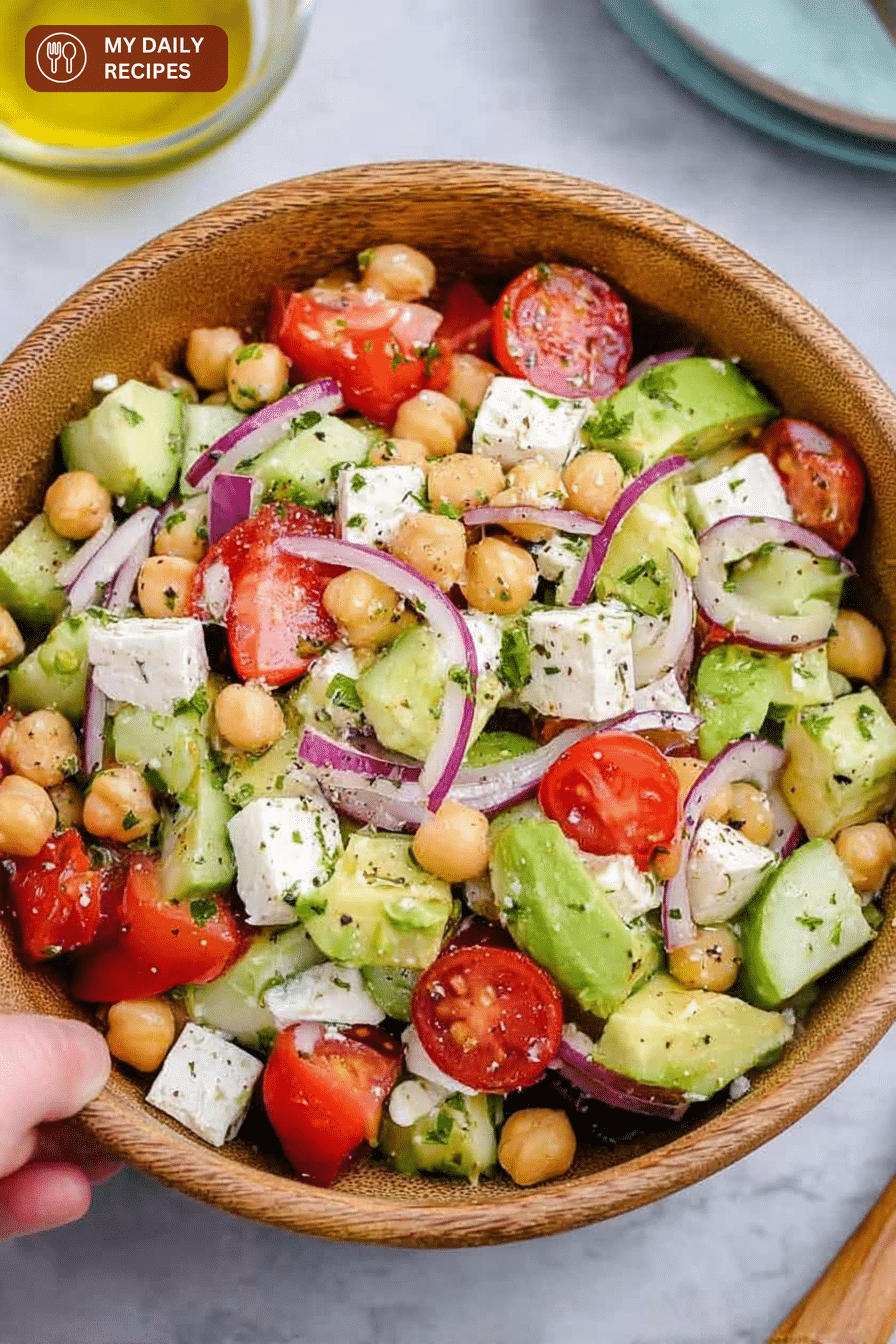
Chickpea Feta and Avocado Salad
Ingredients
Method
- In a large bowl add all the prepped vegetables together with the cilantro and chickpeas.
- Add the cubed feta cheese and drizzle with olive oil.
- Stir in the lemon zest, juice, and garlic, and season to your taste.