- Prep
- 30 min
- Cook
- 15 min
- Total
- 45 min
- Serves
- 15
- Calories
- 153 kcal
Introduction
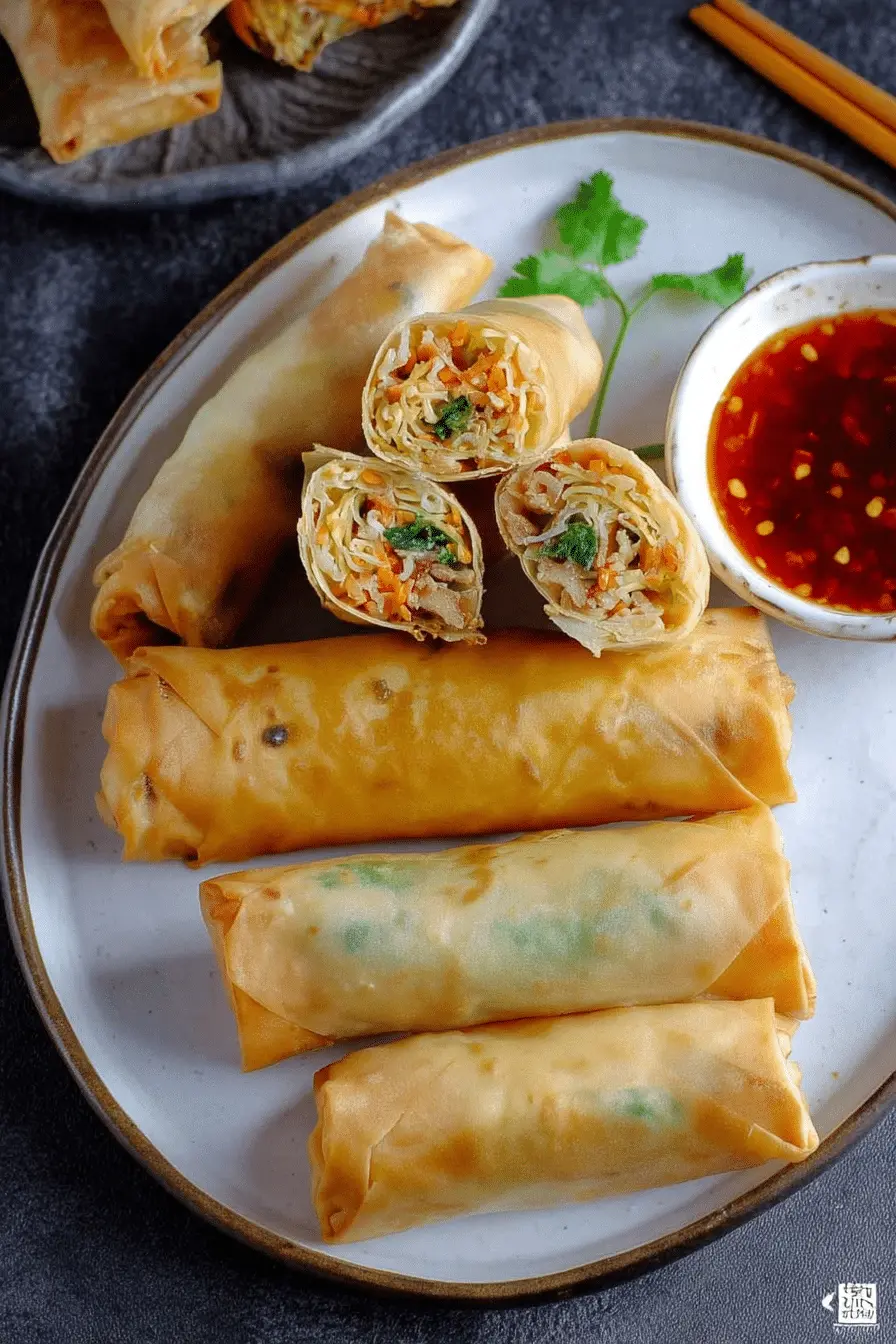
I still remember the first time I rolled a batch of Chinese spring rolls that didn't collapse into a soggy mess — it felt like unlocking a little domestic superpower. Spring rolls are one of those foods that travel: from a humble street snack to the center of a Lunar New Year spread, they show up wherever people want something crispy, hand-held, and comforting. Historically, spring rolls started as a seasonal treat celebrating the arrival of spring; over time, they evolved into countless regional versions across China and then the world, adapting fillings, wrappers, and cooking styles to local tastes. In my kitchen these spring rolls are a weekday lifesaver and a party trick. I make them both deep-fried for an indulgent weekend or air-fried when I want less oil but still crave that satisfying crackle. Over the years I’ve tweaked filling ratios, tried vegetarian swaps, and learned a few things the hard way (like what happens when you overstuff a wrapper). This post collects what I actually do in the kitchen — sensory notes, things that can go wrong, and practical fixes — so you don’t have to learn by burning a few rolls like I did the first time.Ingredients You'll Need for Homemade Chinese Spring Rolls
- Spring roll wrappers – thin flour-based sheets that become golden and crispy when fried; keep them covered with a damp cloth so they don't dry out.
- Ground pork (or chicken/beef) – adds savory richness and umami; you can omit for vegetarian versions or swap for ground tofu.
- Shrimp – diced, for sweet, briny contrast against the pork and vegetables; optional but lovely.
- Carrot – grated for sweet texture and color; holds moisture so grate finely and press out excess if you want extra crispness.
- Bean sprouts – offer juiciness and crunch; pat them dry before mixing so the filling isn't watery.
- Chinese chives (or cabbage) – sharp, grassy flavor from chives; cabbage is a great substitute and adds bulk.
- Shiitake mushrooms – earthy, meaty depth; rehydrate dried ones if necessary and slice thin.
- Mung bean vermicelli – light strands that soak up flavor and add a tender bite when cut into short sections.
- Egg – used in the filling for binding and keep one yolk to seal the wrapper with a glossy finish.
- Oyster sauce and light soy – the backbone for savory seasoning; mushroom-based versions work for vegetarian rolls.
- Sesame oil – a little goes a long way for aroma; finish the filling with a drizzle for that toasty note.
- Salt, sugar, pepper – basic seasoning to balance flavors; taste the filling before assembling if you cooked a spoonful.
- Cooking oil – neutral oils with a high smoke point are best for deep-frying; brush a little oil on rolls before air-frying for a crisp result.
- Vinegar, garlic, fresh chili – for a quick dipping sauce; bright acid helps cut through the fried richness.
Preparation Steps
Below I walk you through making a tested batch that yields about 15 large rolls. This is how I cook them in real life: hands-on, with a damp towel, and a bowl nearby for scraps.- Defrost and prep: If your wrappers came frozen, defrost them in the fridge the night before. Lay them flat on the counter and keep them covered with a damp kitchen towel while you assemble — they dry and tear fast.
- Mix the filling: In a large bowl combine the ground meat (I use pork), cubed shrimp, grated carrot, bean sprouts, sliced shiitake mushrooms, chopped Chinese chives (or finely shredded cabbage), and rehydrated mung bean vermicelli cut into short sections. Add two eggs to bind most of the filling, but reserve one egg yolk for sealing. Season with a couple of tablespoons of oyster sauce, a splash of sesame oil, a little light soy for saltiness, a pinch of sugar to round out the savory, and a dash of white or black pepper. Mix thoroughly — I usually do this with gloved hands so the ingredients are evenly distributed and I can feel the texture. If the mixture feels too wet, squeeze out a little liquid from the bean sprouts or add a tablespoon of breadcrumbs or a bit more vermicelli.
- Assemble: Gently separate wrappers one at a time. Place one wrapper on a clean surface with a corner pointing toward you. Spoon about 3 tablespoons of filling near the corner and shape it into a short log. Fold the corner over tightly, roll to the center, fold the left and right flaps in toward the middle, then finish rolling into a tight cylinder. Brush the remaining egg yolk on the exposed edge and press to seal. Try not to overfill — you want a snug cylinder with no air pockets. Overfilling is one of the most common mistakes; the wrapper will tear while frying or the roll won't seal properly.
- Storage before cooking: If you're not cooking right away, line the assembled rolls on a tray and freeze them in a single layer. Once frozen solid, transfer to an airtight bag and freeze up to 3 months. This step saves time and prevents the wrappers from becoming sticky together.
Cooking Methods: Deep-Frying vs. Air-Frying
There are two reliable ways to cook these spring rolls. I use both depending on time and health considerations. Each has trade-offs: deep-frying yields unbeatable crispiness; air-frying gives a lighter result with much less oil.- Deep-Frying (traditional) — Heat a pot of neutral oil until it hits roughly 180°C/350°F. Fry in batches; don't overcrowd the pot or the oil temperature will drop and rolls will absorb excess oil. Fry over medium heat and turn the rolls a couple of times so they brown evenly; when they’re golden, remove them to a tray lined with kitchen paper to drain. Expect the process to take about 3–4 minutes per batch depending on size. One tip I learned: monitor oil temperature with a thermometer. If the oil is too hot the wrapper will brown too quickly and the filling may not heat through; too cool and the rolls will be greasy.
- Air-Frying (healthier) — Preheat the air fryer to 200°C/390°F for a few minutes. Brush a thin layer of oil around the rolls — this helps the wrapper brown evenly. Place in a single layer with some space between them and cook for 8–10 minutes, flip, and finish with another 4–6 minutes until golden and crisp. Air-fried rolls take a touch longer and don't blister the same way deep-fried ones do, but they’re impressively close when you brush them with oil and don't overcrowd the basket.
Tips for Perfectly Crispy Spring Rolls
I’ve tested variations and these are the steps that consistently worked in my kitchen — from wrapper handling to final frying. They come from making these dozens of times and repairing mistakes along the way.- Dry fillings mean crisper rolls – Squeeze excess moisture from grated vegetables and sprouts. If the mixture seems watery, a tablespoon of cornstarch or a handful of soaked and squeezed vermicelli helps bind without adding weight.
- Keep wrappers covered – A damp towel is your best friend. They dry out and crack in minutes; that’s how tears happen during rolling.
- Tight, not stuffed – Roll snugly to remove air pockets; air pockets expand in hot oil and can burst the wrapper.
- Seal properly – Use the reserved egg yolk or a little flour-water paste for a reliable seal. If a roll opens while frying, remove it quickly and press the torn edge with a slotted spoon, then finish frying gently.
- Temperature control – Maintain oil at around 180°C/350°F for deep-frying; too hot = burnt outside, too cool = oily rolls.
Healthy Filling Variations
Spring rolls are a great vehicle for healthy, colorful fillings. I rotate through these depending on what’s in my fridge:- Vegetable-forward – Finely shredded cabbage, carrots, shiitake mushrooms, bean sprouts, and scallions. Add a little tofu crumbled in for protein.
- Shrimp and veg – Shrimp gives a sweet bite; pair with leeks, mung bean vermicelli, and a touch of sesame oil.
- Tofu & edamame – Pan-pressed tofu crumbled and sautéed with edamame, bell pepper, and garlic for a high-protein vegan option.
- Grain boost – Mix in cooked quinoa or brown rice to make the rolls more filling and to add chewiness.
Dipping Sauce Ideas
Sauces transform the experience. Here are a few I reach for depending on my mood.- Classic sweet chili – Sweet, tangy, and gently spicy; perfect for most spring rolls.
- Garlic soy – A quick mix of light soy, minced garlic, rice vinegar, and a pinch of sugar; punchy and bright.
- Spicy peanut – Peanut butter thinned with warm water, chili oil, a splash of soy, and lime juice for tang.
Storing and Reheating Spring Rolls
Practical notes from the kitchen: if you're planning ahead, assemble and freeze. I keep a tray of frozen rolls in the freezer and pull them straight into hot oil — no defrosting needed. For deep-frying, increase oil temperature slightly (to around 190°C/375°F) so the frozen roll cooks through without absorbing oil. If air-frying from frozen, add a few minutes to the cooking time.- Uncooked rolls – Freeze single-layer on a tray, then transfer to an airtight bag. They keep up to 3 months.
- Cooked rolls – Store in an airtight container in the fridge for up to 3 days. They’re best reheated in an oven or air-fryer to re-crisp.
- Reheating – Oven at 200°C/390°F for about 10 minutes, flipping halfway; or air-fryer at 200°C/390°F for roughly 5 minutes. Avoid microwaving unless you don’t mind a softer wrapper.
Conclusion and Final Thoughts
Making Chinese spring rolls at home is a joyful, hands-on process. Expect a little trial and error the first few times — especially with rolling tightness and moisture control — but once you find the rhythm it becomes a meditative, almost weekend ritual. I like to make a big batch, freeze half, and serve the rest warm with a trio of dipping sauces for family movie night. If you try the air-fryer route, brush with oil and be patient; the results surprise you. If you make these, leave a note about how you adapted the filling or which dipping sauce won your table. I test and cook for real in my kitchen, and hearing your tweaks is the best part.FAQ
What is usually in a Chinese spring roll? Chinese spring rolls typically contain a mix of vegetables like carrots, bean sprouts, bamboo shoots, and mushrooms, often combined with ground meat like pork or shrimp for added flavor. Can I make Chinese spring rolls vegetarian? Absolutely! You can replace the meat with extra vegetables like zucchini, bell peppers, or mushrooms, and even add tofu for protein. What's the best way to store leftover spring rolls? To store cooked spring rolls, keep them in an airtight container in the fridge for up to 3 days. For uncooked rolls, you can freeze them in a sealed bag for up to 3 months. How do I ensure my spring rolls stay crispy after cooking? To maintain their crispiness, make sure to avoid overcrowding in the frying pan or air fryer, and consider reheating them in the oven or air fryer instead of a microwave, which can make them soggy. What dipping sauces pair well with spring rolls? Spring rolls are delicious with a variety of dipping sauces! Try sweet chili sauce, garlic soy sauce, or a spicy peanut sauce to enhance your flavor experience. Recipe notes and timings referenced in the preparation and cooking sections follow a tested approach yielding about 15 large rolls, using a combination of minced pork, shrimp, carrots, bean sprouts, chives (or cabbage), shiitake mushrooms, mung bean vermicelli, eggs, oyster sauce, sesame oil, and seasoning. Deep-fry at 180°C/350°F; air-fry at 200°C/390°F as noted above. Leftovers and freezing instructions are included in the storage section.Recipe Card
Easy Chinese Spring Rolls: A Must-Try Recipe for Any Occasion
- Prep
- 30 min
- Cook
- 15 min
- Total
- 45 min
- Serves
- 15
- Calories
- 153 kcal
Ingredients
- 15 largeflour-based spring roll wrappers ((25×25cm (10×10 inches)))
- 200 gminced pork (or chicken/beef) ((7oz))
- 120 gshrimp, shelled and cubed ((4oz))
- 120 gcarrot, grated ((about 2 cups))
- 130 gbean sprouts ((about 2 cups))
- 100 gChinese chives, cut into sections ((or finely shredded cabbage) (about 2 cups))
- 6shiitake mushrooms, thinly sliced ((rehydrate beforehand if using dried ones))
- 2 stalksscallions, finely chopped
- 100 gdried mung bean vermicelli, rehydrated and cut into sections ((about 2 cups after soaking))
- 2eggs
- 2 tablespoonoyster sauce ((see note for substitutes))
- 1 teaspoonsesame oil
- ½ teaspoonsalt
- ½ teaspoonsugar
- ¼ teaspoonground white or black pepper
- for fryingCooking oil ((for deep frying or air-frying))
- 2 tablespoonwhite rice vinegar ((or fresh lemon/lime juice))
- 1 teaspoonlight soy sauce
- 1 pinchsugar
- 1 clovegarlic, minced
- to tasteFresh chili pepper, finely chopped
Instructions
- 1
Defrost spring roll wrappers in the fridge the night before.
- 2
Combine all filling ingredients in a bowl, mixing well. Set aside.
- 3
Prepare wrappers one at a time, covering remaining with a damp cloth.
- 4
Roll the filling in the wrappers and seal with egg yolk.
- 5
Deep fry or air fry until golden brown.
- 6
Serve warm with dipping sauce.
You might also like

Reviews
Be the first to review this.