- Prep
- 10 min
- Cook
- 40 min
- Total
- 50 min
- Serves
- 6
- Calories
- 292 kcal
- Protein
- 1.00 g
- Carbs
- 22.00 g
- Fat
- 23.00 g
Introduction
Monkey bread is one of those nostalgic, sticky-sweet treats that crowds gather around and kids go back for seconds of without thinking. I’ve been making a version of this for years when I want something that feels festive but actually comes together with minimum fuss — biscuit dough, a buttery cinnamon-sugar coating, and a molten center that pulls apart in messy, satisfying bites. It’s a party in the oven: the smell of butter and cinnamon fills the kitchen, the top crisps and turns a deep golden, and the inside stays pillowy-soft. I first started making monkey bread when I needed a hands-off brunch item that still felt indulgent. The first time I made it in a bundt pan my partner declared it "better than cinnamon rolls," mostly because people can grab pieces without a fork and there’s less slicing drama. Over time I refined a few things — how I roll the biscuit pieces, how much butter to pour, when to add the glaze — and those little choices are what make a reliable, crowd-pleasing loaf. This post walks you through the classic, easy method, plus ways to customize and troubleshoot if your loaf doesn’t cooperate.Ingredients for Easy Monkey Bread
Below are the basic ingredients you’ll need. I talk about healthier swaps after the list so you can choose what fits your kitchen and taste.- Biscuit dough – the shortcut that makes this easy; canned biscuits are forgiving and rise nicely in the pan.
- Brown sugar – brings warmth and stickiness; it caramelizes with the butter for that classic gooey crust.
- Granulated sugar – mixed with cinnamon to coat each piece for texture and bite.
- Cinnamon – the backbone of the flavor; you can increase or decrease depending on how “spicy” you like it.
- Butter – melts into the pan and soaks the layers; it’s the primary fat that gives richness and shine.
- Powdered sugar – used for a simple glaze that smooths the top and adds a sweet finish.
- Milk – thins the glaze to a pourable consistency.
- Optional add-ins – things like chocolate chips, nuts, or fruit can be folded into layers for variety.
Step-by-Step Instructions
This is the step-by-step method I use; I tested it in a deep-dish loaf and a bundt pan to make sure the times and cues work. This yields about six servings — plenty for a family brunch or a small potluck.- Prepare the dough pieces: Open the cans of biscuit dough and break the biscuits into small balls. I usually make them about the size you can hold in a tablespoon — roughly 3 tablespoons of dough per ball if you want uniform pieces. The dough should be cool and easy to handle; if it’s sticky, dust your hands with a little flour or lightly oil them.
- Make the cinnamon-sugar bowl: In a medium bowl combine the cinnamon with the granulated sugar and stir to blend. Taste a tiny pinch (yes, I taste it) — you want the cinnamon to be present but not overpowering.
- Coat the dough: Roll each dough ball in the cinnamon-sugar mixture until fully coated. This is a satisfying step — the dough should have an even speckled look and feel slightly sandy from the sugar. If a piece looks sloppy, roll it again so the sugar forms a thin crust; this helps create the signature crackly surface after baking.
- Layer in the pan: Grease the inside of a deep-dish loaf pan or bundt pan (butter or cooking spray both work). Add a single layer of the coated dough balls to the bottom, then sprinkle about half of the brown sugar over that layer. Add a second layer of coated dough balls and sprinkle the remaining brown sugar over the top. Depending on the pan and biscuit size, you should have two layers; if your biscuits are smaller or you’re using a different pan you might have an extra piece or two — that’s fine.
- Butter bath: Melt the butter and pour it evenly over the dough before baking. The butter should be warm and fully liquid so it seeps between the layers. A trick I use sometimes is to heat the butter with a splash of vanilla for extra aroma; this step matters because the butter dissolves the brown sugar and creates the caramel pockets.
- Final sprinkle: Dust a little of the leftover cinnamon-sugar mix over the top so the first bites are immediately flavorful.
- Bake: Slide the pan into a preheated 350°F oven and bake for about 45 minutes. The exact time depends on the biscuit brand and the pan — I watch for a deep golden top and a toothpick inserted through the center that comes out clean. If the top is browning too quickly but the center isn’t set, tent loosely with foil for the remaining time.
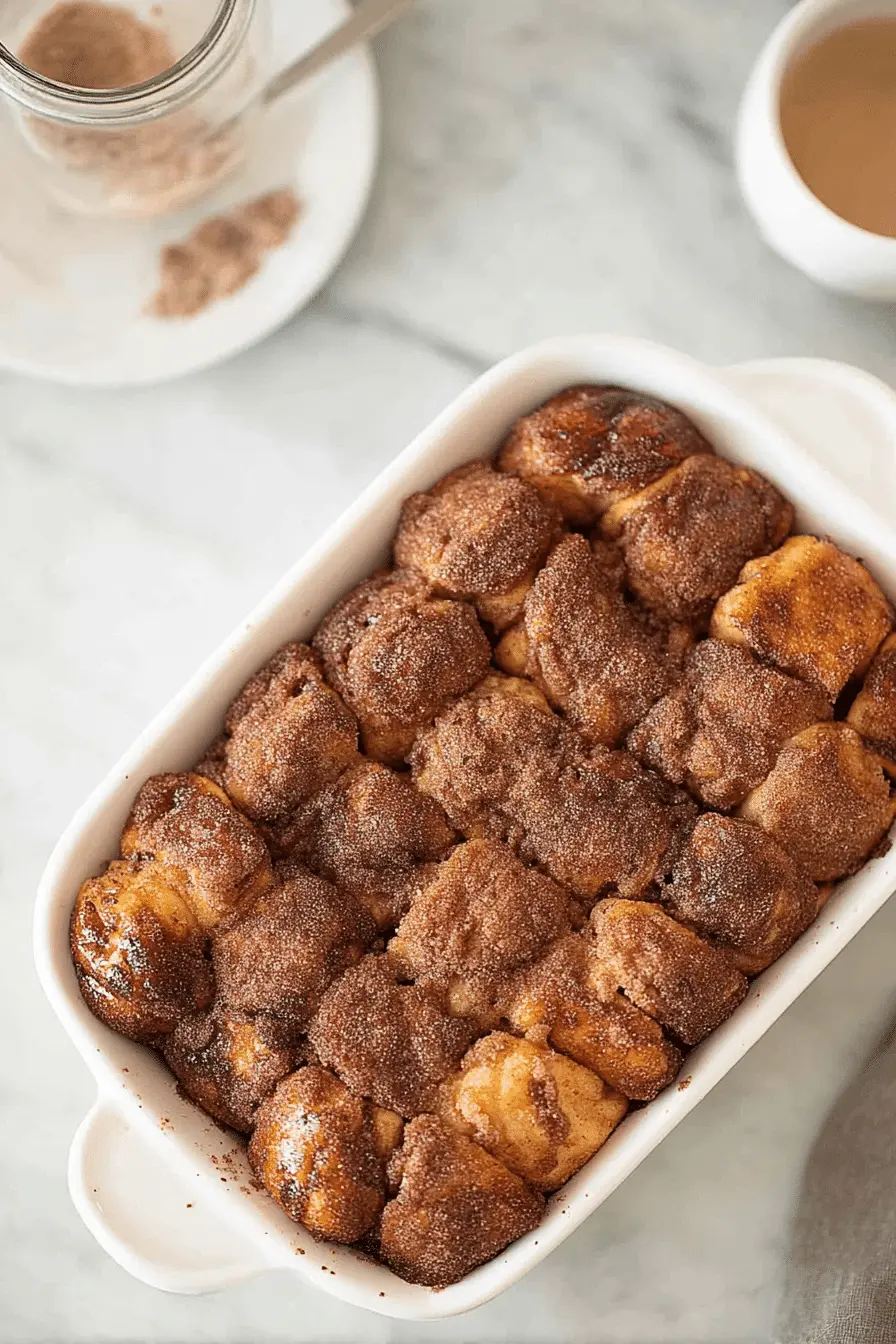
- Glaze and serve: While it cools for a few minutes, whisk the powdered sugar with a tablespoon of milk to make a smooth glaze. Drizzle it over the warm loaf so it melts into nooks. Serve warm; it’s best eaten fresh so the pieces pull apart easily and the interior stays soft.
Tips for Perfect Monkey Bread
- Don’t overcrowd the pan — dough needs a little room to expand. If you cram too many balls in, the center can stay doughy.
- Watch the sugar-to-butter ratio. Too much butter can pool and make the bottom soggy; too little and the bread dries out. If you prefer less butter, reduce to half a stick and increase baking time slightly while keeping an eye on doneness.
- When the top is golden but a toothpick still shows wet crumbs, lower oven temperature by 25°F and finish baking so the sugar caramelizes without burning.
- If your top browns quickly, tent foil over the pan for the last 10–15 minutes. This prevents a charcoal top while letting the center finish.
- Gooey center tip: a slightly underbaked center that firms as it cools is preferable to an overbaked dry center. It will set in the first 10–15 minutes after you take it out.
- Use fresh biscuits. Expired or stale dough doesn’t rise properly and can lead to dense monkey bread.
- For perfectly portioned balls, use a small cookie scoop so pieces are even — this helps the loaf bake uniformly.
Creative Variations and Add-Ins
If you want to play with flavor, monkey bread is incredibly forgiving. You can fold bits of chocolate, fruit, or cream cheese into the layers and still get a reliably tasty result. If you're looking for an exciting twist, try our pizza monkey bread.- Chocolate chip monkey bread — tuck mini chips between the layers so they melt into pockets. Use semi-sweet for balance with the sugar.
- Blueberry or berry-studded — toss fresh berries lightly in flour before adding to avoid too much juice; frozen berries work but thaw and drain first.
- Pumpkin-spice fall version — add pumpkin pie spice to the cinnamon-sugar and swap a little of the butter for canned pumpkin for seasonal depth.
- Nutty crunch — sprinkle toasted pecans or walnuts between layers for texture. Add them last so they don’t burn in the oven.
- Cream cheese pockets — place small spoonfuls of sweetened cream cheese in the center of some dough balls for a surprise tangy bite.
Making Monkey Bread Healthier
It’s easy to lighten the loaf without losing the feel of a pull-apart treat. The most straightforward swaps are using whole-grain or gluten-free biscuit dough, cutting the butter slightly, or swapping part of the sugar for a natural sweetener. For a seasonal touch, you can substitute some ingredients to create a pumpkin flavor reminiscent of our pumpkin cheesecake.- Gluten-free: use a reliable gluten-free biscuit dough and check for doneness a little earlier — GF dough behaves differently and can brown faster.
- Dairy-free: use a plant-based butter and a non-dairy milk in the glaze; the texture will be nearly identical if the butter you choose has a similar water-fat ratio.
- Lower sugar: reduce the granulated sugar mixture slightly and rely on flavorful spices (cinnamon, nutmeg) to add depth. You can replace some brown sugar with coconut sugar for a lower-GI option, though color and flavor change slightly.
- Fat swap: replace up to half of the butter with unsweetened applesauce — it keeps the loaf moist but the crust will be less glossy and slightly less rich.
Storage and Reheating Tips
Monkey bread is best fresh, but it keeps well if stored correctly. Leftovers should be cooled completely, then stored in an airtight container at room temperature for up to 2 days or in the refrigerator for up to 4 days. To reheat, I recommend the oven for best texture: wrap in foil and heat at 325°F for 10–15 minutes until warmed through. The microwave works in a pinch (20–30 seconds per serving), but you’ll lose some of the outer crisp and it can make the interior too soft. If reheating from chilled, give it a few extra minutes in the oven so the center warms without drying out. Pro tip: if the glaze has set and looks dull after storage, warm the loaf briefly and brush on a little extra melted butter and a thin drizzle of glaze to refresh the shine and flavor.Nutritional Information
For the standard recipe as written, expect approximately 292 calories per serving with around 23 g fat, 22 g carbohydrate, and 1 g protein. That estimate comes from the classic ingredient list (canned biscuits, butter, sugars, glaze) and assumes the recipe yields six servings.- Calories (per serving): ~292 kcal
- Fat: ~23 g
- Carbohydrates: ~22 g
- Protein: ~1 g
Conclusion and Serving Suggestions
Monkey bread is versatile and forgiving — a true comfort-baking winner. Serve it warm with coffee for breakfast, bring it to a potluck where people can pull pieces off and share, or plate it with a small bowl of fruit dip for parties. It’s also a fun recipe to involve kids with since rolling and coating the dough is hands-on. For dessert enthusiasts, pairing monkey bread with a slice of cinnamon roll cake could be a delightful experience. Try different combinations, keep notes on what you liked best, and don’t be afraid to make the recipe your own. If you make it for a crowd, give yourself an extra pan: it disappears fast.FAQ
What can I use instead of a bundt pan for monkey bread? You can use a loaf pan or muffin tin to bake monkey bread. Just keep an eye on the baking time and check for doneness with a toothpick! Can monkey bread be made in a 9x13 pan? Absolutely! A 9x13 pan works well. Just make sure it's large enough for the biscuits to expand, and you may need to adjust the baking time. How do I know when my monkey bread is done baking? The monkey bread is done when it’s golden brown on top. You can also check with a toothpick—if it comes out clean, it’s ready! Can I make monkey bread healthier? Yes! You can use whole grain biscuits, reduce the sugar, or even make it gluten-free using suitable alternatives to keep it delicious and lighter. What should I do with leftovers? Store leftover monkey bread in an airtight container. To reheat, use the oven for best results, which helps maintain moisture and flavor.Recipe Card
Easy Monkey Bread Recipe: The Ultimate Gooey Treat for All
- Prep
- 10 min
- Cook
- 40 min
- Total
- 50 min
- Serves
- 6
- Calories
- 292 kcal
- Protein
- 1.00 g
- Carbs
- 22.00 g
- Fat
- 23.00 g
Ingredients
- 2 cansbiscuit dough
- 1/4 cupbrown sugar
- 1/8 cupground cinnamon
- 1/4 cupsugar
- 3/4 cupbutter
- 1/4 cuppowdered sugar
- 1 tbspmilk
Instructions
- 1
Break the biscuits into small balls of dough.
- 2
Roll the dough into small balls, about 3 tablespoons per ball.
- 3
Grease an entire deep-dish loaf pan with butter or cooking spray.
- 4
Combine cinnamon and sugar in a medium bowl and stir.
- 5
Roll each dough piece in the cinnamon mixture.
- 6
Add a single layer of dough balls to the bottom of the pan and sprinkle with brown sugar.
- 7
Create a second layer of dough balls and sprinkle with remaining brown sugar.
- 8
Melt the butter and pour it over the dough.
- 9
Sprinkle any leftover cinnamon and sugar mixture on top.
- 10
Bake in a 350°F oven for about 45 minutes, until golden brown.
- 11
For the glaze, mix powdered sugar with milk until smooth and pour over monkey bread before serving.
You might also like

Reviews
Be the first to review this.