- Prep
- 10 min
- Cook
- 20 min
- Total
- 30 min
- Serves
- 4
- Calories
- 120 kcal
- Carbs
- 10.00 g
Introduction
I first tried radish hummus after watching my neighbor mash a bowl of spicy red slices into something creamy at a summer block party. I was skeptical — radishes had always been the crunchy, peppery garnish of my childhood — but one spoonful convinced me. The crisp heat of the radish against tahini and lemon felt unexpectedly refreshing, and I loved how fast it came together in my kitchen.
Since then I’ve made this dip when I need a healthy snack in a hurry or when friends pop over for drinks. It’s one of those recipes where a simple blender and everyday pantry staples turn a humble vegetable into something spoonable and shareable. I like the bright color it brings to a plate and the way the lemon and garlic perfume the kitchen within minutes.
In my kitchen this hummus is a go-to when I want something light but satisfying: it’s low-calorie, high in fiber, and the texture is silky if you follow a couple of easy steps. I’ll walk you through the small techniques that make a big difference — and include a few ways to use the whole radish, so nothing goes to waste.
Make a batch, chill it for a bit, and you have a colorful dip ready for veggies, pita, or sandwiches — and if you like to plan ahead, it keeps well in the fridge for several days.
Why Fresh Radish Hummus Is the Quick, Healthy Snack You Need
Radishes are naturally low in calories and high in fiber and water, which helps this dip feel light but filling. The prep time is minimal: a quick slice and a short blitz in the blender gets you most of the way there, so this recipe fits into busy afternoons or last-minute get-togethers. Using pantry staples like tahini, olive oil, lemon, and garlic means you probably won’t need a special grocery run to make it.
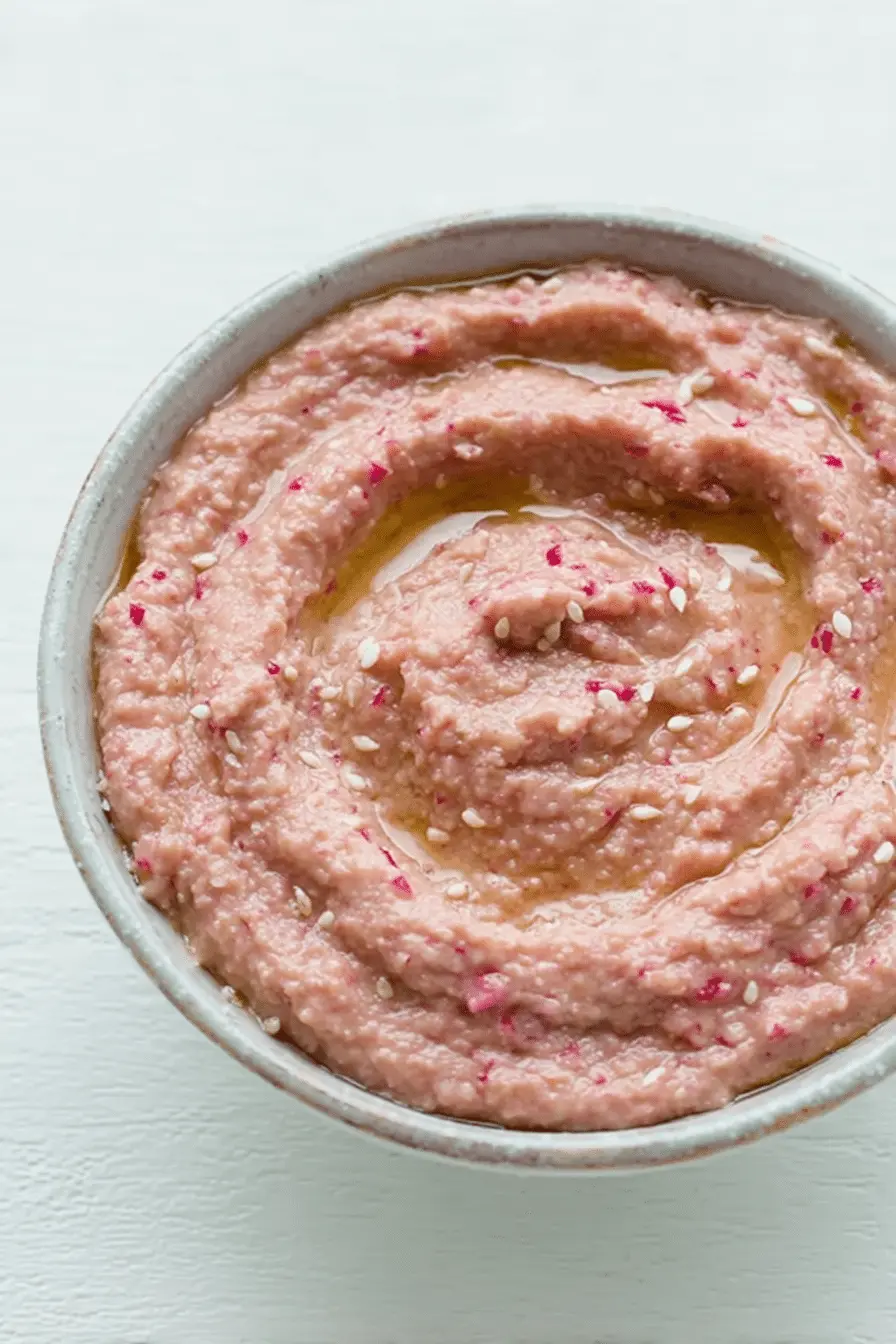
Imagine the lively pink-specked hummus sitting on a platter, the lemon cutting through the peppery radish, and the faint roasted-garlic aroma tempting your first scoop — quick, health-forward snacking without sacrificing flavor. This section focuses on the specifics: what each element brings to the bowl and why the technique matters for texture and taste.
Everything You Need for Fresh Radish Hummus
Below I’ll describe the role of each ingredient so you understand why it’s there and how to tweak it for your pantry or dietary needs. These notes avoid exact measurements and focus on purpose and substitutions.
- Radishes – The star: they provide a bright, peppery bite and hydration. Use them fresh for the best crunch and color.
- Tahini – Adds creaminess and a nutty, slightly bitter depth that balances the radish’s heat. Can be swapped for seed butter for nut-free versions.
- Lemon juice – Brings acidity to brighten flavors and lift the hummus; it also helps keep the color lively.
- Garlic – Provides savory backbone and aroma; adjust to taste depending on how forward you want the garlicky note.
- Sea salt – Enhances sweetness and balances peppery edges; season progressively and taste as you go.
- Olive oil – Adds richness and smoothness; emulsifying it into the mix creates that silky mouthfeel.
The Secret to a Silky Texture with Just Radishes and Tahini
Getting a smooth, velvety hummus from mostly vegetables is all about emulsification and patient blending. Emulsifying the oil bit by bit with the tahini creates a cream that suspends the radish puree rather than letting it separate. Puree thoroughly and chill briefly to let flavors harmonize and the texture firm up slightly — the hummus will seem silkier once it settles.
- Start by blending the tahini, lemon, and garlic first to create a loose emulsion before adding too much liquid.
- Add the radishes in batches and blend until smooth, stopping to scrape down the sides so no chunks remain.
- Stream in olive oil slowly while the blender runs to help the mixture come together into a glossy, creamy consistency.
- For an extra-smooth finish, pass the hummus through a fine-mesh strainer or blitz a little longer on high speed, then chill for 15–30 minutes to let it firm up.
Use Radish Greens: Flavor Booster and Waste-Reducing Tip
If your radishes come with greens, don’t toss them — they’re edible and add a peppery, slightly earthy note that pairs beautifully with the dip. I often toss a handful into the blender to boost color and flavor, or I reserve them to chop and stir in at the end for a fresher bite. Using the greens is a simple way to reduce waste and expand the flavor profile of the hummus.
Radish greens also work well in other preparations, so save a few leaves for salads or a quick pesto. For tips on keeping leafy bits fresher longer, see this note on storing fresh herbs:
Learn more about storing fresh herbs to maximize flavor and minimize waste.
Nutrition Spotlight: Low-Calorie, High-Fiber Benefits of Radishes
Radishes are mostly water and fiber, which makes them naturally low in calories but pleasantly filling. They contain antioxidants and phytonutrients that support overall health, and the fiber aids digestion and helps the hummus hold its body without heavy cream or lots of oil. Combining radishes with tahini and olive oil brings heart-healthy fats and a bit of protein, turning a crisp vegetable into a snack that sustains you longer than raw veg alone.
Thinking of your snack choices this way — colorful, hydrating vegetables plus a touch of healthy fat — is a simple strategy for making small, beneficial swaps in your weekly meal planning.
How to Make Fresh Radish Hummus (Step-by-Step)
Follow these steps in order and taste as you go; visual and textural cues will tell you when the hummus is ready.
- Prepare the radishes: trim, roughly chop, and reserve any tender greens if using.
- Blend tahini, lemon juice, and garlic first until a loose, creamy emulsion forms.
- Add the radishes (and greens, if using) in batches, blending between additions to avoid overloading the blade.
- Scrape down the bowl and check texture — aim for a smooth, spreadable consistency with no visible chunks.
- With the motor running, pour olive oil in a slow stream to emulsify and gloss the hummus; stop when the texture is silky and cohesive.
- Taste and adjust salt and lemon — the hummus should be bright and slightly tangy to balance the radish heat.
- Chill for 15–30 minutes to round the flavors and firm the texture; stirring before serving brings it back to a scoopable consistency.
Pro Tip for Fresh Radish Hummus: Swap Tahini with Sunflower Seed Butter for Nut-Free
Below are concise, scannable lists for quick reference: pro tips to improve results, troubleshooting fixes for common hiccups, and variations to keep this dip interesting.
Pro tips
- Slowly emulsify the olive oil to avoid a greasy finish; go until the hummus looks glossy and holds together.
- If the dip feels too thin, chill it — flavors and texture firm up as it rests.
- Use room-temperature tahini or seed butter so it blends more evenly.
- Toast a few radishes briefly if you want a mellowed, sweeter version instead of a raw bite.
Troubleshooting
- If the hummus is grainy, blend longer and scrape the sides; a splash of cold water while blending can smooth it out.
- Too bitter from tahini? Add a touch more lemon and a pinch of salt to balance.
- If it’s too thin, add more radish or a small spoon of tahini/seed butter and blend until it thickens.
Variations
- Nut-free: replace tahini with sunflower seed butter for similar creaminess and a milder flavor.
- Herbed: blend in fresh dill, parsley, or mint for a green, aromatic lift.
- Spicy: add a pinch of smoked paprika or a little harissa for warmth and color contrast.
Creative Serving Suggestions and Pairing Ideas
This hummus is versatile — serve it as a dip, spread, or component in a composed plate. Try it with fresh vegetables, toasted pita, or as a bright spread on sandwiches and wraps. I often pair it with salty elements like feta or olives to contrast the peppery radish, or alongside crunchy roasted bites for texture variation. For more ideas on how to mix up your hummus lineup, take a look at these inspired recipes:
Check out our delicious hummus variations for more inspired ways to enjoy this nutritious dip.
For a crunchy pairing, serve it with seasoned roasted chickpeas — they add both texture and protein: Pair fresh radish hummus with crispy roasted chickpeas.
How to Store, Make-Ahead, and Serve Fresh Radish Hummus
Here are practical storage and make-ahead tips so your hummus stays fresh and convenient.
- Refrigeration: Store in an airtight container for about 3–5 days; stir before serving if any separation occurs.
- Freezing: You can freeze portions for longer storage; thaw in the fridge and stir to recombine before serving.
- Make-ahead: Flavors deepen when made a day ahead — chill and bring to room temperature for 20 minutes before serving for the best scoopability.
- Freshen before serving with a drizzle of olive oil, chopped radish, or a sprinkle of flaky salt for brightness and texture.
Frequently Asked Questions
Is radish good with hummus?
Absolutely! Radishes add a peppery kick that contrasts beautifully with the creamy texture of hummus. It's a great way to enjoy the freshness of spring!
Can I use other ingredients to make radish hummus?
Yes! You can experiment with different nut butters, add herbs, or even include other vegetables for a unique twist.
How do I make the radish hummus creamier?
To achieve a silky texture, blend the radishes well with tahini and olive oil. You can also adjust the amount of olive oil for creaminess!
What are some good pairings for fresh radish hummus?
Fresh radish hummus pairs wonderfully with pita chips, fresh veggies, or as a spread on sandwiches. Get creative with your serving options!
How can I store leftovers of radish hummus?
Store any leftover hummus in an airtight container in the fridge. It should stay fresh for about 3-5 days. Just give it a good stir before serving!
Recipe Card
The Fresh Radish Hummus I Make for Quick, Healthy Snacking
- Prep
- 10 min
- Cook
- 20 min
- Total
- 30 min
- Serves
- 4
- Calories
- 120 kcal
- Carbs
- 10.00 g
Ingredients
- 2 cupssliced radishes
- 1/2 tablespoontahini
- 1/2 unitlemon juice
- 1 clovegarlic
- 1/4 teaspoonsea salt
- 1/3 cupolive oil
Instructions
- 1
Combine sliced radishes, tahini, lemon juice, garlic, sea salt, and olive oil in a blender or food processor.
- 2
Blend until smooth and creamy. Adjust seasoning as needed.
You might also like

Reviews
Be the first to review this.