Tags
- Prep
- 15 min
- Cook
- 15 min
- Total
- 30 min
- Serves
- 8
- Calories
- 172 kcal
- Carbs
- 19.50 g
Introduction
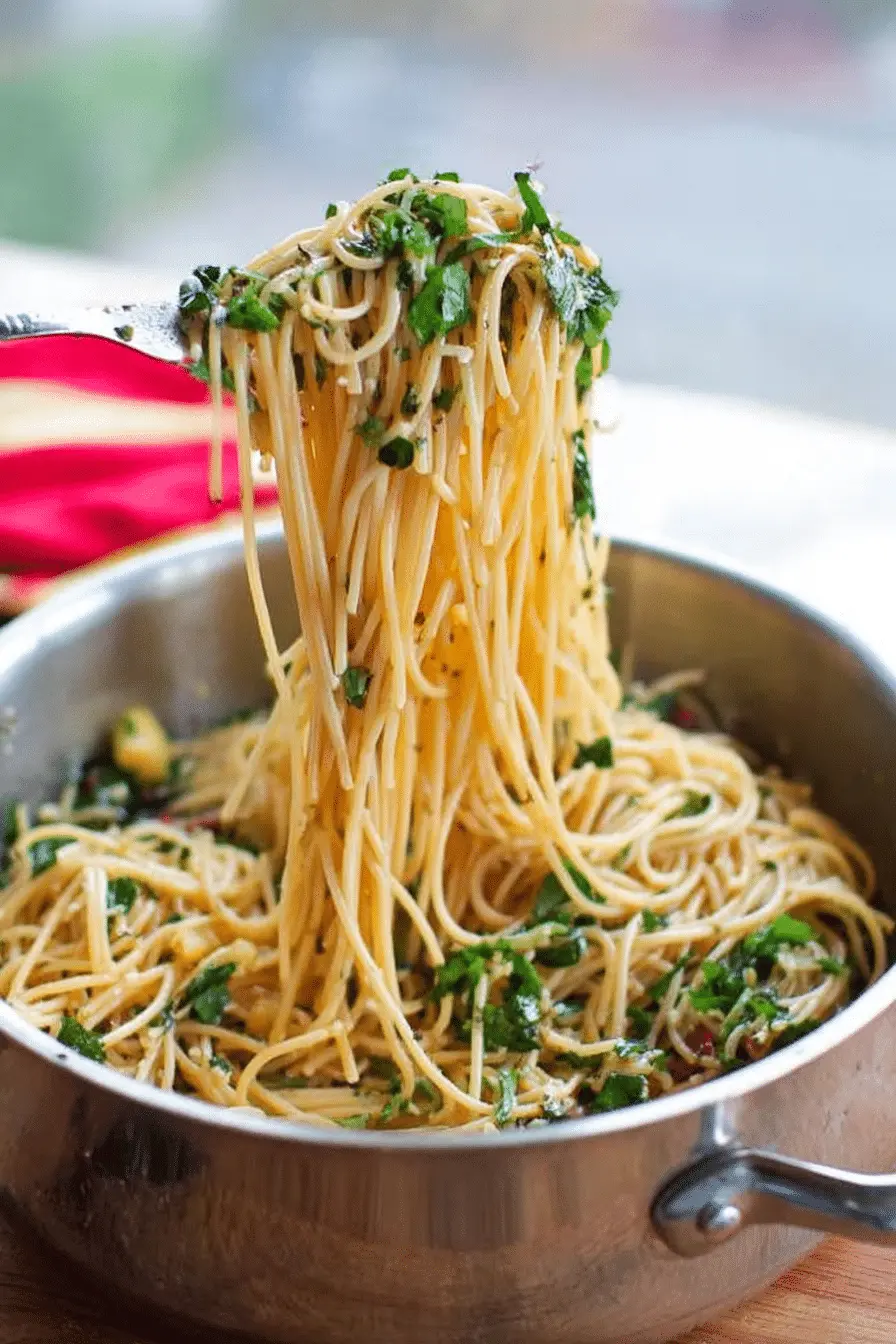
I make this garlic butter spaghetti on the nights when the clock is not on my side but everyone is still expecting dinner that actually tastes like dinner. It comes together fast, uses things I usually have on hand, and finishes with bright fresh herbs that make the whole bowl feel thoughtful instead of thrown together. I remember the first time I slowed the garlic down and watched it go soft and golden instead of blasting it over high heat — the aroma filled my kitchen and the bitterness never came. That small timing habit changed the whole dish for me; now I always make extra sauce because that butter-garlic-herb coating is the reason folks come back for seconds. What I love most about this recipe is its flexibility: it’s a blank-slate pasta that can be a quick vegetarian dinner or the base for proteins and seasonal vegetables. When I’m short on time I keep the steps tight, but I also have a few tricks to keep the spinach and basil vibrant and to rescue garlic if it edges toward brown.Ready in 15 Minutes: Why This Garlic Butter Spaghetti Works for Busy Nights
This is a weeknight-friendly dinner because it pairs a 10–12 minute pasta cook with a short, low-heat sauce that can be made while the pasta boils. The whole process fits cleanly into a 30-minute window when you multitask efficiently. Sensory note: picture a steaming plate where the butter glistens across each strand, the basil flecks pop bright green, and the kitchen smells like warm garlic and toasted butter — an inviting, homey aroma that makes simple ingredients feel elevated.- Prep time is minimal: garlic minced, herbs chopped, greens roughly shredded — you’ll be working quickly, so keep tools within reach.
- The dish relies on pantry staples (pasta, butter, garlic, salt, pepper) plus fresh herbs for a fast flavor lift.
- It’s versatile: add protein or quick-cooking veg at the end and you have a complete meal without extra pans or time.
Everything You Need for Garlic Butter Spaghetti
- Spaghetti – Any long pasta works; whole-wheat gives a nutty bite but regular spaghetti is fine if you prefer a softer texture.
- Butter – The flavor base; use real butter for richness and a silky sauce.
- Garlic – Fresh garlic is ideal for that bold, toasty aroma; see the garlic section below for powdered swaps.
- Basil – Fresh basil brightens the plate and adds a sweet, peppery finish.
- Spinach – Baby spinach wilts quickly and stretches the dish with color and a gentle vegetal flavor.
- Salt & Black Pepper – Essential for seasoning; salt also helps coax moisture and flavor from the greens.
- Parmigiano Reggiano – Freshly grated over the top for savory depth; omit or swap for a dairy-free alternative if needed.
The Secret to Perfect Garlic Flavor — Fresh vs. Powdered
Fresh garlic contains sulfur compounds that transform when heat is applied; gentle cooking releases sweet, mellow flavors, while high heat can create bitter, burnt notes. Powdered garlic is dehydrated and provides a steadier, milder flavor that won’t brown or scorch, but it lacks the bright, aromatic lift of fresh cloves. If you only have powdered garlic, you can still make a tasty sauce: add it toward the end of the butter warming stage so it can bloom in the fat without extended heat. If you use fresh, mince it fine for even cooking and cook it low and slow until it’s translucent and fragrant — not browned. Sensory focus: sautéed fresh garlic will perfume the kitchen with a warm, savory scent that feels immediate and fresh; powdered garlic will be subtler and more background-friendly.Quick Add-Ins: Proteins and Veggies That Turn This into a Full Meal
To make this a heartier, all-in-one dinner, add quick-cooking proteins or pre-cooked items you can toss in at the end. Balance textures: tender proteins with crisp or juicy veggies keep the plate interesting.- Grilled or rotisserie chicken — slice and toss through at the end to warm.
- Sautéed shrimp — cooks in minutes and pairs beautifully with the garlic butter.Add some delicious garlic butter shrimp to your garlic butter spaghetti for an extra protein boost!
- Canned or roasted chickpeas — for a faster vegetarian protein that holds up in sauce.
- Quick veg options: peas, halved cherry tomatoes, thinly sliced bell peppers, or blanched asparagus tossed in at the end for color and bite.
- Finish with a sprinkle of toasted nuts (pine nuts or chopped almonds) for crunch if you like.
How to Wilt Basil and Spinach Without Getting Soggy
Greens can turn limp and waterlogged if overcooked. Treat them gently so they stay vibrant and keep their texture in the finished dish.- Work over medium-low heat so the butter melts and warms the greens instead of stewing them.
- Add the greens in batches if your pan is small — overcrowding traps steam and produces soggier results.
- Salt early but lightly; salt draws out moisture, which helps soften the greens quickly without long cooking.
- Toss greens just until they’re wilted but still bright; a minute or two usually does it for baby spinach and torn basil leaves.
- Finish by tossing the hot pasta with the greens so residual heat further integrates everything without prolonged cooking.
- For a savory side or to bulk up the greens, consider sautéing savory garlic mushrooms to accompany your wilted greens in this recipe.
How to Make Garlic Butter Spaghetti (Step-by-Step)
- Bring a large pot of salted water to a boil and cook the spaghetti until just al dente; reserve a cup of pasta cooking water before you drain.
- While the pasta cooks, warm a large nonstick or stainless steel skillet over medium-low heat and add the butter so it melts gently — you want it warm, not browning.
- Add the minced garlic and keep the heat low; stir frequently and watch for a soft, fragrant translucence rather than color.
- Stir in the chopped spinach and basil just long enough to soften them; season lightly with salt so the greens release flavor without becoming soggy.
- Add the drained spaghetti to the skillet and toss to coat; if the sauce looks dry, add a splash of the reserved pasta water to loosen it and create a glossy finish.
- Season with freshly cracked black pepper and taste for salt; finish with an extra pat of butter and a generous shave or grate of Parm before serving.
- Safety/equipment note: use tongs to toss hot pasta safely, and handle the skillet carefully — butter splatters at higher temps. A nonstick skillet makes tossing easier, but stainless steel works fine if you watch the heat.
Pro Tip for garlic butter spaghetti: Cook Garlic Low and Slow to Avoid Bitterness
- Keep the pan at medium-low heat when cooking garlic — high heat burns the sulfur compounds and produces a bitter taste.
- Visual cue: garlic is done when it becomes opaque and smells toasty-sweet; stop cooking before it takes on any brown edges.
- If you need to speed things up, finish the garlic in butter with a splash of pasta water to moderate temperature and distribute flavor.
- Use fresh garlic for the brightest aroma; if using powdered garlic, add it later in the cooking process so it doesn’t sit in hot fat too long.
- I often keep a small extra knob of butter on hand to swirl in at the end for sheen and depth — it makes the sauce feel richer without extra work.Learn more about how to cook garlic low and slow to avoid bitterness and enhance the flavors in your dishes.
What to Serve with It — Wine, Sides, and Simple Pairings
This light, buttery pasta pairs well with crisp whites and bright sides that cut through the richness. Think lemon-accented salads, simple roasted veggies, or a crunchy baguette to mop the sauce.- Wine: a dry Pinot Grigio, Vermentino, or unoaked Chardonnay complements the butter and garlic without overpowering the herbs.
- Sides: a simple green salad with a lemon vinaigrette or garlic-roasted broccoli provides contrast in texture and acidity.
- For a more luxurious pairing, serve with a rich shellfish side — consider pairing your spaghetti with garlic butter lobster tails for a special occasion.
How to Store, Reheat, and Easy Variations (Gluten-Free + Dairy-Free Options)
Leftovers keep well if stored properly and reheated gently so the pasta doesn’t dry out.- Storage – Cool to room temperature, then refrigerate in an airtight container for up to three days.
- Reheating – Warm in a skillet over low heat with a splash of water or broth, stirring until heated through; microwave on medium, stirring halfway, also works for a quick option.
- Gluten-free swap – Substitute your favorite gluten-free long pasta; timing and texture vary, so watch for doneness and treat the water reserve the same way.
- Dairy-free option – Use a dairy-free buttery spread and a savory, aged dairy-free cheese or nutritional yeast to mimic the salty richness.
- Garlic Butter Shrimp — add cooked shrimp tossed at the end for a surf-and-turf feel.
- Lemon & Herb — finish with lemon zest and a squeeze of juice for brightness.
- Spicy Kick — add red pepper flakes when you add the garlic for warmth.
- Vegetable-forward — toss in roasted cherry tomatoes and peas for color and sweetness.
Frequently Asked Questions
How long does it take to make garlic butter spaghetti? This garlic butter spaghetti can be ready in just 30 minutes, with a prep and cook time of about 15 minutes each! Can I use regular spaghetti instead of whole wheat? Absolutely! You can use any type of spaghetti you like. Whole wheat adds a nice nutty flavor, but regular spaghetti works just as well. What can I add to make this a more filling meal? You can enhance your garlic butter spaghetti by adding proteins like grilled chicken or shrimp, or tossing in veggies like peas or cherry tomatoes. How do I store leftovers? Store any leftover garlic butter spaghetti in an airtight container in the refrigerator for up to 3 days. To reheat, simply warm it in a skillet on the stove or in the microwave. Is there a gluten-free option for this recipe? Yes! You can substitute the whole wheat spaghetti with gluten-free pasta to make this dish gluten-free.Recipe Card
The Garlic Butter Spaghetti I Make on Busy Weeknights
- Prep
- 15 min
- Cook
- 15 min
- Total
- 30 min
- Serves
- 8
- Calories
- 172 kcal
- Carbs
- 19.50 g
Ingredients
- 1 lbwhole wheat spaghetti
- 6 tablespoonsbutter (plus more for serving)
- 8 clovesgarlic (minced)
- 1 large bunchbasil (chopped)
- 1 large bunchbaby spinach (chopped)
- 2 teaspoonssalt
- 1 teaspoonblack pepper
- to tasteParmigiano Reggiano cheese (for topping)
Instructions
- 1
Cook the spaghetti according to package directions.
- 2
Meanwhile, heat the butter in a large nonstick skillet over medium low heat. Add the minced garlic and sauté for 3-5 minutes, until soft and fragrant.
- 3
Chop the spinach and basil and add to the skillet, stirring for just a minute or two to soften slightly. Season with salt.
- 4
Add the spaghetti to the skillet and season with salt and pepper. Toss well to combine and let rest for a few minutes. Serve with more butter and Parmigiano Reggiano cheese.
You might also like
Reviews
Be the first to review this.