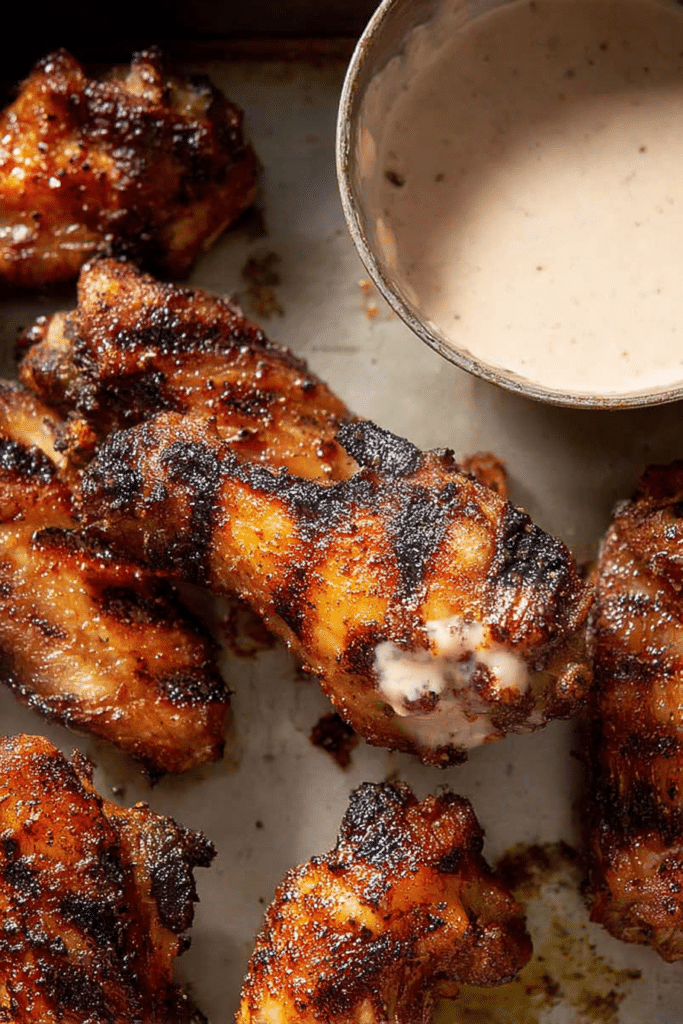
I make these grilled chicken wings when I need something fast, crowd-pleasing, and zero-fuss. In my kitchen the prep is short: a quick pat of the wings, a rub of spices, and a hot grill. I love that the dry rub does the heavy lifting so the clock doesn’t rule the meal.
Over the years I’ve learned a few small things that keep the results reliable: dry the skin well, press the rub on, and resist flipping them too often. When you do it right the wings come off the grill golden-brown with a snappy skin and a toasted, warm spice aroma that fills the air.
These wings are ideal for gatherings because they don’t need overnight marinating or special equipment—just a clean grate, a heat-tolerant oil for the grill, and an instant-read thermometer if you have one. I often make a double batch so people can grab a few as they mingle and the platter never sits empty.
If you’re short on time or energy, this is the kind of recipe that lets you look relaxed while still serving something that tastes like you spent more effort on it than you did.
Why These Grilled Chicken Wings Are Perfect for Busy Cooks
Minimal hands-on time is the whole point here: the dry rub means there’s no waiting for flavor to develop in the fridge, and the cooking window is brief. That makes these wings a go-to for weeknights or casual get-togethers. I love how quickly the grill transforms the spices into a warm, toasty aroma that announces dinner is ready.
Because there’s no messy marinade, cleanup is quicker and you can scale the recipe without extra planning. These are the sort of wings you can make when you want a simple, flavorful meal without a long prep list—perfect if you’re juggling work, kids, or social plans.
Picture juicy meat, bronzed skin, and a mix of sweet and savory spices—ready to serve in under an hour. They’re sturdy enough for dipping, easy to transport, and forgiving if your grill runs a little hotter or cooler than usual.
Everything You Need for Grilled Chicken Wings
- Chicken wings – Choose fresh, evenly sized wing portions for consistent cooking; thaw completely if frozen.
- Light brown sugar – Adds a touch of sweetness and helps the skin caramelize; swap with granulated or coconut sugar if needed.
- Paprika – Gives color and a mild smoky flavor; smoked paprika boosts the grill’s smoke notes.
- Onion powder – Provides savory depth without adding moisture.
- Garlic powder – A basic savory backbone; granulated garlic works too.
- Salt – Essential for seasoning and for helping the skin dry and crisp.
- Black pepper – Freshly cracked for the best bite; substitute with white pepper for a milder heat.
- High heat–tolerant oil – Used to oil the grill grate; pick neutral oils with high smoke points like grapeseed or avocado oil.
Tip: If you want spicier wings, add a pinch of cayenne or your favorite hot spice into the rub. And if you only have frozen wings, make sure to fully thaw them; it helps with even cooking and crisp skin.
The Secret to Extra-Crunchy Wing Skin on the Grill
Crispy skin is a combination of dry surface, high heat, and minimal interference. Patting the wings thoroughly dry before applying the rub is the easiest, most overlooked step. I always press the rub into the skin so it forms a thin crust as it hits the grill.
Use a hot grate to sear the exterior quickly so the skin tightens and browns. Oil the grate lightly with a high smoke point oil to prevent sticking, and avoid piling wings on top of each other—give them space so the air and heat can do their job.
Visualize a brittle, bronzed shell that snaps when you bite in and releases warm, spiced steam—that’s the texture you’re aiming for.
Choosing the Right Dry Rub — No Marinade Needed
A good dry rub creates layers of flavor without adding moisture that would slow crisping. The sugar helps with caramelization, the paprika and powders add color and depth, and salt seasons through the skin to the meat. Press the mix into the wings so it adheres before grilling.
Don’t be afraid to experiment with other profiles: try an Asian-inspired version with five-spice and a touch of brown sugar, or a BBQ-style blend with smoked paprika and a pinch of cumin. The rub also plays nicely with the grill’s smokiness, so the result feels balanced and complete.
Why Grill Temperature and Timing Make or Break Wings
Temperature control decides whether the skin crisps while the meat stays juicy or the meat overcooks while you chase color. I set the grill to medium heat (around 350°F) for even cooking—hot enough to brown but not so hot the skin burns before the inside is done.
Use an instant-read thermometer to check for doneness; wings are safe at an internal temperature of 165°F. Resist flipping every minute—give the skin time to form. Patience here means crisp skin and tender meat.
How to Make Grilled Chicken Wings (Step-by-Step)
- Set your grill to medium heat (about 350°F). If you have a two-zone setup, prepare a slightly cooler zone to finish the wings if they start to char too quickly.
- Pat the wings dry with paper towels until the skin is evenly dry—this is key for crisping.
- Combine the dry rub ingredients in a bowl and mix well so the sugar and spices are evenly distributed.
- Toss the wings with the rub and press the mixture into the skin so it adheres; a light, even coating works best.
- Oil the grill grate lightly with a high heat–tolerant oil to prevent sticking.
- Place wings in a single layer on the hot grate and cook for about 10 minutes without moving them too much—this helps the crust form.
- Flip the wings and cook another ~10 minutes, using the cooler zone if needed to avoid flare-ups, until an instant-read thermometer registers 165°F in the thickest part.
- Let the wings rest briefly off the heat for a couple of minutes so juices redistribute before serving.
Troubleshooting
- If the skin is soggy: you likely didn’t dry the wings enough before seasoning; fully pat them down next time.
- If the outside charred before the inside reached 165°F: move to a cooler part of the grill and finish indirect, or reduce heat slightly.
- If the wings stick to the grate: make sure the grate was oiled and that you waited until they released naturally before flipping.
Pro Tip for Grilled Chicken Wings: Crisp Skin Without Oil
- Try adding a small amount of baking powder to your dry rub (use sparingly) to help dry the skin and create extra crunch—this is especially useful if you’re avoiding added oils.
- Use a grill basket for smaller wings so they don’t fall through and they cook evenly with good air flow around them.
- If you can’t grill, finish the wings in a hot oven on a wire rack set over a sheet pan to maintain airflow and crisp the skin.
How to Store, Reheat, and Serve (Sauces, Sides & Variations)
Store leftover wings in an airtight container in the fridge for up to 3–4 days. For longer storage, freeze on a tray then transfer to a freezer-safe bag for up to 2 months. Thaw completely before reheating for best texture.
To reheat and keep them crispy: use a hot oven or an air fryer. Heat at a moderate temperature until warm and the skin crisps up again—avoid microwaving if you want to preserve crunch.
Popular dipping choices include ranch, blue cheese, or a tangy BBQ sauce; they also pair well with crunchy celery sticks, fries, or a bright, leafy salad.
Variations
- Asian-style: swap the rub for five-spice, a touch of sugar, and finish with a squeeze of lime or a drizzle of chili-garlic sauce.
- BBQ-style: add smoked paprika and a pinch of cumin to the rub, and brush with your favorite BBQ sauce in the last few minutes of grilling.
- Spicy kick: mix cayenne or chili powder into the rub to taste for a heat-forward wing.
Frequently Asked Questions
Can I use frozen chicken wings for this recipe?
It’s best to use thawed chicken wings for even cooking and crispy skin. If you only have frozen wings, make sure to thaw them completely before grilling.
What can I substitute for light brown sugar?
You can use granulated sugar or coconut sugar as a substitute, but keep in mind that the flavor may be slightly different.
How can I make the wings spicier?
You can add cayenne pepper or your favorite hot spice to the dry rub to give the wings an extra kick!
What should I serve with grilled chicken wings?
Grilled chicken wings pair great with dipping sauces like ranch or blue cheese, and sides like celery sticks, fries, or a fresh salad.
How do I know when my chicken wings are done?
The wings are done when they reach an internal temperature of 165°F. Using an instant-read thermometer is the best way to check.
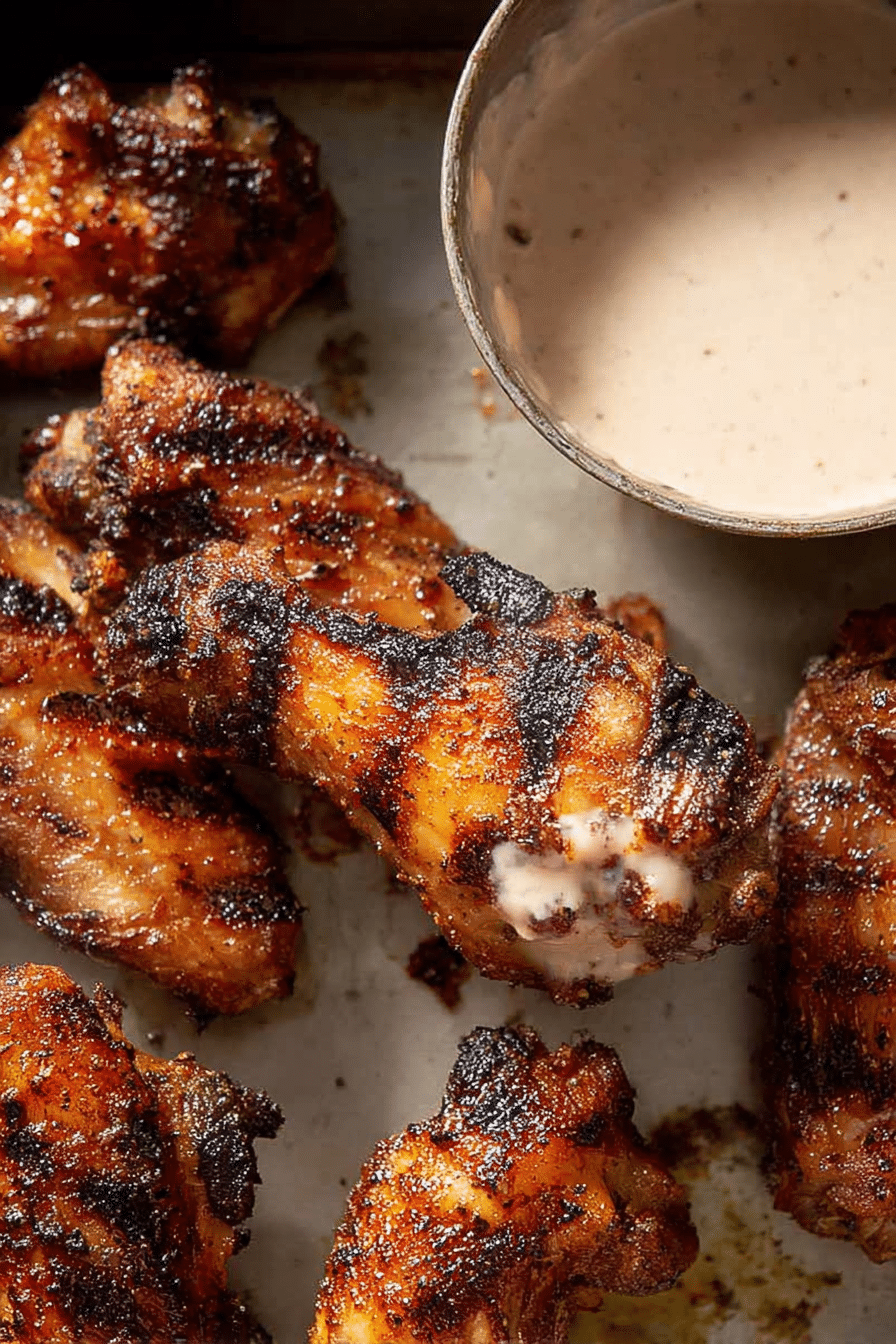
Grilled Chicken Wings
Ingredients
Method
- Set grill to medium heat (350°F.)
- Combine all of the ingredients other than the wings in a small bowl and stir until they are thoroughly mixed together.
- Pat the wings dry and toss them with the rub, pressing it into the wings so that it sticks.
- Oil the grill grate with a high heat tolerant oil. Place the wings on the grill in a single layer. Cook for 10 minutes, then flip. Cook for another 10 minutes, until the internal temperature of the wings is 165° F.