- Prep
- 15 min
- Cook
- 60 min
- Total
- 75 min
- Serves
- 8
- Calories
- 525 kcal
- Protein
- 30.00 g
- Carbs
- 42.00 g
- Fat
- 26.00 g
Introduction
Gyros are the kind of food that smells like a street corner in Athens the moment the meat hits a hot pan — warm spices, sweet onions, and that faint char that makes your mouth water. I first learned to make gyros in my small apartment kitchen the winter I missed a trip to Greece; I wanted the sharp tang of tzatziki and tender, juicy meat wrapped in warm pita so badly that I tested several approaches until one version reliably produced the same comforting result you get from a proper gyro stand. This recipe yields about 8 gyros and takes roughly 1 hour and 15 minutes from start to finish (active time is much less), and it’s the version I return to on busy weeknights and casual dinner parties alike. Before we dig into the how-to, a quick history note: gyros (pronounced YEER-ohs) grew from the older Middle Eastern doner kebab and the Turkish döner, adapted in Greece to local meats and seasonings and usually served sliced off a vertical spit into pita with tzatziki. Today, gyros are beloved worldwide for their bold but familiar flavors — lamb, oregano, cumin, garlic, and cooling yogurt are a great comfort combo. Below I’ll walk you through ingredients, technique, variations, and the real-world tips I learned while testing this recipe in my own kitchen.Ingredients for Authentic Gyros
I like to keep the ingredient list honest: classic flavors but approachable swaps when needed. The list below is conversational — I break down exact amounts and the full recipe in the instructions section so you can follow along at the stove.- Ground lamb – provides the rich, slightly gamey backbone of classic gyros; if unavailable, lean ground lamb or a lamb/beef mix works well.
- Ground beef – adds structure and fattiness; a higher-fat blend (like 80/20) gives juicier slices when baked and seared.
- Onion – finely chopped to keep the meat moist and add sweetness as it cooks.
- Garlic – minced for savory depth; it mellows and goes almost sweet when cooked with the meat.
- Breadcrumbs – help bind the meat and keep the loaf sliceable; panko or stale bread processed fine are fine substitutes.
- Dried oregano – the herbaceous Greek note you want in every bite.
- Ground cumin – warms the meat and balances lamb’s richness without being overwhelming.
- Aleppo pepper (or paprika + cayenne) – gives mild heat and a fruity note; use smoked paprika for a deeper flavor.
- Salt & black pepper – essential; salt brings the flavors alive, and fresh cracked pepper adds brightness.
- Pita bread – soft, slightly chewy pita is the cradle for the meat and sauce; warm it slightly to make it pliable.
- Tzatziki sauce – cooling, garlicky yogurt-cucumber sauce — store-bought works, but homemade is worth the extra five minutes.
- Tomatoes & red onion – fresh, thinly sliced for brightness and crunch.
- Romaine or crisp lettuce – adds crunch and keeps the gyro from becoming too heavy.
- Feta cheese – optional but salty and tangy in small crumbles.
- Hot sauce – optional for folks who want a kick; a drizzle transforms the flavor profile.
Detailed Instructions for Making Perfect Gyros
The method below is the exact, tested process I use when I want restaurant-style gyros at home. It combines baking (to hold the meat together) and a hot skillet finish (for crispy edges and char). Follow the cues and sensory notes — they make the difference between just-good and reliably great.- Prep the aromatics: In a food processor add the small onion and the garlic and pulse until very finely chopped. You’ll see a paste-like texture if you’ve pulsed enough — that’s what helps the meat stay moist and keeps the pockets of flavor consistent.
- Mix the meat: In a large bowl combine 1 pound ground lamb and 1 pound ground beef (80/20). Add the processed onion and garlic, 1/4 cup breadcrumbs, 1 tablespoon dried oregano, 2 teaspoons ground cumin, 2 teaspoons kosher salt, 1 teaspoon Aleppo pepper (or paprika plus a pinch of cayenne), and 1/2 teaspoon freshly ground black pepper. Use clean hands to mix and press the meat thoroughly — you’re not just combining ingredients, you’re developing the texture. I mash and knead for several minutes until the mixture feels cohesive and a little tacky; that tackiness means the meat will slice cleanly after baking.
- Shape and bake: Press the meat mixture firmly into a 9x5-inch loaf pan so there aren’t air pockets. Bake at 325°F (about 160°C) for 50–60 minutes or until the center registers 165°F (74°C) on an instant-read thermometer. You’ll notice the top will be set and slightly browned; the smell will shift from raw meat to warm savory herbs and roasted onion — that’s when you know it’s close. Tip: If the top is browning too quickly, tent it with foil. Low-and-slow oven time lets the fat render without drying the loaf.
- Rest and chill: Remove the loaf from the oven and let it rest in the pan for 20 minutes. Resting lets the juices redistribute; slice too soon and the meat will crumble or lose moisture. For best slicing, refrigerate the loaf for a few hours or overnight — chilled meat slices much thinner and cleaner, about 1/8-inch thick.
- Slice and crisp: Remove the chilled loaf from the pan and slice thin. Heat a skillet or griddle over medium-high and add a little of the meat drippings or a drizzle of oil. Lay slices flat and cook 1–2 minutes per side until the edges brown and crisp. You want a little crunch and char — that contrast against the soft pita and cool tzatziki is everything.
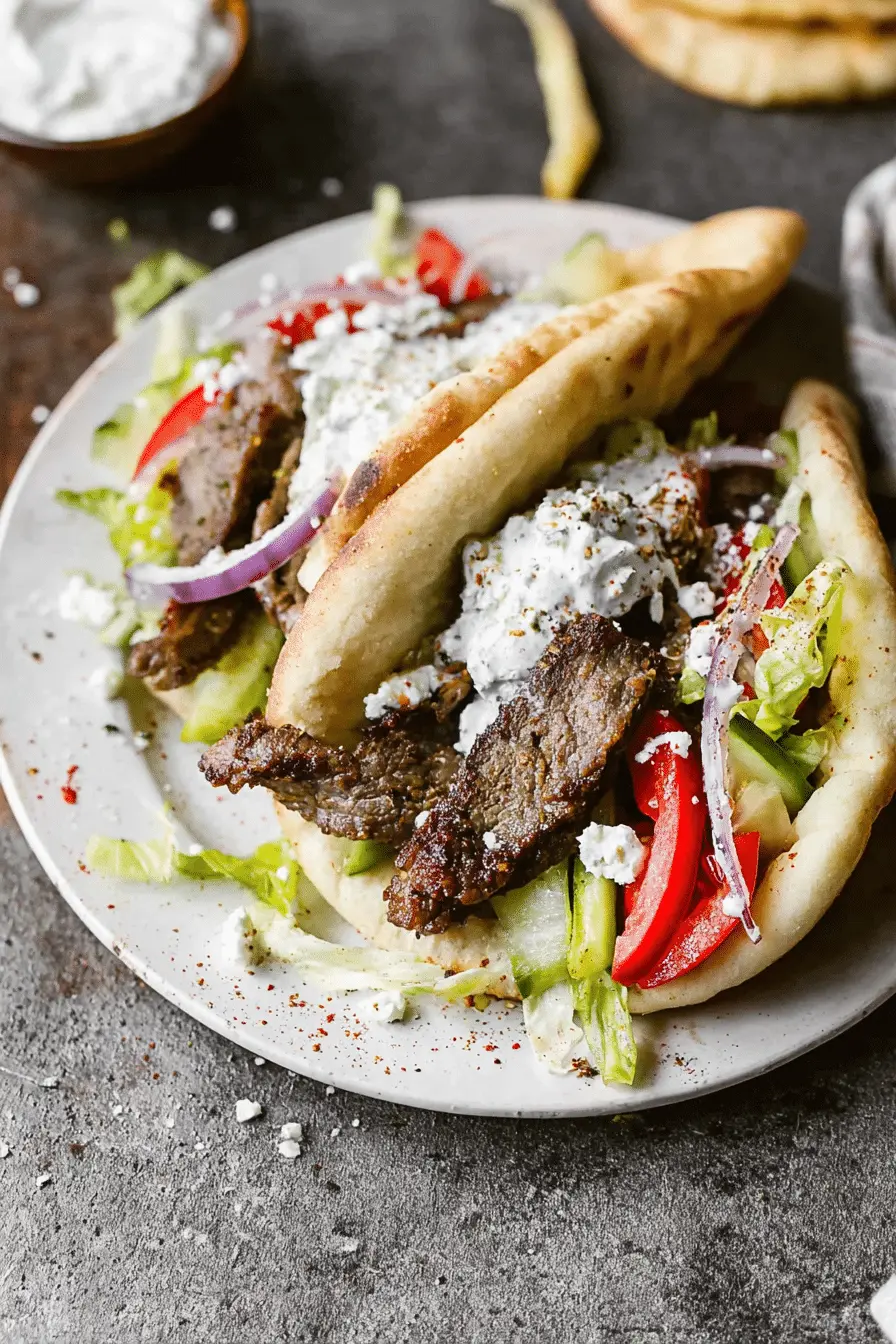
- Assemble the gyros: Warm pita, spread tzatziki down the center, add a layer of shredded romaine, 3–4 slices of gyro meat, top with tomato slices, thin red onion, and a sprinkle of feta if using. Fold and wrap in parchment or foil if you’re serving to-go.
- If the loaf is crumbly when you slice it: you probably didn’t mash it long enough. Next time, knead the mixture until it feels cohesive and tacky. A teaspoon or two of milk can help if your mixture feels dry.
- If the meat tastes flat: salt is often the missing piece. Taste for seasoning by frying a small patty in a skillet before baking — that’s my go-to test. You can always adjust the seasoning in the remaining mixture.
- If the loaf is dry: check oven temperature (oven thermometers are lifesavers). Also, don’t overbake — 165°F in the center is the target. Resting is crucial; it stops the juices from spilling out the moment you cut.
Traditional Gyros Serving Suggestions
Gyros are built for casual sharing: think warm pita, generous saucing, and crunchy toppings. I like to set up a small assembly line so people can build their own.- Greek salad – bright cucumbers, tomatoes, red onion, olives, and tangy feta contrast the rich meat.
- Fries – in Greece they often tuck fries right into the gyro for texture and comfort-factor; a sprinkle of oregano and sea salt makes them sing.
- Simple side of pickled vegetables – quick-pickled cucumber or peppers cut the richness with acidity.
- Warm pita wedges – keep wrapped in a towel or low oven so they stay soft and pliable for wrapping.
Exploring Gyros Sauce Variations
Tzatziki is the classic choice, but a few sauce swaps can change the personality of your gyro dramatically. Classic tzatziki: combine thick Greek yogurt, grated cucumber (squeezed to remove excess water), minced garlic, lemon juice, olive oil, salt, and chopped dill. Taste as you go — more lemon will brighten it, more garlic will anchor it. Let it sit at least 30 minutes for flavors to marry. Enhance your meal with our Greek Chicken Meatballs with Tzatziki as a perfect side dish. If you're looking for a kick, make your own Homemade Tabasco Sauce to drizzle on top of your gyros.- Garlic sauce (skordalia-style) – thicker and punchier than tzatziki, this mashed-garlic-and-potato or garlic-and-bread emulsion clings beautifully to meat.
- Spicy aioli – mayo mixed with smoked paprika, lemon, and a hot sauce of your choice for a richer, creamier bite.
- Yogurt-herb variations – swap dill for mint or parsley for a different herb aroma.
Healthy Alternatives to Classic Gyros
You can lighten a gyro without losing the character. Use lean ground chicken or turkey in place of lamb/beef, or limit the amount of added oil when searing. Put more vegetables in the pita: shredded cabbage, sliced cucumbers, and extra tomatoes add bulk and nutrition for fewer calories. If you want whole grains, choose a whole-wheat pita or a large lettuce leaf for a low-carb wrap. Swapping full-fat Greek yogurt for low-fat will shave calories but keep the tang. Nutritionally, replacing half the meat with mushrooms or beans boosts fiber and reduces saturated fat while keeping the umami and heft.Vegan Gyros Options: A Modern Twist
Vegan gyros are surprisingly satisfying. I’ve made versions with seitan, marinated and pan-fried till the edges crisp; with tempeh that soaks up the spice mixture; and with large portobello or oyster mushrooms for a meaty chew. The key is a strong marinade: olive oil, oregano, cumin, smoked paprika, garlic, and lemon. Marinate at least an hour, then roast or pan-sear until edges caramelize. Vegan tzatziki: use unsweetened dairy-free yogurt, grated cucumber (squeezed), minced garlic, lemon, and chopped dill. Add a little olive oil to mimic the mouthfeel of dairy tzatziki. Taste and adjust for acidity — vegan yogurts vary in tang, so you may need more lemon. Texture tips: press tempeh to remove excess moisture and slice thin for the best bite. For mushrooms, high heat and minimal stirring yield better browning and a concentration of flavor.Tips for Hosting a Gyros Feast
Gyros are inherently social — they’re handheld, customizable, and friendly for mixed diets. Here’s how I set up a gyros night without spending hours in the kitchen:- Prep ahead: Bake the gyro loaf a day ahead and refrigerate to make thin slicing easier. Prepare sauces and chop toppings the day before so you’re only reheating and finishing at service time.
- Assembly station: Warm pitas under a towel or in a low oven, lay out warm meat, tzatziki, veggies, and two or three sauce options. Let guests build their own — it’s interactive and reduces plating time.
- Offer variety: Include one meaty option, one vegetarian/vegan option (mushrooms or seitan), and several toppings so every guest can tailor their wrap.
- Keep things cozy: Use small bowls for sauces and spoons for serving. Parchment-wrapped gyros keep hands clean and make for a lovely casual presentation.
Conclusion: Enjoying Homemade Gyros
Making gyros at home rewards a little patience: build the meat properly, rest it, chill for clean slices, and finish with a hot sear. Expect roughly 1 hour and 15 minutes total time for the method I use, and about 8 servings from the recipe. The result is more flavorful and more connected to the experience of eating gyros than any takeout box I’ve had — it’s warm, herbaceous, and a little messy in the best possible way. Give this recipe a try, and adjust the spice balance to your family’s taste. If you test it, I’d love to hear whether you prefer a thicker garlic sauce or classic tzatziki, and what toppings became favorites at your table.FAQ
What type of meat is traditionally used for gyros? Gyros are commonly made with lamb, beef, or a combination of both. You can also use chicken or pork, depending on your taste preferences! Can I make a vegetarian or vegan version of gyros? Absolutely! You can use plant-based proteins like seitan, tempeh, or mushrooms, and serve them with a homemade vegan tzatziki sauce. It's a delicious twist! How can I ensure my gyro meat stays juicy and flavorful? Make sure to mix the ingredients well, and don't skip the resting time after baking. This helps retain moisture and allows the flavors to meld. What toppings go well with gyros? Traditional toppings include sliced tomatoes, red onion, lettuce, tzatziki sauce, and feta cheese. You can also add hot sauce if you like a bit of heat! How do I store leftover gyros? Store any leftover gyro meat in an airtight container in the refrigerator for up to three days. Reheat it gently in a skillet or microwave, and enjoy!Recipe Card
Easy Homemade Gyros: Enjoy Authentic Greek Flavor in Every Bite
- Prep
- 15 min
- Cook
- 60 min
- Total
- 75 min
- Serves
- 8
- Calories
- 525 kcal
- Protein
- 30.00 g
- Carbs
- 42.00 g
- Fat
- 26.00 g
Ingredients
- 1 lbground lamb
- 1 lbground beef (80/20)
- 1 smallonion
- 5 clovesgarlic (minced)
- 1/4 cupbreadcrumbs
- 1 TablespoonDried oregano
- 2 teaspoonsground cumin
- 2 teaspoonskosher salt
- 1 teaspoonAleppo pepper (or sub paprika and a dash of cayenne)
- 1/2 teaspoonfreshly ground black pepper
- 8 piecesPita bread (warmed)
- 1 cupTzatziki sauce* (homemade or store-bought)
- 3campari or roma tomatoes (sliced)
- 1red onion (thinly sliced)
- 1romaine heart (finely chopped)
- 1/2 cupfeta cheese crumbles (optional)
- —Hot sauce (optional)
Instructions
- 1
Make Gyro Meat: Add onion and garlic to a food processor and very finely chop. Add to a bowl along with the ground meat, salt, pepper, bread crumbs, oregano, cumin, and Aleppo pepper. Use clean hands to mix and mash the meat together really well.
- 2
Bake: Press meat mixture into a 9x5 inch loaf pan. Bake at 325 degrees F for about 50-60 minutes, or until the center registers 165 degrees on a thermometer. Set aside to rest for 20 minutes, and then refrigerate for a few hours or overnight.
- 3
Slice Meat: Remove meat from pan and cut into thin strips, about 1/8 inch thick.
- 4
Brown meat: Heat a griddle or skillet over medium high heat. Add some of the meat drippings or a little oil to lightly coat the bottom of the pan. Once hot, lay the meat slices flat in the pan and cook for just 1-2 minutes on each side, until browned and crisp.
- 5
Assemble Gyros: Serve gyro meat in a warm pita, topped with tomato, onion, lettuce, tzatziki, and feta.
You might also like


Reviews
Be the first to review this.