- Prep
- 10 min
- Cook
- 10 min
- Total
- 20 min
- Serves
- 6
- Calories
- 300 kcal
- Protein
- 10.00 g
- Carbs
- 30.00 g
- Fat
- 20.00 g
Introduction
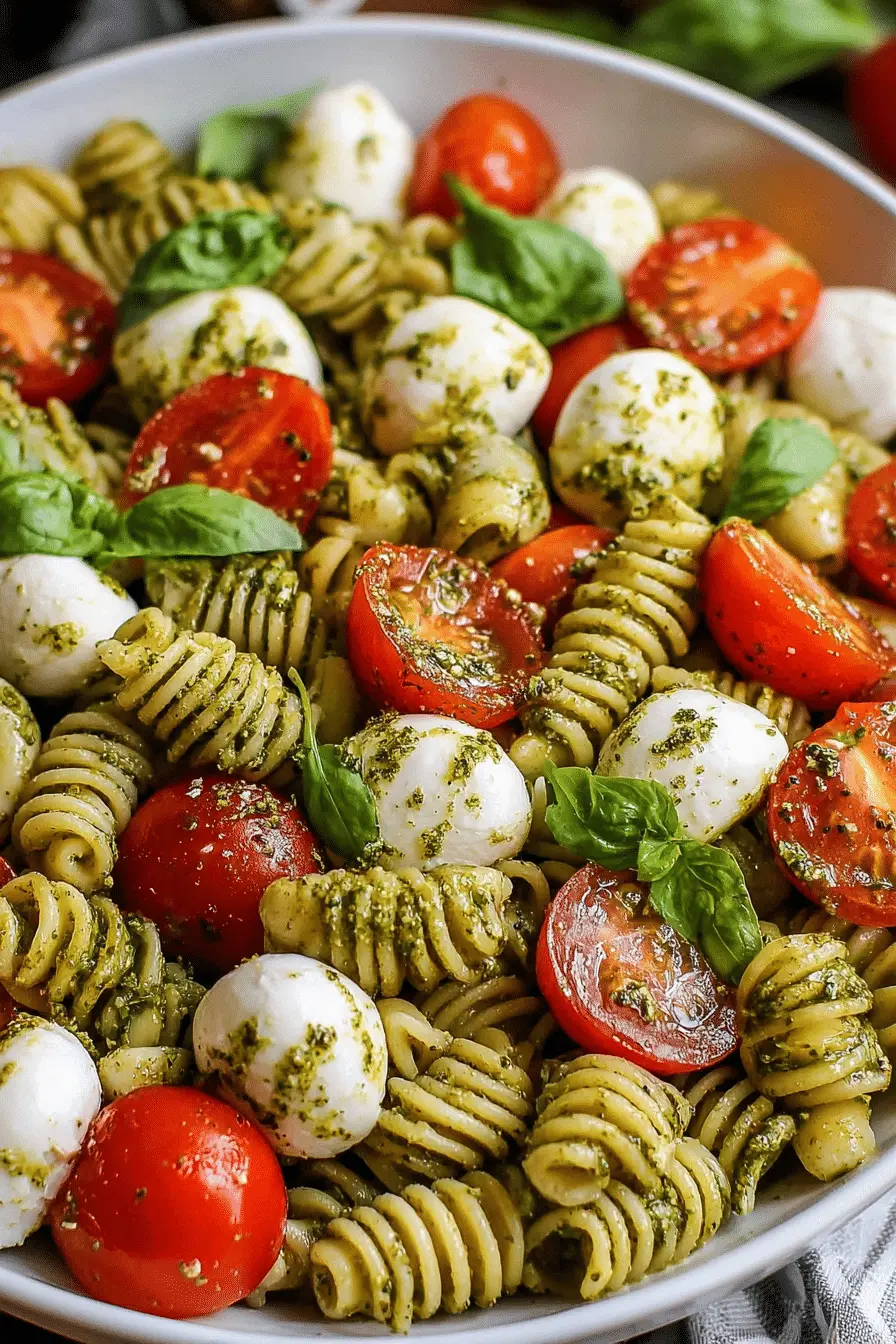
I make this pesto caprese pasta salad whenever I need a crowd-pleasing side that’s fast, fresh, and forgiving. In my kitchen it’s become the recipe I lean on for barbecues and last-minute potlucks — the colors pop, the prep is short, and it travels well. I like that each element keeps its character: juicy tomatoes, pillowy mozzarella, and the bright snap of basil. What makes this dish work for me is the simplicity: most of the heavy lifting is just cooking pasta well and letting quality ingredients shine. I’ll often keep jars of good pesto on hand and a tub of bocconcini in the fridge so I can throw this together while other things finish on the grill. The balance of herb, acid, cheese, and pasta is reliably satisfying. When I’m prepping for the week, I cook the pasta, cool it slightly, toss it with pesto, and add the fresh ingredients at the last minute. That way the basil stays bright and the tomatoes remain juicy. It’s a brilliant, low-stress option when you need something pretty and tasty fast.Why this Pesto Caprese Pasta Salad is my go-to for quick, flavorful meals
I use this salad for practical reasons: it’s colorful (which always makes a buffet look better), it scales easily, and it holds up for a few days in the fridge when stored properly. The mix of textures — creamy mozzarella, snappy onions, tender pasta, and the herbaceous pesto — keeps every bite interesting without complicated steps. For busy evenings I appreciate that most of the prep can be done ahead, and the final toss takes minutes.Everything You Need for Pesto Caprese Pasta Salad
- Pasta – Short shapes are best for holding pesto and bits of tomato; swap to a gluten-free variety if you need to.
- Cherry tomatoes – They add bright, juicy bursts of flavor; you can mix colors for visual appeal or use seasonal varieties for more sweetness.
- Mini mozzarella (bocconcini) – Provides a soft, creamy contrast; use a vegan mozzarella if you’re plant-based.
- Fresh basil leaves – The backbone of the salad’s aroma and flavor; if you don’t have fresh, try a peppery green like arugula or a milder herb mix.
- Basil pesto – The dressing and flavor anchor; store-bought works in a pinch, but a quick homemade pesto brightens the whole dish.
- Red onion – Adds crunch and a mild bite; swap for shallots if you prefer less sharpness.
- Balsamic vinegar – A final drizzle adds brightness and balance; use a good-quality aged balsamic if you have it.
- Black pepper – Freshly ground for finishing; adjust to your taste.
Which Pasta Shape Works Best (and Why)
Short, ridged shapes are my go-to because they trap pesto and little bits of tomato so every forkful is saucy. Think fusilli, rotini, or penne with texture — they grab the dressing rather than letting it pool at the bottom of the bowl. Smaller shapes also integrate better with the size of cherry tomatoes and bocconcini, creating a balanced bite. For salads that need to travel, I prefer medium-sized pieces rather than tiny shapes; very small pasta can get lost next to larger ingredients. If you’re after a specific brand, choose a semolina-based pasta for a firmer bite that holds up after chilling.The Secret to Bright, Juicy Cherry Tomatoes
Choose tomatoes that are glossy, firm but slightly springy, and richly colored — these traits indicate ripeness and flavor. Slice them in half to keep as much juice as possible inside each piece, and if you want extra brightness, give them a short soak in a little balsamic and salt for 10–15 minutes before adding to the salad. That quick marinate deepens flavor without softening them too much. For an exquisite way to use burst cherry tomatoes, try our burst cherry tomato basil chicken rigatoni.Choosing Your Pesto: Basil, Arugula, or Sun‑Dried Tomato
Basil pesto is the classic choice: herbaceous, slightly nutty, and vividly green. Arugula pesto brings a peppery edge that pairs well if you like a little bite, while sun-dried tomato pesto adds a sweet-tart depth and a richer color. Mixing a small amount of two pestos can be fun — try basil with a touch of sun-dried tomato for balance. If you make pesto at home, you’ll notice a fresher aroma and brighter color than most jars. If you enjoy variations that lean toward heartier flavors, check out a pesto-forward pasta like our pesto chicken tortellini for inspiration on pairing pesto styles with proteins and vegetables.How to Make Pesto Caprese Pasta Salad (Step-by-Step)
- Cook the pasta to al dente according to package directions so it keeps a slight bite after chilling.
- Drain the pasta and let it cool just until it’s warm to the touch — not piping hot — so the pesto coats evenly without wilting the basil.
- Toss the warm pasta with the pesto so the sauce spreads across each piece; taste and add more pesto if you like it saucier.
- Add halved cherry tomatoes, sliced red onion, drained mini mozzarella, and chopped fresh basil to the bowl.
- Gently combine everything so the cheese stays intact and the tomatoes don’t get crushed.
- Finish with a light drizzle of balsamic vinegar and a crack of black pepper, then serve or chill briefly before serving.
Pro Tip for pesto caprese pasta salad: Toss pasta warm so pesto coats evenly
- Tossing while the pasta is warm helps the oil in the pesto spread and cling to each noodle for better flavor distribution.
- Start with a modest amount of pesto and add more to taste to avoid overpowering the salad.
- Add a handful of fresh herbs at the end — basil is classic, but a little chopped parsley brightens the dish.
How to Store, Make-Ahead, and Serve Pesto Caprese Pasta Salad
- Store in an airtight container in the refrigerator for up to 3 days; give it a good stir before serving to redistribute dressing.
- If making ahead, toss the pasta with pesto first and add tomatoes and fresh basil just before serving to keep them bright.
- When transporting, place heavier ingredients on the bottom and add delicate ones (fresh basil, cheese) at the last minute or packed separately.
- To revive slightly dry pasta, stir in a splash of olive oil or an extra spoonful of pesto.
Nutritional Information
Per serving, a typical pesto caprese pasta salad made as described will be roughly in the range of 350–450 calories depending on the amount of pesto and cheese used. A reasonable macro split might be:- Calories: ~350–450 per serving (estimate)
- Carbohydrates: Moderate — primarily from the pasta
- Protein: Moderate — from mozzarella; adding chicken or beans increases protein
- Fat: Moderate — mostly from olive oil and pesto; choose lighter pesto or reduce quantity to lower fat
Protein Pairing Suggestions
- Grilled lemon-herb chicken for a classic, crowd-friendly option; slice and serve alongside the salad.
- Quick pan-seared shrimp tossed with a little garlic and lemon pairs naturally with pesto flavors.
- Vegetarian options: roasted chickpeas or grilled tofu marinated in balsamic and herbs.
- For a hearty meal bowl, pair with Mediterranean chicken bowls for balanced plates and complementary flavors: Mediterranean chicken bowls.
Creative Serving Ideas
- Garnish with whole basil sprigs and a few torn leaves for a fresh, rustic look.
- Serve in individual mason jars layered with pasta, then tomatoes and cheese for picnics or grab-and-go lunches.
- Present it in a clear bowl or trifle dish to show off the layers of color and texture.
- Pair your pesto caprese pasta salad with a refreshing cucumber caprese salad for a light summer spread: cucumber caprese salad.
Pro-Tips
- Make the pasta a little underdone if you plan to chill it — it will firm up in the fridge.
- Keep extra pesto on hand to refresh the salad if it looks dry the next day.
- Use room-temperature mozzarella so it blends better with warm pasta and doesn’t cool the salad too quickly.
Troubleshooting
- Too watery? Drain tomatoes well and gently pat with a towel before adding.
- Salad tastes flat? Add a splash more balsamic or a squeeze of lemon to brighten flavors.
- Basil bruised and dark? Add fresh leaves at the end and avoid tossing too vigorously.
Variations
- Swap bocconcini for cubes of burrata or a firm vegan cheese for different textures.
- Mix in roasted vegetables like peppers or zucchini for more color and substance.
- Try whole-grain or legume-based pasta to increase fiber and protein.
Frequently Asked Questions
Can I use a different type of pasta for this salad? Absolutely! You can use any pasta shape you prefer, but shorter shapes like fusilli, penne, or rotini work best as they hold the dressing and ingredients well. How long can I store the Pesto Caprese Pasta Salad? You can store the salad in an airtight container in the refrigerator for up to 3 days. Just give it a good stir before serving! What if I don’t have fresh basil for the pesto? No worries! You can use store-bought pesto or substitute with other greens like arugula or even sun-dried tomatoes for a different twist. Can I make this salad ahead of time? Yes! This salad is perfect for meal prep. Just prepare it a few hours or even a day in advance, and it will still taste delicious! Is this pasta salad suitable for vegetarians? Yes, this Pesto Caprese Pasta Salad is entirely vegetarian! It’s packed with fresh veggies and cheese.Recipe Card
The Pesto Caprese Pasta Salad I Make for Easy Meal Prep
- Prep
- 10 min
- Cook
- 10 min
- Total
- 20 min
- Serves
- 6
- Calories
- 300 kcal
- Protein
- 10.00 g
- Carbs
- 30.00 g
- Fat
- 20.00 g
Ingredients
- 1 375g packagepasta
- 2 cupscherry tomatoes (sliced in half)
- 1/2 largered onion (thinly sliced)
- 1 200g containermini mozzarella (bocconcini) balls (drained of liquid)
- 1 packagebasil leaves (chopped)
- 2 heaping tbspbasil pesto
- 1-2 tbspbalsamic vinegar
- —black pepper (to taste)
Instructions
- 1
Cook pasta according to package directions and let cool.
- 2
Add cooked pasta, tomatoes, red onion, mozzarella and basil to a large mixing bowl.
- 3
Toss mixing bowl ingredients together with basil pesto.
- 4
Drizzle with balsamic vinegar and sprinkle with black pepper before serving. Enjoy!
You might also like
Reviews
Be the first to review this.