- Prep
- 10 min
- Cook
- 10 min
- Total
- 20 min
- Serves
- 2
- Calories
- 86 kcal
- Carbs
- 11.00 g
Introduction
I make a simple raw carrot salad almost every week when I want something bright, crunchy, and unfussy. In my kitchen this is the kind of dish I reach for when dinner needs a fresh element or when I want a light lunch that still feels substantial. The carrots stay crisp, the herbs smell bright, and the dressing—just a little tang and a touch of sweetness—brings everything together without hiding the vegetables. What I love most is how fast it comes together. With a good peeler or mandoline you can have long, glossy carrot ribbons in minutes; the dressing mixes up in the same jar you rinse the peeler in. The contrast of vivid orange carrot against green parsley or mint makes it feel seasonal and cheerful on the plate, whether I serve it chilled or at room temperature. I’ll walk you through the exact texture I aim for, how I avoid limp carrots, and a few small swaps that keep the salad pantry-friendly. This is a recipe built for busy, health-minded cooks who want something nourishing and uncomplicated—perfect for summer but useful all year long.A Refreshing Crunch: Why This Raw Carrot Salad Works for Quick, Healthy Meals
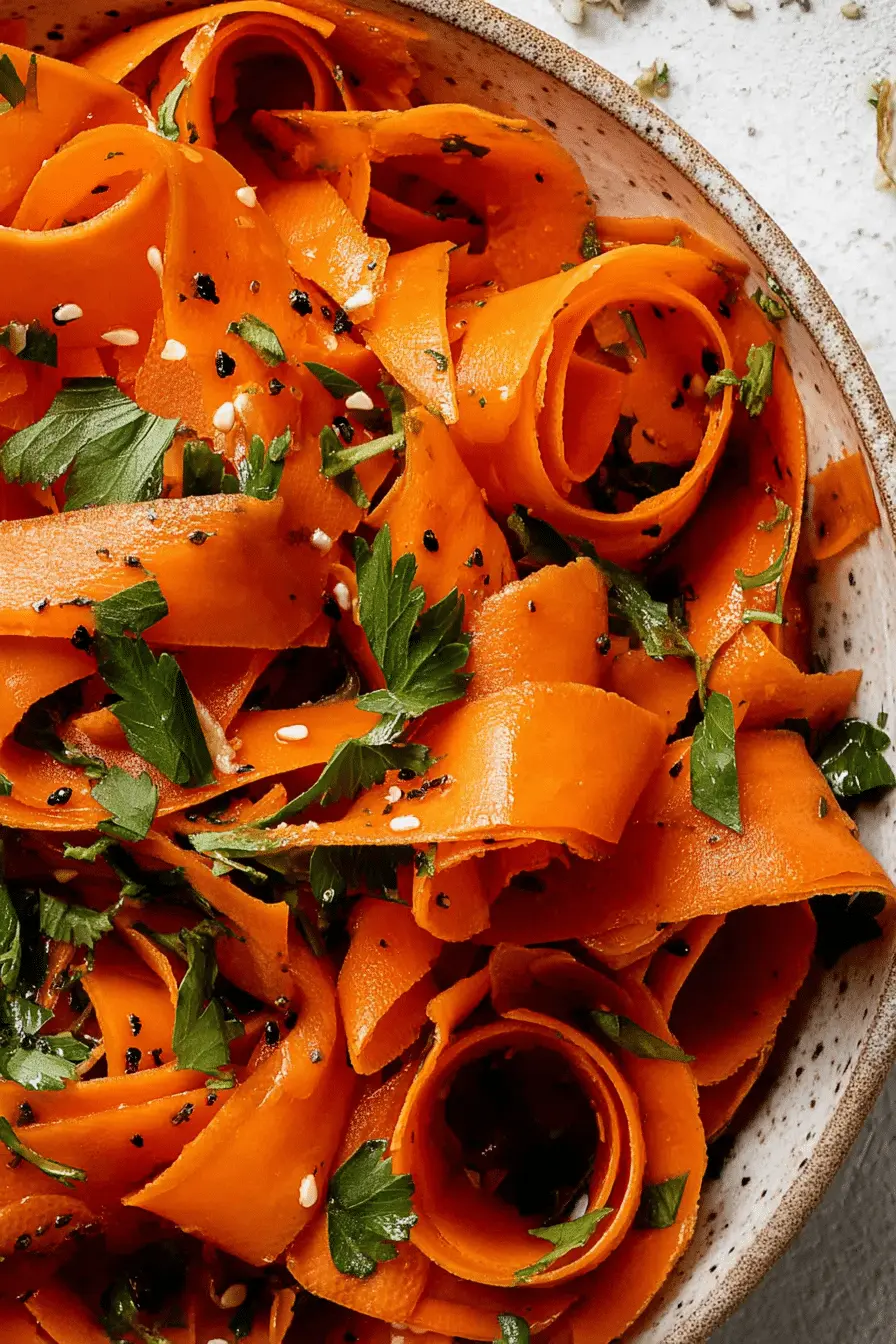
Raw carrots offer a satisfying crunch and a naturally sweet backbone that makes this salad feel fresh and lively. The texture is the star: thin, even ribbons soak up just enough dressing to taste tangy and bright while still snapping when you bite. Visually, the bright orange of the carrots against fresh green herbs is airy and inviting, and you’ll notice the subtle aroma of citrusy vinegar and herb when you bring the bowl to your nose.
This salad fits a busy week because the prep is short and the components are pantry-friendly. You can shave carrots while something else cooks, toss the dressing in a jar when you have two free minutes, and plate in under 20 minutes. It’s versatile—use it as a crunchy side to a warm grain bowl, a light counterpoint to richer mains, or a simple stand-alone lunch.
Everything You Need for Raw Carrot Salad
Below I list the main ingredients and a few optional enhancements. I don’t include exact measurements here—this section focuses on each ingredient’s role and smart swaps.
- Carrots – The foundation. Choose firm, fresh carrots for the best crunch; younger carrots are sweeter and shave more easily.
- Apple cider vinegar – Adds bright acidity that wakes up the sweetness of the carrots.
- Balsamic vinegar – A little goes a long way for depth and a subtle sweetness.
- Olive oil (optional) – Helps carry fat-soluble nutrients and rounds out the dressing; omit for oil-free versions.
- Maple syrup or agave – Balances the acids and complements the carrot’s natural sugars.
- Salt & pepper – Essential seasonings that lift the flavors.
- Crushed red pepper (optional) – Adds a gentle heat if you like contrast.
- Parsley – Bright herbal note that pairs well with raw carrot; chop roughly for texture.
- Mint (optional) – Adds a cooling lift that plays nicely with the sharp dressing.
- Sesame seeds (garnish, optional) – Nutty crunch without nuts; great for nut-free diners.
For gluten-free or nut-free variations, keep the dressing simple and use seeds (sesame, pumpkin) instead of nuts. Fresh ingredients—firm carrots and bright herbs—make the biggest difference in flavor and texture.
The Secret to the Perfect Shaved Texture
- Use a wide vegetable peeler or a mandoline set to a thin setting to make long, glossy carrot ribbons. Uniform thickness lets the dressing coat each ribbon evenly and keeps the mouthfeel consistent.
- Peel toward you in smooth strokes, rotating the carrot as you go so you get full-length ribbons rather than short scraps. The shiny surface of the ribbons should catch the light and feel almost silky between your fingers.
- If you don’t have a peeler, a sharp chef’s knife works: slice the carrot lengthwise into thin planks, then stack and slice into thin sticks or shave the planks into thinner ribbons by slicing at a shallow angle.
- Keep friction minimal—don’t over-handle the ribbons. The less you squeeze or mash them, the more crispness you retain and the fresher they’ll taste.
Why Raw Carrots Boost Vitamin A, Fiber, and Digestion
Carrots are rich in beta-carotene, a precursor to vitamin A that supports eye health and immune function; eating them raw preserves heat-sensitive nutrients that can degrade with cooking. The natural fiber in raw carrots aids digestion and adds bulk to your meal—helpful for feeling satisfied on fewer calories.
To help your body absorb beta-carotene, include a little fat in the dressing (a splash of olive oil does the trick). The crunch of raw carrots also stimulates chewing and saliva, which is the first step in digestion and can make the whole meal feel lighter and more refreshing.
Carrots are versatile beyond salads too—in my kitchen I use them in both savory and sweet dishes. If you like carrot-forward desserts, try carrot cake for another way to enjoy this vegetable’s flavor and nutrients: carrot cake.
How to Make Raw Carrot Salad (Step-by-Step)
- Wash and trim the carrots. Remove any rough spots but keep the skin if it’s clean and fresh-tasting—peeling is optional based on your preference.
- Shave the carrots into long ribbons using a wide peeler or mandoline. Aim for consistent thickness so the dressing coats evenly.
- Mix the dressing in a jar or small bowl: combine the apple cider vinegar, balsamic, sweetener, a pinch of salt and pepper, and olive oil if using. Shake or whisk until emulsified.
- Place the carrot ribbons in a large bowl. Add chopped parsley and mint if using.
- Pour the dressing over the carrots and toss gently until everything is evenly coated. Taste and adjust salt, acid, or sweetness as needed.
- Garnish with sesame seeds or a pinch of crushed red pepper for contrast and serve chilled or at room temperature.
- Troubleshooting (from my kitchen) – If the carrots taste flat, I add a bit more acid; if they feel limp, I drain any excess liquid and finish with fresh herbs. If the dressing seams too sharp, a touch more sweetener balances it without masking the carrot’s flavor.
What to Serve With It: Simple Pairings for Summer Meals
This salad plays well with both warm and cool dishes. Serve it alongside grilled fish, a bowl of seasoned grains, or a simple roasted main to add brightness and texture. For a vibrant option that leans sweeter and roasted, try pairing it with honey-garlic roasted baby carrots: honey-garlic roasted baby carrots.
For a picnic-style spread, serve the raw carrot salad with a creamy potato side—its tang cuts through the richness nicely: creamy dill potato salad. If you want a light, brothy main, try pairing it with a lemony chicken soup for contrasting textures and flavors: Greek lemon chicken soup.
Seasonally, toss the salad into bowls with roasted grains and a pan-seared protein for a full meal, or add chickpeas or white beans for plant-based protein and a heartier lunch.
Pro Tip for Raw Carrot Salad: Make-Ahead Without Sogginess
- I usually prepare the carrots and the dressing separately. Store the shaved carrots in an airtight container lined with a paper towel to absorb excess moisture and keep them crisp.
- Keep the dressing in a separate jar in the fridge and only toss it with the carrots right before serving—this is the single best way to prevent sogginess.
- If you need to prep farther ahead, shave whole carrots and store them for up to two days; for longer storage, keep whole carrots unshaved and shave the day you plan to serve.
- For portability, pack the salad and dressing in separate containers and combine at the last minute—this makes it ideal for packed lunches or potlucks.
How to Store, Meal Prep & Easy Variations (gluten-free, nut-free)
- Storage – Store carrot ribbons in an airtight container with a paper towel to absorb moisture for up to two days. Keep dressing separate in a sealed jar in the fridge.
- Meal prep – Prep herbs and shave carrots up to two days ahead; assemble just before eating. If you’re making bowls for the week, portion out the carrots and dressing separately so they stay crisp until serving.
- Gluten-free – The basic salad is naturally gluten-free. If adding condiments like soy sauce elsewhere in the meal, choose a gluten-free tamari instead.
- Nut-free – Use toasted seeds (sesame or pumpkin) in place of nuts for crunch and to keep the salad safe for nut-free diets.
- Other easy variations – Add thinly sliced cucumber or bell pepper for more crunch; toss in chickpeas or white beans for extra protein; swap parsley for cilantro or dill to shift the flavor profile.
Pro-Tips, Troubleshooting, and Variations are presented above as bulleted lists so you can scan them quickly and use what you need in your meal prep.
Frequently Asked Questions
How should I store leftover raw carrot salad?
A: Leftover raw carrot salad can be stored in an airtight container in the refrigerator for up to 2 days. To keep it crunchy, it's best to store the dressing separately and mix it just before serving.
Can I customize the ingredients in the carrot salad?
A: Absolutely! Feel free to add your favorite herbs, nuts, or even other veggies like cucumbers or bell peppers to enhance the flavor and texture.
Is this raw carrot salad gluten-free?
A: Yes, the raw carrot salad is gluten-free as it contains no gluten-based ingredients. It's a great option for those with gluten intolerance.
How many calories are in a serving of the raw carrot salad?
A: Each serving of the raw carrot salad contains approximately 86 calories, making it a light and nutritious choice.
Can I make this salad in advance?
A: Yes! You can prepare the carrots and the dressing ahead of time, but it's best to combine them just before serving to maintain the freshness and crunch.
Recipe Card
The Quick, Crunchy Raw Carrot Salad I Make Every Week
- Prep
- 10 min
- Cook
- 10 min
- Total
- 20 min
- Serves
- 2
- Calories
- 86 kcal
- Carbs
- 11.00 g
Ingredients
- 2 carrots(thinly sliced lengthwise)
- 2 teaspoonsapple cider vinegar
- 2 teaspoonsolive oil ((optional))
- 1 teaspoonbalsamic vinegar
- 1 teaspoonagave or maple syrup
- —Salt and pepper ((to taste))
- ¼ teaspooncrushed red peppers ((optional))
- 2 tablespoonsparsley ((roughly minced))
- 1 teaspoonmint ((minced, optional))
- —Sesame seeds ((garnish, optional))
Instructions
- 1
Wash the carrots, then using a peeler carefully slice thin and long slices. Set aside in a large bowl.
- 2
In a jar or small bowl, combine the apple cider vinegar, oil, balsamic vinegar, agave or maple syrup, salt and pepper, and mix to combine. Set aside.
- 3
To the bowl with the carrots, add the parsley and dressing. Toss and serve at room temperature or chilled.
You might also like

Reviews
Be the first to review this.