- Prep
- 5 min
- Total
- 5 min
- Serves
- 1
- Calories
- 221 kcal
- Protein
- 25.00 g
- Carbs
- 19.00 g
- Fat
- 8.00 g
Introduction
I started making savory cottage cheese bowls on mornings when I wanted something fast, filling, and bright on the plate. What hooked me was the way the cool, creamy base contrasts with crunchy veg and a scatter of pistachios; it feels like a small, composed meal I can throw together before my coffee finishes brewing. Over the years I’ve swapped toppings, learned which cottage cheeses hold up best, and streamlined the routine so prep time is minimal.
In my kitchen this bowl is a go-to when I want high protein without heaviness. Protein keeps me alert and steady until lunch, and a single serving is often enough to carry me through a busy morning of meetings or workouts. I like to pair it with strong flavors—fresh chives, a squeeze of lemon, or a pinch of smoked spice—so every spoonful feels satisfying.
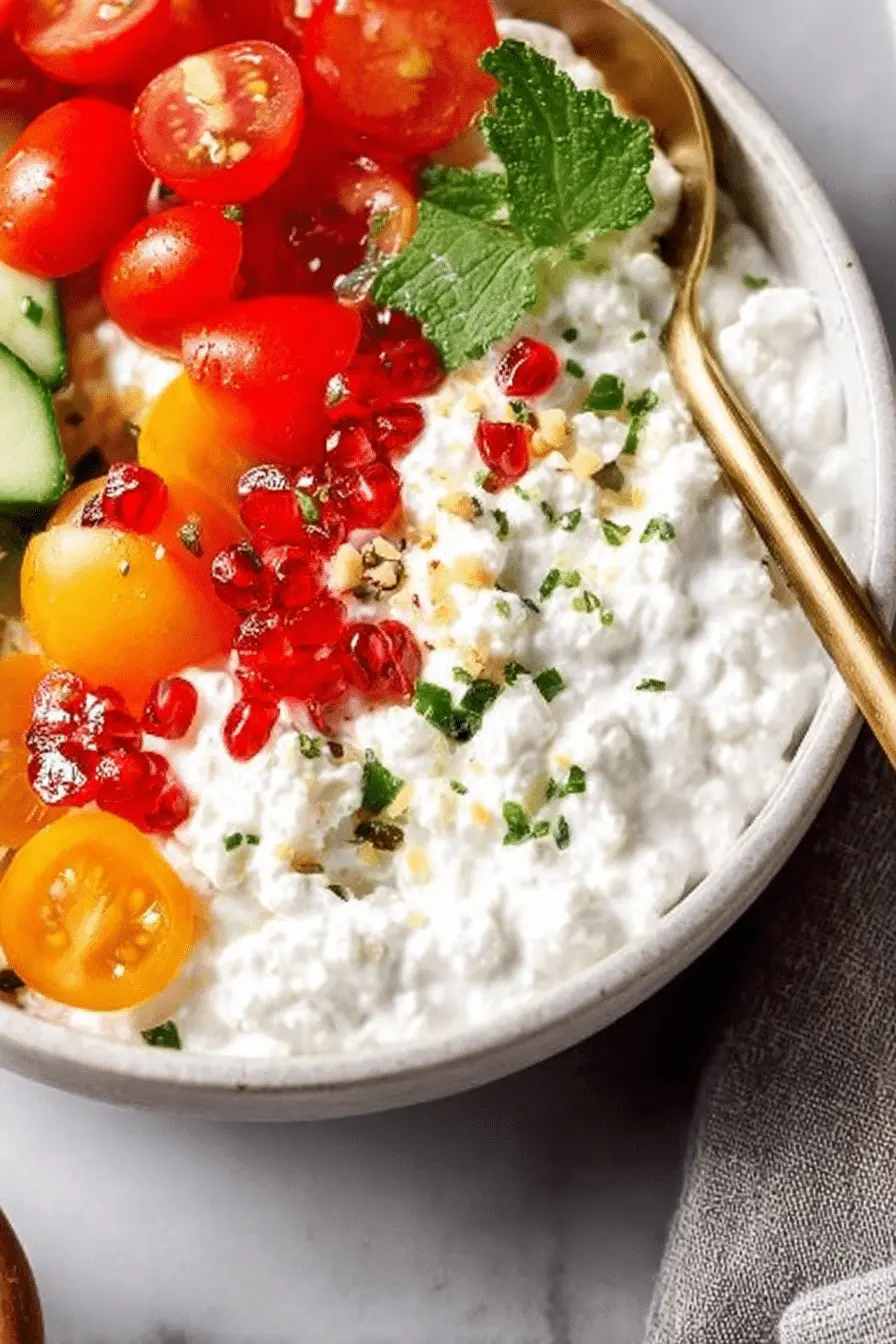
Beyond taste, I pay attention to texture and color: thick cottage cheese that won’t weep, crisp cucumbers, glossy grape tomatoes, and the gritty pop of chopped pistachios. The result looks like a small salad and eats like a complete breakfast. If you care about quick, nutritious meals, this is an easy formula to keep in rotation.
Over time I’ve turned this into a little system for meal prep and variety—cook once, eat twice during the week—while keeping the bowl fresh and interesting. Below I’ll walk you through what I use, how I keep the cottage cheese thick, topping ideas, meal‑prep tips, and a step‑by‑step you can follow in under five minutes.
Why this Savory Cottage Cheese Bowl is Perfect for Busy, Health-Conscious Mornings
This bowl gives you a concentrated dose of protein, which helps blunt mid-morning cravings and supports steady energy. It takes about five minutes to assemble, so you won’t sacrifice nutrition for speed. For someone tracking macros or simply trying to eat more protein at breakfast, a single serving provides a meaningful amount without feeling heavy.
Visually the bowl reads vibrant—emerald cucumber slices, ruby tomatoes, flashes of bell pepper and green chives—so it’s an appetite-friendly way to start the day. The creamy base and crunchy toppings provide contrasting textures that make each bite satisfying: silky cottage cheese, crisp vegetables, and the toasted crunch of pistachios.
Practical wins: it’s flexible (swap in seasonal veg), portable (pack components separately for a grab-and-go), and balanced (protein, fiber, healthy fats). If you want more heft, add a sliced hard‑boiled egg or a handful of greens on the side for a fuller plate.
Everything You Need for a Savory Cottage Cheese Bowl
Here’s a conversational breakdown of the key ingredients and tools I keep on hand. I’m focusing on purpose and substitutions so you can adapt what’s in your fridge.
- Cottage cheese – The creamy protein base; opt for a high-quality variety that’s thick and not overly watery. For a lighter option use lower‑fat versions.
- Chives or scallion greens – Bright onion notes that lift the bowl; finely minced they fold into the cheese and on top as a fresh garnish.
- Black pepper – Freshly ground for warmth and balance; adds savory depth without sodium.
- Persian cucumber – Crisp and refreshing; their thin skin and small seeds keep bites tidy.
- Bell pepper – Adds sweetness and crunch; any color will work to change the visual and flavor profile.
- Grape tomatoes – Juicy bursts of acidity that cut the richness of the cheese.
- Pistachios – Shelled and chopped for toasted, nutty crunch and healthy fats; swap for almonds or sunflower seeds if needed.
- Kosher salt – A pinch to finish; enhances the vegetables and cheese without overwhelming.
Tools I use: a small mixing bowl for the cottage cheese, a sharp knife for neat vegetable slices, and a small spoon for layering. For meal prep, I like shallow containers with separate lids so you can store the base and toppings apart.
If you want to explore flavor spins: try a Mediterranean riff with olives and oregano, or a Middle Eastern touch with za’atar and lemon. Those simple swaps take the bowl in new directions without extra work.
How to Keep Cottage Cheese Thick and Not Watery
Texture matters here: thick cottage cheese supports the toppings and keeps the bowl from turning soupy. The type of cottage cheese you choose makes the biggest difference—look for varieties labeled as thick or high-protein, and check the label for added whey or excess liquid.
When the cottage cheese arrives on the wet side, a quick strain helps. Lay a fine mesh strainer over a bowl, line it with cheesecloth or a coffee filter, add the cottage cheese, and let it sit in the fridge for a short time. This concentrates the curds without drastically changing flavor.
- Chill and drain – If your cottage cheese tastes watery, I drain it briefly in a lined strainer; this keeps the curds creamy but removes excess whey.
- Stir gently – Overmixing can break curds and create a looser texture; stir just enough to combine herbs and pepper.
- Use high-protein varieties – I’ve found they often have less free liquid and hold up better when topped.
- When to add watery ingredients – Add very juicy tomatoes or cucumbers just before eating to avoid soggy bowls during storage.
- Troubleshooting – If the bowl ends up wetter than you like, spoon off extra liquid, blot any wet vegetables on paper towel, and add more crunchy toppings for texture.
For an extra protein and flavor boost you can add cooked savory bits to the bowl—try pairing it with Mediterranean chicken meatballs for heartier meals when you need them.
Toppings That Boost Protein and Flavor (Quick Ideas)
Toppings are where the bowl gets personality. Think about texture contrast (soft vs. crunchy) and flavor lift (acid, herb, spice). Protein-forward choices keep the meal substantial; herbs and spices add interest without fuss.
- Roasted chickpeas – Crispy, nutty, and packed with plant protein.
- Hemp or pumpkin seeds – Tiny but mighty for protein and crunch.
- Sliced turkey or chicken breast – Great for an animal-protein boost; thin slices fold easily into the bowl.
- Toasted pistachios or almonds – For healthy fats and texture.
- Za’atar, smoked paprika, or sumac – International spice suggestions that brighten and diversify the bowl.
- Avocado slices – Rich, creamy fat to make the bowl more satiating.
- Quick pickled onions or cucumbers – Adds tang and keeps the palate refreshed.
Variations I reach for when I want a different regional character:
- Mediterranean – Add chopped olives, diced cucumber, lemon zest, and a sprinkle of oregano.
- Middle Eastern – Use za’atar, chopped parsley, and a few preserved lemon flecks.
- Southwestern – Toss in charred corn, chopped cilantro, and a pinch of chili powder.
For a heartier plated meal, a single-serving protein like high-protein honey garlic butter chicken also pairs beautifully if you want to add warm, savory meat to the top of the bowl.
Pro Tip for savory cottage cheese bowl: Make it a Meal-Prep Power Bowl
Using this bowl as a weekly strategy saves time while keeping breakfasts interesting. Prep smart by portioning the base, prepping toppings, and storing components so assembly is under five minutes.
- Batch the base – Portion cottage cheese into single-serving containers so you can grab one and go.
- Prep toppings in advance – Chop cucumbers, dice peppers, and halve tomatoes; store them in separate airtight containers to maintain crunch.
- Keep crunchy toppings separate – Nuts and seeds stay crisp when stored apart and added at the last minute.
- Use add-ons for variety – Pack small tubs of roasted chickpeas, or slices of cooked turkey, so you can change flavors each day.
- Pack smart – Layer the base and wet ingredients separately from crunchy garnishes to avoid sogginess.
Add variety to your meal prep by incorporating cottage cheese egg bites as a protein-packed side—these are great for days you want more substance without creating lots of extra dishes.
How to Make a Savory Cottage Cheese Bowl (Step-by-Step)
Follow these simple steps and you’ll have a composed bowl in minutes. Use your hands for quick prepping and your eyes to arrange color—presentation makes a simple meal feel intentional.
- Place cottage cheese in a small bowl and gently fold in minced chives and a few grinds of black pepper; mix just enough to distribute the herbs.
- Arrange cucumber slices, chopped bell pepper, and halved grape tomatoes on top of the cottage cheese so each spoonful hits different textures and flavors.
- Sprinkle chopped roasted pistachios over everything for crunch, then finish with a light pinch of kosher salt and another turn of black pepper to taste.
- Optional: add a squeeze of lemon or a drizzle of extra-virgin olive oil for brightness and mouthfeel.
Common mistakes to avoid: don’t over-salt early (the cheese and toppings concentrate when chilled), don’t add crunchy items while storing (they’ll soften), and don’t overmix the curds—small curds resist weeping better than smashed ones.
Dairy-Free and Vegan Swaps for Similar Protein Boosts
If you avoid dairy, there are several plant-based approaches that keep the texture and protein front and center. The goal is a creamy, spoonable base that plays nicely with savory toppings.
- Silken tofu, blended with a touch of lemon and nutritional yeast – Creamy and neutral, with a savory backbone.
- High-protein soy or almond-based yogurt—choose plain varieties with higher protein content for a similar mouthfeel.
- Commercial vegan cottage cheese alternatives – Some newer brands mimic curds and work well if you can find them.
- Protein toppings for vegans – Roasted chickpeas, edamame, tempeh crumbles, or a scoop of lentil salad add substantial plant protein.
When I test vegan versions I focus on seasoning: a little acid (lemon or vinegar), a savory boost (soy sauce or miso), and an herby finish help the plant base feel more like the savory breakfasts I love.
How to Store, Reheat, and Customize Your Savory Cottage Cheese Bowl
Storing components separately is the simplest way to keep everything fresh. Cottage cheese and wet vegetables do best refrigerated in sealed containers, while nuts and seeds belong in airtight jars at room temperature or in the fridge for longer shelf life.
- Storage – Keep the base chilled and store juicy veggies separately; assemble within a couple of days for best texture.
- Reheating – This bowl is best eaten cold or at room temperature; if you add a warm protein topping, reheat that separately and place it on top just before eating.
- Customization – Swap peppers for blanched asparagus in spring, or add roasted beets in fall to mirror seasonal produce.
- Quick fixes – If the cottage cheese releases liquid in the fridge, stir gently and blot excess moisture from veggies before assembling.
For a refreshing side that complements the bowl, try pairing it with a spinach strawberry salad to add a bright, fruity contrast to the savory base.
Frequently Asked Questions
How long does it take to prepare the Savory Cottage Cheese Bowl?
It only takes about 5 minutes to prepare this delicious bowl!
Can I customize the toppings for my cottage cheese bowl?
Absolutely! Feel free to add your favorite veggies, nuts, or even avocado to enhance both flavor and nutrition.
Is this cottage cheese bowl suitable for meal prep?
Yes! This recipe is perfect for meal prep. You can prepare the base ahead of time and add fresh toppings when you're ready to eat.
What can I use instead of cottage cheese for a dairy-free version?
You can substitute cottage cheese with plant-based alternatives like almond or soy yogurt to maintain a similar texture and add protein.
What are some quick toppings to boost protein in my bowl?
Some great options include roasted chickpeas, hemp seeds, or sliced turkey for an extra protein kick!
Recipe Card
The Protein-Packed Savory Cottage Cheese Bowl I Make Every Morning
- Prep
- 5 min
- Total
- 5 min
- Serves
- 1
- Calories
- 221 kcal
- Protein
- 25.00 g
- Carbs
- 19.00 g
- Fat
- 8.00 g
Ingredients
- ¾ cuplow fat cottage cheese ((I like Good Culture))
- 2 tablespoonsminced chives ((divided))
- —Freshly ground black pepper
- ½ cupsliced Persian cucumbers
- ½ mediumbell pepper ((seeded and chopped))
- 10 piecesgrape tomatoes ((halved))
- 1 tablespoonchopped roasted shelled pistachios
- —Kosher salt
Instructions
- 1
In a small bowl, combine cottage cheese with 1 tablespoon chives and pepper, to taste.
- 2
Layer cucumbers, peppers, and tomatoes on top then garnish with remaining 1 tablespoon chives and pistachios.
- 3
Sprinkle with a pinch of salt and pepper, to taste.
You might also like




Reviews
Be the first to review this.