- Prep
- 5 min
- Cook
- 360 min
- Total
- 365 min
- Serves
- 8
- Calories
- 256 kcal
- Carbs
- 26.00 g
Introduction
I make this Slow Cooker Korean Beef when evenings are tight but I still want a dinner that feels homemade and worth the effort. It takes just a few minutes of hands-on time in my kitchen, and then the slow cooker does the heavy lifting — filling the house with a rich, caramelized aroma that always gets everyone to the table faster than I expect. I love how forgiving this recipe is — a quick whisk of the sauce, into the crock pot it goes, and you can get on with your day. By dinner the beef is tender and saucy, the brown sugar and soy sauce having reduced into a sticky glaze that clings to every shred. I often finish it with a quick sauté of seasonal veggies while the rice steams, so you get color and crunch alongside the deep, savory beef.If you enjoy hands-off dinners that still feel special, this is one I return to again and again. The flavors are inspired by Korean BBQ — the balance of sweet, salty, and a touch of heat — but simplified so you can make it on a weeknight without fuss.Why This Slow Cooker Korean Beef Is the Weeknight Game-Changer
This recipe fits into busy evenings because the prep is minimal and the slow cooker builds deep flavor for you. You spend five minutes mixing a sauce, drop in the meat, and let low, steady heat do the rest. While it cooks, your home fills with an inviting, savory-sweet aroma: soy and toasted sesame warming the room, browned sugar caramel developing on the meat. The finished dish looks irresistible — glossy, dark-brown beef glazed with sauce and dotted with scallions or sesame seeds. Korean BBQ traditions focus on bold, balanced sauces and quick-cooked meats; this slow-cooker adaptation keeps those flavors but changes the technique so the meat becomes tender enough to shred. Because the hands-on time is short, the recipe is perfect for weeknights, busy families, or anyone who wants strong, home-cooked flavors without extra work.Everything You Need for Slow Cooker Korean Beef
Below are the core ingredients and what each one brings to the dish. I also include seasonal vegetable ideas so you can add color and nutrition without complicating the process.- * Flank steak – Lean with long grain; becomes tender and shreds well when cooked low and slow. If unavailable, choose a cut with similar texture.
- * Cornstarch – Helps thicken the sauce into a silky glaze at the end.
- * Sesame oil – Adds toasty, nutty aroma; a little goes a long way for authentic flavor.
- * Garlic powder – Gives steady, savory background flavor without the prep of fresh garlic (you can swap fresh if you prefer).
- * Soy sauce – The salty backbone; opt for a naturally brewed variety for more depth.
- * Brown sugar – Provides caramelized sweetness that balances the salt and heat.
- * Onion – Adds sweetness and body to the cooking liquid as it breaks down.
- * Red pepper flakes – Deliver gentle heat; adjust to taste.
- * Seasonal vegetables – Think quick-steamed broccoli, sautéed bok choy, roasted carrots or a crisp cucumber salad for freshness.
The Secret to Tender, Shreddable Korean Beef
- Low-and-slow cooking is the key: long, gentle heat breaks connective tissue and collagen, turning tougher fibers into fork-tender meat that pulls apart easily.
- Keeping the meat mostly submerged in the sauce helps it braise rather than dry out; the liquid both flavors and tenderizes.
- Cornstarch is used at the end to thicken the cooking liquid into a glossy sauce that clings to shredded beef, creating that luscious look and mouthfeel.
- Marinating briefly before cooking can deepen flavor, but because the slow cooker infuses flavors over hours, an extended marinade isn't essential — even a short rest improves the final taste.
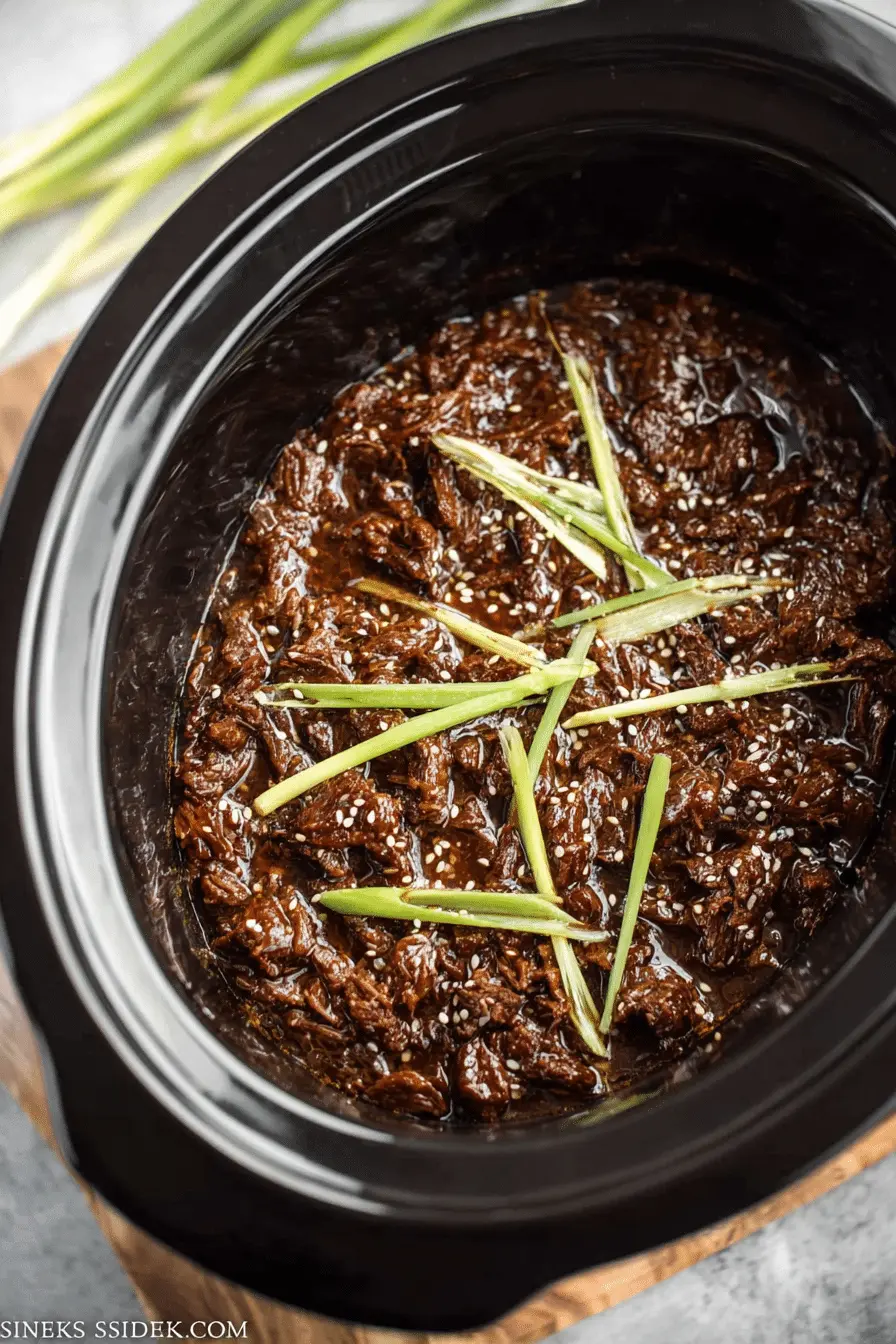
- When shredding, you should be able to pull the meat apart with two forks with almost no resistance; if it still feels firm, give it more time on low. The visual cue is a rich, dark sauce coating soft strands of beef.
What Cut of Beef Works Best (and Why)
Flank steak is my go-to because it becomes tender and shreds into thin ribbons that soak up sauce. It has a firm grain that separates nicely after slow cooking. If you can't find flank, choose a cut with similar structure — sirloin or skirt steak will also work for quicker cooks, while chuck roast is an excellent alternative if you want very tender, pull-apart results thanks to its higher marbling. Marbling is the small streaks of fat in the meat. More marbling generally means richer flavor and a silkier texture after slow cooking. For weeknights I balance budget and texture: flank for clean shreds, chuck for melt-in-your-mouth tenderness. Avoid lean cuts that dry out under long heat.How to Balance Sweet, Salty, and Spicy in the Sauce
The sauce succeeds when each element supports the others: soy sauce provides savory saltiness, brown sugar brings caramelized sweetness, and red pepper flakes add warmth without overwhelming. If the sauce tastes flat, a small increase in acid (a squeeze of rice vinegar or a splash of citrus) will brighten it up. If it's too sweet, add a bit more soy sauce or a pinch of salt. If you want more heat, add chili paste or extra flakes a little at a time. Substitutions to consider: tamari for a gluten-free soy alternative, coconut sugar for a slightly less molasses-forward sweetness, or a touch of toasted sesame oil at the end to boost aroma. Taste as you go and adjust — the sauce is forgiving and meant to match your preference.How to Make Slow Cooker Korean Beef (Step-by-Step)
- Whisk the sauce ingredients together in a bowl until smooth and glossy.
- Place the beef in the slow cooker and pour the sauce evenly over the meat so it’s mostly covered.
- Cook on low for several hours until the meat is fork-tender and easily shreds, or on high for a shorter time if you're pressed for time.
- Remove the beef, shred it with two forks, and return it to the slow cooker to soak up any remaining sauce; if the sauce is thin, thicken it with a cornstarch slurry warmed briefly on the stove or by transferring some liquid to a saucepan and simmering until glossy.
- Finish with a drizzle of sesame oil and a sprinkle of scallions or sesame seeds for color and aroma before serving over rice or veggies.
Pro Tip for slow cooker korean beef: Gluten-Free & Low‑Carb Swaps
Note: Pro-Tips, Troubleshooting, and Variations are presented as bulleted lists for quick scanning.- Gluten-free soy options – Use tamari or a labeled gluten-free soy sauce; flavor is nearly identical but read labels for sodium content.
- Low-carb base – Swap rice for cauliflower rice or serve the beef in lettuce wraps for fewer carbs and a fresh contrast.
- Reduced sugar – Use a brown-sugar substitute or reduce the sweetener amount; balance with a splash of citrus if needed.
- Thickening without cornstarch – Use arrowroot for a paleo-friendly option or simmer the sauce to concentrate it naturally.
- Vegetable-forward – Bulk the meal with quick-roasted vegetables (broccoli, carrots, bell peppers) to increase fiber and color.
How to Store, Reheat, and Make-Ahead Slow Cooker Korean Beef
- Storing: Cool to room temperature, then transfer to an airtight container and refrigerate; it will keep well for a few days.
- Freezing: Portion into freezer-safe containers and freeze for longer storage; thaw overnight in the fridge before reheating.
- Reheating: Reheat gently on the stovetop with a splash of water or broth to loosen the sauce, or microwave in short bursts, stirring between intervals to preserve tenderness.
- Make-ahead: Prepare the sauce and marinate the beef the day before to deepen flavor; keep sauce and meat refrigerated separately until ready to cook.
Suggestions for Side Dishes to Complement Slow Cooker Korean Beef
Pairing thoughtfully makes the meal feel complete. Here are some ideas that add texture, color, and freshness.- Steamed rice – Plain white rice or a nutty brown rice soaks up the sauce and keeps the plate familiar and comforting.
- Quick vegetables – Lightly steamed broccoli, sautéed bok choy, or roasted carrots add color and crunch.
- Cauliflower rice or lettuce wraps – For low-carb options that still let the beef shine.
- Pickled or fresh salad – A crisp cucumber salad complements the rich beef; try this cucumber side for brightness:Pair your Slow Cooker Korean Beef with our Easy Korean Fried Chicken for a delightful meal.For a refreshing side, try our Korean Cucumber Salad that complements the beef perfectly.
User-Generated Content: Personal Stories and Tips
I love hearing how readers make this recipe their own. People often tell me they swapped in different cuts of meat, adjusted the heat level for kids, or served it in lettuce cups for a low-carb family dinner. Those little changes are exactly what makes a recipe part of your weeknight rotation. Share your photos and tips on social media with a hashtag so others can try your variations — it’s a great way to swap ideas for sides, garnishes, and speedier prep tricks. Hearing what worked (and what didn’t) helps everyone cook better at home.Frequently Asked Questions
Can I use a different cut of beef for this recipe? Yes! While flank steak is ideal for its tenderness, you can also use sirloin or chuck roast. Just keep in mind that cooking times may vary slightly. How can I make this recipe gluten-free? To make this dish gluten-free, simply substitute the soy sauce with tamari or a gluten-free soy sauce alternative. What should I serve with Slow Cooker Korean Beef? This dish pairs wonderfully with rice, steamed vegetables, or even lettuce wraps for a fresh touch. Can I prepare this dish in advance? Absolutely! You can prepare the sauce and marinate the beef a day ahead. Just store them separately in the fridge until you're ready to cook. How do I store leftovers? Store any leftover Slow Cooker Korean Beef in an airtight container in the refrigerator for up to 3 days. Reheat in the microwave or on the stove before serving.Recipe Card
The Slow Cooker Korean Beef I Make for Easy Weeknight Dinners
- Prep
- 5 min
- Cook
- 360 min
- Total
- 365 min
- Serves
- 8
- Calories
- 256 kcal
- Carbs
- 26.00 g
Ingredients
- 1.5 lbsflank steak
- 1/4 cupcorn starch
- 2 tbspsesame oil
- 1/2 tspgarlic powder
- 1/2 cupsoy sauce
- 3/4 cupbrown sugar
- 1diced onion
- 1/4 tspred pepper flakes
Instructions
- 1
Place all the ingredients except for the steak into a mixing bowl and whisk until thoroughly combined. Place the meat in a crock pot, pour the sauce mixture over the steak. Cover and cook on low for 360 minutes (6-8 hours) or on high for 240 minutes (3-4 hours).
- 2
Remove meat and cut into pieces or shred.
- 3
Return the meat to the crockpot.
- 4
Serve over rice and enjoy!
You might also like


Reviews
Be the first to review this.