Tags
- Prep
- 10 min
- Cook
- 10 min
- Total
- 80 min
- Serves
- 20
- Calories
- 203 kcal
- Carbs
- 32.00 g
Introduction
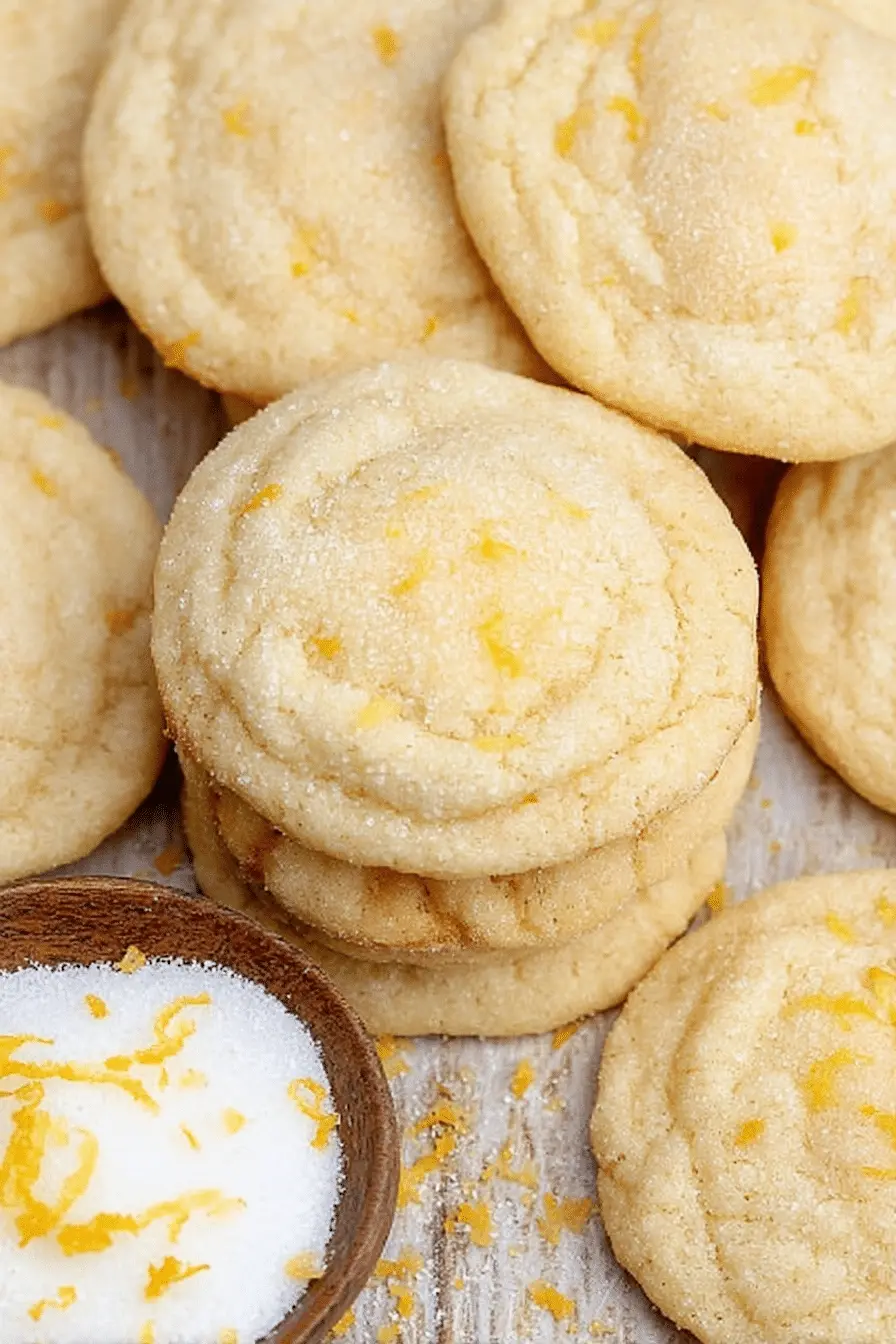
There’s something about a cookie that hits the sweet spot of soft, slightly chewy, and bright with citrus — that’s what these soft & chewy lemon cookies deliver. The first thing I noticed while baking these in my kitchen was the aroma: citrus oils hitting the warm butter, filling the room with a sunny, almost floral brightness. When the dough first came together it felt pillowy and forgiving, and after their brief bake they puff up, look almost cloud-like, then settle into tender cookies with a glossy exterior and a soft, chewy center. If you like lemon-forward bakes that aren’t cloyingly sweet, these are for you — they’re balanced, buttery, and have that clean lemon snap at the finish that makes you reach for a second one. I’ve made these cookies dozens of times — for after-school snacks, for book club, and for a last-minute picnic — and every batch taught me something useful. Early on I learned the simple trick of rubbing lemon zest into the sugar before creaming it into the butter: that little ritual releases the lemon’s volatile oils and brightens every bite. I also learned to respect the brief chilling time; the dough benefits from a pause in the fridge so the cookies spread just enough to get the thin crackled tops without flattening completely. I’ll walk you through the exact recipe I use (the one that yields about 20 cookies) and share the little troubleshooting tips I’ve picked up so you can get consistent, soft and chewy results at home.Ingredients You'll Need
- Unsalted butter – the rich base that gives these cookies their tender, buttery mouthfeel; use softened butter for easy creaming.
- Granulated sugar – adds sweetness and helps with structure; a portion is also used for rolling to give a sparkly finish.
- Lemon zest – the concentrated lemon flavor; rubbing it into the sugar releases oils and deepens the lemon profile.
- Egg + egg yolk – provide structure, fat, and chew; the extra yolk keeps the center soft and tender.
- Lemon extract – optional but potent; boosts lemon flavor without adding extra liquid.
- All-purpose flour – the main structure builder; spoon and level for accurate measurement to avoid dense cookies.
- Baking soda – lightens and helps with gentle spread; activated briefly by the lemon juice for a subtle lift.
- Cornstarch – a little secret for softness; it tenderizes the crumb so cookies stay chewy rather than cakey.
- Salt – balances sweetness and brightens flavors; don’t skip it.
- Lemon juice – provides acidity and real lemon taste; it reacts with the baking soda for that short, feathery rise.
- Granulated sugar for rolling – creates a pretty sparkly exterior and a tiny bit of texture contrast.
Step-by-Step Instructions
- Prep: take the butter out so it’s softened to room temperature and set one large egg and one egg yolk out to warm. Preheat the oven to 325°F when your dough has chilled and is ready to bake. This recipe makes about 20 cookies.
- Cream butter, sugar, and lemon zest: Using a stand mixer fitted with the paddle attachment, beat 12 tbsp unsalted butter, softened with 1 ½ cups granulated sugar and 1 tbsp lemon zest for about 3–4 minutes until the mixture is light and airy. Scrape down the bowl at least once. Tip: rubbing zest into the sugar between your fingertips before adding it to the butter unlocks more aroma and flavor — you’ll smell it instantly.
- Add eggs and extract: Mix in 1 large egg and 1 large egg yolk plus 2 tsp lemon extract (or 1 tsp lemon + 1 tsp vanilla) until glossy and combined. If your eggs are cold the batter will look slightly curdled — that’s fine, the warmth of the other ingredients and the later mixing will bring it back together.
- Combine dry ingredients in a mound: In a separate bowl whisk together 3 cups all-purpose flour (spooned & leveled), 1 tsp baking soda, 1 tsp cornstarch, and 3/4 tsp salt. Make a well in the center of the dry ingredients and mound the baking soda near the top as the original recipe suggests.
- Activate the baking soda: Sprinkle 2 tbsp lemon juice over the mound of baking soda — it will foam briefly as the acid reacts with the base. This is intentional and gives the cookies a gentle lift. Add the dry mixture on top of the wet and mix just until combined; do not overmix.
- Adjust and chill: The dough should be soft but scoopable. At this point you can refrigerate the whole bowl of dough or scoop into balls (~1 ½–2 tbsp each) and chill. I usually scoop first: the dough is easier to handle and the chilled balls bake more uniformly. Cover and refrigerate for at least 1 hour; overnight is fine and can deepen the flavor.
- Roll in sugar: Preheat the oven to 325°F. Pour about ¼ cup granulated sugar into a shallow bowl and roll each chilled ball in the sugar to coat. This gives the cookies a delicate shimmer and a slightly crisp bite on the exterior.
- Bake: Line baking sheets with parchment paper or silicone mats and place about 6–8 cookies per sheet (give them room to spread). Bake for 10–12 minutes. The correct cue: cookies should look puffy and only very slightly golden around the edges — they’ll still be pale in the center and that’s good. DO NOT OVERBAKE; they’ll firm up as they cool.
- Shape and cool: Right when the cookies come out of the oven, swirl a cup around each cookie to make them perfect circles if needed (this is the baker’s trick I use every time). Let them rest on the baking sheet for 5 minutes to set, then transfer carefully to a wire rack to cool completely. Sprinkle extra granulated sugar and a little lemon zest on top for sparkle and aroma.
Tips for Perfect Cookies
I treat baking like a small science experiment, and these are the techniques that make these lemon cookies reliable. Take these as habitual checks to guarantee soft, chewy results:- Measure flour properly: Spoon it into the cup and level it off; packing flour makes the dough heavy and dry. If you weigh ingredients, this recipe works best with about 360–375g of flour (for reference if you convert).
- Don’t overmix: Once the flour is in, mix until you see the streaks disappear. Overworking develops gluten and yields cakier, tougher cookies.
- Chill the dough: Cold dough spreads less, so chilled cookie balls bake into soft centers with crackled tops — 1 hour is the minimum I recommend.
- Watch oven temps: My oven runs a touch hot, so I bake at 325°F. If your oven bakes hot, check at 9 minutes. The cookie will still look underdone in the center when it’s ready; it firms as it cools.
- If dough is too sticky: Pop it back in the fridge for 15–20 minutes. If it’s still sticky after chilling, dust your hands with a little flour or chill the scooped balls on the tray before rolling in sugar.
- If cookies spread too much: Your dough may have been too warm or the butter too soft. Next time chill longer or reduce butter by 1 tbsp. Alternatively increase flour by a tablespoon or two if you live in a humid climate.
- Soft center fix: If your cookies turn out dry, add an extra egg yolk next batch or replace a tablespoon of flour with cornstarch to tenderize the crumb.
Variations for Dietary Restrictions
I often get asked how to adapt this cookie while keeping that soft, chewy texture. Here are tested swaps that work well:- Gluten-free: Use a 1:1 gluten-free all-purpose blend that already contains xanthan gum. If your blend lacks it, add 1/4 tsp xanthan gum to help with the chewiness and structure.
- Vegan: Replace butter with vegan butter sticks (not spreads) and use a flax egg (1 tbsp ground flax + 3 tbsp water per egg, chilled 10 minutes) for structure. Add an extra teaspoon of lemon extract if you miss the egg yolk’s richness.
- Lower sugar: Reduce granulated sugar by up to 25% if you prefer milder sweetness, but keep the sugar used for rolling since it provides textural contrast.
- Egg-free: Applesauce can replace the egg in a pinch (3 tbsp applesauce per egg), but you may lose a bit of chew — counter that with a teaspoon more cornstarch.
Pairing Ideas with Beverages
Lemon cookies are bright and can pair with a surprising range of drinks. The goal is to either complement the lemon note or provide a soothing counterpoint.- Herbal teas: Chamomile or mint tea soothes and lets the lemon shine without competing.
- Black tea: Earl Grey’s bergamot scent echoes citrus notes nicely for a grown-up pairing.
- Cold beverages: Classic lemonade for a citrus-on-citrus party, or iced green tea for a lighter match.
- Coffee: The roast bitterness contrasts the cookie’s brightness and balances sweetness.
- Adult pairings: A light sparkling wine or a gin and tonic (the quinine and citrus work surprisingly well) for parties.
Creative Serving Suggestions
These cookies are very adaptable — here are a few presentation and usage ideas I actually serve at gatherings:- Cookie platter: Arrange cookies with fresh lemon slices, sprigs of mint, and small bowls of lightly sweetened ricotta for dipping.
- Ice cream sandwiches: Cool the cookies completely and sandwich a scoop of vanilla or lemon sorbet for a bright frozen treat.
- Decorating: Dust with extra granulated sugar or make a quick glaze with powdered sugar and lemon juice for a glossy finish; drizzle, don’t drown, to keep chewiness.
- Party favors: Stack three cookies, tie with twine, and tuck a small sprig of rosemary or a thin lemon peel curl for a pretty gift.
Frequently Asked Questions
Below are the most common questions I get when I bring these cookies to a potluck — and the answers you’ll find helpful during baking.- How should I store soft and chewy lemon cookies? Store them in an airtight container at room temperature for up to a week. For longer freshness, you can refrigerate them.
- Can I freeze the dough or baked cookies? Yes! You can freeze the cookie dough for up to 2 months. Just roll it into balls, place them in a freezer-safe container, and thaw before baking. Baked cookies can also be frozen for up to 3 months.
- What if I don't have lemon extract? You can substitute lemon extract with extra lemon juice, or use a combination of lemon and vanilla extract for a different but still delicious flavor.
- Can I make these cookies gluten-free? Absolutely! Substitute all-purpose flour with a gluten-free flour blend, but make sure it includes xanthan gum for the best texture.
- How do I know when the cookies are done baking? The cookies will look puffy and slightly golden around the edges. For the perfect soft and chewy texture, be sure not to overbake them; they will firm up as they cool.
- My cookies spread flat — what happened? Likely the dough was too warm or overcreamed butter; chill the dough longer next time and make sure your butter is softened but not greasy. Also check that your baking soda is fresh.
- My cookies are cakey — how do I get chewiness? Reduce mixing after adding flour, add a small amount of cornstarch (this recipe already includes it), and consider using an extra egg yolk in future batches.
Conclusion
Soft & chewy lemon cookies are one of those reliably satisfying baked goods that brighten any day. They’re forgiving, adaptable, and reward a little patience with a chilled dough and careful timing. I bake these when friends drop by unannounced or when I want a bright, citrusy treat to balance a heavy meal — and I always leave the batter in the fridge for an extra day if I’m busy. Try the recipe as written the first time so you can learn how your oven and ingredients behave; once you know that, adapt with confidence. For another zesty treat, try baking our mini lemon meringue tarts for your next gathering! When you bake these, pay attention to the little tells — the way the lemon-scented butter smells when creamed, the gentle foam when lemon juice hits baking soda, and the pale, puffy look right out of the oven. Those cues will build your intuition so you can repeat the results every time. Happy baking — and if you try a variation (vegan, gluten-free, or boozy adult pairing), I’d love to hear what worked for you.Recipe Card
Soft & Chewy Lemon Cookies: The Ultimate Treat for Cookie Lovers
- Prep
- 10 min
- Cook
- 10 min
- Total
- 80 min
- Serves
- 20
- Calories
- 203 kcal
- Carbs
- 32.00 g
Ingredients
- 12 tbspunsalted butter, softened
- 1.5 cupsgranulated sugar
- 1 tbsplemon zest
- 1 largeegg, room temperature
- 1 largeegg yolk, room temperature
- 2 tsplemon extract
- 3 cupsall-purpose flour
- 1 tspbaking soda
- 1 tspcornstarch
- 0.75 tspsalt
- 2 tbsplemon juice
- 0.25 cupgranulated sugar, for rolling & garnishing
Instructions
- 1
Beat the butter, sugar, and lemon zest in a stand mixer until light and fluffy.
- 2
Add eggs and extract(s), mix again.
- 3
Add the dry ingredients in a mound with baking soda on top and lemon juice.
- 4
Refrigerate the dough for at least 1 hour.
- 5
Preheat the oven to 325°F and roll the balls in granulated sugar.
- 6
Bake for 10-12 minutes.
- 7
Let them cool before transferring to a wire rack.
You might also like
Reviews
Be the first to review this.