- Prep
- 30 min
- Cook
- 90 min
- Total
- 120 min
- Serves
- 10
- Calories
- 180 kcal
- Carbs
- 30.00 g
Introduction
I first met soupe au pistou on a rainy spring evening in my kitchen, stirring a pot that smelled like the whole neighborhood had been chopped into basil and garlic. It’s a humble Provençal vegetable soup built around seasonal produce, beans, short pasta, and a bright spoonful of pistou — the basil-garlic-olive oil mixture that makes the whole thing sing. The dish is rustic and generous: both a pantry-friendly weekday meal and a celebratory pot you bring to a long table when friends stop by. Historically, soupe au pistou comes from Provence, the sun-drenched southeast of France, where gardens overflow with basil, tomatoes, and zucchini. It’s related to Italian minestrone but distinguished by pistou — a Provençal cousin of pesto without pine nuts — and the casual, vegetable-forward approach that shows off the Mediterranean’s best flavors. This version is the one I make when I want something that tastes like summer but warms right through to the bone on chillier nights.Ingredients Required for Soupe au Pistou
- Olive oil – the base for softening onions and coaxing flavor from garlic; use a fruity extra-virgin if possible.
- Onions or leeks – add sweetness and depth when sweated slowly.
- Garlic – gives the pistou its punch and the soup a savory backbone.
- Fresh basil – the star of the pistou; fragrant and bright, it lifts the whole pot.
- Tomato – a small, peeled tomato in the pistou adds acidity and body.
- Parmesan – grated into the pistou for savory umami; swap for nutritional yeast for vegan versions.
- White beans (navy or cannellini) – provide creaminess and protein; soak overnight or use canned in a pinch.
- Seasonal vegetables (carrot, zucchini, green beans, peas) – the heart of the soup; choose firm, ripe produce.
- Short pasta (orzo, shells, or vermicelli) – adds body and makes the soup satisfying; gluten-free pasta works fine.
- Bay and thyme – simple aromatics that round out the broth without stealing the show.
- Vegetable (or chicken) stock – keep it low-sodium so you can control seasoning.
Step-by-Step Cooking Instructions
I like to think of this as a two-part job: get the beans soft and tender, then build the soup so every vegetable keeps its character. Below is the tested, practical route I use most weekends.- Soak the beans (if using dried): Rinse and pick through 1 cup of dry white navy beans, cover them with cold water and soak overnight. If you forget, use the quick-soak method: cover with water, bring to a boil for 1 minute, turn off the heat, and let sit for 1 hour. Drain and rinse before cooking. I’ve found that well-soaked beans break down less in the soup and keep their shape better.
- Cook the beans: Place the soaked beans in a saucepan with 2 bay leaves and enough water to cover by a couple of inches. Bring to a boil, then lower to a gentle simmer and cook for about 15 minutes — the idea here is to start them; we’ll finish them in the soup so they don’t fall apart. If your beans still feel very firm, add another 10–20 minutes on low heat. Keep the cooking liquid if you like a silkier broth.
- Sweat the aromatics: In a large Dutch oven, heat a few tablespoons of extra-virgin olive oil over medium-low. Add 2 diced medium onions (or 4 cleaned and sliced leeks) and cook, stirring occasionally, until soft and translucent — about 8–10 minutes. The odor will shift from sharp to sweet; that’s your cue to add the next veggies.
- Add herbs and vegetables: Stir in fresh thyme leaves and then add diced carrots, zucchini, and trimmed green beans. Add 6 minced garlic cloves and a teaspoon or so of fine sea salt. Turn up the heat briefly to wake the vegetables, but keep it moderate — you want them to soften, not brown. Cook for about 8–10 minutes until they start to yield.
- Assemble the soup: Pour in 2 quarts of low-sodium vegetable stock (or chicken stock if you prefer) and add the pre-cooked beans along with their cooking liquid if you saved it. Add 1 cup of fresh or frozen peas and then the short dry pasta of your choice. Bring everything to a boil, then reduce to a simmer and cook for about 5–8 minutes, or until the pasta is tender. Timing depends on the pasta shape — orzo and small elbows will be quicker; shells slower.
- Make the pistou: In a food processor, pulse one large clove of garlic with a generous pinch of salt. Add about 2 packed cups of fresh basil leaves, one peeled and seeded small tomato, and 1½ ounces of finely grated Parmigiano-Reggiano. Pulse to combine, then stream in about ¼ cup extra-virgin olive oil until the mixture is relatively smooth and emulsified. Taste and add more salt if needed. If your pistou seems olive-oil heavy, a little more tomato or cheese will bind it and brighten the flavor.
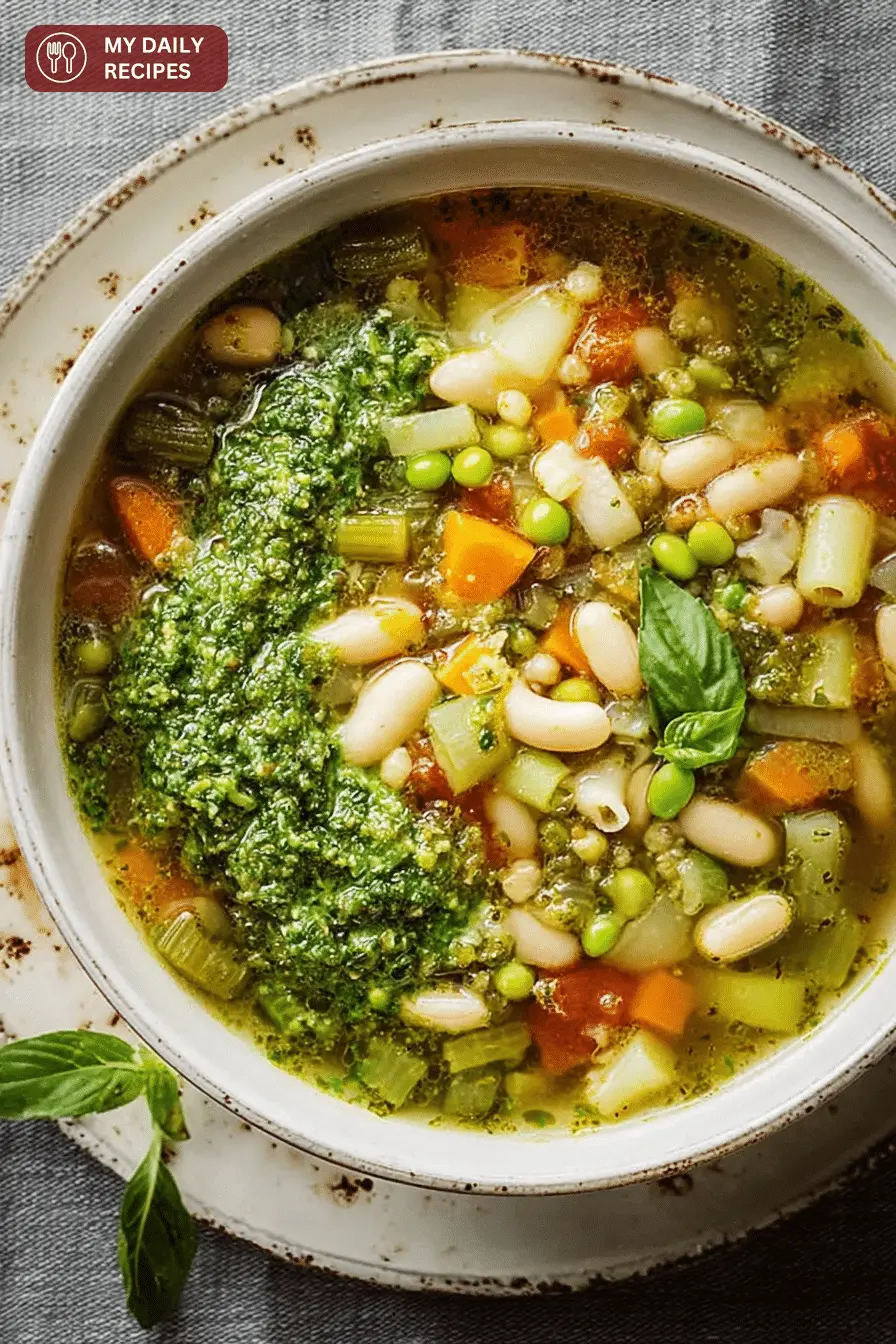
- Serve: Ladle the hot soup into bowls and drop a generous spoonful of pistou into each. The heat from the broth will release the basil’s aroma without cooking it flat. I always keep extra pistou on the table — it’s addictive.
Common Pitfalls and How to Fix Them
- Soup tastes flat: Before adding more sugar or tomatoes, taste for salt. Soupe au pistou needs seasoning. A final squeeze of lemon brightens it too.
- Pistou loses its brightness: Don’t cook the pistou in the soup. Add it just before serving. If it’s been sitting and looks dull, stir in a splash of olive oil and a bit more fresh basil.
- Pasta becomes mushy: Add pasta late and cook just until al dente. If leftovers will hold the soup, cook the pasta separately and add to bowls when serving.
- Beans are chalky: Undersoaked or old beans take much longer to cook. When in doubt, use canned beans for consistent results.
Vegan and Gluten-Free Variations
I make this soup for all sorts of diets. The structure is forgiving, and with the right swaps it’s an inclusive pot that still tastes like Provence.- Vegan: Use vegetable stock and replace the Parmigiano-Reggiano in the pistou with nutritional yeast for savory depth, or omit the cheese entirely. A tablespoon of tahini can also give a silky mouthfeel if you want a richer finish.
- Gluten-Free: Use a gluten-free short pasta or a small rice-shaped variety. Alternatively, cook the pasta separately in salted water and add to bowls so it doesn’t absorb too much broth over time.
- Dairy-free & vegan pistou: Blend basil, garlic, tomato, olive oil, and a little lemon juice. The lemon brightens in place of cheese.
- Bean-free (lighter): If you want a lighter, quicker soup, skip the dried beans and add extra peas and chickpeas or canned white beans for simplicity.
Choosing the Best Seasonal Vegetables
Soupe au pistou is essentially a vehicle for vegetables, so picking the right ones makes all the difference.- Spring: peas, young carrots, tender green beans — they bring sweetness and a fresh snap.
- Summer: zucchini, tomatoes, and basil are at their fullest. Use ripe tomatoes in the pistou for acidity and body.
- Autumn: hold onto the last zucchini, add squash or small chunks of potato for heartiness.
- Winter: rely on stored carrots, leeks, and canned or soaked beans; a little zucchini still works if you blanched and froze it.
Pairing Suggestions with Provençal Dishes
Soupe au pistou sits comfortably at the center of a Provençal meal. Here are pairings that complement its flavors:- Rustic country bread: A crusty baguette or a country loaf to soak up the broth — dunking is encouraged.
- Salade verte: A simple peppery lettuce salad lightly dressed with vinaigrette keeps the meal bright.
- Tapenade or marinated olives: The salt and olive flavors play nicely with basil and beans.
- Wines: A dry rosé from Provence is classic — it’s light, crisp, and won’t overwhelm the soup. A crisp, unoaked white like a Picpoul or a young Sauvignon Blanc also works well.
Cultural Significance of Soupe au Pistou
In Provence, soupe au pistou is more than a recipe; it’s a family pot to which everyone brings a contribution. My grandmother’s version always had more garlic and less cheese, a nod to a frugal household where flavor came from herbs and good bread. Locals often serve it as a communal bowl during summer gatherings; you ladle, add pistou to taste, and pass the bread. I once chatted with an older neighbor who told me she made it every Sunday in summer when the garden overflowed — she called it the soup that used up everything and still fed you like a feast. That spirit — seasonal abundance, simplicity, and communal eating — is what keeps soupe au pistou alive in Provence and kitchens like mine. It’s patient cooking: a long, slow pot that rewards you with depth rather than flash.Tips for Meal Prep and Storage
Soupe au pistou is forgiving for make-ahead cooking, but a few rules keep it tasting fresh:- Store the pistou separately: It stays bright and green in a small jar with a thin film of olive oil on top for a few days in the fridge.
- Refrigeration: Keep the soup (without pistou) in the refrigerator for 3–4 days. The flavors meld deliciously overnight; it often tastes better the next day.
- Freezing: You can freeze the soup for up to 3 months, but avoid freezing the pasta — it gets mushy. Freeze in portions and add freshly cooked pasta when you reheat.
- Reheating: Gently reheat on the stovetop over medium-low so the vegetables don’t break down. Add a splash of water or stock if the soup has thickened from absorbed pasta.
- Make-ahead pistou: Pistou keeps for 2–3 days refrigerated or can be frozen in ice cube trays for single-portion use later.
FAQ
What is soupe au pistou? Soupe au pistou is a classic Provençal vegetable and bean soup cooked with small pasta and finished with pistou — a bright mix of garlic, basil and olive oil (often with parmesan). It’s hearty, fresh, and full of Mediterranean flavors. How do I make the pistou and when should I add it? Pulse garlic, basil, tomato and parmesan in a food processor, then drizzle in olive oil until smooth. Spoon the pistou into each bowl just before serving so the fresh basil and garlic shine. For vegan versions, replace parmesan with nutritional yeast or omit it. Can I make this recipe vegan or gluten-free? Yes. For vegan, use vegetable stock and swap the parmesan for nutritional yeast or omit it. For gluten-free, use a gluten-free short pasta. The rest of the soup stays the same. Do I have to soak the dried white beans? Can I use canned beans instead? Soaking dried beans overnight (or using the quick-soak method) improves texture and shortens cooking time, but you can absolutely use canned beans — just drain and rinse them and add them when the recipe calls for beans. What’s the best way to store and reheat soupe au pistou? Store the soup (without pistou) in the refrigerator for 3–4 days or freeze up to 3 months. Reheat gently on the stove, then add freshly made pistou to each bowl before serving. Keep leftover pistou separate refrigerated for a few days.Conclusion and Serving Suggestions
Soupe au pistou is one of those dishes that rewards attention — the basil’s perfume, the chew of beans, the comfort of pasta. You’ll notice small changes as you make it more often: I now always add a little extra garlic to the pistou and cook the pasta separately if I plan to have leftovers. Serve it with a good crusty bread, a crisp salad, and a chilled rosé for a Provençal-style meal that’s both easy and memorable. If you try it, tell me how you used the pistou — I love hearing about substitutions and happy kitchen mistakes that become new habits. Enjoy the slow-building scent as the pot simmers; that’s the signal that dinner is ready and the house has officially been invited to the table.Recipe Card
Delight in Soupe au Pistou: The Ultimate Comforting French Soup Recipe
- Prep
- 30 min
- Cook
- 90 min
- Total
- 120 min
- Serves
- 10
- Calories
- 180 kcal
- Carbs
- 30.00 g
Ingredients
- 1 cupdry white navy beans
- 2bay leaves
- 3 tbspextra-virgin olive oil
- 2medium onions, peeled and diced
- 2 tspfresh thyme leaves
- 2medium carrots, peeled and diced
- 2medium zucchini, diced
- ½ lbgreen beans, tips removed and cut
- 6 clovesgarlic, peeled and minced
- 1 tbspfleur de sel
- 2 qtlow-sodium vegetable stock
- 1 cupfresh or frozen peas
- 1 cupshort dry pasta
- 1 largeclove of garlic, peeled
- 1 tspfleur de sel
- 2 cupspacked fresh basil leaves, chopped
- 1 smalltomato, peeled, seeded, and diced
- 1 ½ ozfinely grated Parmigiano-Reggiano cheese
- ¼ cupextra-virgin olive oil
Instructions
- 1
Rinse and sort the beans. Soak the beans overnight covered in cold water. The next morning, drain the beans, rinse, and use as directed below.
- 2
Rinse and sort the beans. Transfer to a saucepan and cover with 2 inches water. Bring to a boil, and keep boiling for 1 minute. Turn the heat off, cover the saucepan, and let rest for 1 hour. Drain the beans, rinse, and use as directed below.
- 3
Transfer the soaked beans to a large saucepan. Add the bay leaves and cover the beans with about 2 inches of water. Bring to a boil over high heat, then simmer gently for 15 minutes. Remove from heat and set aside.
- 4
In a Dutch oven or large pot, heat olive oil. Add onions or leeks and cook until soft. Add thyme, diced carrots, zucchini, green beans, garlic, and salt. Cook until vegetables soften.
- 5
Add vegetable stock and bring to a boil. If using dried beans, add cooked beans and liquid. If using canned beans, add drained beans. Next, add peas and pasta, and simmer until pasta is cooked.
- 6
In a food processor, pulse garlic with salt until chopped. Add basil, tomato, and cheese. Blend with olive oil until smooth. Adjust seasoning.
- 7
Ladle soup into bowls and add pistou. Keep extra pistou available.
You might also like




Reviews
Be the first to review this.