- Prep
- 20 min
- Cook
- 35 min
- Total
- 65 min
- Serves
- 12
- Calories
- 334 kcal
- Carbs
- 51.00 g
Introduction
I still remember the first time I swapped regular dough for a bubbly jar of sourdough discard and rolled it into cinnamon rolls — the kitchen smelled like caramelized brown sugar and warm yeast, but with this subtle tang that made each bite feel grown-up and complex. Sourdough cinnamon rolls take the familiar, pillowy comfort of a cinnamon roll and add depth from fermentation: a slightly tangy background, a chewier crumb, and a richer aroma that you notice as soon as you slide the pan into the oven. Because these rolls rely on an overnight rest rather than a fast proof, you get more flavor with less frantic timing. The fermentation breaks down starches and sugars in the dough, which not only develops aroma but helps the brown sugar and cinnamon filling behave differently in the bake — it melts and becomes glossy, not gritty. For a classic spin, check out our recipe for homemade cinnamon rolls.Ingredients You'll Need
- All-purpose flour (2 1/2 cups) – the structure of the rolls; use high-protein all-purpose if you can for better chew and rise.
- Sourdough starter discard (1/3 cup) – adds tang and fermentation flavor; use active discard for best lift.
- Buttermilk (1 cup) – provides acidity and tenderness; whole-milk buttermilk gives the richest crumb.
- Cold butter (8 tablespoons) – grated into the flour to create a flaky, soft dough.
- Honey or granulated sugar (1 tablespoon + 1 teaspoon) – a touch of sweetness to feed the starter and round the flavor.
- Fine sea salt (3/4 teaspoon) – balances sweetness and strengthens gluten.
- Baking powder (1 teaspoon) & baking soda (1/2 teaspoon) – held back until just before rolling to give the overnight dough a final lift.
- Brown sugar (3/4 cup) – the filling’s body; light brown gives molasses notes that caramelize beautifully.
- Ground cinnamon (2 teaspoons) – the classic spice; fresh ground is more aromatic.
- Melted butter for brushing (about 5 tablespoons total) – makes the filling glossy and helps the sugar stick.
- Powdered sugar (1 cup), vanilla extract (1 teaspoon), milk (2 tablespoons) – for the simple glaze that sets shiny and slightly tangy.
- Optional: extra butter for pan and add-ins (nuts, chocolate) – see variations below.
Step-by-Step Instructions
- Mix the dough (hands-on, 15 minutes active + overnight rest) I grate cold butter into the flour using the coarse side of a box grater — it feels like snow in your hands and the little flakes disappear into the flour when you toss them. Cut the butter in briefly with a bench scraper so there are pea-sized bits throughout the flour; this helps create a tender, slightly layered crumb. Stir in the sourdough starter discard, buttermilk, honey, and salt with a spatula until everything comes together into a shaggy dough. Don’t add the baking powder and baking soda yet — those are held back to activate before rolling. Cover the bowl and let it rest on the counter for 10–12 hours (overnight). After about an hour, you’ll notice the dough feel softer and smell slightly tangy; that’s the fermentation doing its work.
- Make the cinnamon-sugar filling and the glaze (10 minutes) Mix the brown sugar and cinnamon in a small bowl; the aroma hits you immediately — warm and molasses-forward. In another small bowl whisk together the glaze ingredients (powdered sugar, vanilla, milk) until smooth; it should be thick but pourable. Preheat your oven to 375°F (190°C) and butter a 12" cast iron skillet or a similar-sized baking dish.
- Add leavening agents (5 minutes) Mix baking powder and baking soda together until no lumps remain, then sprinkle over the rested dough and work it in with your hands. This step gives a bit of extra lift and tenderness since the dough rested without chemical leaveners. If you skip this, expect a slightly denser roll; don’t overwork — incorporate just until even.
- Roll out the dough (10–15 minutes) Generously flour your work surface and turn the dough out. Flour the top too. Roll into a 12" x 24" rectangle — I mark the dimensions with the rolling pin to keep it even. The dough should feel elastic but not sticky; if it fights you, let it relax for 5 minutes before finishing the rectangle. If it’s sticking, dust with a little extra flour but avoid over-flouring, which can dry the dough.
- Assemble and cut (10 minutes) Brush the dough with about 4 tablespoons melted butter, leaving a half-inch strip bare around the edges so the roll seals. Sprinkle the cinnamon-sugar evenly. Starting on the long side, roll the dough tightly into a log — the first turn decides whether the roll is neat or sloppy, so take a breath and keep it snug. Use a bench scraper to cut the log into 12 pieces (about 1.5 inches each). Tip: when you cut, press down straight and then wiggle the bench scraper forward — this gives cleaner edges than a sawing motion and keeps the layers intact.
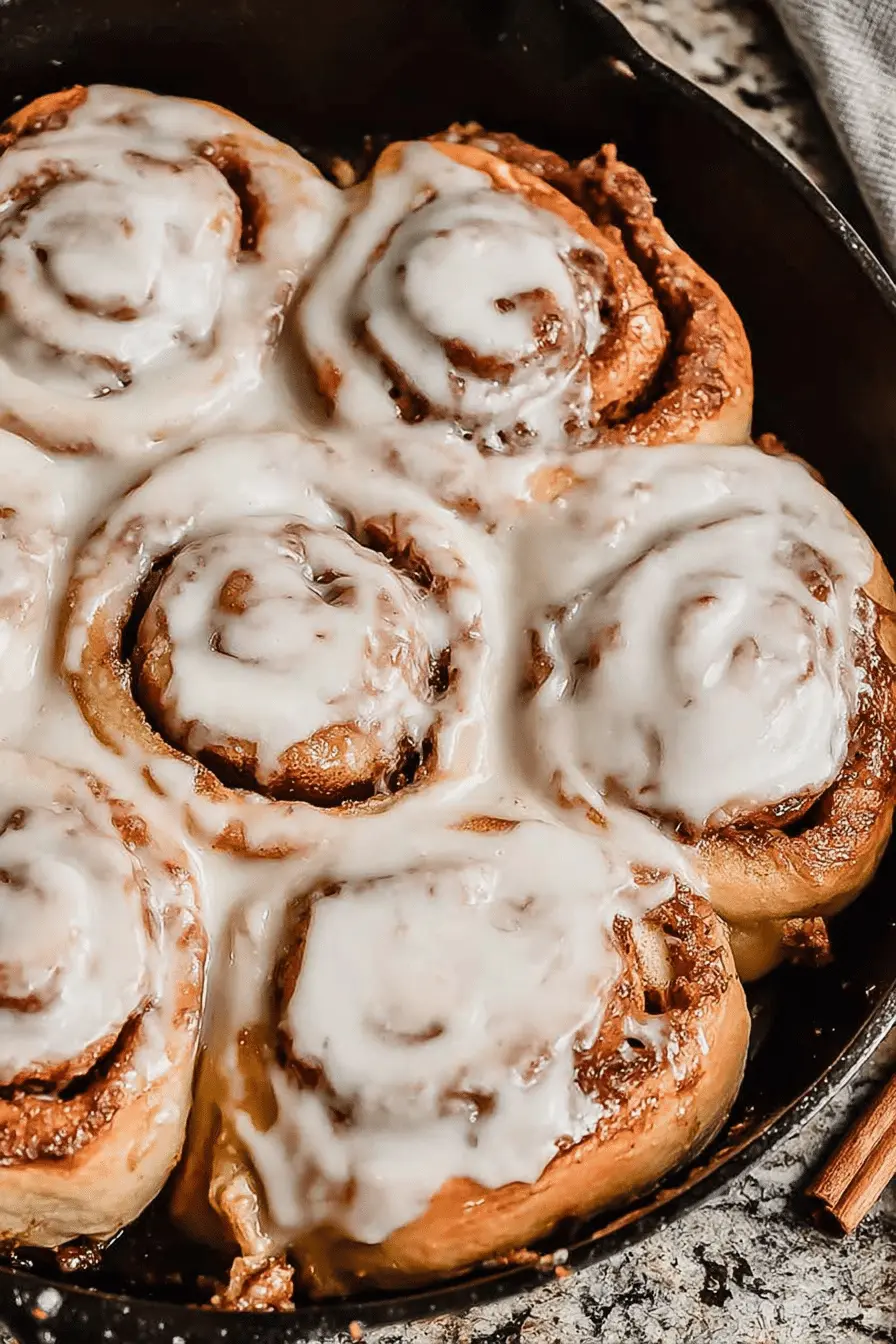
- Arrange in the skillet and bake (35–40 minutes) Place the rolls in the prepared skillet with a little space to expand. Bake at 375°F (190°C) for 35–40 minutes until the tops are golden brown and a skewer inserted into the center comes out with only a few moist crumbs. The aroma will change from sweet cinnamon to a toasty, caramel scent; if the tops brown too fast, tent with foil for the last 10 minutes. Remove from the oven and immediately brush with the glaze so it melts into crevices and makes a glossy finish.
- Freezing option If you want to freeze before baking, shape the rolls and place them in a round disposable tin lined with parchment paper, cover tightly with plastic and foil, and freeze for up to 3 months. When ready to bake, preheat oven to 350°F (176°C) and bake from frozen for 40–45 minutes (no thawing). The centers may need the additional time to come up to temperature.
Tips for First-Time Sourdough Bakers
- Start with an active discard – your starter should be recently fed and bubbly. If it smells overly sharp or flat, give it a feed and wait until it peaks.
- Temperature matters – I keep my kitchen around 68–72°F for this overnight method. If your kitchen is colder, give it a longer overnight rest; if it’s warm, shorten the time or refrigerate for part of the rest to avoid over-fermentation.
- Feel over time – instead of strictly watching the clock, look for dough that’s a bit puffed and softer than when you mixed it. It won’t double like enriched yeast doughs do, but it should look aerated.
- Dough too sticky? – a very sticky dough means the flour was under-measured; flour your surface and hands lightly and give the dough a short bench rest to hydrate evenly. Add flour sparingly — you can always incorporate a tablespoon at a time.
- Rolls too dense? – often this is from under-proofing or a sluggish starter. Next time, ensure your starter is lively and let the shaped rolls sit in a warmer spot for 30–60 minutes before baking to get a final puff.
- Avoid overworking – long kneading isn’t necessary here; develop just enough gluten to make the dough cohesive. Overmixing can make the rolls tight and chewy.
Dietary Modifications: Gluten-Free & Vegan Options
Yes — you can adapt these to dietary needs, but expect differences in texture and timing. If you're looking for pumpkin flavors, our pumpkin pecan cobbler is a delightful alternative to traditional desserts.- Gluten-free flours – use a quality 1:1 all-purpose gluten-free blend (one designed for yeast breads is best). Because gluten-free doughs won’t stretch, rely on binders already in the blend or add 1–2 teaspoons of xanthan gum if your mix lacks it. Expect a slightly denser, more cake-like roll; handle gently and give a longer rest so flours hydrate fully.
- Vegan swaps – swap butter for a solid vegan butter (one with similar fat content) and use plant-based milk for the glaze. For buttermilk, make a vegan version by adding a teaspoon of apple cider vinegar to a cup of soy or oat milk and letting it sit 5 minutes.
- Eggs – this recipe doesn’t use eggs, which makes it easy to adapt to vegan needs without structural changes.
Storage and Reheating Tips
- Room temperature – store cooled rolls in an airtight container for up to 2 days. They stay soft but the glaze can become tacky.
- Refrigeration – keep in an airtight container for up to 3–4 days; the chill firms the butter and the crumb becomes denser but still delicious when reheated.
- Freezing – freeze baked rolls wrapped tightly in plastic and foil for up to 3 months. Thaw overnight in the fridge and reheat as below.
- Reheating (best results) – preheat oven to 350°F (176°C), wrap rolls in foil, and bake 10–15 minutes until warmed through. This method refreshes the crust and melts the interior butter. If short on time, microwave for 20–30 seconds, but expect a softer, slightly gummy texture.
Flavor Variations and Add-Ins
If you're looking for a twist, try making caramel pecan cinnamon rolls with our recipe.- Classic pecan caramel – sprinkle toasted chopped pecans and a tablespoon of butter over the cinnamon-sugar before rolling, and finish with a drizzle of warm caramel.
- Chocolate – swap half the brown sugar for chocolate chips or spread a thin layer of chocolate-hazelnut spread before rolling.
- Fruit preserves – spread a thin layer of apricot or raspberry jam under the sugar for pockets of fruit; the jam will loosen slightly during baking but adds bright contrast to the tangy dough.
- Spice swaps – add cardamom or ground ginger for a more complex profile; I often add a pinch of nutmeg to the filling in winter.
Health Benefits of Sourdough
Sourdough fermentation isn’t just flavor — it changes the way the dough behaves in your body. The long, slow fermentation breaks down some of the starches and proteins in flour, which can make the bread easier to digest for some people. Fermentation also lowers the glycemic response compared with quick-rise commercial breads, meaning blood sugar rises more slowly after eating. And because wild yeast and bacteria are working on the dough, you get more complex flavors with less added sugar. While individual responses vary and this isn’t a cure-all, many people notice sourdough baked goods sit lighter than their conventional counterparts.Conclusion and Serving Suggestions
There’s something quietly satisfying about pulling a skillet of golden, glossy sourdough cinnamon rolls from the oven — the crust is caramelized, the swirl is layered and tender, and the glaze pools into every crevice. I serve these with strong coffee or a milky tea; for brunch, pair with scrambled eggs or a fruit compote to cut the sweetness. If you want an indulgent touch, spread a little softened cream cheese on top while the rolls are still warm. These rolls are forgiving and versatile — I make them when I have starter discard to use up, and they’ve become my go-to weekend comfort bake. Try one variation at a time, take notes, and don’t be afraid to tweak resting times to match your kitchen. Share what you tried and what you learned — sourdough teaches patience, but rewards it handsomely.Frequently Asked Questions
- Can I use my sourdough starter for this cinnamon roll recipe? Absolutely! This recipe is designed to use sourdough starter discard, which adds a unique flavor and texture to the cinnamon rolls.
- How can I make these cinnamon rolls gluten-free? You can use a gluten-free flour blend instead of all-purpose flour. Be sure to check the blend's recommended ratios for best results!
- What should I do if my dough doesn't rise? Make sure your sourdough starter is active and bubbly before using it. Sometimes, warmer temperatures can help speed up the rising process, so you might need to adjust your proofing environment.
- Can I freeze the cinnamon rolls before baking? Yes! You can shape the rolls, place them in a lined tin, and freeze them. Just cover them well, and when you're ready, bake them straight from the freezer!
- What is the best way to reheat leftover cinnamon rolls? The best way to reheat them is in the oven. Wrap them in foil and bake at 350°F (176°C) for about 10-15 minutes until warmed through. You can also microwave them for 20-30 seconds if you're in a hurry!
Recipe Card
Effortless Sourdough Cinnamon Rolls: Your Ultimate Breakfast Treat
- Prep
- 20 min
- Cook
- 35 min
- Total
- 65 min
- Serves
- 12
- Calories
- 334 kcal
- Carbs
- 51.00 g
Ingredients
- 8 tablespoonsbutter (cold)
- 2.5 cupsall-purpose flour
- 1/3 cupsourdough starter discard
- 1 cupbuttermilk
- 1 tablespoonhoney
- 1 teaspoongranulated sugar
- 3/4 teaspoonfine sea salt
- 1 teaspoonbaking powder
- 1/2 teaspoonbaking soda
- 3/4 cuplight brown sugar
- 2 teaspoonsground cinnamon
- 4 tablespoonsbutter (melted)
- 1 tablespoonbutter (melted)
- 1 cuppowdered sugar
- 1 teaspoonvanilla extract
- 2 tablespoonsmilk
Instructions
- 1
Grate the cold butter into a mixing bowl, add the flour, and cut the butter into the flour. Add sourdough starter, buttermilk, honey, and salt. Mix and let rest for 10-12 hours.
- 2
Mix brown sugar and cinnamon in a bowl, and glaze ingredients in another bowl. Preheat oven to 375°F (190°C) and butter a skillet.
- 3
Mix baking powder and baking soda in a bowl and sprinkle on top of the dough, mixing it in.
- 4
Flour the work surface, roll the dough into a rectangle.
- 5
Coat the top with melted butter, sprinkle with cinnamon-sugar, roll into a log and cut into pieces.
- 6
Bake for 35-40 minutes until golden brown. Glaze while hot.
You might also like
Reviews
Be the first to review this.