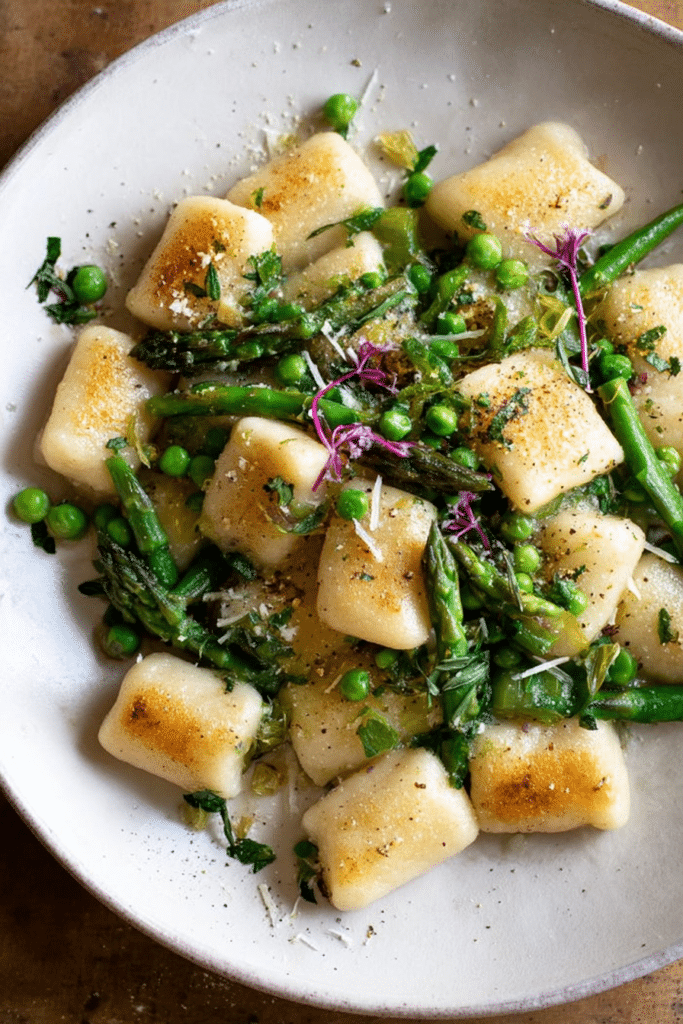
The first time I tossed pillowy ricotta gnocchi with browned butter and early-spring vegetables I remember thinking: this is the kind of simple that feels like a celebration. The scent of butter turning to hazelnut, bright lemon and the green snap of peas — it all says spring in one skillet. I make this dish when I want something elegant without fuss, a midweek dinner that still feels special.
I’ve cooked this version many times in my small kitchen — sometimes rushing after work, sometimes leisurely on a Sunday. There are always tiny differences: one week I use sugar snap peas because they’re crisp and sweet, another I lean on frozen peas because they’re ridiculously convenient. What never changes is the brown butter: that nutty, toasted aroma hits you first and makes the rest of the dish sing. Below I walk through everything I do, from picking potatoes and ricotta to rescuing a too-sticky dough.
Ingredients You’ll Need for Gnocchi
- Peas – fresh or frozen to add sweet pop and bright color; blanch frozen briefly to keep them tender.
- Egg – binds the ricotta dough and gives structure; for vegan swaps, see notes below.
- Whole milk ricotta – the base of the gnocchi; use a creamy, drained ricotta for lightness.
- Grated Parmesan – adds savory, nutty depth to the dough and final seasoning.
- All-purpose flour – the binder; you’ll add a little more for rolling if the dough sticks.
- Kosher salt – seasons the dough and water; salt the boiling water well so the gnocchi tastes seasoned inside out.
- Butter – use real butter for brown butter flavor; it’s the star of the sauce.
- Asparagus – trimmed and thinly sliced, bright and slightly grassy, perfect sautéed.
- Sugar snap peas – optional for crunch and sweetness; thinly slice for even cooking.
- Lemon – zest and juice brighten the butter and cut richness.
- Chives – fresh minced chives finish the dish with oniony freshness.
- Freshly cracked black pepper – for a little bite.
- Flaky sea salt – for finishing and that satisfying crunch on top.
Step-by-Step Instructions for Homemade Gnocchi
Making gnocchi from scratch feels intimidating the first few times, but if you break it down into parts it becomes methodical and even relaxing. I always keep my workspace lightly floured and have a bowl of ice water ready for blanched peas and a clean towel for gentle presses. This recipe yields 2 servings.
- Prep and blanch the peas: Bring a large pot of well-salted water to a rolling boil. Add the peas and cook about 3 minutes until tender. I use a slotted spoon to move them into a bowl of ice water so they halt cooking and keep that bright green. Drain and set aside. Reserve the pot of water — you’ll use it again for the gnocchi.
- Make the ricotta dough: In a mixing bowl beat the egg until smooth. Whisk in about 7.5 ounces of whole milk ricotta until silky, then stir in about half a cup of grated Parmesan. Add half a cup of all-purpose flour and a quarter teaspoon kosher salt. Use a wooden spoon to fold gently until the flour is just incorporated and the dough holds together; over-stirring develops gluten and makes dense gnocchi. The dough should be soft and slightly tacky — not sticky like glue.
- Shape the gnocchi: Turn the dough onto a lightly floured surface. With floured hands, gently roll it into a long rope about the thickness of your thumb. If it sticks, dust with a little extra flour — a tablespoon at a time. Cut the rope into 1/2–1 inch pieces. If you like traditional ridges, roll each piece over the back of a fork or a gnocchi board; I sometimes skip the ridges when I’m short on time and they still cook beautifully.
- Cook the gnocchi: Return the reserved pot of water to a boil and salt it again if needed. Drop the gnocchi in batches so they have room to move. They’ll cook in about 2–3 minutes; they’re done when they float to the top and look slightly plump. Once they float, give them another 30–60 seconds, then scoop them out with a slotted spoon. Drain well.
- Brown the butter: While the gnocchi cook, melt 3 tablespoons of the butter in a small saucepan over medium heat. It will foam, then clarify, then quickly turn golden and smell nutty. Watch it closely — it can go from brown to burnt in under a minute. When it’s a warm brown with toasted bits at the bottom and a fragrant aroma, remove from heat.
- Sauté the vegetables: In a separate skillet melt the remaining tablespoon of butter over medium-high heat. Add thinly sliced asparagus and sugar snap peas; sauté just a minute or two until they caramelize a touch but keep crispness. Stir in the blanched peas to heat through. Finish with lemon zest, a splash of lemon juice and a pinch of salt to taste.
- Toss and serve: Add the drained gnocchi into the brown butter and let them toast for a minute so they pick up that nutty coating — you might hear a gentle sizzle. Plate the gnocchi and spoon the vegetables over the top. Garnish with minced chives, freshly cracked black pepper and a flake of sea salt. Serve immediately.
Timing notes: from start to finish this takes about 30–40 minutes if you keep a steady pace. The key sensory cues: the butter should smell toasty and look a deep golden amber; the gnocchi should float and look slightly translucent at the edges; the vegetables should be bright, not mushy.
Tips for Perfecting Your Brown Butter Sauce
Brown butter isn’t just melted butter — it’s butter cooked until the milk solids toast and the fat takes on a nutty, almost caramel-like aroma. The flavor is deeper and more complex than simple melted butter, and it pairs beautifully with the mildness of ricotta gnocchi.
Step-by-step to brown butter without burning it:
- Use a light-colored pan so you can see the color change — it helps spot those toasted bits.
- Start over medium heat. The butter will foam, then subside — that’s when the milk solids are separating.
- Stir or swirl the pan; when you see tiny brown specks form and smell a warm nutty aroma, remove from heat immediately. Carryover heat can keep browning it for a few seconds.
- If you accidentally burn it (it smells acrid and looks black), toss it and start over — burnt butter tastes bitter and will ruin the dish.
Flavor enhancements I use:
- Add a smashed garlic clove early in the browning process for a mellow garlicky note, then remove before it browns too dark.
- Toss in a few torn sage leaves at the end — they crisp and perfume the butter beautifully.
- A squeeze of lemon brightens the sauce and balances the richness.
If you’re looking for another savory dish, consider making garlic butter chicken as a protein addition to your meal.
Elevate Your Gnocchi with Seasonal Vegetables
Spring vegetables are the reason this dish feels like spring. Their textures and flavors contrast with the soft gnocchi and the rich butter.
- Asparagus – keep it thinly sliced so it cooks in a minute and retains snap and color.
- Fresh peas – sweet and tender; blanch, cool, then finish in the pan so they don’t lose texture.
- Sugar snap peas – add a crunchy, juicy bite; slice thin for easy eating.
- Radishes – thin ribbons give peppery crunch if you like a raw element tossed in at the end.
- Fava beans – if you like more work, shelled fava are buttery and pair beautifully with lemon.
Preparation ideas:
- Quick sauté with a bit of butter and finish with lemon zest for brightness.
- Roast the asparagus at high heat until tips caramelize for a smoky note.
- Keep one vegetable raw (thinly sliced radish or snap peas) to add a textural contrast.
For a delightful accompaniment, try our sautéed spring vegetable salad to enhance your gnocchi dish.
Nutritional Benefits of Seasonal Ingredients
Cooking with spring produce means you’re getting peak-flavor vegetables with the best nutrient profiles. When vegetables are in season they often taste better and can be more nutrient-dense.
- Asparagus – low in calories, high in folate and a good source of vitamins A and K.
- Peas – provide fiber and plant-based protein along with vitamin C and manganese.
- Radishes and snap peas – add crunch and are rich in vitamin C and antioxidants.
Eating seasonally can reduce the time between harvest and your plate, which often preserves nutrients and reduces environmental costs associated with long-distance shipping.
Explore more about the health benefits of seasonal produce through our spring vegetable soup recipe.
Creative Variations to Try
I tinker with this dish all the time. Here are some variations that have worked well in my kitchen:
- Cheese-forward: finish with grated pecorino instead of Parmesan for a saltier edge.
- Nut crunch: toast some hazelnuts or almonds and sprinkle on top for texture contrast.
- Spicy: add a pinch of red pepper flakes to the brown butter for a slow-building heat.
- Herby: fold in torn basil or flat-leaf parsley at the end for herbal freshness.
- Vegan: replace the egg with a tablespoon of aquafaba and use a plant-based ricotta; brown vegan butter or olive oil and toasted nuts add richness.
Notes from testing: adding too much extra flour while shaping makes gnocchi dense. If the dough seems dry, a teaspoon of milk or a light touch of ricotta softens it back up.
Pairings and Side Dish Suggestions
- A spring salad with a sharp vinaigrette balances the buttered gnocchi.
- Simple garlic bread or a warm baguette to soak up the brown butter is always welcome.
- Roasted mushrooms add an earthy, umami counterpoint.
Pair your gnocchi with creamy garlic parmesan mushrooms for a rich and fulfilling dinner.
Storage, Make-Ahead, and Troubleshooting
Make-ahead: You can shape the gnocchi in advance. Lay them on a lightly floured baking sheet and freeze until solid, then transfer to a zip-top bag. Cook from frozen; they’ll take a minute or two longer and will float when done.
Leftovers: Store cooked gnocchi in an airtight container with a drizzle of olive oil to prevent sticking. They’ll keep in the fridge for up to 3 days and reheat gently in a skillet with a splash of water or butter; they won’t be crisp but remain tender and comforting.
Troubleshooting common mistakes:
- If the dough is too sticky: add flour one tablespoon at a time; avoid piling on flour or gnocchi become heavy.
- If gnocchi fall apart in the water: they likely needed a touch more egg or a firmer dough; gently press with a spatula to test a piece before cooking the whole batch.
- If brown butter tastes bitter: it’s burned — start over with fresh butter and lower the heat, using a light pan so you can see the color change.
Conclusion and Final Thoughts
This spring vegetable brown butter gnocchi is one of those recipes I return to because it’s adaptable and reliably delicious. It’s a little bit rustic, a little bit refined — and best of all, it showcases fresh seasonal produce. Expect pillowy gnocchi, a nutty brown butter aroma, and bright pops of green from peas and asparagus. Make it on a breezy weeknight or when you want to impress without stress. Take notes the first few times you make it: you’ll learn the feel of the dough, the exact minute your butter is perfectly browned, and whether you like a sprinkle of nuts or an extra squeeze of lemon. Cooking like that — attentive and experimental — is why recipes become part of your life, not just instructions on a page.
FAQ
Can I make gnocchi ahead of time?
Yes, you can prepare gnocchi in advance! Simply make the dough and shape it, then freeze the gnocchi on a baking sheet. Once frozen, transfer them to a zip-top bag for storage. Cook them directly from frozen when you’re ready to enjoy!
What should I do if my gnocchi dough is too sticky?
If your gnocchi dough is too sticky, you can add a bit more flour, a tablespoon at a time, until it reaches a workable consistency. Just be careful not to add too much flour, as it can make the gnocchi dense.
How do I know when gnocchi is cooked?
Gnocchi is done cooking when it floats to the top of the boiling water. Typically, it takes about 2-3 minutes. Once it floats, give it a minute longer and then gently remove it from the water.
Can I use gluten-free flour for gnocchi?
Absolutely! You can substitute all-purpose flour with a gluten-free all-purpose blend. Just make sure to check for the right consistency since gluten-free flours may absorb moisture differently.
What can I substitute for brown butter in this recipe?
If you prefer not to use brown butter, you can simply use regular melted butter. While it won’t have the toasty flavor of brown butter, it will still be delicious!
Spring Vegetable Brown Butter Gnocchi
Ingredients
Method
- Bring a large pot of salted water to a boil. Add the peas. Cook for about 3 minutes, or until tender. Use a strainer to transfer the peas to a bowl of ice water to cool. Once cooled, drain the peas and set aside. Reserve the pot of water.
- In a mixing bowl, beat the egg. Whisk in the ricotta cheese until smooth. Then, whisk in the grated parmesan. Add the flour and salt to the bowl. Use a wooden spoon to incorporate it. Do not over stir (stop just when all of the flour is absorbed and the dough comes together).
- Transfer the dough to a lightly floured surface. Gently roll the dough into a long rope, adding a little more flour if needed. Cut the rope into ½-1” pieces. Transfer the gnocchi to the pot of salted boiling water. Cook for about 3 minutes, or until they float to the top.
- Meanwhile, add 3 tablespoons of the butter to a small saucepan over medium heat. Allow to melt. Lower the heat to medium-low and continue to cook the butter until golden brown and fragrant.
- In a separate skillet, melt the remaining butter over medium-high heat. Add the asparagus and sugar snap peas. Quickly sauté for a minute or so, just until lightly caramelized. Stir in the peas to heat through. Season with the lemon zest, lemon juice, and a pinch of salt to taste.
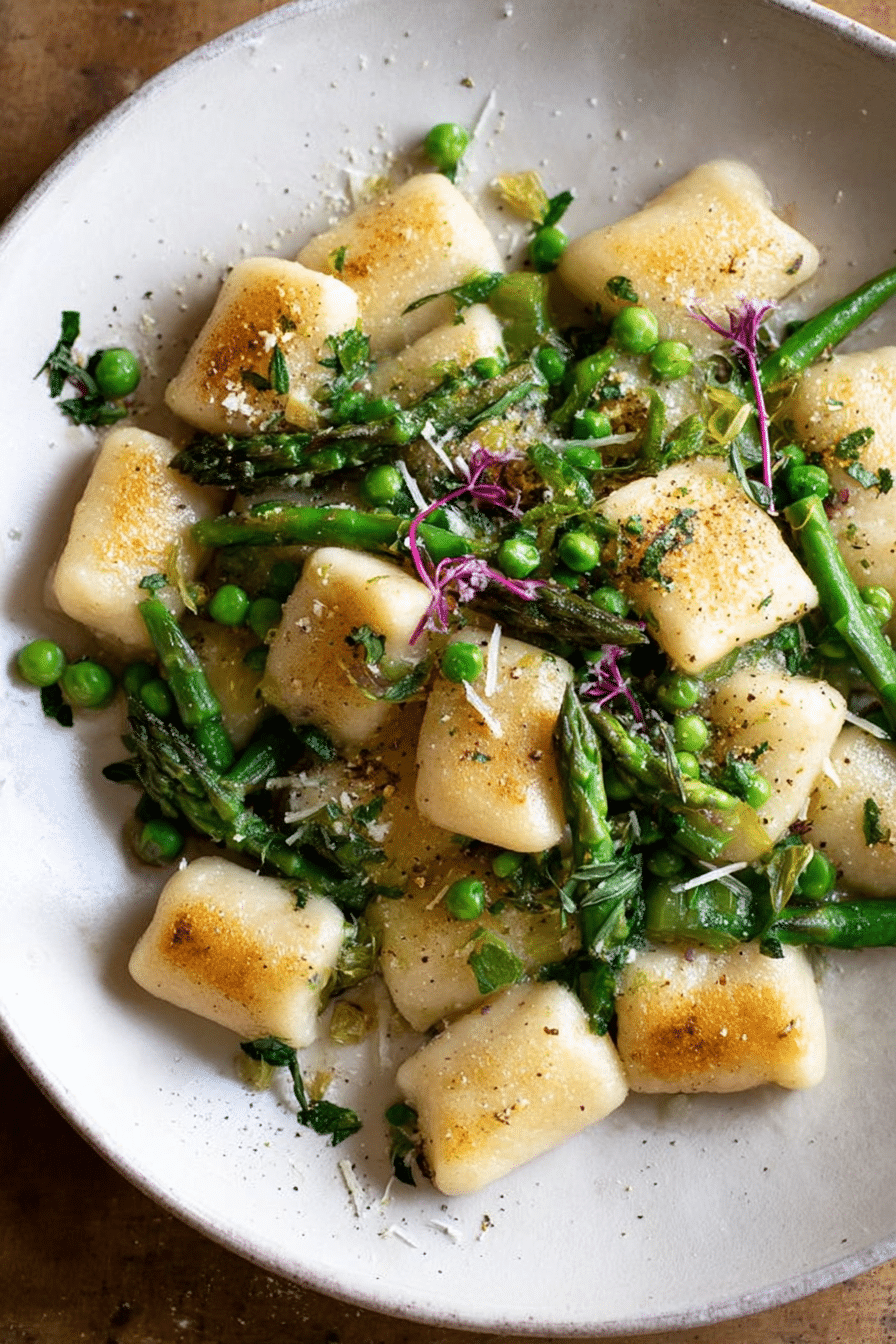
- Drain the gnocchi. Transfer them to the brown butter and allow to toast for a minute. Plate the gnocchi with the brown butter and vegetables over top. Garnish with a pinch of chives, freshly cracked black pepper, and flaky sea salt.