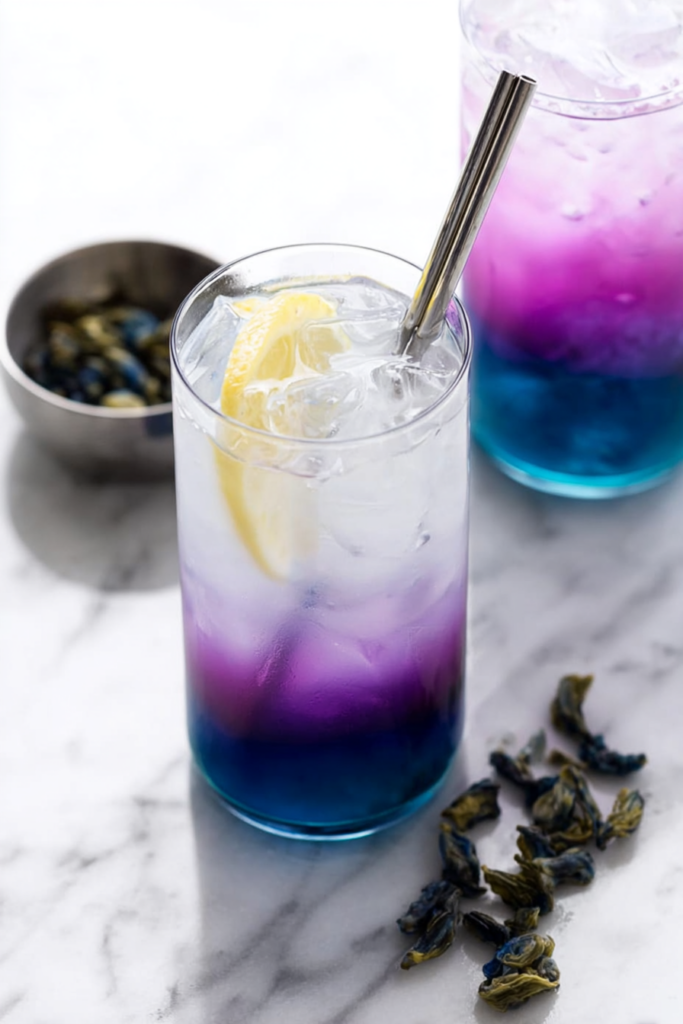
I’ve been bringing this butterfly pea lemonade to backyard barbecues and poolside afternoons for years, and every single time it stops the room. I love that it’s a show-and-tell drink: you hand someone a glass of deep sapphire-blue syrup, they pour in the citrus, and the pink blooms like magic. It’s the kind of small theatrical moment that gets people smiling and talking.
My kitchen experiments taught me which details matter: strong blue color from a good-quality dried flower, clear water so the hue reads clean in the glass, and the timing of syrup and citrus so the change happens right in front of your guests. I’ve also learned how to keep the flavor bright and never bitter — that’s the difference between a novelty and a drink you actually want more of.
Bring this to your next gathering and you’ll have more than a drink — you’ll have a conversation piece. I’ll walk you through what I use in my kitchen, the science behind the color flip, how to brew a deep-blue tea, and quick presentation tricks that make it feel celebratory. Ready to make something that looks like a little party in a glass?
A Magical Summer Sip: Why Butterfly Pea Lemonade Is Perfect for Entertaining
This is a party drink because it gives your guests an experience, not just a beverage. The dramatic transformation from vivid blue to electric magenta happens as you pour the acidic lemon into the floral syrup, and that visual surprise naturally draws a crowd. Serve it in clear glassware so the color gradient reads, and you’ve got instant entertainment that’s refreshingly light and floral on the palate.
Socially, this drink does heavy lifting: it’s a built-in icebreaker and conversation starter. Guests ask how it works, then linger to watch the pour, and before you know it people are taking photos and asking for seconds. The floral aroma from the brewed flowers is gentle — imagine a faint meadow scent that sits behind the lemon’s bright citrus — and that contrast keeps the drink lively rather than cloying.
Everything You Need for Butterfly Pea Lemonade
Quality matters here because the color and clarity of the final drink depend on it. Use filtered water so the blue reads clean, and choose whole, dried butterfly pea flowers that are intact and vibrantly colored. You’ll also want fresh citrus for the brightest flavor and a fine mesh sieve to strain the infused syrup for a glass-clear finish.
- Butterfly pea flowers – Provide the dramatic blue pigment and a delicate floral aroma; choose dried flowers that look whole and vibrant.
- Fresh citrus – Adds acidity that triggers the color change and keeps the flavor bright; fresh-squeezed juice makes a noticeable difference.
- Sugar or sweetener – Balances the tartness and helps create a syrup that mixes easily with the citrus.
- Filtered water – Keeps the color crisp and prevents off-flavors that tap water can add.
- Tools – A saucepan, fine mesh sieve, jar or pitcher for mixing, and clear glassware for the show.
If you enjoy the delightful flavors of our butterfly pea lemonade, you might also love our blueberry tea lemonade for a refreshing twist.
The Science Behind the Color Change
Butterfly pea flowers contain anthocyanin pigments — the same family of pigments that color berries and red cabbage. Anthocyanins are pH-sensitive, which means their molecular structure shifts when exposed to acids. In a neutral to slightly alkaline solution the tea reads deep blue; when you add acid from lemon juice the pigment changes form and the solution transitions to magenta or pink.
The effect is safe and natural, and it’s entirely reversible if you adjust pH back toward neutral. Beyond the visual spectacle, butterfly pea flowers have been associated in some studies with antioxidant activity and traditional uses for wellness. While it’s not a miracle ingredient, adding this tea to your drinks is a pleasant way to introduce floral notes and antioxidants into an otherwise simple lemonade.
For more reading on citrus chemistry and how acids perform in the kitchen, check out this primer on the science of lemon.
How to Brew Deep Blue Butterfly Pea Tea (Beginner-Friendly)
- Bring water just to a simmer — you don’t need a rolling boil. Too-hot water can mute the delicate floral aromatics.
- Add butterfly pea flowers to the hot water and stir gently so they hydrate evenly; you want an intense, even blue without muddying.
- Let the infusion steep for a short, controlled time; check the color as it strengthens. Oversteeping can add vegetal or astringent notes, so err on the side of slightly under-steep and taste.
- Strain the liquid through a fine mesh sieve to remove all flower bits; the clearer the syrup, the more theatrical the color change will look in the glass.
- Sweeten the warm infusion to make a simple syrup; dissolving the sweetener while the liquid is still warm guarantees a smooth, pourable syrup that mixes cleanly with citrus.
Sensory note: as it steeps you’ll catch a faint floral, almost green-tea-like aroma — it’s soft and welcoming rather than perfumed. A clear, bright blue signals you’ve hit the sweet spot.
How to Make Butterfly Pea Lemonade (Step-by-Step)
- Combine your cooled blue syrup with fresh citrus mixture in separate containers so you can layer and control the pour at serving time.
- Fill glasses with ice to chill quickly and to provide vertical structure for the color layering.
- Pour blue syrup into the glass first, filling only partway so there’s room for the citrus mixture to be added on top and create the color shift.
- Slowly add the citrus mixture over the back of a spoon or gently down the side of the glass to encourage a visible gradient and a dramatic color bloom where the two meet.
- Stir if you want an even pink color throughout, or leave unstirred for a layered, ombré presentation.
Visual cues: the syrup should be vividly blue and pour smoothly — too-thin and it won’t layer well; too-thick and it will sit stubbornly. The citrus should be bright and cloudy, not watery; that texture helps it interact visibly with the syrup.
Pro-Tips:
I write these as bulleted tips for quick reference — they’re formatted for scannability and to help you nail the presentation every time.
- I like to cool the brewed syrup before sweetening fully; this preserves more aroma and keeps the final drink balanced.
- Pour the citrus slowly for maximum color bloom — a steady, single stream gives the best effect in my experience.
- Use clear, tall glasses to showcase the gradient; short or frosted glass dulls the visual impact.
Troubleshooting:
- I’ve noticed that if the blue syrup is pale, the magenta will also be muted — brew stronger or use slightly more flowers.
- If the lemon makes the drink taste too sharp, dilute with cold water a little at a time and adjust sweetness; citrus strength varies by fruit.
- Cloudy or gritty texture? Make sure you strain the syrup well and dissolve the sweetener completely while warm.
Variations:
- Add a splash of sparkling water for fizz and a lighter mouthfeel.
- Swap some or all of the sugar for honey, agave, or a lower-calorie sweetener — expect a slight flavor shift depending on your choice.
- Garnish with fresh herbs like mint or Thai basil to introduce an herbal counterpoint to the floral notes.
Pro-Tips, Troubleshooting, and Variations are presented as bulleted lists above for high scannability so you can quickly reference them during party prep.
Presentation Tips: Serve It as a Stunning Party Drink
Presentation is where this recipe becomes a showpiece. Use clear glassware and layer the syrup and citrus to emphasize the color change. Garnishes that complement the blue-to-pink palette—like thin lemon wheels, edible flowers, or sprigs of mint—make the drink pop in photos and in person.
- Glassware — tall, clear glasses maximize the visible gradient and make the pour more dramatic.
- Garnishes — thin citrus slices, a sprig of mint, or an edible bloom echo the drink’s colors and aroma.
- Lighting — natural daylight or soft string lights make the colors read truest; avoid harsh fluorescent light that can wash out the hues.
For an enchanting dessert to serve alongside, consider making our lemonade puppy chow to capture the essence of summer.
Pro Tip for Butterfly Pea Lemonade: Use Syrup and Citrus Timing for Maximum Color Shift
- Pour order matters: blue syrup first, citrus second. The point where they meet is where the color change happens brightest.
- Layering technique — pour citrus slowly over the back of a spoon to create a defined gradient and a dramatic bloom.
- Ice impacts the effect — large ice cubes maintain layers longer; crushed ice will encourage faster mixing and a more blended color.
- For table-side theatre, bring both mixtures to the table separately and invite guests to pour their own citrus for a hands-on reveal.
How to Make Ahead, Store, and Turn It into Cocktails or Mocktails
- Make the blue syrup in advance and refrigerate it in an airtight container; it will keep several days chilled. Keep citrus and syrup separate until serving to preserve the visual effect.
- For cocktails, add a clear spirit like vodka or gin to the citrus mix; the neutral spirit won’t obscure the color transition and pairs well with the floral notes.
- To make a mocktail, simply use sparkling water in place of alcohol for a festive, bubbly version.
- Dietary swaps — use your preferred sweetener in the syrup; honey or agave change the flavor profile slightly but still yield excellent color and balance.
Comparative Analysis of Taste and Preparation Methods Against Traditional Lemonade
Flavor-wise, butterfly pea lemonade sits a touch more floral and delicate than classic lemonade. Traditional lemonade showcases bright lemon-forward acidity with a straightforward sweet-tart balance. Butterfly pea lemonade adds a subtle floral backbone from the tea that softens the citrus edge, making it feel more layered.
In terms of preparation, the extra step is brewing and sweetening the floral syrup; that adds minimal hands-on time but gives you control over color intensity. Traditional lemonade is slightly simpler — juice, water, sweetener — but doesn’t offer the visual theatre that makes this version special.
Nutritionally, both are similar when made with the same sweetener: the floral version brings additional plant pigments (anthocyanins) with antioxidant properties, while traditional lemonade is purely citrus-sourced nutrients. Swap sweeteners or reduce sugar to tailor either drink to dietary needs.
Nutritional Information and Health Benefits of Butterfly Pea Flowers
Butterfly pea tea is low in calories and contributes anthocyanin pigments that have been studied for antioxidant properties. While a single serving won’t replace a balanced diet, using the tea as a base for lemonade adds mild antioxidant benefit without significantly changing calories compared with a regular sweetened lemonade.
Sweetener choice affects the health profile most: refined sugar increases calories and glycemic load, while alternatives like honey or agave shift flavor and calories differently. If you’re watching sugar, reduce the syrup sweetness and let sparkling water or soda water add lift.
Pair your butterfly pea lemonade with our healthy pumpkin-lentil soup for a wholesome meal.
Frequently Asked Questions
What makes butterfly pea lemonade change color? The vibrant color change occurs due to the butterfly pea flowers’ natural pigments reacting with the acidity from lemon juice. When mixed, the blue syrup turns into a beautiful magenta.
Can I adjust the sweetness of this lemonade? Absolutely! You can adjust the amount of sugar in the recipe to suit your taste preferences. Feel free to start with less and add more until it’s just right for you.
How can I store leftover butterfly pea lemonade? You can store any leftover butterfly pea lemonade in an airtight container in the fridge for up to 3 days. Just make sure to stir it before serving again, as the layers may separate.
Can I use fresh butterfly pea flowers instead of dried ones? Yes! If you have fresh butterfly pea flowers, you can use them in place of the dried flowers. Just keep in mind that you may need to adjust the steeping time for optimal flavor.
Is butterfly pea lemonade suitable for kids? Definitely! Butterfly pea lemonade is a fun and colorful drink that’s perfect for kids and adults alike. Just keep an eye on the sugar content to make it a healthier option.
Butterfly Pea Lemonade
Ingredients
Method
- In a saucepan, combine 3 cups filtered water with sugar. Stir in butterfly pea flowers. Bring to a simmer. Remove from heat, cover and let steep for 10 minutes. Strain through a fine mesh sieve, discarding solids. Set aside to cool.
- In a jar or glass measuring cup, combine lemon juice and remaining 2 cups of water.
- To serve, fill glasses with ice. Pour cooled butterfly pea syrup into glass, filling about half way.
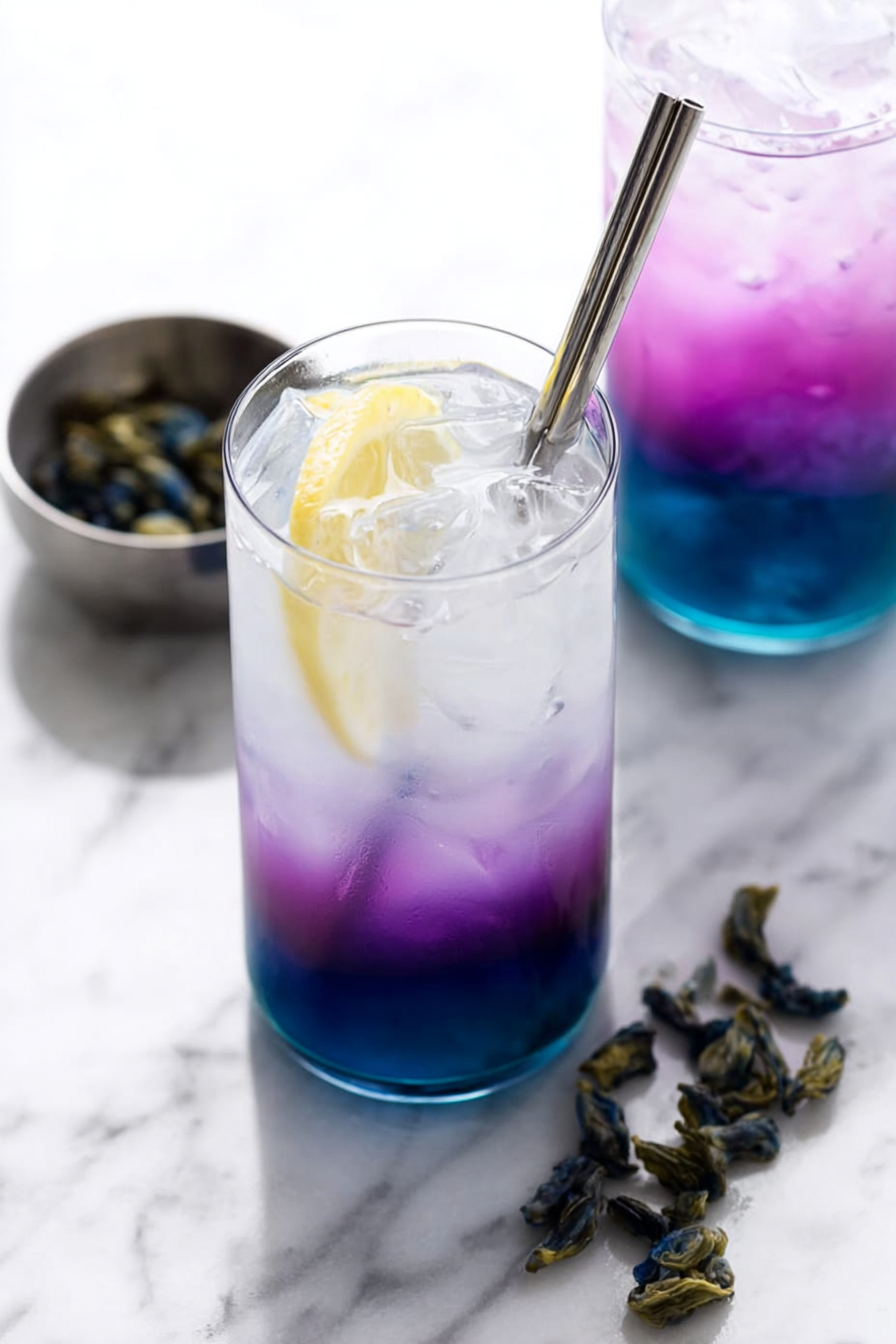
- Pour lemon mixture over top, and watch the magic happen! Where the lemon meets the syrup, the color will change from blue to pink. Stir to combine the two mixtures until the color is pink throughout and enjoy!