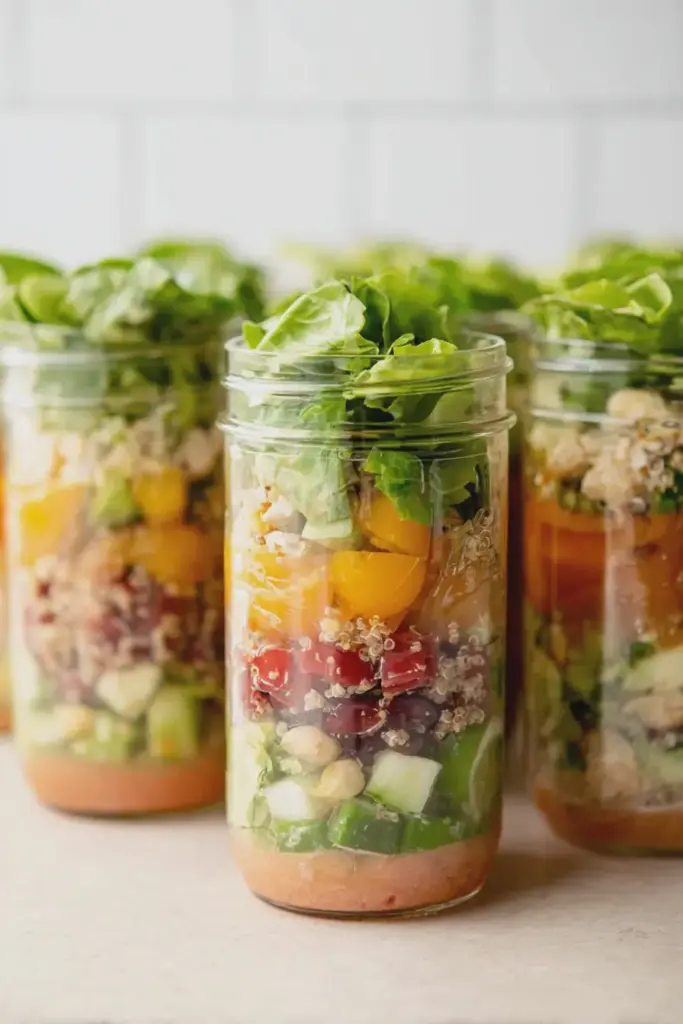
I started making mason jar salads because I needed lunches that survived my workweek: actual food that felt fresh on Thursday, not a limp pile of lettuce. Over the years in my kitchen I tested layering orders, jar sizes, and packing techniques until the jars that left my fridge delivered consistently crisp, flavorful salads. When something went wrong—soggy leaves or a jar that leaked—I traced it back to one small step and fixed it for good.
My routine now is built around rhythm and reliability. I prep proteins and hearty vegetables on Sunday, dress the jars just before sealing, and label each jar so I know which day to eat it. I make choices with texture in mind: things that can sit at the bottom without turning mush, and greens that stay bright when kept away from the dressing.
I like to keep things simple for busy professionals: a predictable layering order, a handful of go-to proteins (including options for vegan and gluten-free needs), and a few dressing formulas that travel well. In this guide I’ll walk you through the exact setup I use, practical substitutions, storage best practices, and the small habits that extend freshness throughout the week.
Why Mason Jar Salad Works for Busy Professionals
Mason jar salads are a practical system for busy people because they separate wet and dry elements, which preserves texture and flavor. Layered jars are essentially a compact, sealed environment that keeps crunch where you want it and dressing where it belongs. The method saves time on hectic mornings and reduces decision fatigue about what to eat for lunch.
For professionals juggling meetings and deadlines, mason jar salads offer customization and variety without extra prep time. You can rotate proteins, swap seasonal produce, and change dressings to keep lunches interesting. Plus, seeing a colorful jar in the fridge is a small, motivating visual cue to eat something healthy.
Everything You Need for Mason Jar Salad
Below is what I keep on hand for reliable jar salads. I also include tools that make prep fast and clean. I emphasize glass jars for sustainability and food safety, and I always match jar size to how hungry I expect to be.
- Jars – Wide-mouth glass mason jars are my go-to because they’re easy to fill and clean; pick a size that fits your appetite and commute.
- Lids – Tight-sealing lids are non-negotiable for travel and freshness.
- Prep tools – A good chef’s knife, a salad chopper or mandoline for quick slicing, and measuring cups make batch prep efficient.
Ingredient notes — conversational and focused on purpose or substitution:
- Greens – Use sturdy leaves like romaine, kale, or baby spinach; they sit at the top and should resist wilting.
- Hearty Vegetables – Carrots, cucumbers, bell peppers, and cherry tomatoes add crunch and can be placed mid-jar without turning mushy.
- Proteins – Cooked chicken, turkey, tofu, beans, or hard-boiled eggs provide satiety; see the dedicated protein section for swaps.
- Grains & Starches – Quinoa, farro, or roasted sweet potato add energy and balance macros; use them to make the salad more filling.
- Nuts & Seeds – Pepitas, sunflower seeds, or chopped nuts give texture and healthy fats; keep them above the dressing to stay crunchy.
- Dressings – Vinaigrettes and yogurt-based dressings both work; always add at the bottom to protect the greens.
- Fresh Herbs – Parsley, cilantro, or basil brighten flavors; add them near the top or mixed with greens.
Layering Order That Keeps Salads Crisp
- Start with the dressing at the very bottom so it doesn’t touch the delicate ingredients. This prevents sogginess and concentrates flavor where it belongs.
- Add dense, sturdy items next: beans, roasted root vegetables, cooked grains, or hard cheeses. These hold up well and create a buffer layer.
- Follow with sliced, juicy vegetables that can stand a bit of pressure—cucumbers, bell peppers, carrots—and small items like cherry tomatoes.
- Place proteins above those veggies so they stay separate from the dressing but close enough to absorb some flavor without getting wet.
- Sprinkle nuts, seeds, or croutons toward the top to keep them crunchy until you’re ready to eat.
- Finish with greens on top; pack them lightly so the jar seals well and the leaves aren’t crushed. When you flip or dump the jar, the dressing will coat everything evenly.
- Use sealed jars and keep them upright in the fridge to maintain that clean separation of layers.
Top Protein Options for a Nutritious Mason Jar Salad
Proteins determine how filling your jar is. I prioritize options that reheat well (if needed) and hold texture in a chilled salad. I also plan swaps for vegan, vegetarian, and gluten-free preferences so you can mix and match with confidence.
- Cooked chicken or turkey – Lean, flavorful, and familiar; great for low-carb and high-protein needs.
- Firm tofu – Pressed and marinated for extra flavor; an excellent vegan protein that soaks up dressings.
- Beans and lentils – Chickpeas and lentils add fiber and plant-based protein and pair nicely with Mediterranean or lemony dressings.
- Hard-boiled eggs – Portable and nutrient-dense; slice or quarter and place near the top to avoid soaking.
- Cooked shrimp or seafood – Use chilled cooked shrimp for a lighter, flavorful option if you want something more special.
Add extra protein to your mason jar salad by incorporating our Mediterranean Chickpea Salad for a nutritious boost.
Consider using creamy garlic shrimp as a flavorful protein option in your salad.
Seasonal Produce, Leftovers & Sustainable Jar Choices
Shopping seasonal produce shortens your grocery list and maximizes flavor. I rotate produce by season—berries and cucumbers in summer, roasted squash and apples in fall—so the jar always feels timely. Leftovers are a secret weapon: roasted vegetables, grilled chicken, or a scoop of last night’s grain bowl turn into new lunches without waste.
For sustainability, I always choose glass jars and reusable lids; glass keeps flavors neutral and lasts for years. Avoid single-use plastics and consider labeling jars with a reusable chalk tag or washable sticker to reduce paper waste.
Pair your mason jar salad with crispy butternut squash fritters for a delightful seasonal side.
How to Make Mason Jar Salad (Step-by-Step)
- Choose a jar size that matches your appetite and set it on the counter open and ready.
- Add your dressing to the bottom of the jar first so it never touches the greens.
- Layer dense cooked items next—grains, roasted vegetables, or beans—so they sit below more delicate vegetables.
- Add sliced or crunchy vegetables in the middle layers to keep texture intact.
- Place protein above the vegetables so it stays separate from the dressing but gains flavor when tossed.
- Sprinkle nuts, seeds, or crunchy toppings above the protein.
- Pack the greens lightly into the top of the jar, seal tightly, and refrigerate upright until you’re ready to eat.
- When it’s time to eat, either dump the jar into a bowl and toss, or shake the jar vigorously and eat from it directly if you prefer.
Pro Tip for mason jar salad: Extend Freshness & Balance Macros
- Keep dressing dry from greens: always put dressing on the bottom and seal the jar upright—this is the single biggest trick to prevent sogginess.
- Control macros visually: aim for roughly equal thirds of proteins, carbs (grains/veg), and greens to create a balanced meal.
- Use acid + oil dressings for longer fridge life; creamy dressings can separate but still hold for several days if sealed.
- Precook and cool proteins before jarring to avoid steam that wilts greens.
- Use a paper towel trick: tuck a small dry paper towel between the lid and jar rim to absorb excess moisture for extra-crisp greens (replace every few days).
Troubleshooting
- If your greens go limp, I check whether the dressing made contact—repack future jars with greens strictly on top.
- If jars leak during transport, replace worn lids or use an additional reusable silicone lid for peace of mind.
- If crunchy toppings get soft, keep them in a separate small container or add them right before eating.
- If flavors fall flat midweek, I add one acidic element at the end—lemon juice or a splash of vinegar—to brighten the jar before eating.
How to Store, Pack, and Make-Ahead Mason Jar Salads
- Store jars upright in the fridge where temperature is most stable; they will keep for up to a week if sealed and ingredients are fresh.
- Label each jar with the prep date and contents so you can rotate through the week safely.
- Pack jars in an insulated lunch bag with a small ice pack for longer commutes to keep them chilled until lunchtime.
- When preparing several jars, assemble dressings and proteins first, then do quick assembly in an assembly-line fashion for speed.
- For a complete meal, enjoy your mason jar salad with some slow cooker tomato soup that can be made ahead.
Nutritional Analysis of Ingredients Commonly Used in Mason Jar Salads
Rather than exact calorie counts, I focus on how ingredients contribute to satiety and micronutrients so you can build balanced jars quickly.
- Lean proteins (chicken, turkey) – High in complete protein, low in carbs; excellent for maintaining muscle and keeping you full through the afternoon.
- Plant proteins (beans, lentils, tofu) – Provide fiber and plant-based protein; they increase fullness and support digestion.
- Greens and vegetables – Low in calories, rich in vitamins A and C, potassium, and fiber; they add volume without heavy calories.
- Whole grains and starchy vegetables – Add complex carbohydrates for sustained energy and additional fiber.
- Nuts, seeds, and avocado – Supply healthy fats and fat-soluble vitamins; these increase calorie density and improve nutrient absorption.
- Dressings – Dressings supply flavor and fats; choose oil-based for longer storage and yogurt-based for creamier texture with additional protein.
Frequently Asked Questions
How long can I store a mason jar salad in the fridge?
You can store a mason jar salad in the fridge for up to a week. Just make sure to keep it tightly sealed!
Can I use any type of dressing for my mason jar salad?
Absolutely! You can use any dressing you like; just remember to add it at the bottom of the jar to prevent the greens from getting soggy.
What are some good proteins to include in my salad?
Great options for protein include cooked chicken, cubed tofu, beans, or even hard-boiled eggs. Choose what suits your taste and dietary needs!
How do I prevent my salad from getting soggy?
To keep your salad crisp, layer your ingredients properly. Start with the dressing at the bottom, then add sturdier veggies like carrots and cucumbers, and finish with the greens on top.
Can I make mason jar salads ahead of time for meal prep?
Yes! Mason jar salads are perfect for meal prepping. Just get your ingredients ready, layer them in jars, and store them in the fridge for easy meals throughout the week.
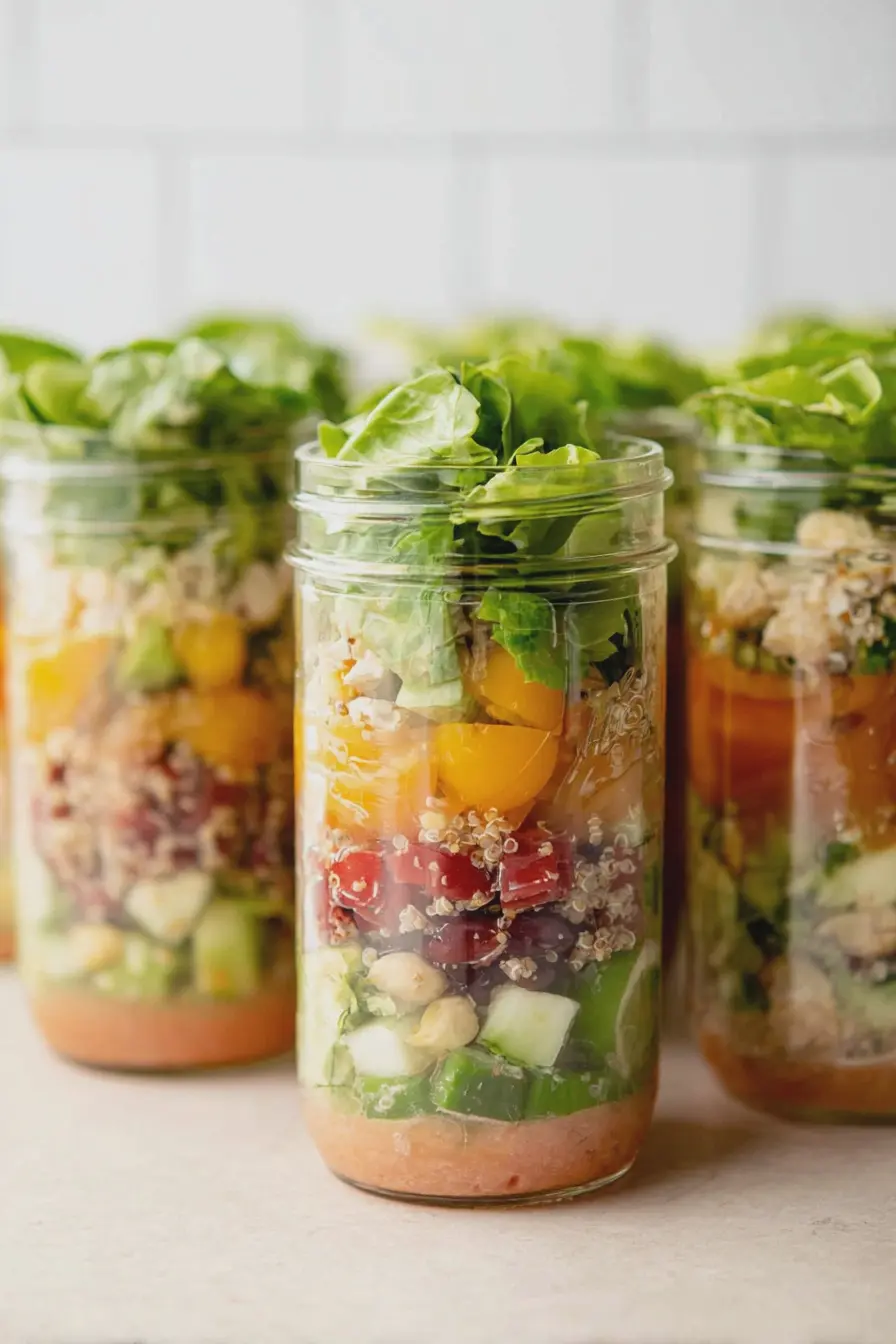
Mason Jar Salad
Ingredients
Method
- Layer the salad ingredients in the order listed into the jar, packing in as much romaine as you need to create a tight pack. Cover the jar, and place it in the fridge for up to a week.
- To eat, dump the entire contents of the jar into a bowl, toss, and enjoy!