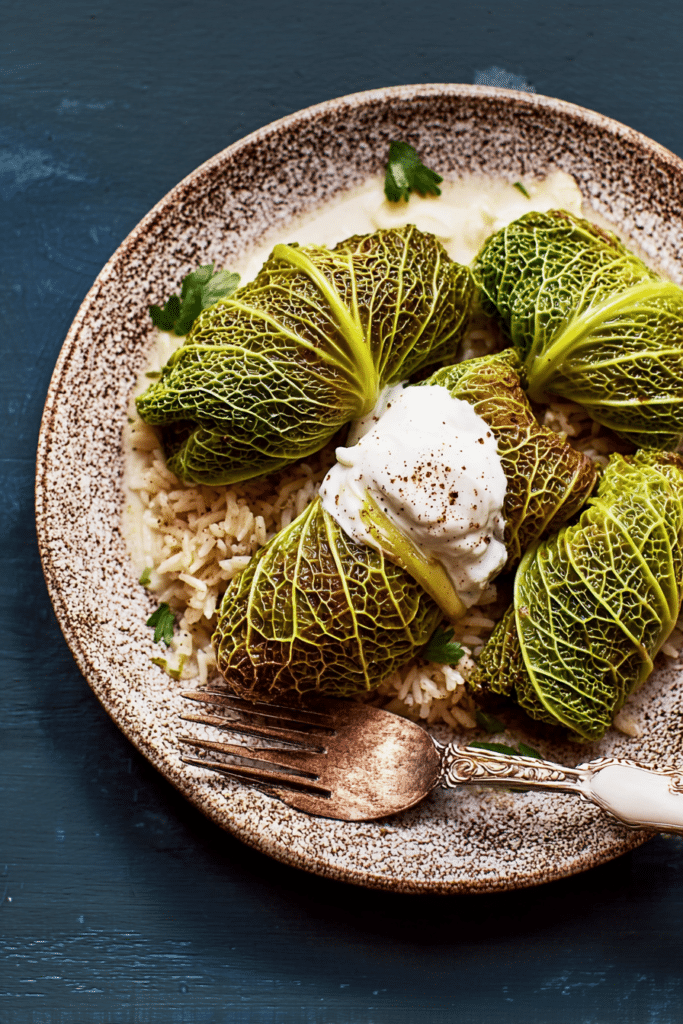
I grew up watching my grandmother fold cabbage leaves the way you might fold a small, precious parcel: careful, patient, and with a little steam fogging the window above the sink. Those rolls were never identical, but they always tasted like an evening settled in the bones — tang from lemon, soft rice, and the faint nutty pop of toasted pine nuts. I make this version when I want something comforting but bright, the kind of food that travels well to a neighbor or fills the house on a weeknight.
In my kitchen these rolls are simple, vegetarian, and utterly forgiving. I take the tart edge of sumac and pair it with fresh herbs so the filling never feels heavy. I always keep a jar of good sour cream on hand; the chill and creaminess it lends is the little pleasure that balances the tart and buttery notes of the dish. When friends come by, they comment on how fresh the herbs smell as I stir them into the warm rice — it smells like luck and ordinary abundance.
There are missteps I’ve learned to avoid: overcooking the leaves until they shred, packing the filling so tight the rice turns to paste, or skipping that last pat of butter in the pan. Those are small sins that make a big difference. I want you to feel confident in the kitchen making these — to hear the gentle sizzle, to feel the leaf give as you roll, and to know this is a dish built on patience and honest flavors.
Before you start, picture the bright green leaves, the soft, lemony rice, and the toasted little pine nuts — that’s what you’re aiming for. Below I’ve gathered everything you’ll need, why each ingredient matters, and practical steps so the finished rolls taste like home.
Everything You Need for Stuffed Cabbage with Rice
Gathering good ingredients and the right tools makes this rustic dish calm and predictable. Below I list the essentials and sensible substitutions so you can shop confidently.
- * Cabbage (savoy or green) – The leaves are the wrapping; you want pliable, unblemished outer leaves. If you use napa, be sure the leaves are large and flexible.
- * Long-grain white rice – Provides a light, separate grain texture in the filling. Swap with parboiled rice if that’s what you have on hand.
- * Onion – Builds savory depth when slowly softened and caramelized.
- * Pine nuts – Add a buttery crunch; toasted, they perfume the filling. Walnuts or chopped almonds work in a pinch.
- * Mixed tender herbs – Parsley, mint, dill, or tarragon brighten the filling; use what’s freshest.
- * Raisins (golden or brown) – Give a touch of sweetness against the tart sumac.
- * Sumac – A tart, lemony spice that cuts richness. If unavailable, lemon zest plus a small pinch of salt can approximate it.
- * Lemon juice – Brings lift and balances butter and rice.
- * Egg – Binds the filling so it sets while steaming; omit for vegan versions and add a touch more cooked rice or a binder like ground flax.
- * Butter – For finishing the pot and adding a silky mouthfeel; use olive oil for dairy-free cookery.
- * Sour cream – For serving; it tames the tartness and adds creaminess. Try a plant-based alternative if you prefer.
- * Salt & pepper – Seasoning is everything: taste as you go.
Essential equipment: a large pot with a lid for blanching and later steaming the rolls, a bowl for holding ice water, a baking sheet to drain leaves, and a heavy-bottomed pot or Dutch oven to steam the assembled rolls. If you want a shortcut, an Instant Pot or pressure cooker can speed the steaming step.
A Short History of Stuffed Cabbage: From Old Kitchens to Your Table
Stuffed cabbage is one of those humble, widespread recipes that appears in many homes under different names. From Eastern European golabki to Middle Eastern mahshi, the concept is the same: a leaf, a filling, and time. In each region the filling changes with what’s plentiful — rice and herbs, meats and spices, or grains and legumes — but the comfort that comes from the work and the sharing is universal.
Families often have their own tiny rules: some like a tomato sauce, others prefer a tangy, buttery stew. In my family the rolls were always the unglamorous hero: moved from pot to plate, one pan, few dishes, and plenty of leftovers. If you want to read about other traditions and preparation styles, this collection of regional takes on stuffed cabbage rolls is a nice place to browse: stuffed cabbage rolls.
Sensory note: think of a table where steam and laughter rise together, where each roll unwraps to reveal a tender bite of rice flecked with herbs — that is what this history carries to your kitchen.
Why Sumac, Pine Nuts, and Lemon Matter Here
Each of these ingredients plays a distinct role in keeping the dish balanced so a single note doesn’t dominate.
- Sumac – Adds a bright, tart citrus quality without liquid acidity. It cuts the richness of butter and pine nuts and lifts the herbs. If you can’t find sumac, lemon zest and a small pinch of salt will mimic its effect.
- Pine nuts – Bring a soft crunch and a toasted, buttery flavor when gently browned. They contrast the tender rice and make the filling feel more luxurious.
- Lemon juice – Adds immediate brightness, rounding out savory and sweet notes and keeping the final plate lively rather than cloying.
If you want inspiration for pairing flavors from other cabbage-forward dishes, this piece on corned beef and cabbage can give ideas for complementary ingredients: corned beef and cabbage. The key is to balance fat, acid, and texture.
How to Make Stuffed Cabbage with Rice (Step-by-Step)
- Prepare the leaves: Bring a large pot of generously salted water to a boil. Working in batches, blanch 12–14 large savoy or green cabbage leaves until bright and pliable, about 1½–2 minutes per batch. Transfer to a bowl of ice water to stop cooking, then drain on a towel.
- Cook the rice: Return the pot of water to a boil and add rinsed long-grain rice. Cook, stirring occasionally, until grains swell and surface, about 3–6 minutes depending on the rice. Test a grain for al dente; it should be slightly underdone because it will finish in the roll. Drain and rinse under cold water, then transfer to a large bowl.
- Make the filling: In the wiped-out pot, heat olive oil over medium. Add finely chopped onion and cook, stirring, until softened and golden, 7–9 minutes. Add pine nuts and cook until fragrant and slightly darkened, about 4–5 minutes. Stir in chopped herbs, raisins, sumac, and lemon juice; remove from heat and let cool slightly.
- Combine and season: Mix the onion-herb mixture and a beaten egg into the rice. Season generously with salt and pepper. The egg helps bind; for a vegan version omit it and add a little extra mashed rice or a flax mixture.
- Trim and fill leaves: With a sharp knife, cut a shallow V from the thick part of each leaf to make rolling easier. Place a heaping spoonful of filling crosswise near the base, fold the cut edge up over the filling, fold in the sides, and roll tightly like a burrito. Aim for even-size rolls for even cooking.
- Steam the rolls: Arrange rolls seam-side down in a single layer in the reserved pot or Dutch oven. Dot with butter (or olive oil) and add about ½ cup water. Bring to a simmer, reduce heat to low, cover, and steam until leaves are tender and filling is cooked through, 18–25 minutes.
- Finish and serve: Transfer rolls to plates, drizzle with a little good olive oil, sprinkle extra sumac and black pepper, and serve with a dollop of sour cream.
- Instant Pot option: Layer rolls seam-side down in the insert, add 1 cup water, seal, and pressure cook on high for 6 minutes with a quick release. Finish with a pat of butter and a sprinkle of sumac.
The Secret to Tender Leaves and Al Dente Rice
- I always salt the blanching water well — it seasons the leaves from the inside and keeps them vibrant green.
- Blanch just until pliable; if the leaf tears when you roll it, it was overcooked. A quick 90–120 second dunk usually does the trick for large savoy leaves.
- Cook the rice until just al dente; it should still have a bite. The filling finishes in the steam so undercooking by a minute or two prevents mush.
- When assembling, don’t overpack the filling. Overstuffed rolls can burst and create a soggy pot bottom.
- Use a tight-fitting lid and low heat during steam to trap moisture without boiling the rolls dry. I find a gentle simmer yields silkier leaves than a rolling boil.
Pro Tip for stuffed cabbage with rice: Make-ahead & meal‑prep strategy
- Make the filling a day ahead and keep it chilled; it tastes better after the flavors marry. When you’re ready to assemble, the work goes quickly.
- You can assemble the rolls and refrigerate them, covered, for up to 24 hours before steaming. Add a few extra minutes to the steaming time if starting from cold.
- To freeze: Arrange assembled rolls on a tray and freeze until firm, then transfer to a freezer-safe container. Steam from frozen, adding about 8–12 minutes to the cooking time.
- For a quick weeknight meal, reheat boxed or pre-cooked rolls gently in a covered skillet with a splash of water until warmed through.
- For a complete meal I sometimes pair these with something meaty on the side — try it with a make-ahead roast or a creamy dish like this pairing suggestion: creamy garlic chicken.
How to Store, Reheat, and Vary These Cabbage Rolls
- Refrigeration: Store cooled leftover rolls in an airtight container for 3–4 days. Keep a little cooking liquid with them to prevent drying.
- Freezing: Freeze cooked rolls in a shallow container with sauce or a bit of butter on top for up to 3 months. Thaw overnight in the fridge before reheating, or reheat gently from frozen.
- Reheating: Reheat covered in a skillet over low heat with a splash of water, or bake covered at 350°F until warmed through. Avoid microwave reheating for best texture — it can make leaves rubbery.
- Variations: Swap long-grain rice for bulgur, quinoa, or millet for different textures; add cooked ground turkey or lamb for a non-vegetarian version; fold in cooked lentils for added protein and heft.
- Casserole shortcut: If you want a hands-off reimagining, try layering deconstructed cabbage roll flavors into a casserole — an easy route for meal prep and leftovers: cabbage roll casserole.
Frequently Asked Questions
Can I use any type of cabbage for this recipe?
While savoy or green cabbage is recommended, you can experiment with other types like napa cabbage. Just ensure the leaves are tender and flexible for easy rolling!
Is there a way to make this dish vegan?
Absolutely! You can omit the egg and use a vegan sour cream alternative or simply serve it without sour cream for a delightful dish.
How long can I store leftover stuffed cabbage?
Leftover stuffed cabbage can be stored in the refrigerator for up to 3-4 days in an airtight container. Just reheat gently before serving!
What if I can’t find sumac?
If you can’t find sumac, you can substitute it with a mix of lemon zest and a bit of salt for a similar tart flavor!
Can I make the stuffed cabbage ahead of time?
Yes! You can prepare the stuffed cabbage rolls and store them in the fridge before cooking. Just steam them for a few extra minutes when you’re ready to serve.
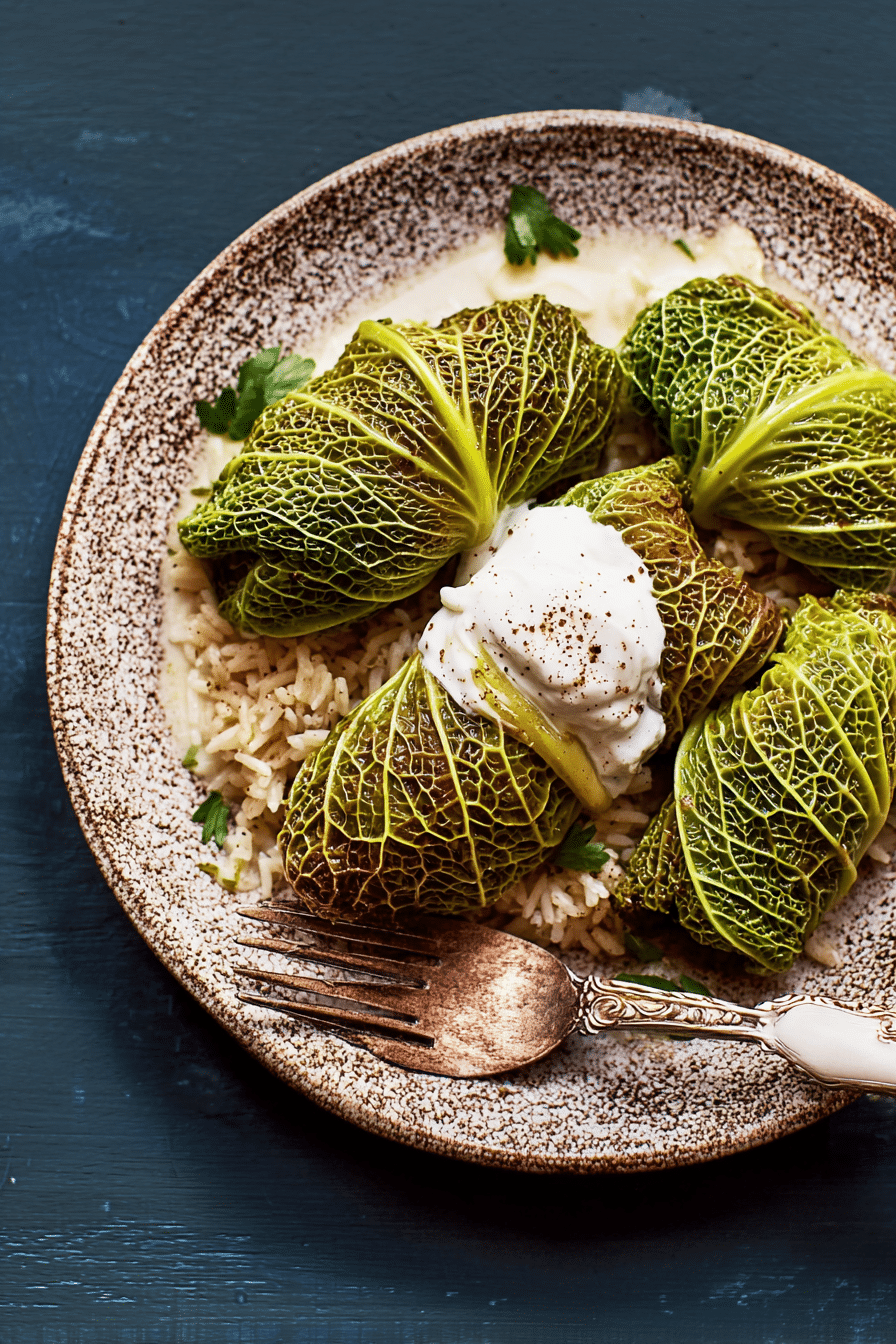
Stuffed Cabbage With Rice
Ingredients
Method
- Line a baking sheet with a clean kitchen towel or a few layers of paper towels; set aside. Cook cabbage leaves in a large pot of boiling salted water until bright green and pliable, about 2 minutes per batch. Transfer leaves to ice water, then to the baking sheet to drain.
- Cook rice in the same pot until grains swell and rise to the surface, 3–6 minutes. Drain and rinse under cold running water.
- Wipe out pot, pour in oil and cook onion until golden, about 7–9 minutes. Add pine nuts and cook until toasted. Mix in herbs, raisins, and sumac; cook until fragrant. Stir in lemon juice and let cool.
- Combine onion mixture and egg with rice; season with salt and pepper. Prepare cabbage leaves by cutting out the thickest part of the rib. Place filling in the center and roll up.
- Arrange rolls seam side down in the pot, add butter and water. Bring to a simmer, cover, and steam until cooked through, 18–25 minutes.
- Serve cabbage rolls drizzled with oil, sprinkled with sumac and pepper, and with sour cream.