- Prep
- 10 min
- Cook
- 15 min
- Total
- 25 min
- Serves
- 4
- Calories
- 443 kcal
- Carbs
- 12.00 g
Introduction
Veal piccata is one of those dishes that feels simultaneously fancy and completely doable on a weeknight. It’s thin, tender veal cutlets seared until just golden and finished in a glossy, lemony butter sauce studded with capers — bright, a little briny, and impossibly satisfying. I remember the first time I made it at home: the kitchen smelled like a sunny trattoria, and a single slice of lemon made the whole plate sing. Historically, piccata refers to meat sliced thin (piccata or piccata alla Milanese often uses veal) and finished in a sauce of lemon, butter, and capers. It’s an Italian classic that migrated easily into Italian-American home cooking — loved for its speed, bright flavor, and elegant look on the plate. Over the years I’ve made this version dozens of times: for last-minute guests, for a relaxed date night, and even as a celebratory Sunday supper. The method is forgiving, and the payoff is a sauce that is silky and lively — lemon cutting through the butter in the best way.Ingredients Needed for Veal Piccata
Quick recipe facts: Yield 4 servings. Prep time about 10 minutes. Cook time about 15 minutes. Total time roughly 25 minutes. The classic ingredient list for this recipe (what I use every time I make it) includes: 4 veal cutlets (about 150g / 5 oz each), flour for dredging, salt and black pepper, a couple tablespoons of olive oil, several tablespoons of unsalted butter, a single shallot, a couple of garlic cloves, one lemon (half juiced and half sliced), dry sherry or white wine, chicken stock, a few tablespoons of capers, and fresh parsley for finishing.- Veal cutlets – delicate, thin pieces of meat that cook quickly and should remain tender; you can pound them if needed to even thickness.
- Flour – creates a light crust on the veal and helps the sauce thicken slightly when you add a bit to the pan.
- Salt & black pepper – basic seasoning that brings out the veal's natural sweetness; don’t skip seasoning before dredging.
- Olive oil – used for browning; it tolerates the initial high heat and adds a fruity backbone to the pan.
- Unsalted butter – added while frying and to finish the sauce for a silky, rich mouthfeel.
- Shallot – gives an onion-like sweetness that’s subtler and more delicate than a raw onion.
- Garlic – provides an aromatic base; keep it moving so it doesn’t burn and turn bitter.
- Lemon – the star of the piccata sauce; its juice brightens the sauce and balances the butter.
- Dry sherry (or white wine) – deglazes the pan, lifts browned bits, and adds complexity; sherry is slightly nuttier.
- Chicken stock – adds body to the sauce without overpowering the lemon.
- Capers – small, briny pops that contrast the butter and lemon; rinse if very salty.
- Fresh parsley – a final sprinkle for color and herbaceous brightness.
Step-by-Step Cooking Instructions for Veal Piccata
I always keep a pan near the stove and a shallow plate for dredging when I make piccata — it keeps the process fast and tidy. Below are the steps I follow every time, with little notes on timing and texture so you can replicate the result.Preparation
- Preheat your oven to its lowest setting — this is just to keep the cooked veal warm without continuing to cook it heavily.
- Pat the veal cutlets dry with paper towels. Even a little moisture on the surface will steam the meat instead of letting it brown.
- Season both sides lightly with salt and a crack of black pepper. Dredge the cutlets in flour, shaking off any excess so the coating is thin and even.
- Mince the garlic and chop the shallot finely. Juice half the lemon and slice the other half into thin rounds to finish the dish.
Cooking the Veal
- Heat a large pan over medium-high heat. Add a drizzle of olive oil and let it shimmer but not smoke — if it smokes, lower the heat for a moment.
- Place the veal in the hot oil and let it cook undisturbed until golden — about 4–5 minutes per side for thin cutlets. You’ll know it’s ready to flip when the edges start to turn golden and the meat releases easily from the pan.
- About two minutes into the first side’s cooking, add a couple tablespoons of unsalted butter to the pan. It will foam and brown slightly, adding nutty flavor to the veal.
- Work in batches if needed. Crowding the pan lowers the temperature and prevents a good sear.
- Once browned, transfer the cutlets to a plate and slide them into the warm oven to rest while you finish the sauce — this keeps them warm and lets the juices redistribute.
Making the Piccata Sauce
- To the same pan (no need to wipe it out), lower the heat to medium-low and add the chopped shallot. Sauté gently for about 2 minutes until softened and fragrant.
- Add the minced garlic and cook for about 30 seconds. The smell will change from sharp to warm and slightly sweet — that’s the cue to move quickly.
- Stir in a tablespoon of flour to the aromatics and mix into a paste; cook 1–2 minutes while stirring. This cooks the raw flour taste and helps the sauce thicken slightly.
- Pour in about half a cup of dry sherry or white wine to deglaze the pan. Scrape the browned bits from the bottom — those are flavor gold. Let the wine bubble for 2–3 minutes to cook off the alcohol and concentrate the flavor.
- Add about half a cup of chicken stock, the lemon juice, the lemon slices, and the capers. Turn the heat up briefly to bring the sauce to a simmer; then lower and reduce for a few minutes until slightly thickened. Taste and adjust seasoning — the sauce should be bright and balanced, not flat.
- Off the heat, swirl in a couple more tablespoons of cold butter to finish the sauce, whisking to create a glossy emulsion. Return the veal to the pan and spoon the sauce over each cutlet. Let everything rest in the sauce for a minute so the flavors marry.
Serving
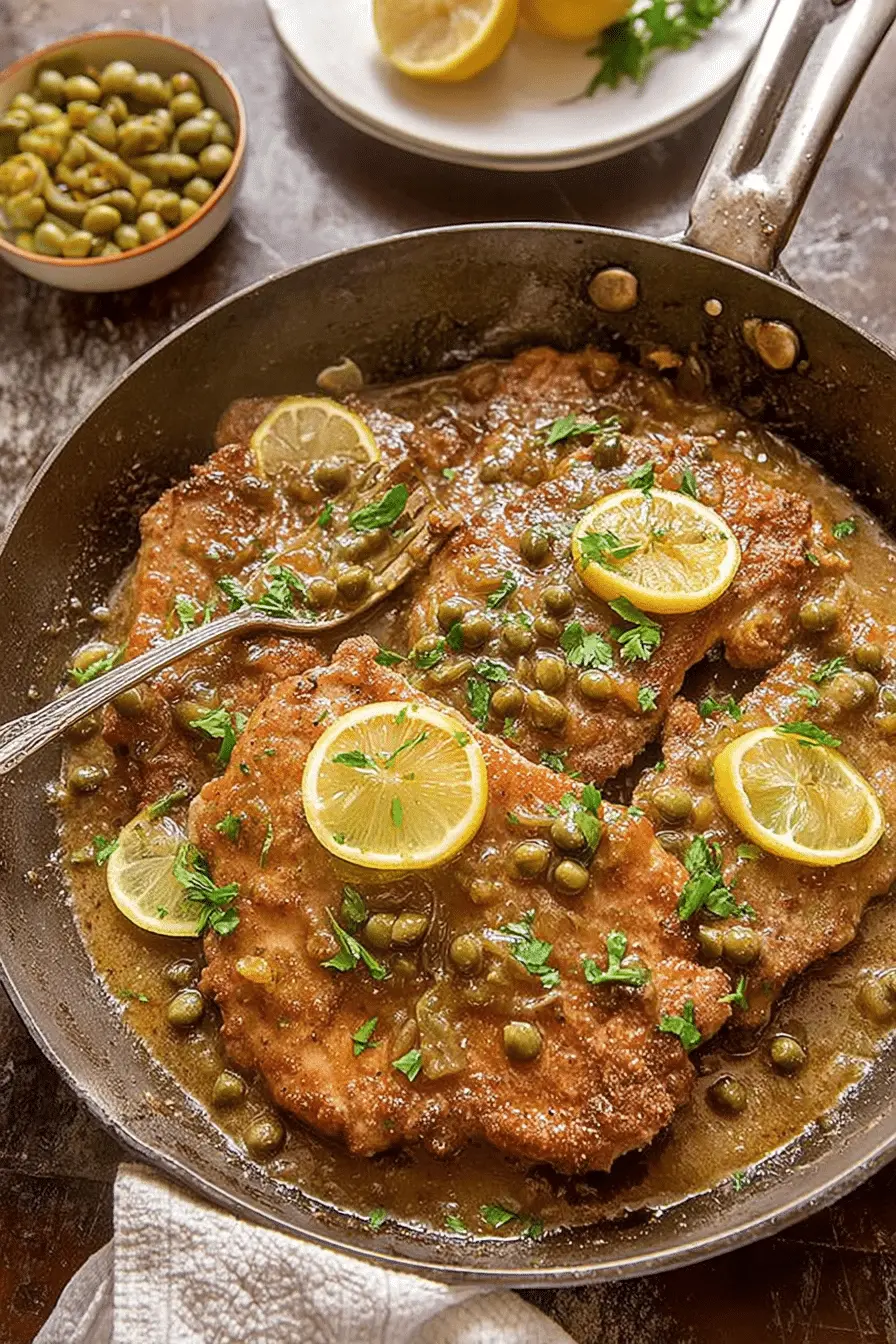
- Slide each veal cutlet onto warm plates, spoon extra sauce and capers over the top, and sprinkle with chopped parsley. Add the lemon slices as a garnish (they are pretty and practical).
- I like to serve this immediately with a starch and a green vegetable — the sauce wants something to soak into, and the lemon is a perfect foil for a creamy side.
Tips for Perfect Veal Piccata
Little techniques make big differences. I always keep a damp towel under my cutting board and a timer at hand — timing matters more than exact measurements here.- Don’t overcook the veal — it’s thin and will go from tender to dry quickly. Aim for short, confident sears and rely on the oven to keep it warm rather than continuing to cook it in the pan.
- Balance the acidity. If the sauce tastes too sharp, it likely needs fat or salt. A pat of cold butter stirred in off the heat smooths and rounds the lemon. If flat, add a tiny pinch of salt; acidity without salt tastes incomplete.
- Use cold butter to finish the sauce — this encourages an emulsion that makes the sauce glossy and silky.
- If the sauce becomes too thin, simmer a little longer; if it gets too thick, thin with a splash of stock or water. If the sauce splits (looks oily), whisk in a spoonful of cold water or a small knob of cold butter off the heat to bring it back together.
- When dredging, shake off excess flour — too much flour will clump in the pan and make the crust gummy.
- Capers can be salty. Rinse them briefly if they’re packed in brine and taste before adding more salt.
Best Side Dishes to Pair with Veal Piccata
Pairings should soak up the sauce and provide textural contrast. Here are the sides I turn to most often.- Garlic mashed potatoes – creamy, starchy, and perfect for sopping up the lemon-butter sauce.
- Sautéed asparagus – quick-cooked greens add color, a slight snap, and a fresh counterpoint to the buttery sauce.
- Light arugula salad – peppery greens with a simple lemon vinaigrette echo the citrus in the main dish and keep the plate lively.
- Buttered egg noodles or simple pasta – a neutral bed for the sauce, especially when you want more carbs on the plate.
- Steamed green beans with almonds – a crunchy element that plays well with soft veal.
Cultural Significance of Veal Piccata
Piccata’s roots are Italian, often associated with Milanese and northern-Italian preparations where veal is commonly used. The technique — thin, tender meat, a bright citrus sauce, and capers — reflects Italian cooking values: simple ingredients, clear technique, and emphasis on freshness. As immigrants carried recipes across oceans, piccata found a natural home in Italian-American cooking, becoming a restaurant staple and a beloved family recipe. I grew up with similar lemon-butter dishes at home; the smell of lemon and butter often marked a special supper without being fussy. In many trattorias, piccata is both weekday friendly and elegant enough for visitors — that flexibility is why it endures. Like classic tiramisu, veal piccata holds a special place in Italian cuisine, used in both home cooking and fine dining.Alternative Cooking Methods for Veal Piccata
Not everyone wants to pan-sear or has access to veal, so here are tested alternatives I’ve used with good results.- Grilling – For thicker scallopini or medallions, grill quickly over high heat to get char and smoky notes. Be careful: without the pan fond you’ll miss some sauce depth, so add a splash of wine and let it reduce in a small saucepan before finishing with butter.
- Baking – Arrange floured cutlets on a rimmed sheet, roast at a high temperature (about 425°F / 220°C) just until set, then finish with pan sauce. This reduces pan splatter and is easier for large batches.
- Chicken piccata – A classic substitute. Use boneless, skinless chicken breasts halved or pounded thin; cook a touch longer than veal and watch for dryness.
- Vegetarian eggplant piccata – Slice eggplant thin, salt and rest to remove bitterness, pat dry, dredge and fry like veal. Eggplant soaks the sauce deliciously but has a different texture — more lush and meaty.
- Gluten-free – Use a gluten-free flour blend or cornstarch for dredging and be mindful of wine or stock ingredients that might contain gluten.
User Feedback and Community Recipes
I encourage readers to experiment and tell me what worked — I’ve gotten notes over the years that are always useful. One reader mentioned swapping sherry for a bright dry vermouth when they were fresh out of wine, and another said adding a little lemon zest to the sauce at the end brought the citrus forward without adding more liquid. These small tweaks are exactly the kind of community sharing that improves a recipe. A few common reader-submitted variations:- Using white wine instead of sherry for a fruitier, lighter sauce.
- Adding a teaspoon of Dijon mustard to the sauce for a subtle tang and slight body.
- Doubling the capers for a bolder briny note, balanced with a touch more butter.
FAQ
What is veal piccata? Veal piccata is a classic Italian dish made with tender veal cutlets sautéed and finished in a light, buttery sauce featuring lemon and capers, creating a fresh, vibrant flavor profile. How do I ensure my veal cutlets are tender? To ensure tender veal cutlets, make sure to pound them to an even thickness before cooking. This helps them cook evenly and remain juicy and soft. Can I substitute the veal with another meat? Yes! You can substitute veal with chicken or even eggplant for a vegetarian version while still maintaining the delicious flavors of the piccata sauce. What side dishes go well with veal piccata? Veal piccata pairs wonderfully with sides like garlic mashed potatoes, sautéed asparagus, or a light arugula salad, which all complement the dish's vibrant flavors. Is veal piccata gluten-free? The traditional recipe uses flour, which contains gluten. To make it gluten-free, you can use a gluten-free flour blend or cornstarch as a substitute.Conclusion
Veal piccata is one of those dependable recipes I turn to when I want something that looks and tastes like a small celebration but doesn’t require hours in the kitchen. You get bright lemon, nutty browned butter, and those cheeky capers that cut through the richness. Keep an eye on cooking times, use cold butter to finish the sauce, and don’t be afraid to taste and adjust — a tiny pinch of salt or an extra squeeze of lemon can make all the difference. Try the recipe, make it your own, and tell me how it went. Share photos, substitutions, or timing tips — cooking is a journey and sharing what you learn is part of the fun. Buon appetito!Recipe Card
Simple and Zesty Veal Piccata: An Elegant Family Dinner Recipe
- Prep
- 10 min
- Cook
- 15 min
- Total
- 25 min
- Serves
- 4
- Calories
- 443 kcal
- Carbs
- 12.00 g
Ingredients
- 4 piecesveal cutlets (150g/5 oz each)
- 4 tbspflour
- 1 tspsalt
- 1/2 tspblack pepper
- 2 tbspolive oil
- 4 tbspunsalted butter
- 1shallot (chopped)
- 2 clovesgarlic (minced)
- 1lemon (1/2 juiced and 1/2 sliced)
- 125 mldry sherry (or white wine)
- 125 mlchicken stock
- 3 tbspcapers
- 1 tbspchopped fresh parsley
Instructions
- 1
Preheat the oven to the lowest temperature. Pat the veal cutlets dry with a paper towel, season with salt and pepper and dredge in flour.
- 2
Heat the olive oil in a large pan, brown the veal pieces in the hot oil until golden for 5 minutes on each side. A couple of minutes into the cooking add the butter to the pan. This will add more flavour and colour to the veal. You might want to do the frying in batches to avoid overcrowding.
- 3
Then remove the veal from the pan and keep it warm in an oven preheated to the lowest temperature while you are making the sauce.
- 4
To the same pan add the chopped shallot and sauté over low heat for 2 minutes, add the minced garlic and let it cook over low heat for 30 seconds, then add 1 tbsp of flour and mix it in until it turns into a paste, cook for 1-2 minutes while stirring, pour in the dry sherry and let it bubble for a 2-3 minutes.
- 5
Add the chicken stock, lemon juice, lemon slices, capers and parsley, turn up the heat and bring to a boil, as soon as it boils, lower the heat and simmer the sauce until it’s reduced in volume for a few minutes.
- 6
Return the veal back to the pan and spoon the sauce all over. Serve immediately.
You might also like
Reviews
Be the first to review this.