- Prep
- 10 min
- Cook
- 120 min
- Total
- 130 min
- Serves
- 4
- Calories
- 111 kcal
- Protein
- 3.00 g
- Carbs
- 14.00 g
- Fat
- 6.00 g
On this page15 quick jumps
TOC
15 quick jumps
Introduction
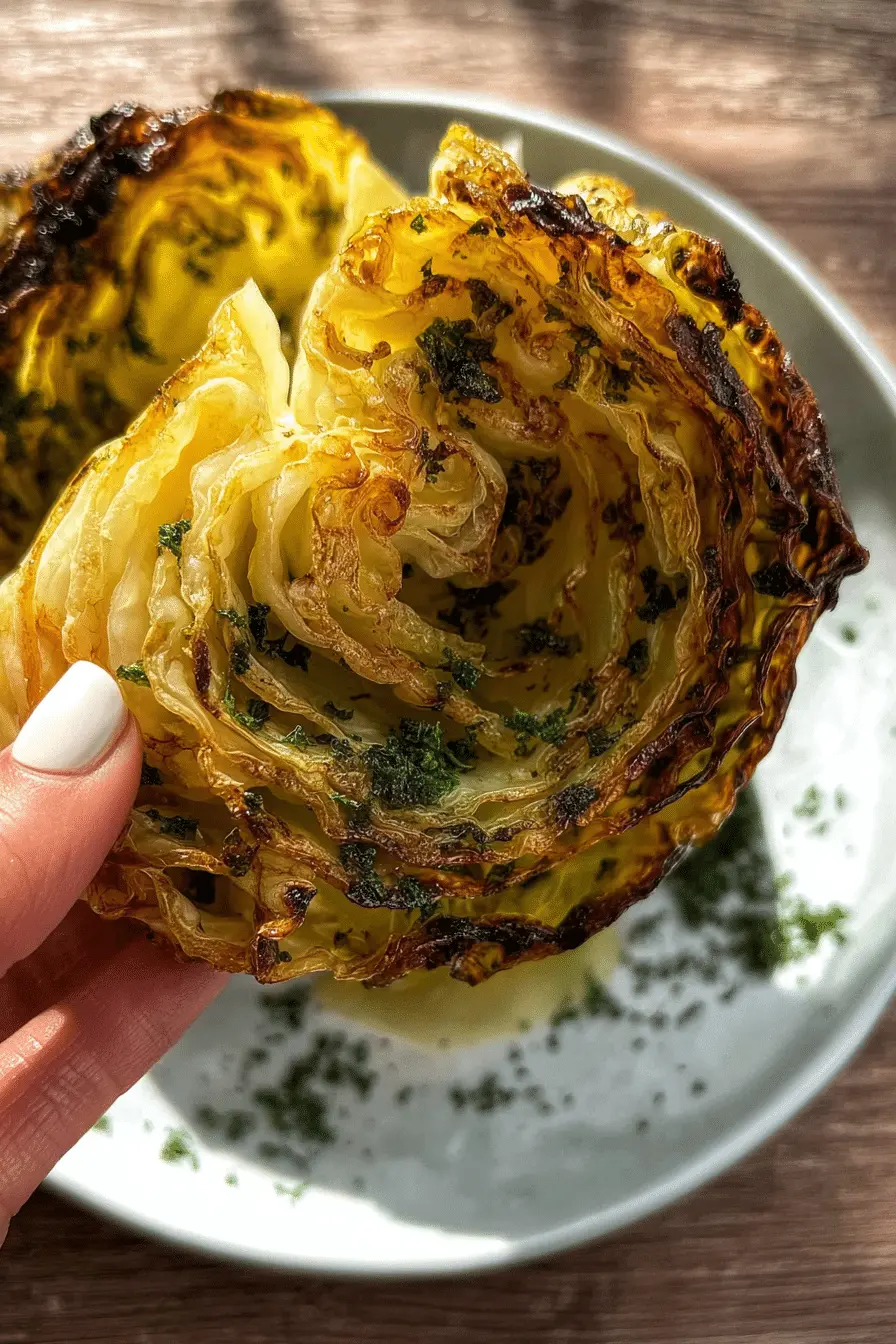
I learned to love cabbage the way a cook falls for an underappreciated instrument in the kitchen: by using it until it stopped being ordinary. In my kitchen this recipe grew from curiosity — could a humble head of green cabbage stand in for the texture and depth of a roast — into a staple I reach for when I want a show-stopping side with minimal fuss. I slow-roast and steam the cabbage until the layers become almost meaty, then coat them in buttery, garlicky, paprika-tinged seasoning that smells like a summer seafood boil without the shellfish.
On weeknights when time and willpower are limited, this dish delivers: it needs little hands-on attention, it’s budget-friendly, and it fills the house with a warm, savory aroma that makes whoever walks through the door pause. I’ve cooked this at low energy, with a glass of wine in hand, and with guests hovering in the kitchen — it performs every time. The contrast of bright green leaves against the deep-red spice and browned edges is a visual treat that reads like a composed vegetable main.
What finally made this work for me was treating the cabbage the way you’d treat a roast: slow heat, fat, and a tightly wrapped steam bath. That gives you layers that yield with a satisfying tug, a glossy, buttery finish, and concentrated sweetness from the veg itself. I’ll share the tools and small techniques that make that texture reliable, plus a few ways you can adapt it for vegan, gluten-free, and more assertive spice preferences.
Below, you’ll find everything you need for a weeknight-ready recipe that feels elevated. I’ll also cover why temperature and time matter, the single seasoning that brings seafood-boil vibes, practical storage and reheating notes, and a handful of easy variations so you can make this your own.
Why the Viral Cabbage Boil Belongs in Your Weeknight Repertoire
This is a dish that works for busy evenings because it asks for little hands-on time and returns a lot of flavor. Cabbage is economical, forgiving, and stores well in the fridge — so you can buy one head and make multiple meals. The warm, savory spice blend paired with butter and garlic gives the cabbage a richness that rivals meat-based sides without the cost or effort of grilling or braising a large protein.
Visualize the vibrant green canopy of leaves threaded with deep-red paprika and flecks of seasoning; imagine the scent of garlic and butter rolling through the kitchen as the oven does the heavy lifting. Use this as a centerpiece for casual dinners or a composed side for guests: it reads elevated but is simple to prep.
Practical note: you can use different types of cabbage for a textured result — green for the classic look, savoy for a tender crinkled leaf, or napa for a softer, sweeter bite. The FAQ below also confirms interchangeability if you want to experiment.
Everything You Need for Viral Cabbage Boil
Below I list the key ingredients and tools, and explain why each matters. I keep quantities flexible so you can scale the recipe up or down.
- Essential tools – Sharp knife, sturdy cutting board, a baking sheet, heavy-duty foil (two layers), and an ovenproof dish or rimmed pan to catch any juices. A small bowl for mixing seasonings helps keep things tidy.
- Why fresh garlic matters – Whole roasted garlic softens and sweetens in the steam bath; squeezing it into the cabbage at the end gives a mellow, spreadable garlic butter that infuses every layer.
- Cabbage – The foundation. Choose a firm head with tightly packed leaves for the best texture and slicing stability.
- Olive oil – Helps the spices cling and begins the browning process on exposed leaf edges.
- Butter or butter alternative – Provides richness and mouthfeel; plant-based butter works well if you want vegan results.
- Paprika – Brings color and a sweet-smoky note; smoked paprika intensifies that grilled quality.
- Old Bay or seafood-style seasoning – Adds the classic boil profile; I explain this below as the ingredient that mimics a seafood boil.
- Broth or water – A little liquid at the bottom of the foil packet creates steam and concentrates the cabbage’s natural sugars.
- Optional salts and aromatics – Onion powder, lemon zest, or a pinch of sugar can be used to balance and lift flavors.
The Secret to the Perfect Tender, Meaty Layers
Achieving a texture that feels almost like a roasted protein starts with two things: slow, even heat and a sealed steaming environment. The oven’s dry heat caramelizes exposed leaf edges (Maillard flavors), while the foil trap holds moisture so the inner leaves become silky and tender rather than drying out.
Butter (or a butter alternative) is critical here — it seeps between layers, carries spices, and creates that unctuous, meaty mouthfeel. When you squeeze roasted garlic into the layers at the end, the sweet, nutty garlic fat permeates the cabbage for a concentrated savory finish.
Texture cues: the cabbage is ready when the knife or fork slides through the core without resistance and the outer leaves have browned slightly at the tips. The interior should be tender, glossy, and juicy — not mushy.
Why Temperature and Time Make All the Difference
Temperature and time control moisture, caramelization, and flavor concentration. I recommend roasting at a moderate oven temperature so the cabbage softens without burning; in my kitchen I use 375°F (190°C) for roughly two hours as a reliable baseline.
At that temperature the exposed leaf edges undergo Maillard browning, producing savory, nutty notes that deepen the overall flavor. Meanwhile, the sealed foil keeps the interior steaming gently, preserving juiciness and allowing natural sugars to concentrate. If your oven runs hot or you prefer a faster finish, check doneness after 90 minutes; conversely, if your oven is cool or you’re cooking at altitude, add 15–30 minutes.
Food-safety note: the cabbage should be steaming hot through the core when you serve it; pierce to confirm. If you’re reheating leftovers, reheat to an even internal temperature so the butter is glossy and the garlic is warm.
The One Ingredient That Mimics a Seafood Boil
Old Bay seasoning is the single most effective shortcut to that seafood-boil character. Its blend of celery salt, paprika, and warm spices gives the cabbage a briny, savory lift that evokes shellfish without using any animal products.
If you don’t have Old Bay, you can approximate the profile with a mix of paprika, celery salt, a pinch of cayenne, and a hint of lemon zest. For vegan umami depth, a sprinkle of smoked seaweed flakes or mushroom powder will add ocean-like notes while keeping the dish plant-forward.
How to Make Viral Cabbage Boil (Step-by-Step)
- Preheat your oven to 375°F (190°C) so it’s steady when the cabbage goes in.
- Trim any loose outer leaves and remove the core by cutting around it or using an apple corer if you prefer; you want a neat hollow that allows seasoning to reach inner leaves.
- Drizzle the inside and outside with olive oil and rub it in so the spice rub adheres evenly to each layer.
- Season generously: sprinkle paprika, onion powder, Old Bay (or substitute blend), and salt onto and between the leaves so every layer picks up flavor.
- Add butter knobs in the cavity and on top of the crown; tuck a whole garlic bulb with the top sliced off into the cavity so it roasts and softens as the cabbage cooks.
- Place the cabbage on a double layer of foil, pour a small amount of broth or water into the base to create steam, wrap tightly crosswise, and set the parcel on a rimmed baking sheet to catch any drips.
- Bake for about two hours, checking briefly after 90 minutes only if your oven runs hot. The cabbage is done when a fork pierces the core easily and the outer leaves have some browned edges.
- Unwrap carefully to avoid the steam. Squeeze the roasted garlic out of its bulb directly into the cabbage, press the garlic into the layers, and let any juices mingle before serving.
Pro Tip for Viral Cabbage Boil: Steam in Foil for Ultimate Tenderness
- Create a tight steam bath – Use two layers of heavy-duty foil and seal the packet well to keep moisture from escaping; this traps steam and softens inner leaves without drying the exterior.
- Liquid matters – A small splash of broth gives the steam flavor; you don’t need much, but don’t omit it entirely or the cabbage can bake dry.
- I always add garlic bulbs whole – Roasted this way, the garlic becomes spreadable and integrates beautifully when squeezed into the cabbage at the end.
- Troubleshooting:
- If the cabbage is browned but still firm in the center, reseal and return to the oven for 20–30 minutes; the steam will finish it without over-browning the tips.
- If the exterior is soggy, open the foil in the last 10–15 minutes and let the edges dry and brown on the baking sheet.
- If flavors feel flat, finish with a squeeze of lemon or a tiny sprinkle of finishing salt to brighten the overall profile.
How to Store, Reheat, and Meal-Prep the Cabbage Boil
Cooked cabbage keeps well and makes a great make-ahead dish for busy weeks. Let the cabbage cool completely before storing it in an airtight container to prevent condensation from making the leaves soggy. Refrigerate for up to three days.
- Reheat in the oven – Wrap the cabbage loosely in foil and warm at a moderate temperature until heated through; this restores texture better than the microwave.
- Microwave option – For quick reheating, cover loosely and microwave in short bursts so the butter melts evenly and the leaves don’t go rubbery.
- Freezing – You can freeze cooked cabbage, but note that the texture will soften further on thawing. Freeze in a shallow airtight container for best results and reheat gently from frozen.
- Meal-prep idea – Slice the cooled cabbage and store with a little extra butter or oil; reheat portions to serve over grains, alongside grilled protein, or chopped into a warm salad.
Easy Variations: Vegan, Gluten-Free, and Spice-Level Swaps
- Vegan – Use a plant-based butter and vegetable broth; smoked seaweed flakes or mushroom powder add umami without animal products.
- Gluten-free – Old Bay is typically gluten-free, but check labels; you can replace any seasoning blend with paprika, celery salt, and a pinch of cayenne for similar flavor.
- Spice-level swaps – For mild: use sweet paprika and just a touch of cayenne. For medium: add smoked paprika and a sprinkle of cracked red pepper. For high heat: fold in chopped fresh chiles or a punchy cayenne-forward rub.
- Presentation ideas – Serve the cabbage whole on a wooden board with knives for tearing, or slice into wedges and arrange on a platter topped with chopped parsley, lemon wedges, and a drizzle of browned butter or chile oil for contrast.
- Protein-forward – Add grilled shrimp or sliced roasted sausage alongside for a surf-and-turf feel; the cabbage works as a dramatic vegetable centerpiece.
Nutritional Benefits
Cabbage is an economical, nutrient-dense vegetable: it’s high in fiber and vitamin C, low in calories, and contains phytonutrients that support general wellness. Roasting concentrates its natural sugars, improving flavor without added sweeteners. Using butter increases richness and fat-soluble vitamin absorption; choose a plant-based butter if you prefer a vegan profile.
Because the dish is vegetable-forward and adaptable, it’s easy to balance on a plate with whole grains or lean proteins to make a complete meal that’s both satisfying and nutrient-conscious.
Serving Suggestions
Serve the cabbage warm as the star side: slice into wedges and pair with crusty bread to mop up juices, or present whole on a platter and let guests tear off leaves. It pairs beautifully with grilled fish or roasted chicken, and also stands alone with a simple green salad for a light vegetarian main. Finish with lemon wedges and a sprinkle of fresh herbs to add brightness before serving.
Frequently Asked Questions
Can I use a different type of cabbage for this recipe?
Absolutely! While green cabbage is recommended, you can also experiment with savoy or napa cabbage for a different flavor and texture.
How do I know when the cabbage is done cooking?
The cabbage is done when it's tender and can easily be pierced with a fork. It typically takes about 2 hours at 375F (190C).
Can I make this dish vegan?
Yes! Simply substitute the butter with a plant-based alternative and omit any animal-based broth.
What can I serve with the Viral Cabbage Boil?
This dish pairs wonderfully with crusty bread, grilled proteins, or even as a hearty side alongside a light salad.
How do I store leftovers?
Let the cabbage cool completely, then store it in an airtight container in the fridge for up to 3 days. You can reheat it in the oven or microwave!
Ingredients
- 1 smallcabbage
- 1 drizzleolive oil
- —onion powder (to taste)
- —butter and herb seasoning (to taste)
- —paprika (to taste)
- —old bay seasoning (to taste)
- 1/2 stickbutter
- 1 bulbgarlic (top cut off)
- 1/2 cupbroth
Instructions
- 1
Preheat the oven to 375F (190C).
- 2
Remove 2-3 of the outer leaves from the small cabbage.
- 3
Cut the bottom where the core is and remove the core carefully.
- 4
Drizzle the inside and outside of the cabbage with olive oil and massage it all around.
The best recipes reward patience — don't rush the sear.
- 5
Season well with onion powder, butter and herb seasoning, paprika, and old bay seasoning.
- 6
Add two knobs of butter to the bottom, along with the bulb of garlic.
- 7
Add two more knobs of butter on top.
- 8
Wrap with foil making sure to add water or broth to the bottom of the foil.
- 9
Bake at 375F (190C) until soft, about 2 hours.
- 10
Squeeze out the bulb of garlic into the cabbage. Serve and enjoy!
Recipe Card
How I Finally Nailed Viral Cabbage Boil — Slow-Roasted & Buttery
Keep it handy for later, send it to someone cooking with you, or open the clean print view.
- Prep
- 10 min
- Total
- 130 min
- Serves
- 4
You might also like
The Lemon Honey Salad Dressing I Make for Microgreens
May 23, 2026
The Salad I Make All Summer — Peach Avocado Green Salad
May 23, 2026
The Mason Jar Salad I Make Every Meal-Prep Sunday
May 23, 2026
The Esquites My Guests Always Ask For — Ready in 15 Minutes
May 23, 2026
Reviews
Be the first to review this.